DESERT ISLAND DOZENS: FRANK KIMBROUGH by Eric Novod (editor)
Not many jazz musicians have had a stronger revitalizing and sustaining impact on the everyday NYC jazz scene over the past two decades years than pianist/composer/educator Frank Kimbrough. Aside from his previous and current work as a sideman with Dewey Redman, Maria Schneider, and Kendra Shank, among others, Kimbroughs groups as a leader and co-leader represent his generations foremost post-bop piano recordings.

From 1992 2005, Kimbrough and Ben Allison (another Desert Island Dozens participant), co-led NYCs Jazz Composers Collective, and out of this fruitful performing/recording co-op came many of Kimbroughs finest collaborations: a duet project with vibraphonist Joe Locke, trios with bassist Ben Allison and drummers Matt Wilson or Jeff Ballard, a group with Ben Monder, Scott Robinson and Tony Moreno called Noumena, and performances as a member of groups led by Ben Allison, Ted Nash, Ron Horton and Michael Blake.
Kimbroughs two most recent post-Collective recordsPlay, a roomy 2006 trio outing with Masa Kamaguchi and Paul Motian, and Air, his debut solo piano recording in 2008have earned Kimbrough spots on multiple record of the year lists in recent years.
After sifting through his record collection, Frank Kimbrough presents the twelve individual jazz tracks he simply cant live without in this latest installment of Desert Island Dozens. The group of tracks that follows is an intriguing representation of the musicians who have most directly influenced the jazz world since 1960. From Paul Bley to Andrew Hill to Keith Jarrett and beyond, Kimbrough turns out a revealing, piano-heavy batch of tracks that educates us on what todays modern masters are listening to. E.N.
What makes a track a desert island pick? The answer is probably different for each individual, and can change with each passing day. As I look over my choices, though, my common denominators are warmth and joy. There are a couple of exceptions (and Ill let you figure out which they are), but whether played solo, duo, or by a trio, quartet, or big band, most of these tracks share those qualities. I strive to convey warmth and joy in my playing, and its what I appreciate most in the composers and players whose music I love most. F.K.
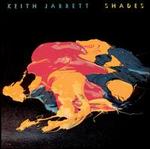
Keith Jarrett: Shades of Jazz
Musicians:
Keith Jarrett (piano), Dewey Redman (tenor sax), Charlie Haden (bass), Paul Motian (drums),
Guillerme Franco (percussion)
.Composed by Keith Jarrett
.Recorded: New York City, 1975
Rating: 100/100 (learn more)
Keith Jarretts American Quartet with Dewey Redman, Charlie Haden and Paul Motian has always been one of my favorite bands, and this track, recorded in 1975, has stood out to me for a long time. Keith ambles through the changes in a way that sometimes reminds me of Bud Powell, and every time Dewey begins his solo, it sends a chill up my spineeven 30 years after hearing it for the first time. Charlie Haden and Paul Motian make it swing like crazy! Motian mentioned in an interview somewhere that he didnt like this track because at some point everyone was lost, but thats where the magic is for me. Its exciting and celebratory.
(Editors Note: The Paul Motian interview that Mr. Kimbrough mentions above first appeared in Percussive Notes Magazine in 1995, but you can read it at the interviewers website here. Motian discusses many of his musical encounters in great detail, and listens and reacts to some of his old recordingsincluding Shades of Jazz.) Eric Novod
Reviewer: Frank Kimbrough (for Desert Island Dozens)
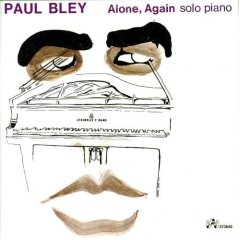
Paul Bley: Dreams
Recorded: Oslo, Norway, August 8-9, 1974
Rating: 100/100 (learn more)
This tune was composed by Annette Peacock, whose compositions have had a big influence on me. Her tunes are landscapes for improvisation, somehow very meticulous, yet very freea very difficult balance to find as a composer, and perhaps even more difficult for someone interpreting and improvising on the written material. Paul is one of the most inventive pianists on the planet, and was a mentor to me when I was coming up. Ever the contrarian, he always looks at the other side of the coin. At the time of Alone, Again (1974), he was trying to be the slowest pianist on the planet, and on this ballad, he gives us a taste of this concept: slow, lyrical, patient playing that allows the overtones to ring out, creating a piece of exquisite beauty filled with tension and release.
Reviewer: Frank Kimbrough (for Desert Island Dozens)
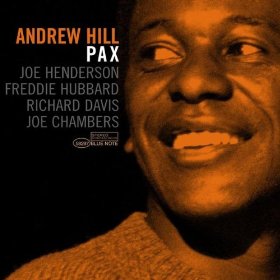
Andrew Hill: Erato
Musicians:
Andrew Hill (piano), Richard Davis (bass), Joe Chambers (drums).
Composed by Andrew Hill
.Recorded: Englewood Cliffs, New Jersey, February 10, 1965
Rating: 100/100 (learn more)
Erato is a masterpiece, one of many by Andrew Hill that I could have chosen for this list. Its named for the Greek goddess of love poetry, and more than lives up to its name. When Ben Allison, Ron Horton and I were playing the sessions that were the genesis of what became the Jazz Composers Collective, we discovered that we had each transcribed this tune. Comparing our transcriptions, we realized that even though the notes were the same, each of them was different in terms of how time signatures and chord changes were notated. This speaks to the inherent mystery of Andrews music. Its hard to put your finger on it sometimes, but his tunes have an inner logic and architecture that is very strong. On this track from a 1965 quintet date (with Freddie Hubbard and Joe Henderson), Andrew plays in a trio format with Richard Davis and Joe Chambers.
Reviewer: Frank Kimbrough (for Desert Island Dozens)
Herbie Nichols: Beyond Recall
Musicians:
Herbie Nichols (piano), George Duvivier (bass), Dannie Richmond (drums).
Composed by Herbie Nichols
.Recorded: New York City, November, 1957

Rating: 100/100 (learn more)
Beyond Recall is from Herbie Nichols last recording date as a leader, Love, Gloom, Cash, Love, recorded in 1957 with bassist George Duvivier and drummer Dannie Richmond. With dark chords in the left hand and a blues-based melody, its almost like a combination of the blues form and Rhythm changes. Like many of Nichols other compositions, this tune uses an extended AABA form, with a few harmonic twists and turns along the way. When I first heard Herbies music, this track grabbed my ear right away, and it was among the first tunes of his that I transcribed. This eventually led to the formation of the Jazz Composers Collectives Herbie Nichols Project.
Reviewer: Frank Kimbrough (for Desert Island Dozens)
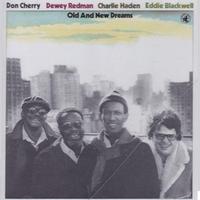
Old and New Dreams: Dewey's Tune
Track
Dewey's Tune
Group
Old and New Dreams
CD
Old and New Dreams (Black Saint CD 120013)
Musicians:
Dewey Redman (tenor sax), Don Cherry (trumpet), Charlie Haden (bass), Ed Blackwell (drums).
Composed by Dewey Redman
.Recorded: October, 1976.
Rating: 100/100 (learn more)
Comprised of Don Cherry, Dewey Redman, Charlie Haden and Ed Blackwell, this group of Ornette Coleman alumni convened in the mid-70s for tours and several recordings. I was lucky to hear them live a number of times in the early 80s, and each time was a revelation. Deweys Tune is from their first (and lesser known) eponymous album on the Black Saint label (1976)recorded without the gloss of the later ECM studio recording (1979). This one tune showcases everything that the group had to offer: parade rhythms from Blackwell, hand-in-glove melodies from Cherry and Redman, springy, inventive bass lines from Haden, the groups patented call and response, and concise, always swinging solos from everyone. The beginning of Cherrys solo is a high point, but the whole tune is beautiful and perfectly exemplifies the ethos of Old and New Dreams.
Reviewer: Frank Kimbrough (for Desert Island Dozens)
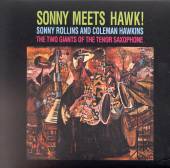
Sonny Rollins & Coleman Hawkins: All The Things You Are
Musicians:
Sonny Rollins (tenor sax), Coleman Hawkins (tenor sax), Paul Bley (piano), Roy McCurdy (drums), Bob Cranshaw (bass).
Composed by Jerome Kern and Oscar Hammerstein III
.Recorded: New York City, July 15, 1963
Rating: 100/100 (learn more)
This track comes from the fabled Sonny Meets Hawk! sessions from July, 1963 with Rollins and Coleman Hawkins, and exhibits perhaps the most abstract playing of Rollinss career. This track also features one of the greatest piano solos ever from Paul Bley. While retaining bits and pieces of Jerome Kerns melody in their improvisations, Bley and Rollins both play against the time, the changes, and everything else, but still swing ferociously, while Henry Grimes on bass and Roy McCurdy on drums keep things together underneath it all.
Reviewer: Frank Kimbrough (for Desert Island Dozens)
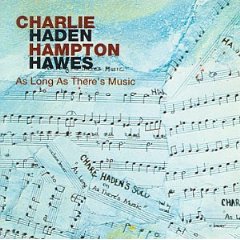
Hampton Hawes (with Charlie Haden): As Long As Theres Music
Track
As Long As Theres Music
Artist
Hampton Hawes (piano) and Charlie Haden (bass)
CD
As Long As Theres Music (Artists House AH 4)
Recorded: Los Angeles, California, August 21, 1976
Rating: 100/100 (learn more)
This was Hampton Hawes last recording as a leader, and perhaps his most beautiful. The master take of the title tune by Jule Styne and Sammy Cahn (theres also an alternate take on the CD, which is now out of print), is an object lesson in the art of the duo. The way Haden and Hawes breathe together is incredible and subtle, allowing them to stretch the time and bring out the tunes (and their own) expressive qualities. Their history of playing together and shared musical wisdom is very much evidenced throughout this track and record.
Reviewer: Frank Kimbrough (for Desert Island Dozens)
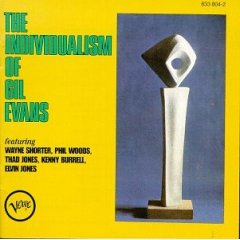
Gil Evans: The Barbara Song
Track
The Barbara Song
Artist
Gil Evans (piano, arranger)
CD
The Individualism of Gil Evans (Verve 833 804-2)
Musicians:
Gil Evans (piano, arranger), Wayne Shorter (tenor sax), Gary Peacock (bass), Elvin Jones (drums),
Frank Rehak (trombone), Ray Alonge, Julius Watkins (French horns), Bill Barber (tuba), Al Block (flute), Andy Fitzgerald (bass flute), George Marge (English horn), Bob Tricarico (bassoon), Bob Maxwell (harp)
.Composed by Kurt Weill
.Recorded: Englewood Cliffs, NJ, July 9, 1964
Rating: 100/100 (learn more)
Gil Evans use of space, interesting combinations of instruments, and keen eye for talent are all in evidence on this track recorded in 1964. Using two French horns, trombone, tuba, flute, bass flute, English Horn, bassoon, and harp, with himself on piano, Gary Peacock on bass, Elvin Jones on drums, and Wayne Shorter on tenor sax, Evans conjures a spooky stillness on this piece from Kurt Weills Three-Penny Opera. The melody moves around the band, with each section of the piece featuring a different lead voice or section of the ensemble, with Evanss piano commenting and complimenting before he drops out altogether. Shorter enters about halfway through the track, playing minimally and quietly, with suspense. Its dark, subtly veiled music, showcasing Evanss arranging abilities to their fullest.
Reviewer: Frank Kimbrough (for Desert Island Dozens)
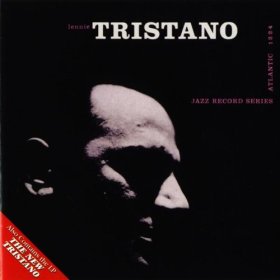
Lennie Tristano: Line Up
Musicians:
Lennie Tristano (piano), Peter Ind (bass), Jeff Morton (drums).
Composed by Lennie Tristano
.
Rating: 100/100 (learn more)
Using early (1955) multi-tracking techniques in his home studio, Tristano recorded his piano over prerecorded rhythm tracks by bassist Peter Ind and drummer Jeff Morton. Well probably never know for sure whether Tristano sped up the tapes in order to get the rather unusual piano sound, but it doesnt matter. This track is an amazing improvisation played over the chord changes to All of Me, and a perfect example of Tristanos trademark lines and phrasing. If you want to check this tune out further, a transcription is included in Eunmi Shims book Lennie Tristano: His Life in Music.
Reviewer: Frank Kimbrough (for Desert Island Dozens)
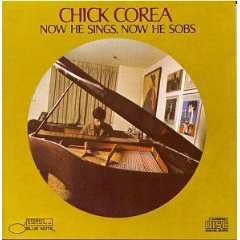
Chick Corea: My One and Only Love
Track
My One and Only Love
Artist
Chick Corea (piano)
CD
Now He Sings, Now He Sobs (Blue Note 38265)
Musicians:
Chick Corea (piano), Miroslav Vitous (bass), Roy Haynes (drums).
Composed by Guy Wood and Robert Mellin
.Recorded: New York City, March, 1968
Rating: 100/100 (learn more)
This track comes from my favorite Chick Corea session, which incredibly was awarded NO stars in a Downbeat review soon after it was released in the late 60s. History, however, has proved this to be one of the greatest piano trio recordings of the past fifty years.
This track wasnt included on the initial LP release, but appears on subsequent CD releases. Its the most beautiful version of this tune Ive ever heard. Taken more up-tempo than usual, it contains elegant, joyous, interactive playing by Chick, Miroslav Vitous and Roy Haynes.
Reviewer: Frank Kimbrough (for Desert Island Dozens)
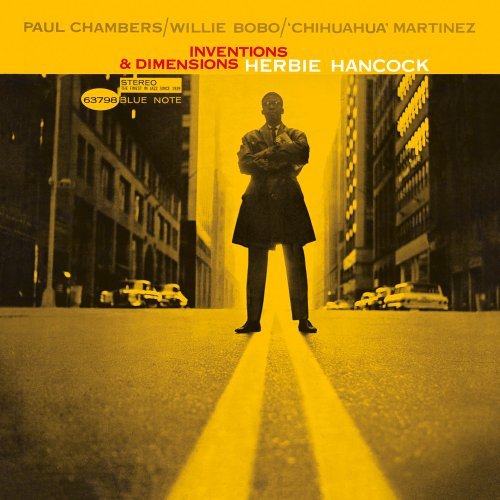
Herbie Hancock: Jackrabbit
Musicians:
Herbie Hancock (piano), Paul Chambers (bass), Willie Bobo (drums),
Osvaldo Chihuahua Martinez (percussion)
.Composed by Herbie Hancock
.Recorded: Englewood Cliffs, New Jersey, August 30, 1963
Rating: 100/100 (learn more)
This track is taken from Inventions and Dimensions, one of Herbies earliest recordings as a leader for Blue Note in August, 1963. Theres an introductory four-bar pedal tone, established by Paul Chambers, then sixteen bars of time, with Chambers walking. At the end of the sixteen bars, Chambers picks another pedal tone, then theres another sixteen bars of time. Its a very interesting strategy for a tune, because there's neither a written melody nor chord changes. Paul Chambers can choose whatever note he wants to play for the pedal tone, which then dictates the harmony over the next sixteen bars. Herbie plays beautiful, swinging, darting lines throughout this completely improvised yet thoroughly coherent piece, with Willie Bobo on drums and Osvaldo Chihuahua Martinez on congas and bongos.
Reviewer: Frank Kimbrough (for Desert Island Dozens)
Abdullah Ibrahim: Namhanje (Today)
Track
Namhanje (Today)
Artist
Abdullah Ibrahim (Dollar Brand) (piano, vocals)
CD
Echoes from Africa (Enja ENJ-CD 3047)
Recorded: Tonstudio Bauer, Germany, September, 1979

Rating: 100/100 (learn more)
This traditional tune, presumably of South African origin, is a lovely, peaceful duet, sung and played by South African pianist Abdullah Ibrahim and bassist Johnny Dyani. Its basically a two-chord vampnobody plays anything particularly fancy, but its warm and inviting, a great thing to hear first thing in the morning. It was beautifully recorded direct-to-disc (according to the Penguin Guide to Jazz Recordings) in 1979 at Tonstudio Bauer in Germany. This is a great example of making something rich out of almost nothing.
Reviewer: Frank Kimbrough (for Desert Island Dozens)
Add your comments here