THE DOZENS: BRIAN LYNCH SELECTS 12 ESSENTIAL WOODY SHAW TRACKS by Ted Panken (editor)
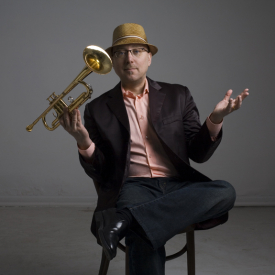
Editor's Note: From the nature of his remarks on these dozen choice tracks by the iconic trumpeter Woody Shaw (1944-1989), it's evident how deeply Brian Lynch, himself a son of 1956, absorbed and thought deeply about Shaw's music during his formative years in Milwaukee, Wisconsin. A New Yorker since 1981, Lynch would go on to mirror Shaw's own apprenticeship path on consequential '80s gigs with Horace Silver and Art Blakey, then to carve his own clarion voice as a key contributor to the units of Eddie Palmieri and Phil Woods, who regard him more as a collaborator than a sideman. He collaborated with both mentors on Simptico (Artist Share), which earned a 2006 Grammy award for Best Latin Jazz Album. It's the latest and most effective document of Lynch's singular stature as an improviser-composer who navigates a broad timeline of mainline-to-beyond jazz and Afro-Caribbean dialects with characteristically encyclopedic thoroughness and hardcore soul. T.P.
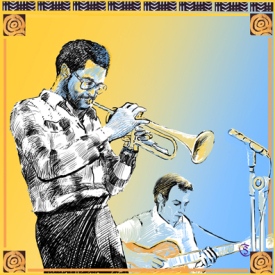
I believe I first heard Woody Shaw on an LP I picked up at the local cut-out bin (we had a great one in Milwaukee called Dirty Jacks Record Rack with a killing selection of jazz!) by Joe Henderson called In Pursuit Of Blackness. Most of that record had a tenor/trombone front line, but there were two live cuts on there with trumpet Gazelle and Invitation (later I found out these were extras from the live session that produced the LP If Youre Not Part of the Solution). There was incredible stuff coming out of the trumpet player on those two tracks! Swinging, but deep! he had that avant-garde tip while being grounded, and really pretty, in a different sort of way. Some of his formations really blew my mind, Im telling you.
Well, I had a new favorite, joining Lee, Freddie, Charles Tolliver (the other new trumpet explorer of that time in the music) and all the other greats. Woody is, in a certain sense, the Last Of The Line (as one of his CD reissues is titled): the ultimate development on his chosen axe of the unitary African-American jazz tradition that we sometimes call, for lack of a better term, hard bop. I was privileged to hear this giant first hand many times during the time of his greatest work (mid 70s to 80s), and even know him personally to a modest extent. My Dozens represent some of the cuts graced with Woody Shaws presence that have helped to shape my love and passion for the music.
Horace Silver: The African Queen
Musicians:
Horace Silver (piano), Woody Shaw (trumpet), Joe Henderson (tenor sax), Bob Cranshaw (bass), Roger Humphries (drums).
Composed by Horace Silver
.Recorded: Englewood Cliffs, NJ, October 22, 1965

Rating: 96/100 (learn more)
This was a breakthrough recording for Woody Shawfor me, the first fully realized representation of the innovations that he would bring to the jazz trumpet vocabulary. Many of Woodys signature melodic formations are present in his solo, such as his systematic use of pentatonic and fourth-based permutations leading to wider interval jumps, and the in-to-out sequencing and side-slipping. And the poise of his playing is beautiful; everything Woodys going for is coming off here, with beautiful sound and pinpoint, nuanced articulation. Its a truly incredible achievement for a 20-year-old player to have his own vocabulary and style so fully formed so quick!
Reviewer: Brian Lynch
Larry Young: The Moontrane
Musicians:
Larry Young (Khalid Yasin) (organ), Woody Shaw (trumpet), Joe Henderson (tenor sax), Elvin Jones (drums).
Recorded: Englewood Cliffs, N.J., November 10, 1965
Rating: 96/100 (learn more)
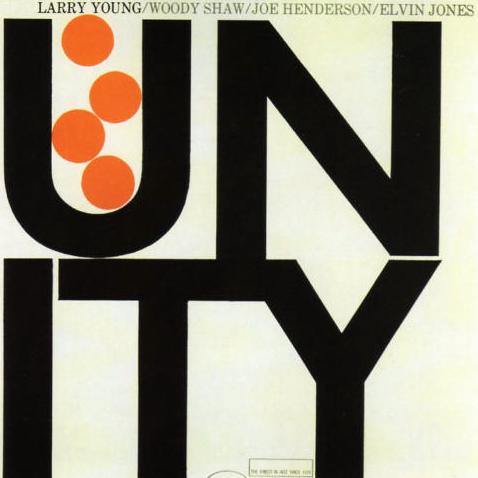
An absolutely essential recording, Unity is also the template for the progressive jazz organ date. While its organist Larry Youngs date, Unity could also be thought of as Woody Shaws coming-out party as an important jazz composer, with three originals of his on the record. Its also notable as an early document of the Woody/Joe Henderson front line. The Moontrane has become a modern jazz standard, subsequently recorded by Woody in a number of recordings, both studio and live. While his solos on later versions, such as the 1975 recording on Muse, may have more reach and fire, I have a special regard for the solo statements of young Woody on this first version from 1965. This record has been a real touchstone for musicians ever since it came out, and I vividly remember my own excitement in first hearing it over 30 years ago!
Reviewer: Brian Lynch
Woody Shaw: The Goat and the Archer
Track
The Goat and the Archer
Artist
Woody Shaw (trumpet)
CD
Song Of Songs (OJC/Contemporary, OJC 180)
Musicians:
Woody Shaw (trumpet), Bennie Maupin (tenor sax), George Cables (piano), Henry Franklin (bass),
Emanuel Boyd (tenor sax), Woodrow Sonship Theus, II (drums)
.Composed by Woody Shaw
.Recorded: Los Angeles, September 15 and 18, 1972
Rating: 91/100 (learn more)
Ive never understood why it took so long (almost five years from the date of his first breakthrough sideman dates) for Woody Shaw to release his first album as a leader. (The excellent session he recorded at Rudy Van Gelders in 1965 was not released until the late 1970s.) In Lester Koenigs West Coast label Contemporary, Woody finally found a company with the vision to present his music and group leadership. Woodys first release for Contemporary, Blackstone Legacy, from 1970, was a somewhat sprawling affair, with plan and instrumentation seemingly informed both by the Miles Davis expanded ensemble of Bitches Brew (Miles's sideman of the time Gary Bartz was an important force on Blackstone) and the larger setups of late Coltrane and contemporaneous Pharaoh Sanders (with whom Woody recorded around this time). The music, though, was strong and distinctly Woodys, and at least one jazz classic came out of the first date pianist George Cabless Think On Me. On Woodys second Contemporary date, Song Of Songs, the format tightened up a bit, and over the years this record has become my favorite of the two sessions (which is not to say you should pass over Blackstone!). The Goat and the Archer is a blues, played harmonically and formally freely with standout solos from Cables and Woody. The introduction to this song, as well as the theme, uses the descending fourth structure lick, seemingly derived from the opening of Coltranes A Love Supreme, that to me shouts Woody! In the theme and the opening of Woodys solo, the major/minor 3rd ambiguity beloved of Woody (and of one of his favorite composers, Bartok) is on display.
Reviewer: Brian Lynch
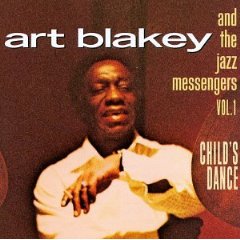
Art Blakey: Anthenagin
Track
Anthenagin
Group
Art Blakey and the Jazz Messengers
CD
Childs Dance
Musicians:
Art Blakey (drums), Woody Shaw (trumpet), Carter Jefferson (tenor sax), Cedar Walton (electric piano),
Michael Howell (guitar), Mickey Bass (bass), Tony Waters (conga)
.Composed by Cedar Walton
.Recorded: Berkeley, CA, March 29, 1973
Rating: 93/100 (learn more)
I have always really liked the little-noticed Messengers records on Fantasy/Prestige from the early '70s: Anthenagin, Buhaina, and Childs Dance, now re-released on CD in a Vol. 1Vol. 2 setup by OJC/Concord. Theres a sense of the cultural moment here with Cedar Waltons Rhodes, the one-chord vamps on a number of tunes, and Tony Waterss conga pumping it out in tandem with the redoubtable Buhaina. The highlight for me has been a number of great Woody Shaw solos throughout these dates, as well as the beginnings of the frontline partnership of Woody and tenor saxophonist Carter Jefferson, which bore fruit later in the '70s in Woodys own group. Anthenagin has a great soloone of Woodys case studies in how to sustain interest on a limited harmonic base and reach multiple peaks in a solo statement. I feel Woody is getting into a new gear here in the development of his vocabulary; theres a greater variety of melodic gestures (which you can really keep track of due to the harmonic stasis of the tune itself), and he can keep the line going longer.
Reviewer: Brian Lynch
Woody Shaw: Hello to the Wind
Track
Hello To The Wind
Artist
Woody Shaw (trumpet)
CD
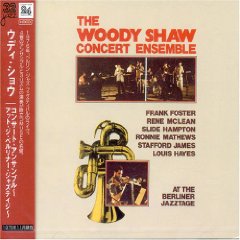
At The Berliner Jazztage (Muse MR5139, 32 Jazz 32069)
Musicians:
Woody Shaw (trumpet), Frank Foster (reeds), Slide Hampton (trombone, percussion), Stafford James (bass), Louis Hayes (drums), Ronnie Matthews (piano),
Rene McLean (alto sax, flute, percussion)
.Composed by Joe Chambers
.Recorded: Berlin, November 6, 1976
Rating: 93/100 (learn more)
Woody Shaws series of Muse records from 1974 to 1979 really heralded his arrival as the next cat on the trumpet to the wider jazz public. These were also the sides that this budding player cut his teeth on, anxiously waiting for each new release! Im picking here something from a live recording of an expanded version of the Woody Shaw/Louis Hayes quintet that was active between 1975 and 1977 on the recording and touring scene. (The performance of that group at Chicagos Jazz Showcase in 1976 will be forever stamped on my mind and soul.) A beautiful rendition of an eloquent (and difficult) piece, Joe Chamberss Hello To The Wind, a wide canvas for Woody to explore many emotions, from lyricism to aggression, while using every section of his musical palette from diatonic forthrightness to chromatic convolution.
Reviewer: Brian Lynch
Dexter Gordon: Gingerbread Boy
Track
Gingerbread Boy
Artist
Dexter Gordon (tenor sax)
CD
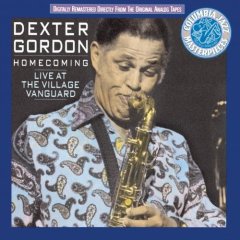
Homecoming: Live At The Village Vanguard (Columbia 34650)
Musicians:
Dexter Gordon (tenor sax), Woody Shaw (trumpet), Ronnie Matthews (piano), Stafford James (bass), Louis Hayes (drums).
Composed by Jimmy Heath
.Recorded: Village Vanguard, New York City, December 11-12, 1976
Rating: 91/100 (learn more)
This recording contains all the feeling of New York in the 70s. It was a big event in jazz when Dexter Gordon returned to the scene as a bandleader, his personal charisma in good part spurring on the resurgence of straight-ahead jazz in the latter part of the decade. The collaboration of the Shaw/Hayes group with Dexter on this recording, Live at the Vanguard, led to Woodys signing with CBS and the inception of the most fruitful and successful period of his career. On Gingerbread Boy, a blues, Woody engages in a canny strategy (after Dexters long solo) of starting his solo trading twelves with Louis Hayes, then moving to a continuous solo statement later ona great way of focusing attention and refreshing a long piece! Hearing Woody alongside Dexter, I really feel the continuity of tradition between these two players of different generations. Even as Woody stakes out his own position (and puts some fire on Dexter in the process!), his reference and knowledge of the tradition complements the older master quite well indeed.
Reviewer: Brian Lynch
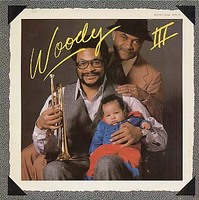
Woody Shaw: Woody I: On The New Ark
Musicians:
Woody Shaw (trumpet), Carter Jefferson (tenor sax), James Spaulding (alto sax), Curtis Fuller (trombone), Steve Turre (trombone), Onaje Allan Gumbs (piano), Buster Williams (bass), Victor Lewis (drums),
Rene McLean, (alto sax, soprano sax), Charles Sullivan (trumpet), Azzedin Weston (conga, percussion), Nobu Urushiyama (percussion)
.Recorded: New York, January 18, 1979
Rating: 97/100 (learn more)
I feel that in many ways Woody III is the masterpiece of Woody Shaws recorded output in the studio The three pieces that made up the first side on the LPthe Afro-Cuban tinged Woody I: On The New Ark; the up-tempo burner Woody II: Other Paths; and the nursery ballad-tribute (to the newborn Woody Shaw III), Woody III: New Offeringsreally hit the bull's-eye both as composition and arrangement, eliciting outstanding performances from the all-star lineup. Woody has really hit his stride here in all aspectstrumpet innovator, composer and bandleader. I think Woody I is the hippest piece!the quasi-songo feel coupled with its harmonic/melodic sophistication and ambiguity is way ahead. Woody had been hanging with the salseros a bit, methinks, around this timehe was a part of the glory days of Salsa Meets Jazz at the Village Gate. A classic!
Reviewer: Brian Lynch
Woody Shaw: Isabel the Liberator
Musicians:
Woody Shaw (trumpet), Carter Jefferson (tenor sax, soprano sax), Larry Willis (piano), Stafford James (bass), Victor Lewis (drums).
Composed by Larry Willis
.Recorded: Keystone Korner, San Francisco, 1979-80
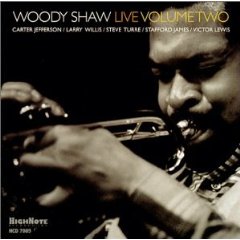
Rating: 96/100 (learn more)
In the late 1970s and early 1980s Woody Shaw had arguably the finest touring jazz (straight ahead) small group on the scene, only rivaled by Betty Carters trio and of course Art Blakey and the Jazz Messengers. Its fortunate that a number of performances by his band have been documented on CD, notably the four volumes from the Keystone Korner. Here is Woody at his absolute peak as a player and bandleader. The live version of pianist Larry Williss Isabel the Liberator (originally recorded on Woodys third CBS release For Sure!) is a tautly driving performance, and Woodys solo on here is on a magisterial tip, building from a calm, reflective yet rhythmically assured opening to a number of successive peaks of shattering impact. This solo exemplifies for me that quality of Woodys playing narrative in which hes able to sustain a long solo through a sure control and exploitation of contrasts (intensity and complexity, inside and outside harmonic motion, chromatic and intervallic line construction, short rhythmic jabs and long legato phrases). Also check out Larry Williss playing, behind Woody and on his soloout of sight! His comping really inspires Woody here.
Reviewer: Brian Lynch
Woody Shaw: Rahsaan's Run
Musicians:
Woody Shaw (trumpet), Mulgrew Miller (piano), Stafford James (bass),
Tony Reedus (drums)
.Composed by Woody Shaw
.Recorded: New York, January 7, 1982
Rating: 92/100 (learn more)
Woody Shaw re-recorded this up-tempo minor blues, dedicated to the great Rahsaan Roland Kirk, on his first studio date back on an independent label after the completion of his stay with a major. Winds were shifting on the jazz scene, not necessarily in Woodys direction. His playing, of course, remained at its towering level, and his group of 1981-1983 with Steve Turre, the young Mulgrew Miller, mainstay Stafford James, and Tony Reedus maintained the high standard of Woodys ensembles. As much as the original version of Run (from Rosewood) is iconic for Woodyphiles, theres something special about the headlong burn of this quartet version.
Reviewer: Brian Lynch
Woody Shaw: All the Way
Musicians:
Woody Shaw (trumpet), Cedar Walton (piano), Buster Williams (bass),
Victor Jones (drums)
.Composed by Jimmy Van Heusen and Sammy Cahn
.Recorded: Englewood Cliffs, NJ, December 1, 1983
Rating: 92/100 (learn more)
Even as Woody Shaws profile became a little lower in the 1980s, his art was still deepening and gaining a rich patina of experience and wisdom. This cut, from a late 1983 session of mostly standards, is proof positive. Woodys mastery here enables him to take a more inside stance while preserving full freedom to employ his own lexicon in the most subtle, nuanced way. You can really hear Woodys affinity with Lee Morgan on this song, associated with the slightly older trumpeterand know that Woody was just as much a master of the jazz ballad. Woody here is not just paying tribute to, but making the tradition new with the heavy authenticity effect of his artistry. Also of note is the mastery of pianist Cedar Walton here, as always!
Reviewer: Brian Lynch
Freddie Hubbard & Woody Shaw: Desert Moonlight
Track
Desert Moonlight
Artist
Woody Shaw (trumpet) and Freddie Hubbard (trumpet)
CD
The Complete Freddie Hubbard and Woody Shaw Sessions (Blue Note 32747 )
Musicians:
Woody Shaw (trumpet), Freddie Hubbard (trumpet), Kenny Garrett (alto sax), Mulgrew Miller (piano), Cecil McBee (bass), Carl Allen (drums).
Composed by Lee Morgan
.Recorded: Englewood Cliffs, NJ, November 21 or 22, 1985
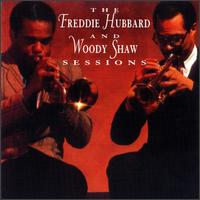
Rating: 93/100 (learn more)
The meeting on record of Woody Shaw and all-time trumpet great Freddie Hubbard was a cause for rapt anticipation before this side came out in 1986. (They had already met under the leadership of Benny Golson on the European Timeless label three years before, but somewhat under the radar.) The results were indeed historic, if a little confined by the Blue Note repertory approach to the material played. I cant help feeling that, all in all, Woody was heard to better effect on the Hubbard/Shaw recordingshes always poised and fluent where sometimes Freddie strains a bit. They both sound great on this track, a cover of Lee Morgans Desert Moonlight.
Reviewer: Brian Lynch
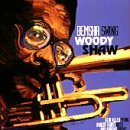
Woody Shaw: Ginseng People
Musicians:
Woody Shaw (trumpet), Geri Allen (piano), Robert Hurst (bass), Roy Brooks (drums).
Composed by Woody Shaw
.Recorded: Bakers Keyboard Lounge, Detroit, February 26 or 27, 1986
Rating: 94/100 (learn more)
Revisiting another of his classic lines from the CBS era with a local rhythm section comprising one established master (drummer Roy Brooks) and two rising stars (pianist Geri Allen and bassist Robert Hurst), Woody Shaw soars on this well-recorded live session from 1986.
By the time of the Bemsha Swing session, it seemed that Woody at 41 was almost a figure from a past era. Changes in the jazz business and the fashion for young lions had marginalized one of the most important voices in the music. It seemed that there was little interest for this swinging but forward-leaning music as young players turned to other, often conservative models for their nascent and marketable styles. Shaw would keep playing brilliantly until his tragic death after a subway accident in 1989, but the message of his accessible yet challenging music was overlooked. Woodys music and playing had true originality, building on tradition but never content to follow, always striving to lead. The implications of his music have still not been explored by the musicians who have come after him to the extent that it, and he, truly deserves.
Reviewer: Brian Lynch