THE DOZENS: ERIC REED SELECTS 12 ESSENTIAL AHMAD JAMAL TRACKS by Ted Panken (editor)
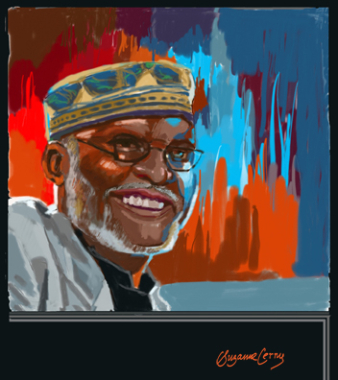
Editor's Note: Ahmad is to the piano trio what Thomas Edison was to electricity, says Eric Reed, referring to the fact that, since his very first recordings in 1951, Ahmad Jamals investigations into the sonic potentials of the piano trio, with and without the drum, have served as a sort of to expand Reeds metaphor gold standard for the idiom. Its hard to overstate this artist's influence on the sound of the post-bop piano mainstream. Miles Davis, Jamals most famous acolyte, assigned homework on appropriate rhythm section behavior to Red Garland, Paul Chambers and Philly Joe Jones by having them attend performances by the Three Strings, Jamals trio with guitarist Ray Crawford and bassist Israel Crosby, and his subsequent trio with Crosby and drummer Vernel Fournier.
McCoy Tyner, Herbie Hancock, Keith Jarrett, Kenny Barron, Cedar Walton, Mulgrew Miller and Bill Charlap are among the pianists who cite Jamal as a seminal influence, and at early 90s sessions at Bradleys, the iconic New York piano saloon, young talent like Cyrus Chestnut, Benny Green, Stephen Scott, Jacky Terrasson, and, yes, Reed, enthusiastically experimented with Jamallian dynamics and orchestrative strategies.
Paradoxicallyor perhaps typicallyJamal objects to using trio as a descriptive for his sound. Its limiting as to what I do, he told me several years ago. I like to refer to my small ensemble or my large ensemble. Basically, Im a writer and an orchestrator. I like big bands. I listen to Duke Ellington, Billy Strayhorn and Count Basie. Ive always been a fan of 80 pieces, or 16 pieces; I once wrote for 22 voices. Im not saying I can do itI never acquired the skillbut Ive always been a fan of orchestrations, Ravel and Johnny Mandel, all the things that speak of getting incredible sounds out of an orchestra. Ive had an orchestra going on in my mind daily for all my life.
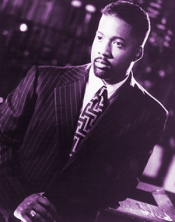
Pianist Eric Reed
As Jamal noted, such orchestral sounds were de rigueur during Jamals formative years in Depression Era Pittsburgh.I was shaped by the big band era, by the GillespieParker era, and by the electronic age or whatever we call it, and I project my life and musical experiences in my writing and performance, Jamal said. Ive accumulated some information. Now Im absorbing all the feedback, and trying to channel it into my present lifestyle. Sometimes Ill resurrect a composition that I havent done in years, because it fits in that spot. Then I use the same basic structure, although the approach is more musically mature than it was years ago. Why change a good minuet or a good concerto? You just interpret as best you can. If it aint broke, dont fix it. Ted Panken
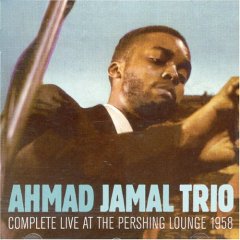
Ahmad Jamal: But Not for Me
Musicians:
Ahmad Jamal (piano), Israel Crosby (bass), Vernel Fournier (drums).
Composed by George & Ira Gershwin
.Recorded: Chicago, January 16-17, 1958
Rating: 100/100 (learn more)
One of the slickest things about this arrangement of But Not For Me is that it defines Ahmad Jamals subtleties. In the trio, each guy is doing something very specific, but you dont think youre listening to an arrangementyoure just enjoying the ride. When Ahmad Jamal improvises on a form, hes constantly playing over the barlinehes not strictly defining the top and end of a form, but completely easing across it musically, making for an entity versus a series of choruses. You dont think about keys or tempos or modulations or time signatures or anything like that. Another slick thing about the piece is that super-hip modulation at the top of the last chorus, where he slides right from C-major (his favorite key) into F-major. For years, I didnt even realize that he had modulated.
Reviewer: Eric Reed
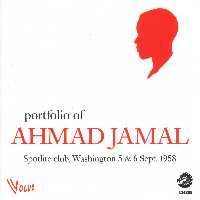
Ahmad Jamal: Autumn Leaves
Musicians:
Ahmad Jamal (piano), Israel Crosby (bass), Vernel Fournier (drums).
Composed by Joseph Kosma and Jacques Prvert
.Recorded: Washington, D.C., September 5-6, 1958
Rating: 100/100 (learn more)
It takes a special kind of artist to be able to take hackneyed songs and make them his own, but in fact, thats what Ahmad Jamal does. He takes the chords and the melodythen deconstructs and interjects all his own ideas. I tried to play this arrangement with a bunch of different guys, and it never really came off. Obviously, I didnt have Israel and Vernel, but part of the problem is that so many bassists and drummers in particular, who claim to be so into the Ahmad Jamal Trio, miss the very subtle elements that make the arrangement work. The fact is, most cats get bored playing arrangements. But Ahmad knew that arrangements were the way to go, at least for his conception, because it kept the audience drawn in to what he was doing.
Reviewer: Eric Reed
Ahmad Jamal: Autumn in New York
Musicians:
Ahmad Jamal (piano), Israel Crosby (bass), Vernel Fournier (drums).
Composed by Vernon Duke
.Recorded: Washington, D.C., September 5-6, 1958
Rating: 100/100 (learn more)
Ahmad Jamal utilizes so many devicesmodulations, space, vamps, intros, interludes, shout choruses, tempo shifts, musical quotes, meter and groove shifts, exotic feels, the element of surprise. These arent devices that he introduced to jazz (you can hear modulations and interludes in Jelly Roll Mortons music, and Ahmad took cues from his mentors, Art Tatum, Nat Cole and Erroll Garner), but Ahmad Jamal synthesized them better than most. This arrangement is so funky. He plays the intro and, as with a lot of things that Ahmad plays, he gives no hint or foreshadowing of whats to come. Unless youve heard the arrangement before, you have no idea what hes getting ready to do. Hes my favorite ballad player. His approach to interpreting melody is unique and individual, not like most of the recorded ballads that youll hear on those Blue Note or Prestige recordings, where the cats play the melody, then solo, and then you take it out. Every time Ahmad Jamal plays or records a song, he takes you on a fantastic journey.
Reviewer: Eric Reed
Ahmad Jamal: I'll Never Stop Loving You
Musicians:
Ahmad Jamal (piano), Israel Crosby (bass), Vernel Fournier (drums).
Composed by Nicholas Brodzsky and Sammy Cahn
.Recorded: Chicago, January 20-21, 1960
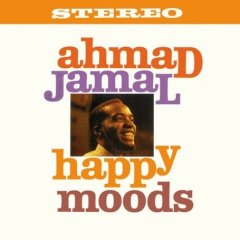
Rating: 100/100 (learn more)
On the intro of Ill Never Stop Loving You it sounds like Ahmad Jamal pulled out a third hand. One of my conflicts with a lot of Ahmad Jamals earlier recordings is that, in my opinion, they werent recorded very wellthe engineering was not to my satisfaction and I thought the piano was inferior. But Ahmad Jamal completely killed that lion in terms of trying to fight with an instrument. He plays the piano with such perfect command and his musical conception was so clear that it wouldnt have made a difference if he were playing on a toy piano.
Reviewer: Eric Reed
Ahmad Jamal: Buenos Aires
Musicians:
Ahmad Jamal (piano), George Duvivier (bass), Osie Johnson (drums),
and the Richard Evans Orchestra
.Recorded: New York, December 20-21, 1962
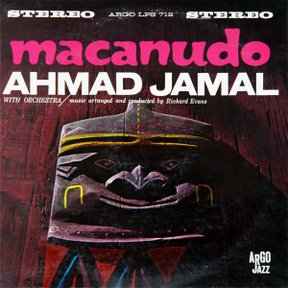
Rating: 100/100 (learn more)
This was recorded after Israel Crosby and Vernel Fournier went over to George Shearing, and its clear that Ahmad Jamal had no problems regrouping after Israels and Vernels defection. I think it was a brilliant move by Ahmad to have his next recording be a huge departure from the trio format. This hearkens back to Ahmad Jamals days with the George Hudson Orchestra in the 1940s. Hed always claimed to be uncomfortable in an orchestra setting, but this totally disproves thator he just got better at playing with orchestras. It seems as though he made a more conscious effort to play in the time, to be more appropriate with the heavy Latin theme of the date, and hes just so supremely bad! Its obscure, but one of my favorite Ahmad Jamal recordings.
Reviewer: Eric Reed
Ahmad Jamal: Allison
Musicians:
Ahmad Jamal (piano), Jamil Sulieman Nasser (bass), Frank Gant (drums).
Recorded: Washington, D.C., February 17-18, 1966
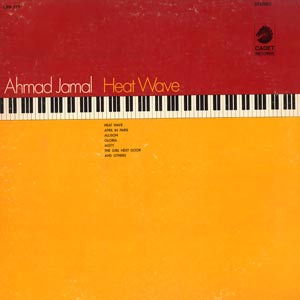
Rating: 100/100 (learn more)
Im sure people would try to compare Jamil and Frank to the earlier group with Vernel and Israel, but with Ahmad Jamal as the common denominator, theres obviously some consistency. Allison shows an example of how Ahmad redefines the art of soloing by the way he restated phrases. He would pick a phrase, or a lick, if you will, and keep placing that lick throughout different portions of the piece. Sometimes he wouldnt even play single-note lines, but just vamp on some chordal motifs. This kind of thing makes him not just a musicians musician, because of his tremendous facility, but also a peoples musician. He was tapping into the laymans need and desire for something memorable by saying, Hey, this is still the piece were playing, whether by quoting the melody outright or just hinting at it.
Reviewer: Eric Reed
Ahmad Jamal: Misty
Musicians:
Ahmad Jamal (piano), Jamil Sulieman Nasser (bass), Frank Gant (drums).
Composed by Erroll Garner
.Recorded: Washington, D.C., February 17-18, 1966
Rating: 100/100 (learn more)
Misty is a song that Ive come to hate, but when I heard this version... Of course, this was written by his mentor, so I dont doubt that there was a special little vibe when he recorded the piece. Ahmads fortitude, his cockiness to say, You know what? Im going to put a really funky contemporary groove on this. Ahmad Jamal does not shy away from contemporary sounds. Whatever is happening at the time, hell check it out and figure out some way to personalize it. He didnt get stuck in time because of the success of Poinciana; in fact, Id say it compelled him to continue to forge ahead through musical territory.
Reviewer: Eric Reed
Ahmad Jamal: Close Enough for Love
Track
Close Enough For Love
Artist
Ahmad Jamal (piano)
CD
American Classical Music (Shubra, SHU 101)
Musicians:
Ahmad Jamal (piano), Payton Crossley (drums),
David Sabu Adeyola (bass)
.Composed by Johnny Mandel and Paul Williams
.Recorded: San Francisco, July 1982
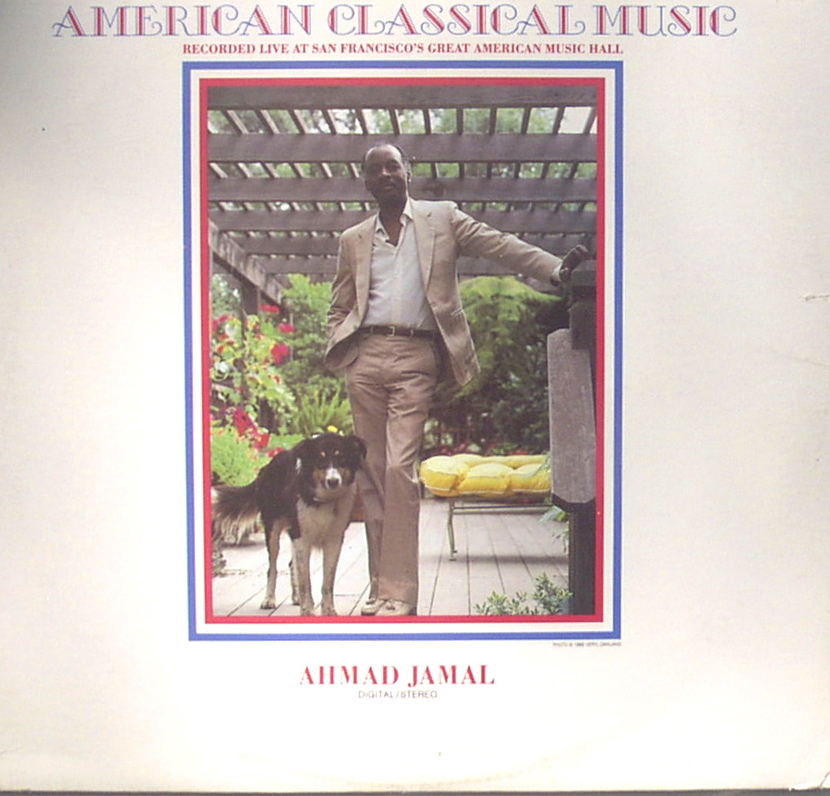
Rating: 100/100 (learn more)
The 1970s was a turbulent time for a lot of so-called straight-ahead jazz musicians, although Id hardly call Ahmad Jamal a straight-ahead jazz musician because hes more than that. But in the years before this, hed done a number of electric and pop-ish records like Jamalca and Intervals. Now, on Live at Bubba's (Who's Who WWLP21021), which he did with the same rhythm section in about 1980, he seemed to have gone back to 1961 to regroup, and then traverse from there. But with Close Enough for Love, it seems that he was on to the next phase of his artistry. We get to hear him on a superior instrument, and you get an even deeper sense of his romanticismyou hear the fullness and robustness of his sound. Ahmad Jamal is a two-handed piano player. He plays the whole piano. Hell use that absolutely lowest A on the Steinway, or the extra octave down if hes on the Bosendorfer, and hell use that highest C. He recognizes that you get a different tonality and timbre if you press the pedal all the way down or halfway down, that each octave on the piano carries its own characterif you play an octave from middle-C up, it will sing a certain way; if you play two octaves down, and youre not careful, its going to become real muddy. His understanding of weight, tone, touch and sensitivity come out on here. This record, which was recorded live at the Great American Music Hall in San Francisco, could also be called The Real Ahmad Jamal, because youre truly hearing his full capabilities.
Reviewer: Eric Reed
Ahmad Jamal: Wave (1985)
Musicians:
Ahmad Jamal (piano), Herlin Riley (drums),
Larry Ball (electric bass), Iraj Lashkary (percussion)
.Composed by Antonio Carlos Jobim
.Recorded: Dallas, Texas, August 1985

Rating: 100/100 (learn more)
Ahmad Jamal understood popular music, he understood commercialism, but, to me, he didnt compromise. All of his artistic and musical decisions were personal and deliberate choices. There were some similarities between his work during this period and the so-called smooth jazz or instrumental R&B, or whatever you want to call it. But even though it was in a similar instrumental setting, what Ahmad Jamal was doing was too intense and complex to be called smooth jazz.
On Wave he revives the same basic arrangement from
his version on The Awakening [Impulse!] in 1970. He plays the bassline, then breaks it up with this completely divergent rhythmic tangent, comes back to the line, and then sets up the song. Theres that element of surprise. A lot of young musicians today compose songs with a little piano-bass ostinato line to start off, which usually winds up being the most interesting part of the song. Most of them dont know it, but theyre following Ahmad Jamals popularization of that device. He will stay on the vamp of a song for 10 minutes, and then play the actual song itself very briefly. For him, the form doesnt make a difference. He might play an A section 20 times before going to the bridge, but you didnt get tired of it. Then once he got to the bridge it was this huge release. His ability to spontaneously orchestrate is absolutely incredible. His genius has no limits.
Reviewer: Eric Reed
Ahmad Jamal: Crystal
Musicians:
Ahmad Jamal (piano),
James Cammack (bass). David Bowle (drums), Willie White (percussion)
.Composed by Ahmad Jamal
.Recorded: Warren, Rhode Island, 1987
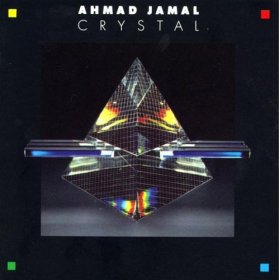
Rating: 100/100 (learn more)
I used to believe that musicians play differently on standards than they do on their own pieces, but Im not entirely convinced of that notion. Thelonious Monk plays Sweet and Lovely and his own Ruby, My Dear exactly the sameits Monk through and through. However, Ahmad Jamal wrote this particular piece based on his improvisations (somebody once used a word called comprovisation, meaning combining composition and improvisation), and its a perfect vehicle for him. Its almost like a rondo, and it taps into his romanticism and lyricism. His own compositions dont simply follow the AABA format. The intros arent just something used to introduce the song. Ahmad Jamal takes every element of the song seriously.
Reviewer: Eric Reed
Ahmad Jamal: Piano Solo #11
Recorded: Warren, Rhode Island, , 1987
Rating: 100/100 (learn more)
I am completely blown away by how huge Ahmad Jamals musical world actually is. He is able to totally defy styles, bags and genres. He can play absolutely anything that comes to his mind. Art Tatum was that kind of piano player. Earl Hines. Keith Jarrett. As a composition, this piece seems to synthesize this musical world.
Reviewer: Eric Reed
Ahmad Jamal: Dance to the Lady
Track
Dance To The Lady
Artist
Ahmad Jamal (piano)
CD
Chicago Revisited: Live at Joe Segal's Jazz Showcase (Telarc 83327)
Recorded: Chicago, November 13-14, 1992
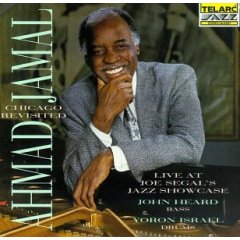
Rating: 100/100 (learn more)
This rendering starts with just piano and drums, which Ahmad doesnt do often, even live, but when he does, it really explodes. Now, this piece is a very tender piece, not really a ballad, but more or less a bright waltz. Yoron Israel plays lightly behind him, real loose and kind of open. One thing that stands out is that when Ahmad Jamal plays waltz time, he almost keeps the feeling of the old-style waltz. In a lot of ways, hes a traditionalist. You dont hear him play things in 3/4 like, say, Cannonball Adderley, with the real heavy walking basslines, almost like a gospel blues thing. That wasnt really Ahmads thing. His approach to 3/4 is almost childlike. His sound and conception is distinctively African-American in terms of not containing an overabundance of European influence, like when you listen to Bill Evans or George Russell or someone like that.
Ahmad Jamal told me that for a disciplinarian, there are no rewards, only consequences. People like Ahmad, Herbie Nichols, Horace Silver and John Lewis were very straight-laced guys, who didnt get caught up in the whole clichd jazz scene of succumbing to negative influences. They were quirky, but not in the negative sense. Their minds were always clear, so they were consistent in what they wrote and in their recorded and performance output. This also took their music outside of categories. You could call Horace Silver a hard-bop musician, but only in the sense that its a style that he helped to define. You could call John Lewis a bebop jazz pianist, but it wouldnt be accurate to limit him to one style.
On Dance for The Lady, Im blown away by how one person can simultaneously have so much power and so much sensitivity. McCoy Tyner also has that. McCoy and Ahmad are very similar piano players, and I would like to believe that during the mid-1960s, when McCoy Tyners thing was really beginning to unfold with the John Coltrane Quartet, it had a tremendous impact on Ahmad. I dont think thats cheeky or disrespectful to say, even though Ahmad Jamal is McCoys senior. What that says is that Ahmad Jamal is open to whats in the air; that he knows whats going on at all times. He recorded Chick Coreas Tones For Joans Bones. He recorded Herbie Hancocks Dolphin Dance. He recorded a Monty Alexander piece, You Can See. Hes done Curtis Mayfields Pusher Man or Theme From M.A.S.H. So Ahmad Jamal not only honors the masters, Erroll Garner, Art Tatum, Nat Cole, but also respects the newer generation, and thats what has allowed him to stay so fresh.
Reviewer: Eric Reed
Add your comments here.