THE DOZENS: 12 ESSSENTIAL WAYNE SHORTER TRACKS by Matt Miller
Early stints with Horace Silver and Maynard Ferguson introduced Wayne Shorters riveting sound to the jazz community but it was as Art Blakeys musical director that the saxophonists career took flight. From the hard-bopping Jazz Messengers, Shorter joined Miles Davis quintet as the last, integral piece in a puzzle that would form the trumpeters groundbreaking second great quintet. During this same period, the saxophonist was amassing an impressive discography as a leader first on Vee-Jay, then, famously, for Blue Note on a series of records that remain astonishing for the consistently brilliant playing of Shorters groups and for the leaders considerable skills as a soloist, composer and arranger.
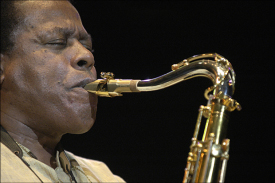
In the 1970s and 80s, Shorter broadened his musical palate, instigating and continually redefining the fusion movement as a cofounder of Weather Report and drawing heavily on outside cultural influences Brazilian music, film, eastern philosophy in his efforts as a leader. The saxophonist followed the fusion model to heavily synthesized efforts in the mid-eighties, all the way to 1995s High Life, a Grammy winning album that brilliantly blended Shorters sound with rock, hip-hop and classical elements.
Since 2000, Shorter has toured and recorded with a virtuosic quartet of young, daring musicians. The group is a return to the saxophonists acoustic roots, but is in no way a step backward; Shorters music is as fresh, insightful and emotionally resonant as ever.
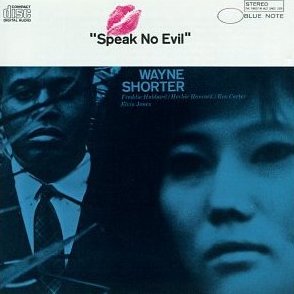
Wayne Shorter: Witch Hunt
Musicians:
Wayne Shorter (tenor sax), Freddie Hubbard (trumpet), Herbie Hancock (piano), Ron Carter (bass), Elvin Jones (drums).
Composed by Wayne Shorter
.Recorded: Englewood Cliffs, NJ December 24 1964
Rating: 92/100 (learn more)
Wayne Shorters incisive solo on "Witch Hunt" starts with a shout, or rather a bristling retort to Elvin Jones stuttering sendoff. The tenor master is at the top of his game throughout the Speak No Evil session, but nowhere are his skills more apparent and dazzling than on this brooding opener. Building on the latent tension of the melody, Shorters solo is a model of restraint and improvisational acumen. His clipped phrases and bluesy sustains draw fervent responses from his bandmates and inspire equally brilliant solos from Hubbard and Hancock.
Reviewer: Matt Miller
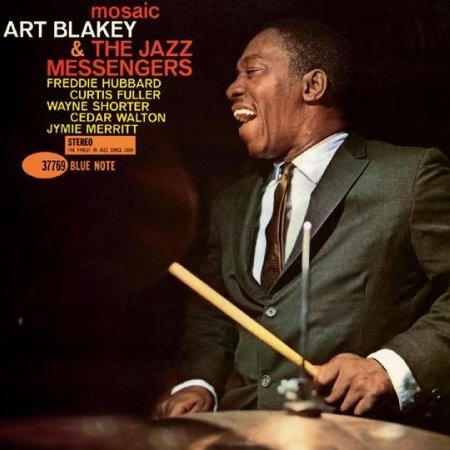
Art Blakey (featuring Wayne Shorter): Children of the Night
Track
Children Of The Night
Group
Art Blakey and the Jazz Messengers
CD
Mosaic (Blue Note 37769)
Musicians:
Art Blakey (drums), Wayne Shorter (tenor sax), Freddie Hubbard (trumpet), Curtis Fuller (trombone), Cedar Walton (piano), Jymie Merritt (bass).
Composed by Wayne Shorter
.Recorded: Englewood Cliffs, NJ. October 2, 1961
Rating: 88/100 (learn more)
Wayne Shorters first big career break came when he joined Art Blakeys Jazz Messengers in 1959. He quickly became the groups musical director, composing and arranging many of the bands most popular titles from the era. "Children Of The Night" features Shorters tenor from the outset with Hubbard and Fuller contributing harmonic accompaniment. At the time, Shorter was often compared to John Coltrane, and he does seem to take a cue from Trane at the beginning of his solo, navigating the changes with dense sheets of sound. That said, Shorters sound and conception are fully matured and his wry, often stuttering lines reveal his own original voice.
Reviewer: Matt Miller
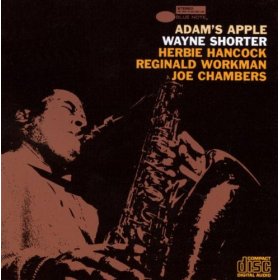
Wayne Shorter: Teru
Musicians:
Wayne Shorter (tenor sax), Herbie Hancock (piano), Reggie Workman (bass), Joe Chambers (drums).
Composed by Wayne Shorter
.Recorded: Englewood Cliffs, NJ
Rating: 89/100 (learn more)
The one constant in Wayne Shorters ever-evolving artistry is a sense of supreme restraint and deliberateness. These qualities are especially striking in his treatment of ballads. On "Teru," Shorters tenor rarely ascends above a whisper as he navigates the piece's harmonic twists with patient, snaking lines. The rhythm section follows Shorter in and out of an ambling tempo with Hancock and Workman supplying mostly fills and counterpoints to the leaders line as Chambers brushes quarter notes on cymbal and snare. Hancock's and Workmans solos are striking for their brevity, rhythmic freedom and melodic invention, and lead seamlessly into Shorters restatement of the melody.
Reviewer: Matt Miller
Wayne Shorter: Mephistopheles
Musicians:
Wayne Shorter (tenor sax), Herbie Hancock (piano), Reggie Workman (bass), Joe Chambers (drums), Grachan Moncur III (trombone),
Alan Shorter (flugelhorn)
.Composed by Wayne Shorter
.Recorded: Englewood Cliffs, NJ., October 15, 1965
Rating: 85/100 (learn more)
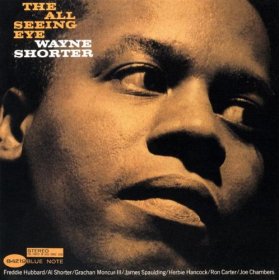
Equally rich in inspired performances and brilliant arrangements, The All Seeing Eye is a standout in Wayne Shorters impressive '60s oeuvre. "Mephistopheles," the albums final track, is a creative high-water mark that features Shorters dazzlingly dissonant writing for an augmented horn section and a series of arresting improvisations by the leader, trumpeter and sibling Alan Shorter, and drummer Joe Chambers. Built around a hypnotic ostinato that continues throughout the seven-minute track, the head is a grating sendoff for Shorter, whose creativity is never bound by the pieces harmonic stasis. Shorter and company develop their improvisations in surprising ways, exploiting the melodic and rhythmic possibilities inherent in the songs open structure, and never resolve the suspense that grips the piece.
Reviewer: Matt Miller
Wayne Shorter: Tom Thumb
Musicians:
Wayne Shorter (tenor sax), James Spaulding (alto sax), Curtis Fuller (trombone), Herbie Hancock (piano), Ron Carter (bass), Joe Chambers (drums).
Composed by Wayne Shorter
.Recorded: Englewood Cliffs, NJ, March 10, 1967
Rating: 87/100 (learn more)
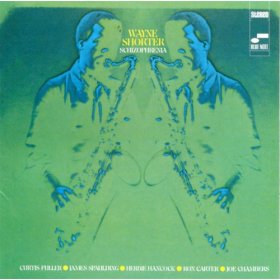
Blue Note albums from the '60s abound in long-form variations on the blues, and Wayne Shorters loping, riff-based Tom Thumb is an offbeat extension of that tradition. Of course, Shorter and his bandmates are never content to merely deliver a funky dance track. While the melody is relatively straightforward, the improvisations are thrilling in their interplay and creativity. The leaders tenor is guttural and penetrating from the outset of his solo, his stuttering phrases and melodic asides toying with but never wholly obliterating the bluesy essence of his statements. Hancock is, of course, totally captivating, delivering a dense yet infectiously rhythmic statement that is a perfect sendoff for the slithering, emotive cry of James Spauldings alto.
Reviewer: Matt Miller
Miles Davis: Footprints
Musicians:
Miles Davis (trumpet), Wayne Shorter (tenor sax), Herbie Hancock (piano), Ron Carter (bass), Tony Williams (drums).
Composed by Wayne Shorter
.Recorded: October 24, 1966 New York.
Rating: 95/100 (learn more)
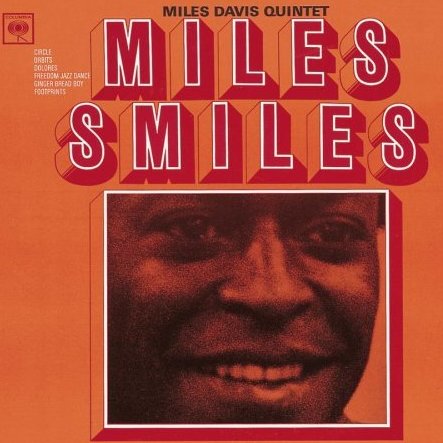
Miles Davis great mid-'60s quintet was at the height of their powers when they recorded Miles Smiles in the fall of 1966. The band had been together for over two years and had developed a rapport that has yet to be surpassed in the ensuing four decades. On "Footprints," Davis masterfully develops his solo from a series of riffs, gaining focus and momentum with the help of the ferociously rhythmic Tony Williams and Ron Carters rock-solid bass line. Shorters approach is remarkably similar, developing a driving statement from tiny melodic kernels. The saxophonist abstracts freely, sustaining high and honking low register notes over the furiously bubbling rhythm section before handing off to Hancock.
Reviewer: Matt Miller
Gil Evans (featuring Wayne Shorter): Time of the Barracudas
Track
Time Of The Barracudas
Group
Gil Evans (featuring Wayne Shorter)
CD
The Individualism Of Gil Evans (Verve 9210)
Musicians:
Gil Evans (piano), Wayne Shorter (tenor sax), Kenny Burrell (guitar), Gary Peacock (bass), Elvin Jones (drums),
Frank Rehak (trombone), Ray Alonge (French horn), Julius Watkins (French horn), Bill Barber (tuba), Al Bock (reeds), Andy Fitzgerald (reeds), George Marge (reeds), Bob Tricario (reeds), Robert Maxwell (harp)
.Composed by Gil Evans and Miles Davis. Arranged and conducted by Gil Evans
.Recorded: Englewood Cliffs, NJ, July 9, 1964
Rating: 93/100 (learn more)
On a series of stellar albums under his own name in the 1960s, Gil Evans went one step forward in cementing his reputation -- developed through his celebrated 1950s work with Miles Davis -- as jazzs preeminent arranger. On "Time Of The Barracudas," the all-star ensemble executes Evanss gorgeous arrangement before turning over to Wayne Shorter, whose solo is a model of thematic development and melodic precision. Over the driving force of Elvin Joness ride and a relentless pedal-point line from bassist Richard Davis, Shorters lines snake with a probing intensity, running the range of the horn, but always zeroing in on the perfect melodic counterpoint.
Reviewer: Matt Miller
Steely Dan: Aja
Track
Aja
Group
Steely Dan
CD
Aja (MCA 37214)
Musicians:
Donald Fagen (synthesizer, percussion, vocals), Walter Becker (guitar), Wayne Shorter (tenor sax), Larry Carlton (guitar), Chuck Rainey (guitar), Chuck Rainey (bass), Joe Sample (keyboards), Steve Gadd (drums), Victor Feldman (percussion),
Michael Omartian (piano), Denny Dias (guitar), Tim Schmit (vocals)
.Composed by Walter Becker and Donald Fagen
.Recorded: Los Angeles 1977
Rating: 85/100 (learn more)
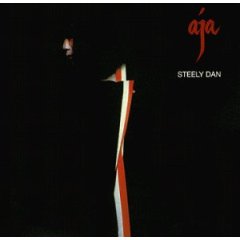
Wayne Shorter, along with the other founding members of Weather Report, put fusion on the map in the early 1970s. The saxophonist also recorded with a wide array of artists from the pop and rock world in the '70s and '80s. With the rock/jazz group Steely Dan, Shorter contributed a solo to the song "Aja" that garnered critical praise and introduced a new world of listeners to his artistry. Shorters dry tenor enters after a lilting guitar solo lending an immediate urgency to the performance. Over drummer Steve Gadds syncopated lines and jazz-inflected chords from Donald Fagens synthesizer, Shorters tenor soars to an enormous climax before incrementally descending back for the closing melody.
Reviewer: Matt Miller
Wayne Shorter (with Milton Nascimento): Miracle of the Fishes
Track
Miracle Of The Fishes
Artist
Wayne Shorter (tenor sax, soprano sax)
CD
Native Dancer (Columbia PC 33418)
Musicians:
Wayne Shorter (tenor sax, soprano sax), Milton Nascimento (vocals), Airto Moreira (percussion),
Wagner Tiso (electric piano), David Amaro (guitar), Roberto Silva (drums)
.Composed by Milton Nascimento
.Recorded: Los Angeles, September 12, 1974
Rating: 91/100 (learn more)
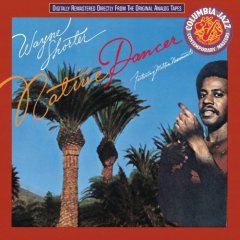
With his 1975 release Native Dancer, Wayne Shorter fully embraced the Brazilian influence that had been present in his music from his early Blue Note days. The album highlighted not only Shorters skills as an arranger and composer, but also those of the astonishingly talented Milton Nascimento. On "Miracle Of The Fishes," Nascimentos powerful vocals introduce the theme in a soaring falsetto before descending into the meaty mid-register and delivering the Portuguese vocal in a declarative tone that Shorter picks up going into his solo. Over an ethereal vocal counterpoint Shorters tenor is a brash foil, delivering low-register retorts and chirping high notes before switching to his more subdued soprano and leading the band out.
Reviewer: Matt Miller
Weather Report: Elegant People
Track
Elegant People
Group
Weather Report
CD
Black Market (Columbia PC 34099)
Musicians:
Wayne Shorter (tenor sax), Joe Zawinul (electric piano), Alphonso Johnson (electric bass), Chester Thompson (drums).
Recorded: Hollywood, Decmber 19, 1975
Rating: 87/100 (learn more)
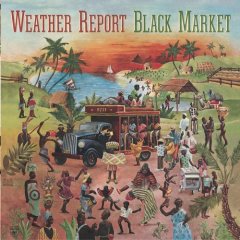
Weather Report was reaching the height of its popularity in 1976 when the group released Black Market. On a series of tightly arranged originals that allowed ample room for solos over driving, often open-ended funk beats, the band defined the sound that made them one of the most influential groups of '70s. Wayne Shorters distinct influence shines through every aspect of "Elegant People," from the phased, haunting intro to his patient solo over a series of shifting grooves and electronic effects. The intricate arrangement is threaded together by his burnished, vibratoless tone, building incrementally with the saxophonists carefully calibrated statements.
Reviewer: Matt Miller
Wayne Shorter: Children of the Night
Track
Children Of The Night
Artist
Wayne Shorter (tenor sax, soprano sax)
CD
High Life (Verve 314 529 224)
Musicians:
Wayne Shorter (tenor sax, soprano sax), Terri Lyne Carrington (drums), Airto Moreira (percussion), Lenny Castro (percussion),
Rachel Z (piano, synthesizers), David Gilmore (guitar), Will Calhoun (percussion), Munyungo Jackson (percussion), Kevin Ricard (percussion)
.Composed by Wayne Shorter
.Recorded: Hollywood CA 1995
Rating: 89/100 (learn more)
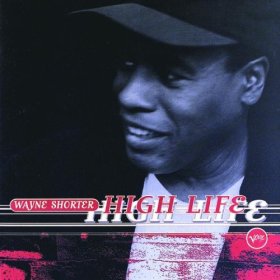
"Children Of The Night" appeared frequently on set lists for Art Blakeys Jazz Messengers during Wayne Shorters tenure as artistic director in the early to mid-1960s, albeit in a form that bears little resemblance to this 1995 reworking. The album, Shorters first for Verve Records, is a heavily engineered session that is a milestone in his transition from almost entirely synthesized efforts in the 1980s to his subsequent work with an acoustic quartet. Bearing the mark of producer Marcus Miller in its backbeat and electric bass- heavy arrangement, the piece is extraordinary in its abstraction on the original melody, carefully crafted orchestral accompaniments and Shorters dubbed horn lines and emotional solo statements.
Reviewer: Matt Miller
Wayne Shorter: Joy Ryder
Track
Joy Ryder
Artist
Wayne Shorter (tenor sax, soprano sax)
CD
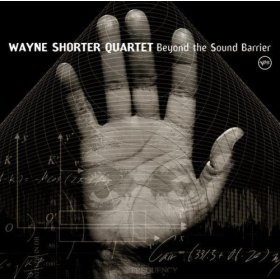
Beyond The Sound Barrier (Verve B0004518)
Musicians:
Wayne Shorter (tenor sax, soprano sax), Danilo Perez (piano), John Patitucci (bass), Brian Blade (drums).
Composed by Wayne Shorter
.Recorded: North America, Europe and Asia 2002-2004
Rating: 92/100 (learn more)
Wayne Shorters decision in 2000 to return to an all-acoustic format after years of playing in mostly electrified settings was certainly a turning point in the saxophonists career. The quartet, featuring pianist Danilo Perez, bassist John Patitucci and drummer Brian Blade, that the saxophonist began touring with turned out to be one of his best, and the resulting music chronicled on the Footprints-Live and the Grammy-winning Alegria and Beyond The Sound Barrier is among his most challenging and rewarding. "Joy Ryder" is a mostly improvised selection that pairs Shorters acerbic, engaging soprano with the surging, dramatic statements of Danilo Perez. The band holds an underlying pulse through sections of legato and driving swing during the pieces 11+ minutes, and the pulsing polyrhythms of Blade and the unrelenting force of Patituccis bass push Shorter to some of his most thrilling playing on record.
Reviewer: Matt Miller
Add your comments here