THE DOZENS: A DIZZY DOZEN GILLESPIE CLASSICS by Mark Lomanno
From his seminal work with Charlie Parker to his collaborations with Chano Pozo, Dizzy Gillespie continually broke new ground throughout his storied career. Aside from his musical virtuosity, Dizzy was revered as a consummate professional, affable entertainer, and admired patriarch of the jazz world.
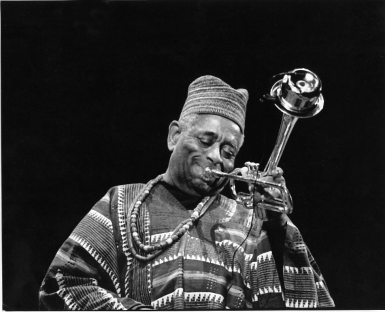
Dizzy Gillespie, photo by Ray Avery
This collection of tracks spans Gillespies entire career. Showcased here is the broad range of Dizzys artistry: not only his trumpet performance, but also his composing and arranging skills, love of Latin music, and flexibility among styles, genres and ensembles. Noticeably absent from this list are Dizzy's classic recordings with Charlie Parker – readers are encouraged to search jazz.com for reviews of these tracks (including those of the recently discovered 1945 Town Hall concert). A list of a dozen tracks cannot be comprehensive, but is rather intended to offer something for everyonefrom time-tested classics to long-forgotten gems.
Cab Calloway (featuring Dizzy Gillespie): Pickin' the Cabbage
Track
Pickin' the Cabbage
Group
Cab Calloway & His Orchestra
CD
New York 1939-1940, Vol. D (JSP 2006)
Musicians:
Dizzy Gillespie (trumpet),
Mario Bauz, Lammar Wright (trumpets), Quentin Jackson, Keg Johnson, Tyree Glenn (trombones), Hilton Jefferson, Jerry Blake (aka Jacinto Chabani) (alto saxes & clarinets), Andrew Brown (alto & baritone saxes), Chu Berry (tenor sax & clarinet), Walter Thomas (tenor & baritone saxes, clarinet), Benny Payne (piano), Danny Barker (guitar), Milt Hinton (bass), Cozy Cole (drums)
.Composed and arranged by Dizzy Gillespie
.Recorded: Chicago, March 8, 1940
Rating: 90/100 (learn more)
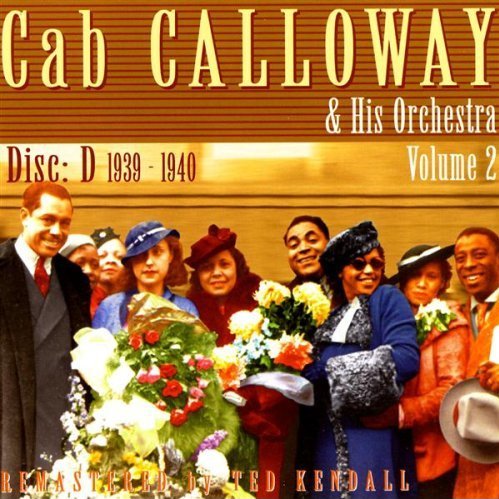
Originally released on the Vocalion label, "Pickin' the Cabbage" is often referred to as Gillespie's first attempt at incorporating Latin rhythms in his compositions. His section mate Mario Bauz helped him secure a spot in Calloway's band and introduced Gillespie to the music of Bauz's native Cuba. The bass ostinato of this piece mimics the 3-2 Cuban clave that could also be heard in contemporary mambo recordings. As in such future compositions as "Manteca" and "A Night in Tunisia," Gillespie varies the syncopated Latin feel in the A section with a more straight-ahead swinging bridge. The lone solo falls to Dizzy, who plays well, showing glimpses of his future genius, and is backed by one of the best bands of its day.
Reviewer: Mark Lomanno
Dizzy Gillespie: Lover Come Back to Me
Track
Lover Come Back to Me
Artist
Dizzy Gillespie (trumpet)
CD
The Complete RCA Victor Recordings: 1937-1949 (Bluebird/RCA 66528)
Musicians:
Dizzy Gillespie (trumpet), Cecil Payne (baritone sax),
Willie Cook, Dave Burns, Elmon Wright (trumpets), Andy Duryea, Sam Hurt, Jesse Tarrant (trombones), John Brown, Ernie Henry (alto sax), Joe Gayles, Budd Johnson (tenor sax), James Foreman Jr. (piano), Al McKibbon (bass), Teddy Stewart (drums), Sabu Martinez, bongo), Joe Harris, conga
.Composed by Sigmund Romberg & Oscar Hammerstein II. Arranged by John Lewis
.Recorded: New York, December 28, 1948
Rating: 95/100 (learn more)
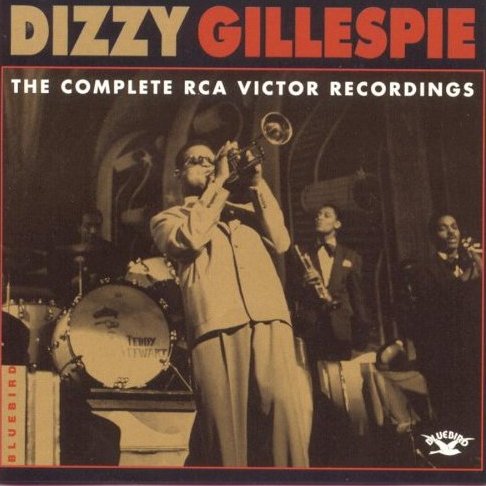
This 1948 session for Victor showcases the Gillespie Orchestra as one of the most innovative ensembles of its era. The intricate arrangement features a syncopated ostinato, implying 6/8 time, anchored by baritone saxophonist Cecil Payne that underscores Gillespie's lyrical rendition of the melody in 3/4 time. The added percussion helps suggest an overall bolero aesthetic. On the bridge, the melody, split between the sax and brass sections, is rhythmically reworked to fit a more articulated Latin feel. After a quick cadenza, Gillespie launches the band into a double-time swing passage that features Dizzy's masterful trumpet skills in all their pyrotechnical glory.
Reviewer: Mark Lomanno
Dizzy Gillespie: Cubano Be, Cubano Bop (aka Afro-Cuban Drum Suite)
Track
Cubano Be, Cubano Bop (aka Afro-Cuban Drum Suite)
Artist
Dizzy Gillespie (trumpet)
CD
Pleyel Jazz Concert 1948 (BMG International 40941)
Musicians:
Dizzy Gillespie (trumpet), Chano Pozo (congas),
Dave Burns, Lamar Wright Jr., Benny Bailey, Elmon Wright (trumpets), Ted Kelly, Bill Shepherd (trombones), John Brown, Howard Johnson (alto saxes), George Nicholas, Joe Gayles (tenor saxes), Ceil Payne (baritone sax), John Lewis (piano), Al McKibbon (bass), Kenny Clarke (drums)
.Composed and arranged by George Russell
.Recorded: live in France, 1948
Rating: 95/100 (learn more)
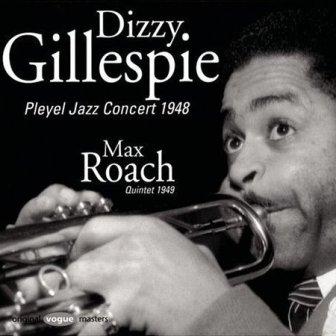
Listed on the album as "Afro-Cuban Drum Suite," this version of George Russell's "Cubano Be, Cubano Bop" features an especially rich, improvised duet by conguero Chano Pozo and Gillespie not heard on other versions. Recorded live in France as part of a very successful European tour in 1948, this was the last time Pozo would record this seminal piece of jazz history with the Gillespie band (he was murdered in November of the same year). The composition was originally commissioned for a September 1947 concert at Carnegie Hall that was the premiere of Gillespie's new Afro-Cuban jazz aesthetic, later dubbed "Cubop." In his improvisation, Gillespie demonstrates a remarkable affinity for Afro-Cuban rhythms, which he seamlessly melds with bebop phrasing and vocabulary.
Reviewer: Mark Lomanno
Dizzy Gillespie & Roy Eldridge: I've Found a New Baby
Track
I've Found a New Baby
Artist
Dizzy Gillespie (trumpet) and Roy Eldridge (trumpet)
CD
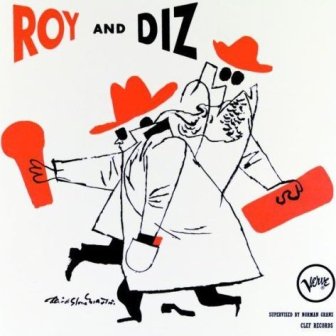
Roy and Diz (Verve 521647)
Musicians:
Dizzy Gillespie (trumpet), Roy Eldridge (trumpet), Oscar Peterson (piano), Herb Ellis (guitar), Ray Brown (bass), Louie Bellson (drums).
Composed by Jack Palmer & Spencer Williams
.Recorded: New York, October 29, 1954
Rating: 93/100 (learn more)
Known at times for having a contentious relationship, Gillespie and his idol, Roy Eldridge, are united for this recording on Norman Granz's Verve label. The competition between the twoboth of whom were known for winning "cutting" contestsproduces a stellar album. This piece opens and closes with a drum-and-trumpet feature in the New Orleans "street beat" style, which complements the unwavering swing of the melody and solo sections. Gillespie and Eldridge are backed by one of the best rhythm sections in jazz history (the Oscar Peterson Trio, with the addition of Louie Bellson here), which wisely stays clear of the limelight, providing a solid foundation on which this great trumpet battle is staged.
Reviewer: Mark Lomanno
Dizzy Gillespie: Swing Low, Sweet Cadillac
Track
Swing Low, Sweet Cadillac
Artist
Dizzy Gillespie (trumpet, vocals)
CD
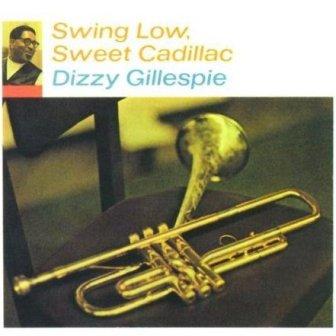
Swing Low, Sweet Cadillac (Impulse 11782)
Musicians:
Dizzy Gillespie (trumpet, vocals), James Moody (alto & tenor saxes, flute, vocals),
Mike Longo (piano), Frank Schifano (electric bass), Otis "Candy" Finch (drums)
.Composed by Dizzy Gillespie
.Recorded: live at Memory Lane, Los Angeles, May 25-26, 1967
Rating: 90/100 (learn more)
The magic of a live performance is captured in this rendition of the Gillespie classic based on an African-American spiritual. Opening with a chant reminiscent of the Yoruba-derived religious chants of Chano Pozo, Gillespie welcomes Moody on stage as the "response" to his "call." To Dizzy's carefully executed passages, Moody sarcastically replies, "Yo' mom-oand yo' papa, too," sending the musicians and audience into an uproar. What follows is a groove-oriented Gillespie solo in which he shows great range and facility. Mike Longo, a new member of the band at that time, headlines a rhythm section playing in an energetic R&B style.
Reviewer: Mark Lomanno
Dizzy Gillespie: Tour de Force
Track
Tour de Force
Artist
Dizzy Gillespie (trumpet)
CD
Live at the Village Vanguard (Blue Note 80507)
Musicians:
Dizzy Gillespie (trumpet), Pepper Adams (baritone sax), Chick Corea (piano),
Garnett Brown (trombone), Richard Davis (bass), Mel Lewis (drums)
.Composed by Dizzy Gillespie
.Recorded: live at the Village Vanguard, New York, October 1, 1967
Rating: 93/100 (learn more)
The band Gillespie assembled for this date was not his regular working group. Nonetheless the performance is cohesive, with each member afforded ample time to share the spotlight with Dizzy. Adams and Gillespie share the melodic responsibilities, while Brown can be heard in the background quoting "Jeepers Creepers" as a countermelody. The improvisations are of high quality: Adams quickly makes way for Brown, whom the liner notes tout as "one of the finest young trombonists to come along in decades." Gillespie sounds much the same as he did 20 years earlier, navigating the chord changes with range and velocity equal to that of his younger self. Also of interest is the track's concluding solo, featuring a young Chick Corea, whose harmonic choices and scalar runs show a fresh approach to Tatum (an obvious influence here).
Reviewer: Mark Lomanno
Dizzy Gillespie: Jitterbug Waltz
Musicians:
Dizzy Gillespie (trumpet), Joe Pass (guitar),
Ray Brown (bass), Mickey Roker (drums)
.Composed by Fats Waller & Richard Maltby, Jr.
.Recorded: Los Angeles, September 19, 1974
Rating: 90/100 (learn more)
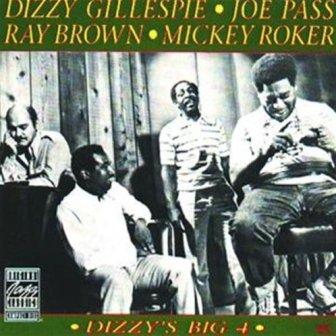
When Norman Granz founded Pablo Records to help support "older" jazz musicians, Gillespie was a natural choice for a new project, based on the success of prior collaborations. Dizzy's Big 4 is Gillespie's first recording for Pablo. The piano's absence is hardly noticed, as Pass provides both harmonic backing and an additional melodic voice for the ensemble. This arrangement of the Fats Waller standard is notable for the rhythm section's introductory vamp and the refreshing changes of time signatures and grooves. Performances of this song can rely too heavily on the "waltz feel" to drive the arrangement. Here, however, the quartet succeeds in energizing the performance with an interactive inventiveness.
Reviewer: Mark Lomanno
Oscar Peterson and Dizzy Gillespie: Caravan
Track
Caravan
Artist
Oscar Peterson (piano) and Dizzy Gillespie (trumpet)
CD
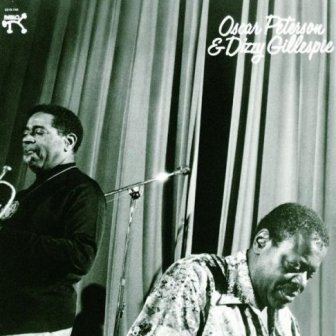
Oscar Peterson and Dizzy Gillespie (Pablo 2310-740)
Musicians:
Oscar Peterson (piano), Dizzy Gillespie (trumpet).
Composed by Duke Ellington, Juan Tizol & Irving Mills
.Recorded: London, England, November 28-29, 1974
Rating: 97/100 (learn more)
On Gillespie's second recording for Norman Granz's Pablo label, he joins Oscar Peterson for a set of miraculous duets. Benny Green, who wrote the liner notes for this album, compared this performance of Ellington's classic composition to the Armstrong and Hines rendition of "Weather Bird." Peterson melds a keen sense for complementary accompaniment with dexterous, interweaving polyphonic lines. The breakneck tempo does little to deter Gillespie, who navigates an unaccompanied section without wavering in the slightest. Both musicians bring their best to this date: both show incredible range, flexibility, and complete mastery of their instruments. The result is a well-worn standard transformed through harmonic freshness and rhythmic vitality into an iconic performance.
Reviewer: Mark Lomanno
Dizzy Gillespie: Fiesta Mojo
Musicians:
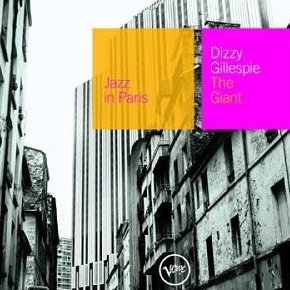
Dizzy Gillespie (trumpet), Johnny Griffin (tenor sax), Kenny Drew (piano), Niels-Henning Ørsted Pedersen (bass), Kenny Clarke (drums),
Humberto Canto (congas)
.Composed by Dizzy Gillespie
.Recorded: Paris, France, April 13, 1973
Rating: 87/100 (learn more)
Originally released in Europe as The Giant, this album was retitled to avoid confusion with two other Gillespie releases with similar titles released within several years of this recording. The composition features Brazilian-inflected melody and groove, an idiom in which Gillespie was very comfortable, due in part to his extensive touring of South America as a cultural ambassador for the United States Government. The band assembled for this Paris session features several American expatriates (Griffin, Drew and Clarke), as well as Pedersen, a native of the Netherlands. Highlights include the solid foundation supplied by Clarke and Pedersen and the ensemble passages and subsequent improvisations by Griffin and Gillespie.
Reviewer: Mark Lomanno
Dizzy Gillespie: Tenor Song
Musicians:
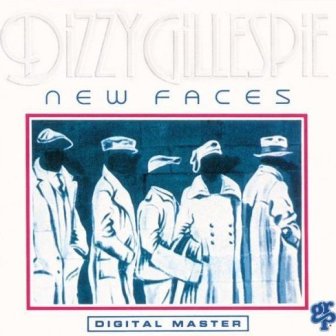
Dizzy Gillespie (trumpet), Branford Marsalis (tenor sax), Kenny Kirkland (piano),
Lonnie Plaxico (bass), Robert Ameen (drums)
.Composed by Dizzy Gillespie
.Recorded: New York, 1984
Rating: 83/100 (learn more)
This project joined Gillespie with some much younger musicians. Though not his best, the album is a success, even though at times Dizzy's facility noticeably falters. "Tenor Song," which he composed for this session, features a samba-like feel and solos by Kirkland, Gillespie, and Marsalis. For its groove and execution, Marsalis's improvisation is the finest of the three, although it's unfortunately cut short by an ensemble counterline that reintroduces the melody. The performance's best aspect is the composition (the melody and its arrangement), which outshines a somewhat clumsily articulated Brazilian feel that tends to get in the way of the soloists.
Reviewer: Mark Lomanno
Dizzy Gillespie: A Night in Tunisia (1989)
Track
A Night in Tunisia (1989)
Group
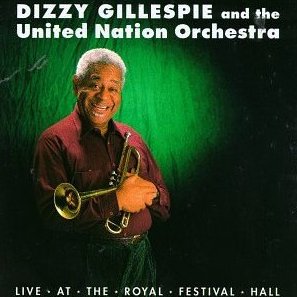
Dizzy Gillespie and the United Nations Orchestra
CD
Live at the Royal Festival Hall 1989 (Enja 79658)
Musicians:
Dizzy Gillespie (trumpet), James Moody (tenor sax), Claudio Roditi (trumpet), Arturo Sandoval (trumpet, piccolo trumpet),
Slide Hampton, Steve Turre (trombones), Paquito D'Rivera (alto sax), Mario Rivera (tenor sax), Danilo Perez (piano), Ed Cherry (guitar), John Lee (bass), Airto Moreira (percussion), Giovanni Hidalgo (congas, bongo), Ignacio Berroa (drums)
.Composed by Dizzy Gillespie & Frank Paparelli
.Recorded: live at the Royal Festival Hall, London, England, June 10, 1989
Rating: 95/100 (learn more)
Of all the versions available, this live recording of "A Night in Tunisia" is noteworthy for its all-star cast and eight minutes of closing cadenzas, each of which is a composition-in-miniature: (1) Gillespie makes a brief, nuanced statement, an invitation to the others that could be construed as a passing of the (jazz) standard; (2) James Moody weaves themes through harmonically adventurous territory, in and out of the highest registers of his tenor sax; (3) trumpeter Claudio Roditi picks up on Moody's soulful suggestions and transports the band into a samba feel, using his horn to mimic the sound of a Brazilian cuica drum; and (4) Arturo Sandoval changes directions completely, taking the audience through a tour of classical themes on piccolo trumpet before switching back to his usual horn for a four-octave sequence of Gillespie's signature ending.
Reviewer: Mark Lomanno
Dizzy Gillespie: Billie's Bounce
Musicians:
Dizzy Gillespie (trumpet), Benny Golson (tenor sax), David Snchez (tenor sax), George Mraz (bass),
Danilo Perez (piano), Kenny Washington (drums)
.Composed by Charlie Parker
.Recorded: live at the Blue Note, New York, January 23-25, 1992
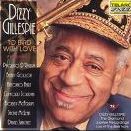
Rating: 93/100 (learn more)
One of Gillespie's final albums was this tribute to Charlie Parker, recorded live at the Blue Note in New York, as part of a celebration of Dizzy's 75th birthday. This track shows little of the dexterity for which Dizzy was famous, but rather showcases two other aspects of his genius: his ability to assemble exemplary bands and his highly developed sense of phrasing. There are fine solos all around, including a masterful contribution by Mraz, who draws loud cheers from both his bandmates and the audience. The far-reaching and probative solos by Golson and Sanchez are marked contrasts to Gillespie's subtle, thematic improvisation, whose nuance could be called Armstrong-esque.
Reviewer: Mark Lomanno
Add your comments here