THE DOZENS: DEXTER GORDON by Eric Novod

Dexters Deck
Dexter Gordon at the Three Deuces (1946)
Artwork by Thomas Andersen
Long Tall Dexter Gordon played a vital role in developing and sustaining the bebop vocabulary on the tenor saxophone. He grew up as a West Coast Basie addict and a Pres devotee; played with bands of Lionel Hampton, Fletcher Henderson,and Louis Armstrong; entered the swing to bop school that was the Billy Eckstine Orchestra; and then performed with both Dizzy Gillespie and Charlie Parker during the prime years of bop formulation. And at that point in the mid-1940s, Gordons career was only getting started.
From there, Gordon performed and recorded in America and Europe for more than four decades, churning out classic session after classic session for the Blue Note, Steeplechase and other labels. His discography is immense, making the consistent high-quality of his recorded output all the more impressive. While a handful of tenor saxophonists may have come along to make more dynamic splashes in shorter periods of time, Dexter Gordon is the architect of his genres sound on his instrumentleaving behind a musical legacy that reveals one of the more charismatic, pure and complete individual sounds in jazz.
Throughout the twelve tracks that follow, well return to the same basic characteristics again and againbebop line construction, clever quoting, a bluesy hard-bop appetite, and stunning ballad offerings with his trademark expansive tonebecause Gordon appeared perfectly happy to work with what he knew best. His stylistic reliability therefore made his rare experimentation even more intriguing, and there are a few boundary-pushing tracks (by Gordons standards, anyway) included in the dozen below.
Dexter Gordon: I've Found A New Baby
Track
Ive Found a New Baby
Artist
Dexter Gordon (tenor sax)
CD
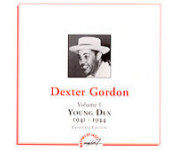
Young Dex 1941-1944 (Masters of Jazz MJCD 112)
Musicians:
Dexter Gordon (tenor sax), Harry "Sweets" Edison (trumpet), Nat 'King' Cole (piano),
or Johnny Miller (bass); Clifford Juicy Owens (drums)
.Composed by Jack Palmer and Spencer Williams
.Recorded: Los Angeles, Late 1943.
Rating: 92/100 (learn more)
Ive Found a New Baby is the first track listed on the first Dexter Gordon-led recording session in late 1943. Situated in time after Gordons period with Lionel Hampton and before his big band work with Louis Armstrong and early bop work with Billy Eckstine, Dizzy Gillespie, and Charlie Parker, these recordings present a young Pres disciple bursting at the seams with bouncy accents and sweet, bluesy lines. His entire solo here, but especially his first few phrases, are as cool as it getschock full of those dominating sixths and ninths that ruled the Pres-to-Bird era of harmonic development. This performance also proves that, aside from the overwhelming Pres influence, Gordon was also flirting with an earthy, aggressive tone that seemed part reminiscent of Coleman Hawkins and Illinois Jacquet, the latter being Gordons tenor partner in Lionel Hamptons group. While there are a few hints of some rhythmically investigational playing here, Gordon is never one to push too far too fast, making Ive Found a New Baby the prime example of swing-era trained musician developing the proper tools to make bop headway in the near future.
Reviewer: Eric Novod
Dizzy Gillespie: Blue N Boogie
Track
Blue N Boogie
Group
Dizzy Gillespie Sextet
CD
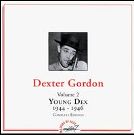
Young Dex 1944-1946 (Masters Of Jazz MJCD 128)
Musicians:
Dizzy Gillespie (trumpet), Dexter Gordon (tenor sax), Chuck Wayne (guitar), Shelly Manne (drums),
Frank Paparelli (piano), Murray Shipinski (bass)
.Composed by Dizzy Gillespie and Frank Paparelli
.Recorded: New York, February 9, 1945
Rating: 95/100 (learn more)
This vital track from early 1945 captures the various levels of bebop sophistication during its prime years of formulation. Pianist Frank Paparelli, who co-wrote this tune with Diz, is stuck between stations throughout his improvisationtrying his very best to create a bop-ish statement andlets leave it at that. Dexter Gordon comes next, and offers a mostly horizontal improvisation where he is fast approaching the creation of an inimitable bop statement without necessarily copping the double-timed rhythmic styling of Bird or Diz. The master-class is in session upon Gillespies blistering first line, and his comfort level with the bebop vocabulary is, of course, flawlessly executed and exciting as heck. No less crucial than Dizzys rightness, though, is Dexters overall approach and thought-process. His contrasting style offers the more discreet, minimalist, thinking-through-the-changes approach to bop that would come to define Gordons career and provide an enormous influence on the bop and hard-bop worlds.
Reviewer: Eric Novod
Dexter Gordon: Dexter Rides Again
Track
Dexter Rides Again
Group
Dexter Gordon Quintet
CD
Young Dex 1944-1946 (Masters Of Jazz MJCD 128)
Musicians:
Dexter Gordon (tenor sax), Bud Powell (piano), Max Roach (drums), Curly Russell (bass),
Leonard Hawkins (trumpet)
.Composed by Dexter Gordon and Bud Powell
.Recorded: New York, January 29, 1946
Rating: 92/100 (learn more)
Directly following performances with Dizzy Gillespie and Charlie Parker in 1945, Dexter Gordon capitalized on his bop momentum by recording this classic date as a leader with the top-notch bop rhythm section of Bud Powell, Curly Russell, and Max Roach. Digging into the changes here more than ever before, Gordons solo on Dexter Rides Again strings together several genuine, stand-alone bebop lines without sacrificing a traditional overarching storyline. Check out 00:51-00:59 for one of the strongest developmental lines from the middle of his solo.
There are two other important points to note here. First, the true enormity of Gordons trademark wide-open tone is more evident here than ever before. Perhaps because the Pres aesthetic, the Hawkins/Jacquet-inspired strong tone, and the bebop vocabulary have finally coalesced into a unified Dexter Gordon sound for the first time here, theres a jovial, declaratory quality to these proceedings. Fortunately, this atmosphere is not a one-time offer, as these magnetic Gordon characteristics govern all of his future sessions.
Finally, the famous Jingle Bells quote should be pointed outnot because its necessarily his most creative, but because its yet another example of a major Gordon mainstay. Not only does he find a witty quote that works, but, as all capable quoters do, he artistically alters the final few notes to begin a new improvised line over the next chord without missing a step. All things considered, Dexter Rides Again is an ideal three-minute encapsulation of the newly arrived and fully defined Gordon style.
Reviewer: Eric Novod
Dexter Gordon & Wardell Gray: The Hunt
Track
The Hunt
Artist
Dexter Gordon (tenor sax) and Wardell Gray (tenor sax)
CD
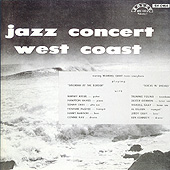
Jazz Concert West Coast, Vol. 1 (Savoy 12012)
Musicians:
Dexter Gordon (tenor sax), Wardell Gray (tenor sax), Sonny Criss (alto sax), Howard McGhee (trumpet), Trummy Young (trombone), Hampton Hawes (piano), Barney Kessel (guitar),
Leroy Gray (bass), Ken Kennedy (drums)
.Composed by Ozzie Cadena
.Recorded: Elks Auditorium, Los Angeles, California, July 6, 1947
Rating: 87/100 (learn more)
Two of Wardell Grays and Dexter Gordons tenor duels, The Chase and The Hunt, rank among the all-time highlights of west coast jazz. While The Chase, recorded a month earlier on June 12, was the seven-minute top-seller, The Hunt is an all-out 18-minute jam session where several Cali pioneers skip the melody altogether in order to roll up their sleeves and get down and dirty with their improvisations. This track represents so many things at once: bop that doesnt really sound like Bird and Diz; a rare jazz performance where audience interaction plays an important role in the tunes development; and two leading west-coast tenors proving that they can jam as hard as any of those dominant east coasters. The tracks importance is encapsulated by a singular moment of jazz history intersecting with another landmark of American cultural history, when Dean Moriarity himself, of Kerouacs On the Road, remembers listening to a wild bop recordThe Hunt, with Dexter Gordon and Wardell Gray blowing their tops before a screaming audience that gave the record fantastic frenzied volume. A historically significant track featuring Gordon at his most vibrant.
Reviewer: Eric Novod
Dexter Gordon: You've Changed
Musicians:
Dexter Gordon (tenor sax), Freddie Hubbard (trumpet), Horace Parlan (piano), George Tucker (bass), Al Harewood (drums).
Composed by Bill Carey and Carl Fischer
.Recorded: Englewood Cliffs, New Jersey, May 6, 1961
Rating: 95/100 (learn more)
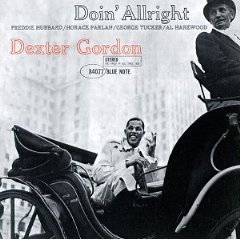
With the exception of a couple of bop/hard-bop sessions (Daddy Plays the Horn and Dexter Blows Hot and Cool), the 1950s was largely a period of narcotics-induced inactivity for Dexter Gordon. As the sixties began, Gordons performance career reemerged with his acceptance of Alfred Lions offer to record for the Blue Note label. Whether he recorded in the U.S. or in Europe (the latter was Gordons home from 1962-1976), Gordon produced some of his finest playing, compositions, and backing bands during his seven-year relationship with the famed label.
While much of Gordon's playing on his Blue Note debut, Doin Alright, reinforces his forcefully refined bop styling of the late 1940s and 50s, this track presented a new trend in Dexters recording careerhis penchant for beautiful ballad playing. While he had certainly recorded ballads before this rendition of Youve Changed, one would hardly call Gordon a ballad expert based on his playing in the 1940s and 1950s. He only needed one Blue Note record to institute his mastery of the form, however, as evidenced throughout this faultlessly executed track. Note the eerily beautiful opening line, his ability to present romantic playing at a louder overall volume (for a ballad at least), and his pitch-perfect knack for knowing when to stretch out over the changes and when to reel himself back in and quote from the Youve Changed melody.
Reviewer: Eric Novod
Dexter Gordon: Cheese Cake
Musicians:
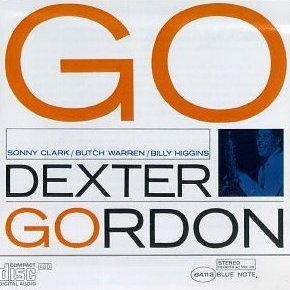
Dexter Gordon (tenor sax), Sonny Clark (piano), Butch Warren (bass), Billy Higgins (drums).
Composed by Dexter Gordon
.Recorded: Englewood Cliffs, New Jersey, August 27, 1962
Rating: 95/100 (learn more)
Once asked which of his own Blue Note albums his personal favorite was, Gordon rather surprisingly offered a response, declaring: I would have to say it is Go!the perfect rhythm sectionmade it possible for me to play whatever I wanted to play.
One listen to Cheese Cake reveals that Dexters comment really isnt much of an overstatement. Right off the bat, one cant help but notice the magnetism of Billy Higginss and Dexter Gordons shared proclivity towards vigorous playing with a tender touch. They are perfect foils for one another, and its no surprise that Higgins became the saxophonists drummer of choice for much of the remainder of his Blue Note period and during years beyond.
Clark is also in fine form here, comping at a somewhat softer, entirely perfect volume (an art unto itself) that allows him to busily predict Gordons moves without stepping on his toes. Whats then left to discuss is whatever Dexter wanted to play. In typical Gordon form, his improvisation begins with some standard, unhurried bebop fare and is slowly but surely enhanced by quotes, hints of the blues, and sudden vertical leaps that Gordon unpacks and prolongs along the way. Finally, note how Gordon adds a bit more length to the end of many of his eighth notes to achieve a deep, straightened-out-swing feel. A textbook bebop/hard-bop performance.
Reviewer: Eric Novod
Dexter Gordon: A Night In Tunisia
Track
A Night in Tunisia
Artist
Dexter Gordon (tenor sax)
CD
Our Man in Paris (Blue Note CDP 7 46394-2)
Musicians:
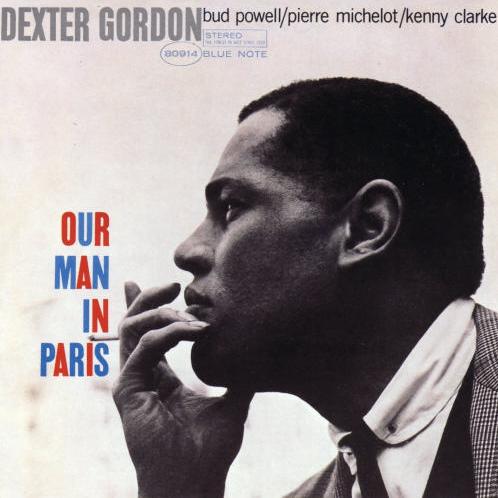
Dexter Gordon (tenor sax), Bud Powell (piano), Pierre Michelot (bass), Kenny Clarke (drums).
Composed by Dizzy Gillespie
.Recorded: CBS Studios, Paris, France, May 23, 1963
Rating: 90/100 (learn more)
Discouraged by the palpable lack of appreciation throughout the first twenty years of his career, Dexter Gordon relocated to Europe from 1962-1976. Even though he was still under contract with Blue Note and returned to the States for sessions and occasional gigs, Gordon appeared both fulfilled and re-energized by the European scene in the 1960s and recorded some of his finest live music at the Montmartre Club in Copenhagenhandfuls of which have been released on disc.
Dexter was certainly not the only American in Europe during these years, and its the reunion of Dexter Gordon with fellow expat Bud Powell (from their classic bop session seventeen years earlier) and famed American swing-to-bop drummer Kenny Clarke that combine to form one of Gordons finest studio efforts during his decade-and-a-half in Europe. A super relaxed solo-break begins Gordons improvisation over this bebop staple, but this serene atmosphere doesnt last long. In the blink of an eye, Dexter has committed to one of his more heated improvisationscomplete with repetitive Coltrane-esque yelps that make us wonder if what were hearing is stemming from a place of joy or ferocity, or perhaps a bit of both. Challenging and entirely musically rewarding, Our Man in Paris comprises an albums worth of fascinating listening.
Reviewer: Eric Novod
Dexter Gordon: Kong Neptune
Musicians:
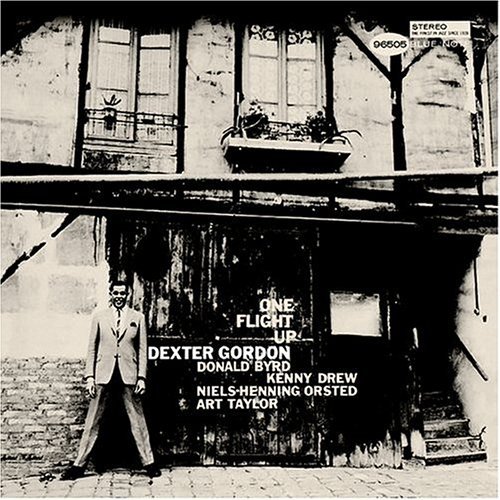
Dexter Gordon (tenor sax), Kenny Drew (piano), Niels-Henning Ørsted Pedersen (bass), Art Taylor (drums).
Composed by Dexter Gordon
.Recorded: Barclay Studios, Paris, France, June 2, 1964
Rating: 95/100 (learn more)
Recorded in Paris in 1964 and featuring two of Gordons most familiar European sidemen (pianist Kenny Drew and bassist Niels-Henning Orsted Pedersen), One Flight Up reveals one of the more intriguing relationships in the history of jazz influenceDexter Gordon and John Coltrane. Dexter Gordons line construction and big, open sound was a major early influence on Coltrane. And while Trane initially took a little while to develop his craft, we all know that once he did, he altered the course of how just about everyoneGordon includedapproached their instrument. At the height of Coltranes creative powers in 1964, Gordon, in turn, released One Flight Up, and while its certainly not free or avant-garde, it features a kicked-in-the-rear Gordon eager to stretch out more than ever before.
Whether listening to the 18+ minute Tanya, the 11+ minute Coppin the Haven, or the 11+ minute Kong Neptune, one gets a glimpse of a Gordon who is relying a bit more on energy, texture, and mood than on careful construction of bop lines. While Tanya may be the most adventurous and Trane-like (although it proves that not even Art Taylor could pull off a legit Elvin Jones imitation), Kong Neptune comes closest to achieving a fully cohesive atmosphere. Note how Gordon utilizes the full range of his horn for certain lines and then alternately focuses on repetitive, single-note lines to provide a more-tension-than-release feel. A rigorous, self-aware performance featuring Gordon at his most creative.
Reviewer: Eric Novod
Dexter Gordon: Everybodys Somebodys Fool
Track
Everybodys Somebodys Fool
Artist
Dexter Gordon (tenor sax)
CD
Gettin Around (Blue Note CDP 7 46681-2)
Musicians:
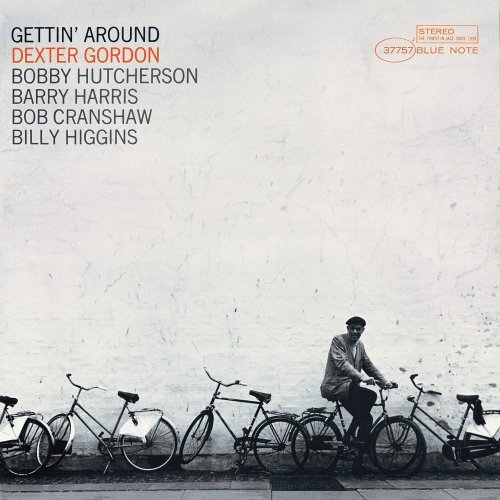
Dexter Gordon (tenor sax), Bobby Hutcherson (vibes), Barry Harris (piano), Bob Cranshaw (bass), Billy Higgins (drums).
Composed by Harold Greenfield and Jack Keller
.Recorded: Englewood Cliffs, New Jersey, May 28, 1965
Rating: 98/100 (learn more)
After some captivating if uncharacteristic experimentation in 1963-64, Gordon returned to his classic sound with Gettin Around, a bebop/hard-bop masterwork which found the saxophonist in absolute top form. Throughout the entire disc, Gordon is still holding onto some of his new darker, moodier concepts while (re)focusing on his logical, straight-ahead solo construction. Le Coiffer, Flick of a Trick, Manha de Carnival and Shiny Stockings are all highlights that feature the charming frontline of Gordons tenor and Hutchersons vibes, supported by an all-star hard-bop rhythm section of Harris, Cranshaw and Higgins. The highlight of highlights from Gettin Around once again reveals itself in ballad form on Everybodys Somebodys Fool. While much of the solo space here is reserved for an excellent statement from pianist Harris, Gordon's poignantly improvised statement of the melody is faultless, and comes as close as any track can to fully revealing the dichotomous elements of Gordons soundpowerful yet sensitive, insistent yet speculative, improvised yet utterly defined.
Reviewer: Eric Novod
Dexter Gordon: Boston Bernie
Track
Boston Bernie
Artist
Dexter Gordon (tenor sax)
CD
L.T.D. Live at the Left Bank (Prestige PRCD 11018-2)
Musicians:
Dexter Gordon (tenor sax), Bobby Timmons (piano), Victor Gaskin (bass),
Percy Brice (drums)
.Composed by Dexter Gordon
.Recorded: The Famous Ballroom, Baltimore, Maryland, May 4, 1969
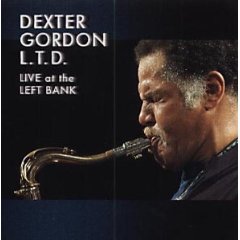
Rating: 92/100 (learn more)
In the spring of 1969, seven years before he would make his dramatic permanent return to the United States, Gordon took a trip to America, where he would play three dates that led to the release of five albums of prime Gordon material. Three of the five records consist of material from studio sessions on April 2nd and 4th (Power!, The Tower of Power!, and More Power!), and the two other albums, L.T.D. and XXL, contain music from a single live outing in Baltimore on May 4th.
From what I can find, L.T.D. and XXL are the only two recordings that find Dexter Gordon and Bobby Timmons playing together, and their instant bond makes these albums true gems in the discographies of both musicians. In fact, I dont think Ive ever heard Gordon have more fun playing than on these two recordings, evidenced here by the commonly-called Gordon original, Boston Bernie. Once Gordon and Timmons get started on this trackalong with most others on these two discsits tough to stop them. The solos are very long but are absolutely jam-packed with an endless supply of effortless ideas. Throughout Gordons improvisation, the usual combination of quotes, spiraling bop lines and single-note motives abound, but on this specific track, the addition of a heightened awareness of his gospel/blues surroundings make this peppery Gordon solo an exclusive gem.
Reviewer: Eric Novod
Dexter Gordon: The Shadow of Your Smile
Track
The Shadow of Your Smile
Artist
Dexter Gordon (tenor sax)
CD
The Shadow of Your Smile (Steeplechase SCCD 31206)
Musicians:
Dexter Gordon (tenor sax),
Lars Sjosten (piano), Sture Nordin (bass), Fredrik Noren (drums)
.Composed by Johnny Mandel and Paul Francis Webster
.Recorded: Stockholm, Sweden, April 21, 1971
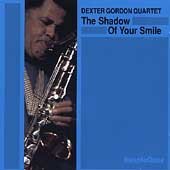
Rating: 94/100 (learn more)
If you ask someone to connect Dexter Gordon to a single record label, Id guess that nine times out of ten, Blue Note is deservedly going to be the label uttered. But perhaps just as rich and rewarding a historical legacy is Gordons relationship with Steeplechase, the Danish label with which he recorded countless albums throughout his European sojourn from 1962-1974. Just a quick rundown reveals how much there is to offerthe seven-volume Dexter in Radioland series documenting his extended run at the famed Montmartre club in 1964, his individual mid-sixties sessions including Loose Walk and Wee Dot, and the late 1969 dates that led to the Swiss Nights releases.
The Shadow of Your Smile is among the first of Gordons Steeplechase releases from the 1970s. Supported with a light touch by a Swedish backing band, Gordon is in the mood to play slowly here, and does so exquisitely. Shadow of Your Smile, along with his longtime favorite, Youve Changed, are two of the ballads that Gordon played most frequently, and any version you may find speaks to Gordons dedication to staying true to the original lyric. On this one, he chooses to embellish that lyric, and later develop his improvisation, with a heightened sense of open rhythmic space. Were so used to hearing Gordon seem to know exactly where hes going next that listening to a more speculative, slow-searching statement is an attractive and unique late-career experience.
Reviewer: Eric Novod
Dexter Gordon: Its You or No One
Track
Its You or No One
Artist
Dexter Gordon (tenor sax)
CD
Homecoming Live at the Village Vanguard (Columbia CD 46824)
Musicians:
Dexter Gordon (tenor sax), Woody Shaw (trumpet), Ronnie Matthews (piano), Stafford James (bass), Louis Hayes (drums).
Composed by Sammy Cahn and Jule Styne
.Recorded: Village Vanguard, NYC, December 11-12, 1976
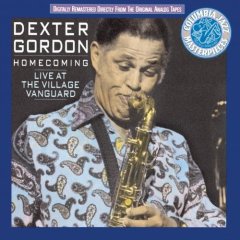
Rating: 95/100 (learn more)
After thirty-plus years in the business with a respected yet somehow undervalued reputation, Dexter Gordon received an astounding heros welcome upon his return engagement to the United States with a week-long run at the Village Vanguard in December 1976. Seemingly all at once, the jazz world realized that there werent many musicians whose resumes were as entirely representative of jazz history as Gordonsfrom swing to bop to hard-bop, from America to Europe and now back to America again. From December 76 on, the jazz community, filled with many new faces who were just kids when Gordon last resided in America, made up for lost time by celebrating Gordons life and music.
The playing on Its You or No One is emotional and raw. One could almost sense that the Vanguard might not have felt this kind of energy for a quite a few years. Backed by Woody Shaw and his working band at the time, which featured the propulsive drummer Louis Hayes, Gordons playing is fun and wittyand his bop lines are infused with an excited grittiness not heard so strongly since his early bop recordings. Shaw is in top form here as well, displaying such effortless talent that another review of this track could rightly focus on Shaws sustaining impact on the post-bop trumpet world. But its Gordons party, and his solo here encapsulates the classic up-tempo Gordon bop style with his never-ending focus on improvisations with clear beginnings, middles, and ends. As legend (or the original liner notes) has it, Charles Mingus showed up to one of the rehearsals for this engagement and declared to Dexter: youre gonna be teachin New York some stuff, man. Some lessons. He did indeed.
Reviewer: Eric Novod
Add your comments here