THE DOZENS: FIFTIES FEMMES FATALES by Alan Kurtz
In 1958, as evidence that love's fever is a long-running malady, singer/lyricist Peggy Lee alluded to Romeo & Juliet (Thou givest fever when we kisseth), and further cited Captain Smith & Pocahontas's "very mad affair" of the early 1600s. Miss Lee's historicity may be questionable, but there's no doubt that women vocalists in the 1950s made jazz a very mad affair.
From Forties holdovers June Christy, Ella Fitzgerald, Billie Holiday, Peggy Lee, Anita O'Day, Sarah Vaughn and Dinah Washington to Fifties newcomers Blossom Dearie, Julie London, Carmen McRae, Nina Simone and Dakota Staton, jazz's femmes fatales gave us fever in the morning, delirium all through the night.
Give a listen to these 12 tempting tamperers with the body's thermoregulatory equanimity, and we think you'll agree that Dr. Lee's diagnosis was astute: "What a lovely way to burn."
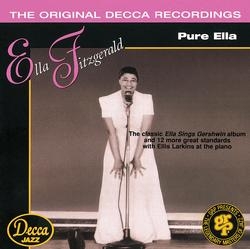
Ella Fitzgerald: But Not For Me
Recorded: New York, September 12, 1950
Rating: 100/100 (learn more)
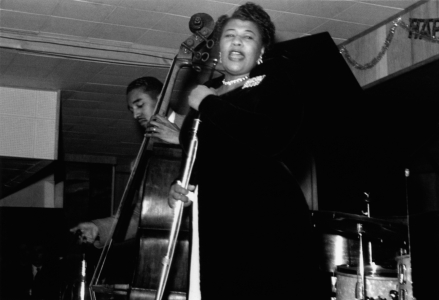
Ella Fitzgerald and Ray Brown at Birdland,
photo by Marcel Fleiss
"I never knew how good our songs were," Ira Gershwin allowed, "until I heard Ella sing them." As the 1950s dawned, America's First Lady of Song wasn't yet lugging around the excess baggage of superstardom that would weigh heavily on her voluminous Song Book series later in the decade with their kitschy Las Vegas- type arrangements. In 1950, traveling light, Ella could arrive at the studio with a solitary accompanistthe impeccably sensitive Ellis Larkinsand reduce a song to its sparkling essence with the graceful simplicity of a world-class diamond cutter. We never knew how good Ella was until we heard this track. Ella-gant.
Reviewer: Alan Kurtz
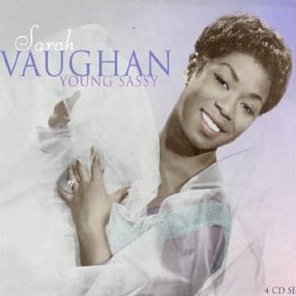
Sarah Vaughan: Come Rain or Come Shine
Musicians:
Sarah Vaughan (vocals), Miles Davis (trumpet), Bennie Green (trombone), Tony Scott (clarinet), Budd Johnson (tenor sax), Jimmy Jones (piano), Mundell Lowe (guitar), Billy Taylor (bass), J.C. Heard (drums).
Composed by Harold Arlen & Johnny Mercer
.Recorded: New York, May 19, 1950
Rating: 90/100 (learn more)
By 1950, the finest singer of the bebop era had done her best to put bop behind her. Since bop was primarily instrumental music dominated by male eccentrics, there wasn't much room for female vocalists, no matter how skillful. After her mid-1940s record sessions with Diz, Bird, Bud, et al., Sarah Vaughan shunned such company and avoided their material. During the 1950s, Sarah's singles were often on the pop charts, but her relationship with jazz was skittish. So it's good that we catch her early in the decade for "Come Rain or Come Shine." Sarah, mannerisms at a minimum, shines.
Reviewer: Alan Kurtz
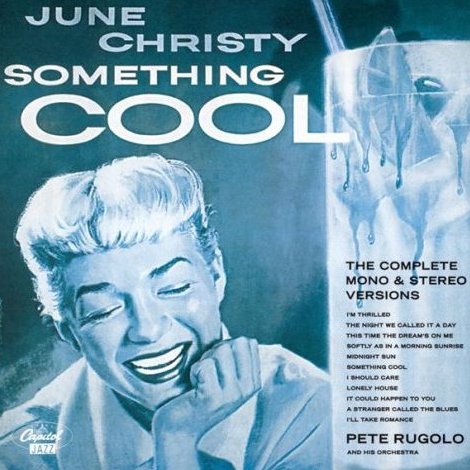
June Christy: Something Cool
Musicians:
June Christy (vocals),
with 17-piece band featuring Gus Bivona (alto sax). Arranged by Pete Rugolo
.Composed by Bill Barnes
.Recorded: Los Angeles, August 14, 1953
Rating: 93/100 (learn more)
In 1953, no longer the '40s flychick scatting "How High the Moon" with Stan Kenton, June Christy turned to dramatic readings of saloon songs. Bill Barnes's "Something Cool" is incisive storytelling, as June enacts the first-person narrative of a self-deluding barfly. Think Blanche DuBois as lounge lizard. Ordinarily, she would decline to drink with a stranger, but relents because she's "so terribly far from home." Citing past triumphsa house with countless rooms, 15 different beaus, off to Paris in the fallthis gal fools herself more than she impresses the guy who stops to buy her something cool. A remarkable 4-minute drama.
Reviewer: Alan Kurtz
Dinah Washington: There is No Greater Love
Musicians:
Dinah Washington (vocals), Junior Mance (piano), Keter Betts (bass), Max Roach (drums).
Composed by Isham Jones & Marty Symes
.Recorded: Los Angeles, August 14, 1954

Rating: 94/100 (learn more)
Forget the frills. Dinah Washington would just plant her feet and belt a song, lustily and often tongue in cheek. Here, before an appreciative studio audience, Dinah rattles the rafters with a normally tranquil ballad. When Dinah declaims (with diction as precise as Nat King Cole's) "There is no greater love / Than what I feel for you," it's plain that if you dare doubt her, she'll come smack you upside the head to prove her affection. Dinah was a delight.
Reviewer: Alan Kurtz
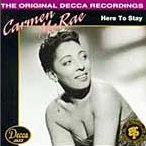
Carmen McRae: Love Is Here to Stay
Track
Love Is Here To Stay (aka Our Love Is Here To Stay)
Artist
Carmen McRae (vocals)
CD
Here To Stay (Decca GRD-610)
Musicians:
Carmen McRae (vocals), Dick Katz (piano), Mundell Lowe (guitar), Wendell Marshall (bass), Kenny Clarke (drums).
Composed by George & Ira Gershwin
.Recorded: New York, June 14, 1955
Rating: 91/100 (learn more)
What distinguishes a jazz vocalist from a pop singer? It can't be improvisation. Aside from occasional scatting (nonsense syllables), both jazz and pop singers stick pretty much to the lyrics as written. Jazz singers take more liberties with a melody, but must be careful lest their embellishments prevent listeners from following the tune. (Otherwise, what's the point?) The biggest difference is rhythm. Jazz singers are freer in phrasing their words. Take Carmen McRae. At age 35, early in her belated recording career, McRae shows her maturity with a remarkable rhythmic creativity. She started late, but Carmen McRae was here to stay.
Reviewer: Alan Kurtz
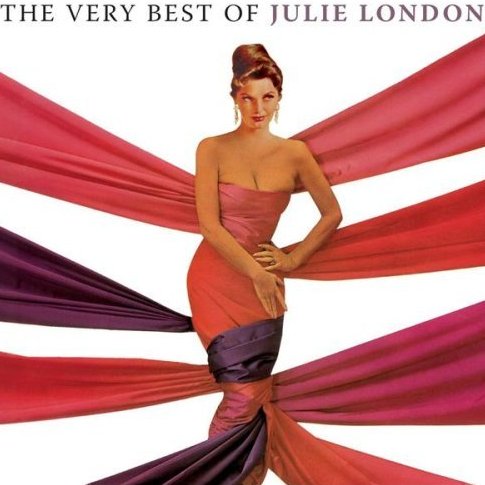
Julie London: Cry Me a River
Musicians:
Julie London (vocals), Barney Kessel (guitar), Ray Leatherwood (bass).
Composed by Arthur Hamilton
.Recorded: Los Angeles, October 1955
Rating: 97/100 (learn more)
After costarring at 18 in a jungle movie with Olympic swimmer Buster Crabbe, Julie London transitioned from fetching ingnue to sultry chanteuse. Her 1955 single "Cry Me a River" (water again) swirled 15 weeks among the Top 50, swept her debut LP into the Top 10, splashed her back onscreen in The Girl Can't Help It, and landed her on Life's cover. Blessed with Barney Kessel's hush-hush backing and a lyric deft enough to use "plebian" unpretentiously, Julie rekindles the intimacy and irony of those smoky, dimly lit, off-the-beaten-track little bars where 1950s jazz sulked too long over a watery drink.
Reviewer: Alan Kurtz
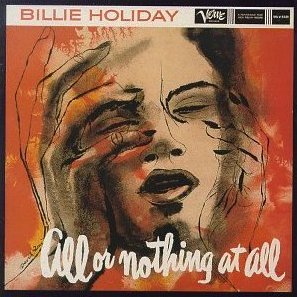
Billie Holiday: Comes Love
Musicians:
Billie Holiday (vocals), Harry "Sweets" Edison (trumpet), Ben Webster (tenor sax), Jimmy Rowles (piano), Barney Kessel (guitar), Red Mitchell (bass), Alvin Stoller (drums).
Composed by Arthur Altman & Jack Lawrence
.Recorded: Hollywood, January 3, 1957
Rating: 95/100 (learn more)
By the mid-1950s, Billie Holiday had been rescued by a record label (Verve) with the wisdom to scrap her former label Decca's desperate late '40s attempts at commercialization, and put Billie back where she belongedwith a small jazz band. And what a band! True, Lady's voice had seen better days, but the more her notes wavered, the more unwavering became her struggle. Billie carried about her the nobility we accord to survivors of some large tragedy. In her case, the tragedy was her life. She may have been a wreck, but she was still the damnedest jazz singer ever.
Reviewer: Alan Kurtz
Anita O'Day: S'Wonderful / They Can't Take That Away From Me
Track
S'Wonderful / They Can't Take That Away From Me
Artist
Anita O'Day (vocals)
CD
Anita Sings the Most (Verve 829 577-2)
Musicians:
Anita O'Day (vocals), Oscar Peterson (piano), Herb Ellis (guitar), Ray Brown (bass),
John Poole (drums)
.Composed by George and Ira Gershwin
.Recorded: Chicago, January 31, 1957

Rating: 97/100 (learn more)
"Swing you into bad health" is the ultimate jazz compliment. "Man, that drummer will swing you into bad health!" The reason bad health is prized above good health purportedly goes back to early 20th-century New Orleans, where admission to the St. James Infirmary gave a musician a leg up on gainful employment in the band that trailed the hearse bearing a patient whose Infirmary stay had ended unhappily. Anyhow, among 1950s vocalists nobody could swing you into bad health better (worse?) than Anita O'Day, ably assisted in her surgery by the eminent Doctors Gershwin and Consulting Professor Peterson.
Reviewer: Alan Kurtz
Blossom Dearie: They Say It's Spring
Track
They Say It's Spring
Artist
Blossom Dearie (vocals)
CD
Give Him the Ooh-La-La (Verve 314 517 067-2)
Musicians:
Blossom Dearie (vocals), Herb Ellis (guitar), Ray Brown (bass), Jo Jones (drums).
Recorded: New York, September 12, 1957

Rating: 100/100 (learn more)
Confronted with Blossom Dearie, jazz fans divide faster than a cell undergoing cytokinesis. Either you find her kittenishly enchanting or insufferably coy. Call us pushovers for adorable felines, but we're enchanted. Her wispy voice, which wouldnt carry without a mike across a cocktail napkin, is deceptive. Far from being baby-chick helpless, this grown chick is a survivor. Her heart's been broken, alright. More than once. But throw in the towel? Fat chance! Listen to Blossom make this tender, little-known song wistfully her own. And when she concludes, "It wasn't spring, 'twas you," it's we whose hearts break. Blossom springs eternal.
Reviewer: Alan Kurtz
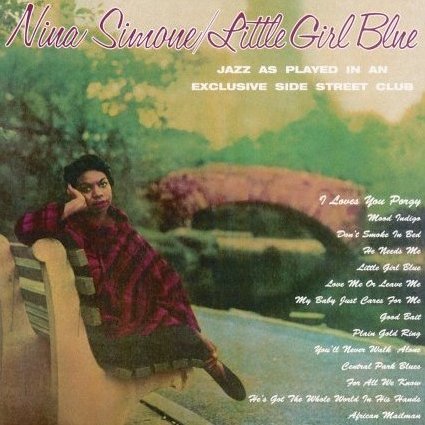
Nina Simone: Mood Indigo
Musicians:
Nina Simone (vocals, piano), Jimmy Bond (bass), Albert "Tootie" Heath (drums).
Composed by Duke Ellington, Barney Bigard & Irving Mills
.Recorded: New York, 1957
Rating: 95/100 (learn more)
A classically trained pianist, Nina Simone kicks off Ellington's "Mood Indigo" with a two-fisted display that sounds amazingly like Duke, fires off a fugue worthy of J.S. Bach, and finally vocalizes with a youthful (age 24) defiance that thankfully would never mellow. When she sings "You ain't never been blue / Till you've had that mood indigo," Simone is clearly invoking not personal depression but her homeland's 300-year collective black experience. Her militant Afro-Americanism and kick-ass feminism would both find wider voice in the 1960s and '70s. But Nina Simone was there first, a pioneer woman on the Fifties frontier.
Reviewer: Alan Kurtz
Dakota Staton: The Late, Late Show
Track
The Late, Late Show
Artist
Dakota Staton (vocals)
CD
The Late, Late Show: Golden Classics (Collectables COL-CD-5231)
Musicians:
Dakota Staton (vocals), Jonah Jones (trumpet), Hank Jones (piano),
others unidentified
.Composed by Murray Berlin & Roy Alfred. Arranged by Van Alexander
.Recorded: Hollywood, February 28, 1957

Rating: 93/100 (learn more)
Dakota Staton was jazz's Ethel Merman. Her booming voice didn't just reach the auditorium's last row, it bolted out the door, raced down the street and swept out to sea. When she wriggled onstage in a low-cut, form-fitting satin gown with matching sash slung sexily to one side, it seemed a safe bet Dakota wasn't there to conduct a civics lesson. And sure enough, when she swung into her hit "The Late, Late Show," Staton set the drunks with swizzle sticks to drumming on their ice-laden Scotch glasses (thereby annoying hell out of her musicians). It was sooooo Fifties!
Reviewer: Alan Kurtz
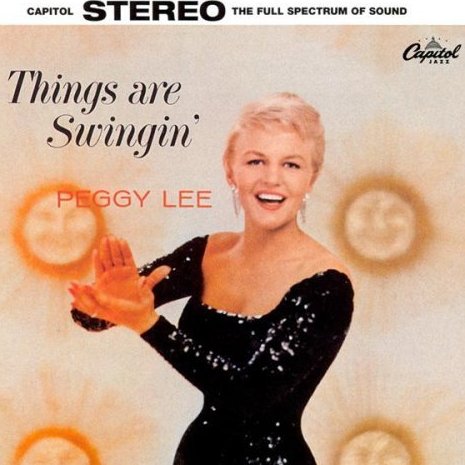
Peggy Lee: Fever
Musicians:
Peggy Lee (vocals), Joe Mondragon (bass), Shelly Manne (drums).
Composed by John Davenport (Ottis Blackwell) & Eddie Cooley; additional lyrics by Peggy Lee
.Recorded: Los Angeles, May 19, 1958
Rating: 100/100 (learn more)
Peggy Lee not only swings you into bad health, she gives you "Fever" to boot. For her signature 1958 hit, Peggy slyly transposed the mood of R&B singer Little Willie John's 1956 original from aggressively raw to suggestively smooth. In contrast to Little Willie's lesson in primal lewdness, Lee leads a postgraduate seminar in hip seduction. The entitlement of Willie's "I know you're gonna treat me right" becomes Peggy's inviting "You know I'm gonna treat you right." With Shelly Manne's clairvoyant support, Miss Peggy Lee raises room temperature and makes sophistication sizzle.
Reviewer: Alan Kurtz