THE DOZENS: FRANK SINATRA FOR JAZZ LOVERS by Marc Myers
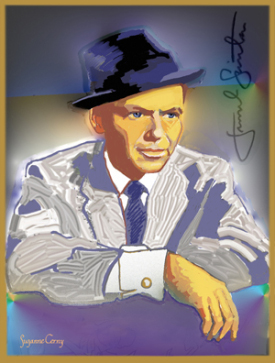
Editor's Note: This month jazz.com offers up Dozens on many of the leading vocalists in the history of jazz, including Billie Holiday, Ella Fitzgerald and (the subject of this installment) Frank Sinatra. Marc Myers, who generally can be found presiding over his always insightful JazzWax blog, makes a cameo appearance on jazz.com, and selects 12 Sinatra tracks for jazz lovers. T.G.
Throughout his career, Frank Sinatras singing was deeply influenced by the jazz musicians he knew and heard. And jazz musicians from Louis Armstrong and Billie Holiday to Miles Davis and Eddie Lockjaw Davis openly appreciated Sinatras hip vocal phrasing, honest intonation and swinging confidence.
While its virtually impossible to select a definitive dozen Sinatra tracks with a distinct jazz feel, these twelve should do the trick.
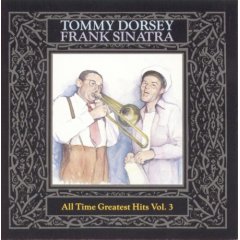
Tommy Dorsey (featuring Frank Sinatra): How Do You Do Without Me
Track
How Do You Do Without Me
Group
Tommy Dorsey and his Orchestra (featuring Frank Sinatra)
CD
Frank Sinatra & Tommy Dorsey: All Time Greatest Hits Vol. 3 (RCA)
Musicians:
Tommy Dorsey (trombone), Frank Sinatra (vocals),
and a big band including Ziggy Elman (trumpet), Joe Bushkin (piano) and Buddy Rich (drums)
.Composed by Joe Bushkin and John De Vries
.Recorded: New York, September 18, 1941
Rating: 90/100 (learn more)
Virtually all of Sinatras 83 studio sides recoded with Tommy Dorsey for RCA from February 1940 to June 1942 are towering masterpieces. His poured-steel renditions of songs like East of the Sun, Everything Happens to Me and Violets for Your Furs remain the versions to beat. How Do You Do Without Me is a nearly forgotten tune from his Fox Trot period and features a swingy Sinatra vocal and clock-time drum and cymbal work by Buddy Rich.
Reviewer: Marc Myers
Frank Sinatra: We Just Couldn't Say Goodbye
Track
We Just Couldn't Say Goodbye
Group
Frank Sinatra with the Johnny Guarneri Trio
CD
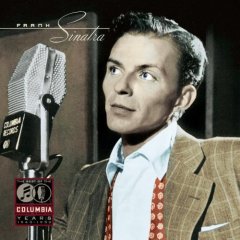
The Best of the Columbia Years (1943-1952): The Complete Recordings (Sony)
Musicians:
Frank Sinatra (vocals), Johnny Guarnieri (celeste), Herman 'Trigger' Alpert (bass), Tony Mottola (guitar).
Composed by Harry Woods
.Recorded: October 24, 1947
Rating: 94/100 (learn more)
When Sinatra left Dorsey in mid-1942, he was seeking solo stardom. After signing with Columbia Records in 1943, he remained with the label for nearly 10 years, maintaining a grueling recording schedule. This image-rich sweetheart ballad about lovers unable to part is taken at a pulses pace. Its a delightful example of Sinatras vocal range and quiet control. Listen as he moves cat-like behind and ahead of the beat. And dig the trios Shearing tag at the end. For fun, compare it to the end of George Shearings So Rare of February 1947.
Reviewer: Marc Myers
Frank Sinatra: Nevertheless (I'm in Love with You)
Track
Nevertheless (I'm in Love With You)
Artist
Frank Sinatra (vocals)
CD
The Best of the Columbia Years (1943-1952): The Complete Recordings (Sony)
Musicians:
Frank Sinatra (vocals),
with an orchestra featuring Billy Butterfield on trumpet
.Arranged by George Siravo and conducted by Axel Stordahl
.Recorded: October 9, 1950
Rating: 98/100 (learn more)
Most of Sinatras sides for Columbia are notable for their dramatic string arrangements and double-thick romantic mood. On this track, Sinatras voice is relaxed and at its peak during this period. Listen as he takes vocal risks that resolve beautifully. Billy Butterfield plays trumpet behind Sinatra, making this side an early example of the singer-and-wandering-horn formula that would become so successful in the 1950s. Listen to the 'outro' where Butterfield and Sinatra seem to complete each others musical thoughts.
Reviewer: Marc Myers
Frank Sinatra: From Here to Eternity
Track
From Here to Eternity
Artist
Frank Sinatra (vocals)
CD
Frank Sinatra: The Capitol Years (Capitol)
Recorded: May 2, 1953
Rating: 96/100 (learn more)
Sinatras Capitol Records era began in April 1953 and lasted until March 1962. When he joined Capitol, Sinatra was considered a vocal liability and an emotional mess. But with the help of arrangers such as Nelson Riddle, Sinatras confidence was restored as he began to trust his instincts and call the shots. From Here to Eternity is Sinatras first session with Riddle and his strongest ballad from the period. Inspired by the film for which he won an Oscarbut not written for itthe song marked Sinatras comeback and peaked at #15 on the pop charts.
Reviewer: Marc Myers
Frank Sinatra: I Guess I'll Have to Change My Plan
Track
I Guess I'll Have to Change My Plan
Artist
Frank Sinatra (vocals)
CD
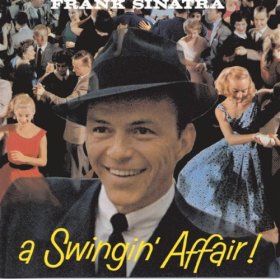
A Swingin' Affair! (Capitol)
Musicians:
Frank Sinatra (vocals),
with orchestra arranged and conducted by Nelson Riddle
.Composed by Arthur Schwartz and Howard Dietz
.Recorded: November 20, 1956
Rating: 98/100 (learn more)
A Swingin Affair! was Sinatra third 12-inch LP for Capitol and possibly his finest for the label. Nelson Riddles tricked-out arrangement of this Schwartz-Dietz standard set the writing standard for the entire decade, and Sinatras voice is comfortable and in control. During these years, Sinatras approach on standards had a big influence on Miles Davis, who also liked taking mainstream tunes and transforming them. If you think Riddles chart sounds simple, try counting off the intros beats. Tough, huh? Now you know why only the best session musicians were brought in to read the charts on these Capitol dates.
Reviewer: Marc Myers
Frank Sinatra: Heart of Mine
Track
Heart of Mine
Artist
Frank Sinatra (vocals)
CD
Sinatra in Hollywood: 1940-1964 (Reprise/Warner Bros.)
Musicians:
Frank Sinatra (vocals),
and orchestra arranged and conducted by Jerry Fielding
.Composed by Jerry Fielding and Ned Washington
.Recorded: September 18, 1961

Rating: 94/100 (learn more)
This touching ballad is considered by many to be the Sinatra song that never was. Absent from even the most comprehensive discographies, the tune was recorded by Sinatra only oncefor the 1962 Otto Preminger film, Advise and Consent. Sinatra deep-sixed the recording after the tune was used in the controversial movie as mood music for a scene in a gay bar. What makes this ballad so endearing is its haunting melody and Sinatras wide-open vulnerability, which can be compared only to a Billie Holiday vocal.
Reviewer: Marc Myers
Frank Sinatra: How Little it Matters (How Little We Know)
Track
How Little It Matters (How Little We Know)
Artist
Frank Sinatra (vocals)
CD
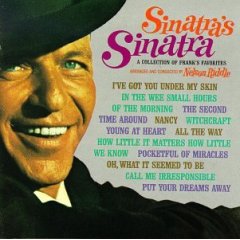
Sinatras Sinatra (Warner Bros)
Musicians:
Frank Sinatra (vocals),
and orchestra arranged and conducted by Nelson Riddle
.Composed by Carolyn Leigh and Philip Springer
.Recorded: April 30, 1963
Rating: 95/100 (learn more)
First recorded by Sinatra in 1956 for Capitol, this Carolyn Leigh-Phillip Springer tune was brought back for a retooling on this album of Sinatra favorites. The purpose of this album was to bring the hits he made for Capitol onto his new Reprise label. The brassy update is pure Kennedy Administration, with Riddle shaking together an optimistic cocktail of trombones, muted trumpets and strings. Dig Riddles openingwith the bass clarinet playing the downbeat, followed by pizzicato strings and muted trumpets on top. Sinatras voice here is no longer restrained, and his sass and cool provide a glimpse of the Sinatra to come on future albums.
Reviewer: Marc Myers
Frank Sinatra: Here's to the Losers
Recorded: July 31, 1963
Rating: 97/100 (learn more)
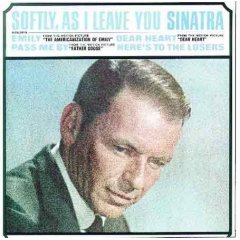
This is Sinatra at his underdog best, a tribute to those who cant seem to land right-side up. Like a Coleman Hawkins solo, Sinatras singing is wide open. Paichs arrangement accelerates beautifully and is a tip of the snap-brim to Nelson Riddlefrom the call and response intro between reeds and trombones to the crafty use of strings, harp and even bongos. And dig the chime that follows Sinatras jabbing lyric: To the girl who sighs with envy / when she hears that wedding bell. Ding.
Reviewer: Marc Myers
Frank Sinatra: The Way You Look Tonight
Track
The Way You Look Tonight
Artist
Frank Sinatra (vocals)
CD
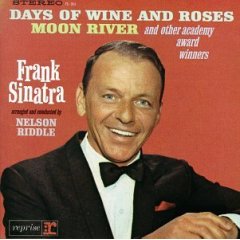
Days of Wine and Roses, Moon River and Other Academy Award Winners (Reprise)
Musicians:
Frank Sinatra (vocals),
and orchestra arranged and conducted by Nelson Riddle
.Composed by Jerome Kern
.Recorded: January 27, 1964
Rating: 95/100 (learn more)
This update of a Fred Astaire number from the 1936 film Swing Time doesnt glide across the ballroom floorit struts. Riddle opens the tune with jaunty reeds and sizzling muted trumpets echoing each others lines. Sinatra comes in tough and is cocky throughout, but theres also a subtle tenderness between the lines. After the first run-through, the songs pace picks up, with trombones punctuating Sinatras staccato lyrics And that laugh, wrink-le-s your nose/Touch-es my fool-ish hearttt. The charts crescendo occurs on the bridge and features a hip trumpet dragging the final note. Cool touch. Sinatra returns to provide a warm wind-down and finishes remarkably in ballad tempo.
Reviewer: Marc Myers
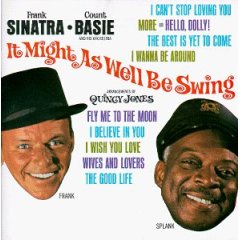
Frank Sinatra (with Count Basie): I Believe in You
Track
I Believe in You
Group
Frank Sinatra with the Count Basie Orchestra
CD
It Might As Well Be Swing (Reprise)
Musicians:
Frank Sinatra (vocals),
and the Count Basie Orchestra
.Arranged and conducted by Quincy Jones. Composed by Frank Loesser
.Recorded: June 9, 1964
Rating: 97/100 (learn more)
This may be the best Sinatra swinger on Reprise from the early '60s. Count Basies band is in peak form and perfectly suited to this hard-charger from Broadway's How to Succeed in Business Without Really Trying. Quincy Jones opens the chart with a rip-roaring fanfare, and the Basie band effortlessly sustains the breakneck pace. Sinatras confidence level here is in the red zone as he snarls out the lyrics: To see the cool, clear, eyes of a seeker of wisdom of truth / Yet theres that slam, bang, tang reminiscent of gin and vermouth. Getting ahead at work never sounded so good.
Reviewer: Marc Myers
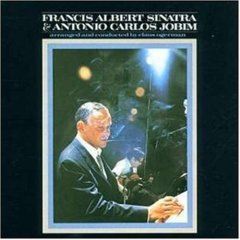
Frank Sinatra: Change Partners
Track
Change Partners
Artist
Frank Sinatra (vocals)
CD
Francis Albert Sinatra & Antonio Carlos Jobim (Reprise)
Recorded: January 30, 1967
Rating: 98/100 (learn more)
Recorded six months after the Strangers In the Night LP, this bossa nova album is Sinatras best- produced package since his Capitol years. Gone momentarily is the cocky swagger and bachelor-pad attitude. Every track on this album is sublime, but Change Partners is still a cut above. Claus Ogermans flutes-on-strings chart is perfectly matched to the odd-man-out lyrics, and the acoustic guitars open-chord exhale at the end is a nice touch. Sinatras patient balladry here is reminiscent of his romantic Columbia period of the 1940s.
Reviewer: Marc Myers
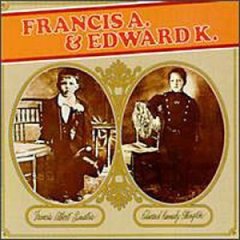
Frank Sinatra (with the Duke Ellington Orchestra): Follow Me
Track
Follow Me
Group
Frank Sinatra with the Duke Ellington Orchestra
CD
Francis A. & Edward K. (Reprise)
Musicians:
Frank Sinatra (vocals),
and the Duke Ellington Orchestra, featuring Paul Gonsalves (tenor sax) and Cootie Williams (trumpet)
.Arranged and conducted by Billy May. Composed Alan Jay Lerner and Frederick Loewe
.Recorded: December 12, 1967
Rating: 96/100 (learn more)
Lerner & Loewes show tune from Camelot opens with Duke Ellingtons piano, followed by the band slinking along in strip time. Sinatras voice here is husky and distinctly middle-aged. Billy May wrote the charts, but Ellingtons band reportedly wasnt big on sight-reading and members werent too happy about the date. So May brought in a few session readers, a move that only further diminished the date's energy level. But eventually the band found its groove. The lyrics are perfectly suited to this uneven period in Sinatra's personal life: Time goes by, or do we? / Close your eyes and youll see / As we were, we can be / Weep no more, follow me. We also get a taste of Paul Gonsalves on tenor sax and Cootie Williams on muted trumpet.
Reviewer: Marc Myers
Add your comments here.