THE DOZENS: JAZZ EXOTICA by Alan Kurtz
Exotica is armchair tourism. We experience foreign strangeness without the hassles of leaving home. No passports, immunizations, airfare, hotels, travelers checks, careening cabdrivers, indigenous foods or suspect water. This stay-at-home escapism appeals to consumers and producers alike. Musicians who've never been west of Catalina convey us to fictitious South Sea island paradises. A Harlem cabaret star leads our African safari. Such detachment is essential to exotica. Never mind authentic performances by native musicians. We're Americans. We demand the ersatz. A Disney jungle is vastly preferable to the real thing. At least Disney has fast-food concessions and strategically placed restrooms.
Jazz.com is pleased to offer an exotic itinerary for the intrepidly cautious, commencing with a desert caravan and ending in the tropics, with delightful stopovers from China to Tahiti to Tijuana. Our exotica is guaranteed to be culturally no closer than secondhand; indeed, it's often third-hand, as when a Penn- sylvanian gussies up a Russian's song of India, a Californian masticates a German's slice of Turkey, or a Swede from St. Louie accepts a Polish migr's invitation to the most exotic of all locales: MGM's back lot.
So hold onto your daiquiri and settle back in your deckchair. We're off to faraway lands.
Duke Ellington: Caravan (1936)
Track
Caravan
Group
Barney Bigard And His Jazzopators
CD
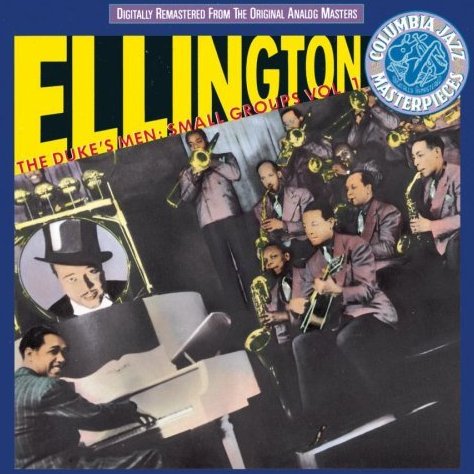
The Duke's Men: Small Groups, Vol. 1 (Columbia C2K-46995)
Musicians:
Duke Ellington (piano), Barney Bigard (clarinet), Juan Tizol (trombone), Harry Carney (baritone sax), Billy Taylor (bass), Sonny Greer (drums).
Composed by Duke Ellington, Juan Tizol & Irving Mills. Arranged by Duke Ellington
.Recorded: Hollywood, December 19, 1936
Rating: 100/100 (learn more)
Duke Ellington's first "Caravan" set off from Hollywood five months before his better-known 1937 big-band excursion departed New York. The journey was cloaked in mystery. Asked our destination, Duke said only, "Expect sand." That could've meant Malibu. Duke chuckled, "Lots of sand." So the Sahara was not entirely a shock. Upon arrival, a local official demanded to know why we were there. "We came," said Duke, "for the waters." The official sputtered, "We're in the desert!" Duke slyly tugged his ear and replied, "I was misinformed." Cootie, Carney and Barney are all masterful here, but co-composer Tizol's valve trombone is unforgettable.
Reviewer: Alan Kurtz
Tommy Dorsey: Song of India
Track
Song of India
Artist
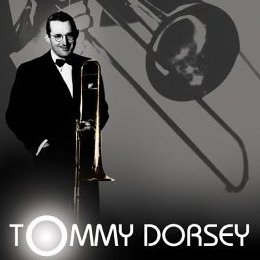
Tommy Dorsey (trombone)
CD
The Sentimental Gentleman of Swing: Centennial Collection (Bluebird/Legacy 711672)
Musicians:
Tommy Dorsey (trombone), Bunny Berigan (trumpet), Bud Freeman (tenor sax), Dave Tough (drums),
BJimmy Welch, Joe Bauer, Bob Cusumano (trumpet); Les Jenkins, Red Bone (trombone); Joe Dixon (clarinet, alto sax), Fred Stulce, Clyde Rounds (alto sax), Dick Jones (piano), Carmen Mastren (guitar), Gene Traxler (bass)
.Composed by Nikolai Rimsky-Korsakov. Arranged by Tommy Dorsey & Red Bone
.Recorded: New York, January 29, 1937
Rating: 73/100 (learn more)
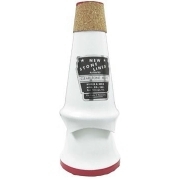
Rimsky-Korsakov's 1898 opera Sadko depicts a Russian harpist who deserts wife and home for foreign adventure. During his travels he acquires Wife #2 and a fortune. When he returns, everyone rejoices, including Wife #1, who's retained a shrewd divorce lawyer and reduces hapless Harpo to his musical souvenirs, notably the "Song of India." Plugged with a Solotone mute to render this melody in a freakish sopranino register approximating a muted trumpet, TD's trombone is as pretty and as phony as the fixed smiles at a debutante ball. The only jazz here is Berigan's real trumpet, standing out grandly like a moonlit Taj Mahal.
Reviewer: Alan Kurtz
Raymond Scott: Twilight in Turkey
Track
Twilight in Turkey
Artist
Raymond Scott (piano)
CD
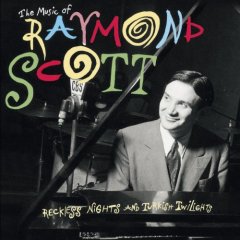
Reckless Nights and Turkish Twilights (Columbia/Legacy 65672)
Musicians:
Raymond Scott (piano),
Dave Wade (trumpet), Pete Pumiglio (clarinet), Dave Harris (tenor sax), Lou Shoobe (bass), Johnny Williams (drums)
.Composed by Raymond Scott
.Recorded: New York, February 20, 1937
Rating: 97/100 (learn more)
Despite being co-opted for many long-lived Warner Bros. cartoons, Raymond Scott's late-1930s music has largely been forgotten. Encountering it now is like opening an heirloom music box from which figurines pop up to play a quaintly charming tune. Except as you listen and peer down, you're gradually, irresistibly drawn into this strange tableau. You lean closer. The figurines have come alive! They're more than entertaining. They're your new best friends. And that music! You realize it's neither quaint nor charming. It's completely, utterly, certifiably insane! And you want it never, ever to stop. Welcome to the world of Raymond Scott.
Reviewer: Alan Kurtz
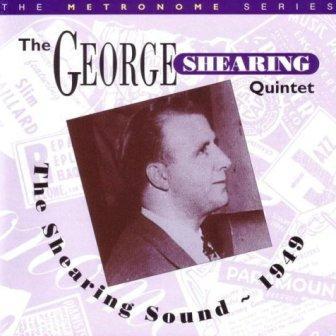
George Shearing: In a Chinese Garden
Musicians:
George Shearing (piano), Marjorie Hyams (vibes), Chuck Wayne (guitar), John Levy (bass), Denzil Best (drums).
Composed by Chuck Wayne
.Recorded: New York, July 27, 1949
Rating: 94/100 (learn more)
Like Albert W. Ketlbey's 1925 "In a Chinese Temple Garden," one of the staples of British light music, "In a Chinese Garden" invokes clichs; but it also shimmers with Debussy-esque delicacy, transporting us to a tranquil landscape in which the fluttering of bamboo shoots, water gently dripping into a jade green pond, and fragrance of jasmine are palpable. A lovely, contemplative and unjustly neglected travelogue from a cornerstone cool jazz group that committed the cardinal sin of popularity. To critics, the more widely loved an artist, the less worthy of respect. To prove them wrong, sneak into this "Chinese Garden."
Reviewer: Alan Kurtz
Stan Kenton: Evening in Pakistan
Track
Evening in Pakistan
Artist
Stan Kenton (piano)
CD
The Innovations Orchestra (Capitol Jazz 5269230)
Musicians:
Stan Kenton (piano), Buddy Childers (trumpet), Maynard Ferguson (trumpet), Shorty Rogers (trumpet), Milt Bernhart (trombone), Bill Russo (trombone), John Graas (French horn), Gene Englund (tuba), Bud Shank (alto sax), Art Pepper (alto sax), Bob Cooper (tenor sax), Laurindo Almeida (guitar), Don Bagley (bass), Shelly Manne (drums),
Chico Alvarez, Don Paladino (trumpet); Harry Betts, Bob Fitzpatrick, Bart Varsalona (trombone); Lloyd Otto (French horn), Bart Caldarell (tenor sax), Bob Gioga (baritone sax), Carlos Vidal (conga), and a 16-piece string section
.Composed by Franklyn Marks
.Recorded: Hollywood, CA, February 4, 1950
Rating: 94/100 (learn more)
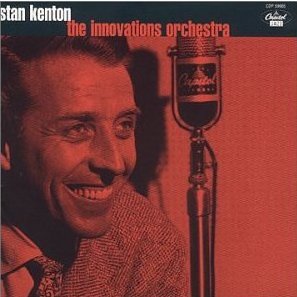
Like the proverbial Ark, Stan Kenton's behemoth Innovations in Modern Music Orchestra included at least two of every known instrument. Yet try as he might, Noah couldn't keep the boat afloat. During its 2-year maiden voyage, Kenton's Titanic struck an economic iceberg. The overextended skipper knew he was in trouble when his crew began outnumbering paying passengers. Before reaching dry-dock, however, Captain Kenton put in at Karachi Port for an "Evening in Pakistan," which conjures via finger cymbals and tambourine an atmospheric stroll after dark around the bazaar. For all his foibles, Kenton was jazz's Marco Poloa magnificent adventurer.
Reviewer: Alan Kurtz
Cal Tjader: Invitation
Musicians:
Cal Tjader (vibes),
Manuel Duran (piano), Carlos Duran (bass), Luis Miranda (conga), Bayardo Verlardi (timbales)
.Composed by Bronis?aw Kaper
.Recorded: Los Angeles, November 1956
Rating: 90/100 (learn more)
Born in St. Louis of Swedish stock, Cal Tjader was to Latin jazz what New York pianist Martin Denny was to the South Pacific. (Transplanted to Hawaii, Denny christened Exotica with his 1957 LP and scored a campy mainland hit with "Quiet Village," on which sidemen imitated birdcalls and jungle cries.) After an early-'50s apprenticeship with Englishman George Shearing's pseudo-Latinized combo, Tjader capitalized on the mid-'50s mambo mania with such Latinate lounge-exotica as Polish migr Bronis?aw Kaper's 1952 MGM movie theme "Invitation," which is Denny minus the birdcalls. With Awk-awks and Whoop-whoop-whoops, this could've been a huge hit.
Reviewer: Alan Kurtz
Charles Mingus: Ysabel's Table Dance
Musicians:
Charles Mingus (bass), Jimmy Knepper (trombone), Shafi Hadi (alto sax), Dannie Richmond (drums),
Ysabel Morel (voice, castanets), Clarence "Gene" Shaw (trumpet), Bill Triglia (piano)
.Composed by Charles Mingus
.Recorded: New York, July 18, 1957
Rating: 100/100 (learn more)
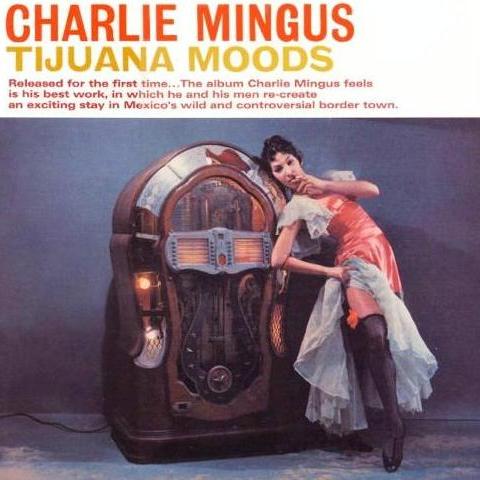
Trying to party away the heartache of a failed marriage, Charles Mingus found "not even Tijuana could satisfy." Born in Nogales, Arizona, he had a special feel for border towns. From his unsatisfying binge around Tijuana's streets and bars, Mingus brought home a hard-won hangover and a triumphant flamenco trophy. Featuring namesake Ysabel Morel's crisp castanets and vocal urgings, "Ysabel's Table Dance" does in <10 minutes what filmmaker Orson Welles's Tijuana-lite Touch of Evil (1958) fails to in >1 hours. Namely, it scares hell out of you. For Mingus, danger and depravity are not the stuff of stagecraft. They're real.
Reviewer: Alan Kurtz
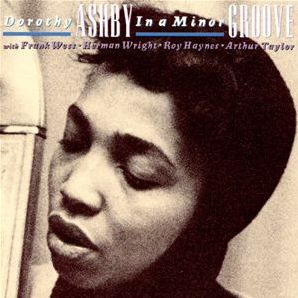
Dorothy Ashby: Taboo
Musicians:
Dorothy Ashby (harp), Frank Wess (flute), Roy Haynes (drums),
Herman Wright (bass)
.Composed by Margarita Lecuona & Bob Russell
.Recorded: New York, September 19, 1958
Rating: 95/100 (learn more)
F.W. Murnau's silent film Tabu (1931) introduced a sacred Polynesian word into the pop lexicon. Shot on location in Bora Bora, Tabu tells of lovers fleeing their village after the girl's unwilling selection as a bridesmaid to the gods. Americans were scandalized by their first cinematic exposure to the au naturel South Pacific, abounding with bare-breasted native ladies. Here, a fully clothed Dorothy Ashby performs "Taboo" on an ancient and most exotic musical implement. Some instruments deserve to be taboo in jazz, but not Ashby's harp. This is solid, swinging jazz, whetted by Wess and whisked by the matchless Haynes.
Reviewer: Alan Kurtz
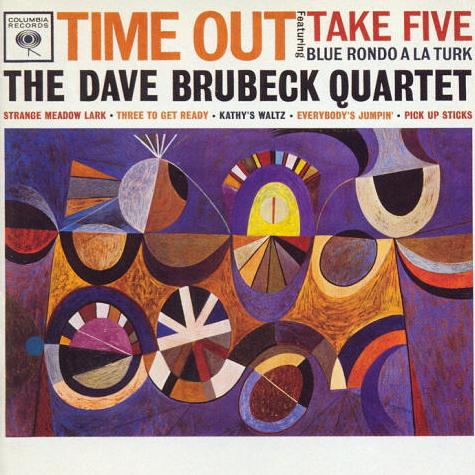
Dave Brubeck: Blue Rondo la Turk
Track
Blue Rondo la Turk
Group
Dave Brubeck Quartet
CD
Time Out (Columbia/Legacy CK 65122)
Musicians:
Dave Brubeck (piano), Paul Desmond (alto sax), Eugene Wright (bass), Joe Morello (drums).
Composed by Dave Brubeck
.Recorded: New York, August 18, 1959
Rating: 97/100 (learn more)
Using Mozart's "Rondo Alla Turca" as a reference point, Brubeck adapts the 9/8 time signature that intrigued him during an Istanbul visit, and creates a driving enclosure for straight-ahead 4/4 blues solos by himself and Desmond. As with "Take Five" (Brubeck's hit 1961 single to which "Blue Rondo" served as flip side), simplification makes the experiment fun. As to what the blues have to do with Turkey, it's long been rumored that during the Turkish War of Independence, W.C. Handy proffered his "St. Louis Blues" as the Republic's national anthem. When Turks wisely chose instead the stirring ?stikll Mar?? (Independence March), Handy's "St. Louis Blues" was made the USA's national anthem, and is now sung perfunctorily before ballgames.
Reviewer: Alan Kurtz
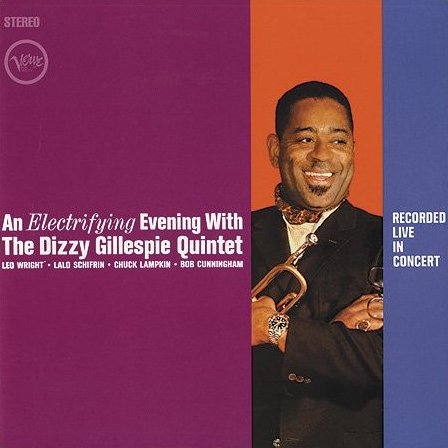
Dizzy Gillespie: Kush
Track
Kush
Artist
Dizzy Gillespie (trumpet, vocals)
CD
An Electrifying Evening with the Dizzy Gillespie Quintet (Verve 314 557 544 2)
Musicians:
Dizzy Gillespie (trumpet, vocals), Leo Wright (alto sax), Lalo Schifrin (piano), Bob Cunningham (bass),
Chuck Lampkin (drums)
.Recorded: Live at the Museum of Modern Art, New York, February 9, 1961
Rating: 97/100 (learn more)
Kush, an early civilization centered in North Africa's Nubian region (today's Sudan), flourished from 2000 to 1500 BC. Dizzy Gillespie, an early bebopper in North America's New York region (today's Harlem), flourished between 1917 and 1993 AD. These two monumental forces converge on this track recorded, significantly, at the Museum of Modern Art. Nobody did more than Dizzy Gillespie to make jazz a modern art. It's doubtful the Kushites would've appreciated Dizzy, but what matters is he appreciated them. This 6/4 tribute is more exciting than an unexpected encounter with the Kushites' worst nightmare, Conan the Barbarian. Dizzy kicks tush.
Reviewer: Alan Kurtz
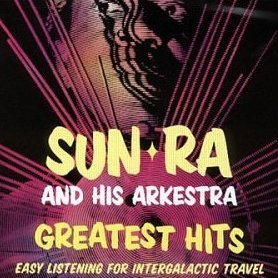
Sun Ra: The Order of the Pharaonic Jesters
Track
The Order of the Pharaonic Jesters
Group
Sun Ra & His Arkestra
CD
Sun Ra & His Arkestra Greatest Hits Easy Listening for Intergalactic Travel (Evidence ECD 22219-2)
Musicians:
Sun Ra (organ, synthesizer, Rocksichord),
Ronnie Boykins (bass), Harry Richards (drums), Derek Morris (conga)
.Composed by Sun Ra
.Recorded: New York, 1973
Rating: 69/100 (learn more)
After World War II, pianist Sonny Blount moved from Alabama to Chicago, where he pursued Egyptology, which had captivated him since childhood. Identifying with the sun-god Ra of Heliopolis (well, why not aim high?), Sonny changed his name to Sun Ra. His music, however, remained surprisingly devoid of Arabic influence. Instead of the distinctive Arabian scales, rhythms or instruments that evolved from ancient times, Sun Ra dishes out cheesy electric organ to inept accompaniment. If teenagers played this in your garage, you'd swear they have no talent, and you'd be right. These "Pharaonic Jesters" ought to be called "Moronic Gestures."
Reviewer: Alan Kurtz
Chick Corea: Brazil
Recorded: Live at Culture & Congress Center, Lucerne, Switzerland, November 20, 1999
Rating: 95/100 (learn more)
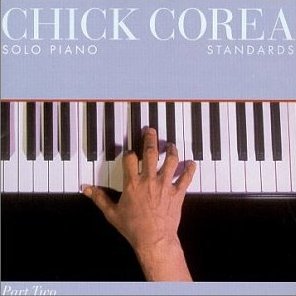
With the care of a fine-art restorer, Chick Corea rescues Aquarela do Brasil ("Watercolor of Brazil") from Disney's Saludos Amigos (1943), wherefor the edification of one Donald DuckBrazilian composer Ary Barraoso's samba-exaltao exalted the Technicolor glories of Latin America's largest nation. Quickly recognizing the tune, Chick's Swiss audience chuckles affectionately. "Brazil," covered by everyone from Django Reinhardt to The Coasters to Joo Gilberto, reinforces music as universal language. Chick Corea, born in Massachusetts of Italian and Spanish ancestry, speaks that language as fluently as anyone. This lovely 3-minute track does more for international amity than a corps of diplomats.
Reviewer: Alan Kurtz