THE DOZENS: SCAT SINGING by Thomas Cunniffe
Scat singingimprovised solos created by a vocalist using nonsense syllables for wordsis one of the great paradoxes in jazz. A vocalist who scats with any level of authority is usually considered to be a jazz singer, yet one need not scat to fall into the jazz singer category. So, Betty Carter was undoubtedly a jazz singer because she scatted, but so was Billie Holiday and she never scatted. Tony Bennett has undeniable jazz chops, yet his scatting may be the weakest part of his artistry.
Part of the problem is that theres so much bad scatting. A scat solo is just like an instrumental jazz solothe improvised melody must fit into the existing chord structure. Unfortunately, many singers lack the most basic knowledge of music theory and harmony, so they are unable to comprehend what theyre doing, and apparently cant tell when they make a mistake. Every jazz fan can tell horror stories of singers who scatted, but shouldnt have. Singers like that may never go away, but aspiring vocalists who study with sympathetic teacher/vocalists such as Anita Wardell and Roseanna Vitro are encouraged to work at the piano, so they can understand the harmonic element so that the improvised melodies work within the musical context.
Of course, jazz has had an abundance of superb scat singers, some with an excellent music theory background and others with extraordinarily well-trained ears (the best scatters had both). The 12 recordings below are merely highlights in the history of scat. To supplement the following reviews, please check out the videos of Leo Watson, Clark Terry, Anita ODay and Eddie Jefferson. CD tracks with astounding scat solos by several contemporary female jazz singers (including Roseanna Vitro and Anita Wardell) have been reviewed in an earlier dozens, which can be found here.
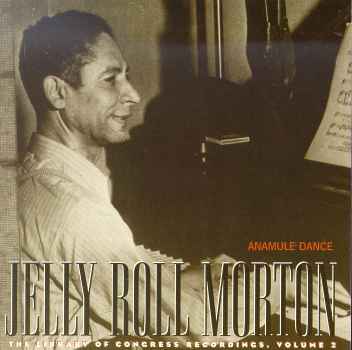
Jelly Roll Morton: Scat Song
Musicians:
Jelly Roll Morton (piano, vocals),
Alan Lomax, interviewer
.Composed by Jelly Roll Morton
.Recorded: Washington, DC, May 23-June 7, 1938
Rating: 90/100 (learn more)
Scat singing was not born when Louis Armstrong dropped the sheet music during a recording of Heebie Jeebies. Although Armstrong perpetuated the myth, he well knew that scat had been around almost as long as jazz itself. Jelly Roll Morton may have been the first person to set the record straight, and in his recorded reminiscences for the Library of Congress, he credits Joe Simms, an old comedian from Vicksburg, Mississippi, as the first person to scat sing. Mortons most interesting claim comes right before his charming demonstration: in its original use, scat was not used for extended solos, but merely as a unique introduction for a song. We may never know how much Simms and how much Morton there is in the 1938 re-creation heard here, but the simple syncopations, light New Orleans swing and delightful scoodle-ee-doo syllables give us a good idea of the origins of scat.
(The MP3 link above is not from the Anamule Dance CD, which only includes the musical demonstration. Instead, the linked recording is from Mortons The Complete Library of Congress Recordingsalso from Rounderwhich includes the spoken introduction. The recording begins with the final section of the Morton composition Anamule Dance and segues into the discussion of scat at 2:35.)
Reviewer: Thomas Cunniffe
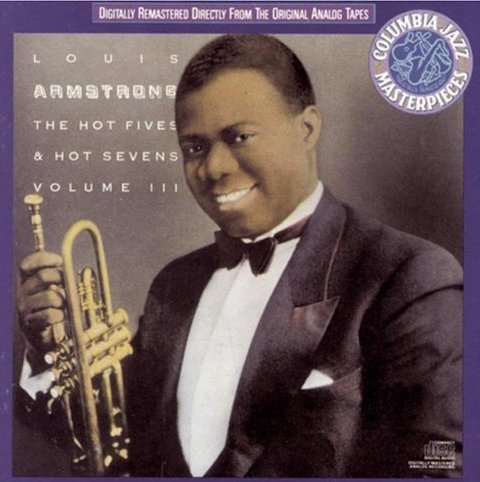
Louis Armstrong: Hotter Than That
Track
Hotter Than That
Group
Louis Armstrong and his Hot Five
CD
The Hot Fives And Hot Sevens, Volume III (Columbia 44422)
Musicians:
Louis Armstrong (cornet, vocals), Kid Ory (trombone), Johnny Dodds (clarinet), Lil Hardin (piano), Lonnie Johnson (guitar), Johnny St. Cyr (banjo).
Composed by Lil Hardin
.Recorded: Chicago, IL, December 13, 1927
Rating: 100/100 (learn more)
The fiery Hotter Than That is one of Louis Armstrongs masterpieces. Played at a flying tempo, Armstrong soars while most of his band-mates can barely get off the ground. The opening trumpet solo is a brilliant example of developing a melodic idea, all with a dynamic sound and sophisticated swing. Lonnie Johnson, guesting with the Hot Five, was clearly a student of Armstrongs innovations, and he accompanies Armstrongs magnificent scat solo. Armstrongs advanced rhythmic sense is in full display as he sings behind the beat and then intensifies the rhythm with a brilliant series of dotted quarter notes which get further and further off the beat. (Later, Armstrong ties his solo work together by alluding to those dotted quarters in his final trumpet solo!) Also of note are Armstrongs scat syllables: he uses rip several times, each time with an ascending glissando (the term is now commonly used for that melodic device), and he even improvises the term bebop which became the name of the jazz movement in the 1940s. Louis Armstrong may not have invented scat singing, but he remains one of its greatest exponents.
Reviewer: Thomas Cunniffe
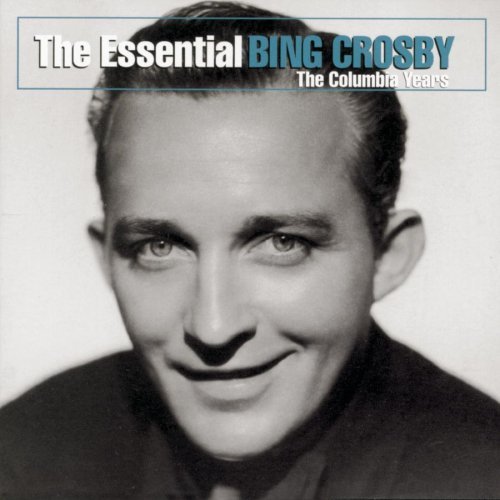
Bing Crosby and the Mills Brothers: Dinah
Musicians:
Bing Crosby (vocals),
The Mills Brothers: Harry Mills, Donald Mills (vocals), John Mills (vocals, guitar); Frank Guarente (trumpet), Will Bradley (trombone), Les Dreyer, Bernie Krueger, Max Farley (reeds), Fred Glickman, Max Solowsky (violins), Joe Meresco (piano), Eddie Lang (guitar); Hank Stern (bass); Larry Gomar (drums).
.Composed by Harry Akst, Samuel Lewis and Joseph Young
.Recorded: New York, December 16, 1931
Rating: 95/100 (learn more)
Bing Crosby and the Mills Brothers enjoyed long careers in pop music, but they were all influenced by jazz in their early years. Dinah starts out like one of Crosbys pop records, with Crosby singing the melody with minor variations over a small orchestra with strings. Then the tempo jumps up, there is a jazzy trumpet break, the Mills Brothers enter, and most of the orchestra is silent for the rest of the recording. John Mills sings a tuba part under the three-part harmony of his brothers (John also plays guitar for the rest of the side). Donald Mills takes a scat break to finish the chorus, then Crosby takes over with a scat solo of his own. While Crosby sings even eighth notes on top of the beat, he varies the line with sharp rhythmic emphasis. Trumpeter Frank Guarante accompanies Crosby when he goes back to the lyrics at the bridge, and then again in the first half of the next chorus, but the solo at the bridge which follows is not a trumpet, but a vocal impression by Harry Mills. The side comes to an exciting conclusion as the Mills Brothers riff like a high-powered big band behind Crosby.
Reviewer: Thomas Cunniffe
Ella Fitzgerald: Blue Skies
Track
Blue Skies
Artist
Ella Fitzgerald (vocals)
CD
Ella Fitzgerald Sings The Irving Berlin Song Book (Verve 314 543 830)
Musicians:
Ella Fitzgerald (vocals),
Paul Weston & His Orchestra: John Best, Pete Candoli, Harry Edison, Don Fagerquist, Mannie Klein (trumpets), Ed Kusby, Dick Noel, Bill Schaefer, Juan Tizol (trombones), Chuck Gentry, Matty Matlock, Ted Nash, Babe Russin, Fred Stulce (reeds), Paul Smith (piano), Barney Kessel (guitar), Joe Mondragon (bass), Al Stoller (drums)
.Composed by Irving Berlin; arranged by Paul Weston
.Recorded: Los Angeles, March 18, 1958
Rating: 98/100 (learn more)
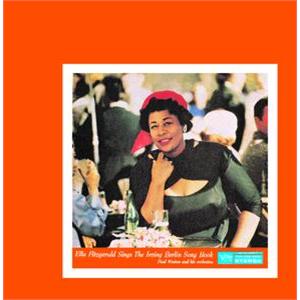
Blue Skies was originally recorded for (and eventually omitted from) The Irving Berlin Song Book, and it was first issued as part of an all-star jazz compilation album created by Playboy magazine, and later appeared on a Verve compilation of assorted bits and pieces from Ellas many sessions for the label. The recording is still not well-known, but it features one of her finest extended scat solos. Like her famous Oh, Lady Be Good recording 9 years earlier, the big band arrangement exists only to support Ella, and shes never asked to interrupt her improvisation for ensemble figures. Ella opens with 4 virtuosic cadenzas, and then jumps to a medium tempo for the opening chorus. Harry Edison provides pithy commentary during the melody statement, and then Ella launches into a two-and-a-half chorus scat solo. She starts out by adapting the saxophone riff playing behind her, and as the solo continues, she repeats and develops ideas with uncanny fluency. Encouraged on by the magnificent accompanying group, Ella builds her solo in a natural and unforced manner. There are plenty of quotes (Here Comes The Bride near the beginning, Rhapsody In Blue as the solo peaks), but mostly this is Ella, joyously creating music on the spot and spreading that joy to her audience.
Reviewer: Thomas Cunniffe
Roy Eldridge & Dizzy Gillespie: Pretty-Eyed Baby
Track
Pretty-Eyed Baby
Artist
Roy Eldridge (trumpet, vocals) and Dizzy Gillespie (trumpet, vocals)
CD
Roy and Diz (Verve 314 521 647)
Musicians:
Roy Eldridge (trumpet, vocals), Dizzy Gillespie (trumpet, vocals), Oscar Peterson (piano), Herb Ellis (guitar), Ray Brown (bass), Louie Bellson (drums).
Composed by Mary Lou Williams, Snub Mosley and William Luther Johnson
.Recorded: New York, October 29, 1954
Rating: 90/100 (learn more)
In an interview, Jon Hendricks asked Dizzy Gillespie to demonstrate the evolution of styles by singing a riff as Louis Armstrong would sing it, then as how Roy Eldridge would sing it, and finally how Dizzy would sing it. Dizzy replied with a simple rhythmic idea from Louis, an intense, agitated version for Roy and then an arhythmic flurry of fast notes for himself. Although Dizzy was joking around, he admitted that his example wasnt too far from reality. The similarities and differences between Roy and Dizzy are better illustrated in Pretty-Eyed Baby, a light-hearted duet from Roy And Diz, which features both principals on trumpet and vocals. Although the recording is in mono, its very easy to tell the difference between the two players, as Eldridge plays a Harmon mute throughout and Dizzy plays in a cup mute. Further, each mans scat singing style echoes their trumpet work: Roy with a pronounced rasp and powerful rhythm, Dizzy smoother with very complex rhythmic combinations. The trumpet solos that follow the scat are 8-bar exchanges (probably kept short as both trumpeters had played in their high registers for most of the date). The improvised 2-part vocal harmony on the coda doesnt really workI doubt they rehearsed the number before recording itbut the recording is an important historical document of two of the best trumpeters (and scat singers) in jazz history.
Reviewer: Thomas Cunniffe
Sarah Vaughan: Shulie-A-Bop
Musicians:
Sarah Vaughan (vocals), Roy Haynes (drums),
John Malachi (piano), Joe Benjamin (bass)
.Composed by George Treadwell & Sarah Vaughan
.Recorded: New York, April 2, 1954
Rating: 90/100 (learn more)
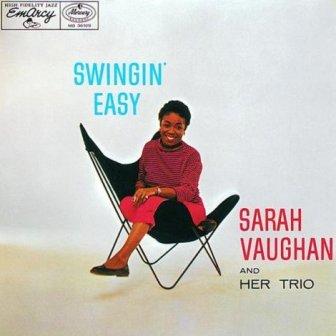
Sarah Vaughan had the jazz singer's perfect combination: a flexible voice and an acute harmonic sense. Naturally, she improvised every time she went on stage, but considering the length and breadth of her recording career, there arent many full-fledged scat solos on record. Shulie-A-Bop, which may have been created at the recording session, features Sarah and her working trio on a 16-bar minor blues. Other than a quote of "I Ain't Mad At You" and the introductions of the musicians, the performance is entirely wordless. Sarah gets most of the solo space and makes the best of it, displaying her fine way of developing ideas and inserting several bop melodic sequences. Sarahs trio was one of the finest touring groups of its day, and each member of the trio takes a 16-bar solo here, and as noted, each is introduced by Sarah. Bop pioneer Roy Haynes is the best-known member of the group, but John Malachi had been an arranger and pianist for the Billy Eckstine bop band and Joe Benjamin would gain greater fame when he joined the Dave Brubeck Quartet. Sarahs unique introduction of Roy (tap, tap, tap) Haynes was developed for this recording, and the drummer still uses it in performances with his own groups.
Reviewer: Thomas Cunniffe
Mel Torme & The Marty Paich Dek-tette: Lullaby Of Birdland
Track
Lullaby Of Birdland
Artist
Mel Tormé (vocals) and Marty Paich (arranger)
CD
Mel Tormé and the Marty Paich Dek-tette (aka Lulu's Back In Town) (Bethlehem 75732)
Musicians:
Mel Tormé (vocals), Marty Paich (arranger),
The Marty Paich Dek-tette: Pete Candoli, Don Fagerquist (trumpets); Bob Enevoldsen (valve trombone, tenor sax), Vince DeRosa or John Cave (french horn), Al Pollan (tuba), Bud Shank (alto sax, tenor sax), Bob Cooper or Jack Montrose (tenor sax), Jack DuLong (baritone sax), Red Mitchell (bass), Mel Lewis (drums)
.Composed by George Shearing
.Recorded: Los Angeles, January 1956
Rating: 95/100 (learn more)
"Lullaby of Birdland" is an anomaly in the recordings of Mel Tormé and the Marty Paich Dek-tette. Although Mel's scat singing was prominently featured on the Reunion albums of the late 1980s, "Lullaby" was the only cut from the original set of recordings to feature a scat solo. At nearly 5 minutes, "Lullaby" was the longest track on the first Dek-tette LP, and it features Mel's scatting for most of its length. It starts with Mel and Red Mitchell in duet with Mel Lewis joining in at the bridge. As Tormé starts scatting, the saxes enter, backing the singer with a unison figure. As usual with Tormé, his improvisations are an even mix of original ideas and song quotes, but he puts the ideas together so skillfully, the listener loses track of each idea's paternity. In the next chorus, Torm� trades ideas with Pete Candoli, Don Fagerquist and Bob Enevoldsen (the latter on valve trombone - for the moment). Then the saxes return (with Enevoldsen on tenor) with a tightly-arranged figure, to which Tormé offers a scatted response. The figure is repeated for the next 8 bars. The sax figure is a Paich self-quote - it was originally the introduction for his arrangement of "You.re My Thrill", written for a Shelly Manne LP a couple of years earlier. Tormé said that hearing that recording inspired him to work with Paich. As an acknowledgement of that inspiration, Paich included the figure in the "Lullaby" arrangement. After a brass-dominated bridge, we return to Tormé, Mitchell and Lewis with a short reprise of the opening chorus. Lewis drops out after 8 bars as Tormé and Mitchell fade into the distance.
Reviewer: Thomas Cunniffe
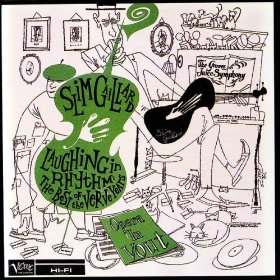
Slim Gaillard: Babalu (orooney)
Track
Babalu (orooney)
Artist
Slim Gaillard (vocals, guitar)
CD
Laughing In Rhythm (Verve 314 521 651)
Musicians:
Slim Gaillard (vocals, guitar),
Maceo Williams (piano), Clyde Lombardi (bass), Charlie Smith (drums)
.Composed by Margarita Lecuona and Theo Hansen
.Recorded: New York, May 25, 1951
Rating: 95/100 (learn more)
Now we take a turn towards the surreal, guided by the unique multi-instrumentalist Slim Gaillard. Even with prior knowledge of Gaillards mastery of double-talk and his invented language, Vout, little can prepare the listener for this bizarre and very funny transformation of the Cuban classic Babalu. Although the song was forever associated with Desi Arnaz, Gaillards version starts in imitation of the Xavier Cugat recording. However, Gaillards imagination soon takes over and he starts inserting orooney and other vout phrases in with the Spanish lyrics. By the time he quotes Jingle Bells (!), we are in a completely different universe where all kinds of languagesreal and inventedcome at us from all angles.
In the 1998 notes for the Smithsonian collection,The Jazz Singers, Robert G. OMalley wrote that Gaillard had transformed the moments of parody in the recordings of Fats Waller and Al Hibbler into an aesthetic of parody. While such an analysis seems rather high-brow, there is little doubt that Gaillards comedic concepts were unparalleled in jazzor any other music, for that matter. At any rate, such theories are much less damaging than those offered during his career, including the idea that Gaillards vout promoted drug use. That accusation caused Gaillard to lose a lot of work and led to long nomadic periods in his life.
Reviewer: Thomas Cunniffe
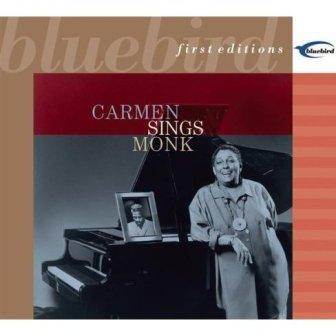
Carmen McRae: Suddenly (aka In Walked Bud)
Track
Suddenly (aka "In Walked Bud")
Artist
Carmen McRae (vocals)
CD
Carmen Sings Monk (Bluebird 63841)
Musicians:
Carmen McRae (vocals), Charlie Rouse (tenor sax), Larry Willis (piano), George Mraz (bass), Al Foster (drums).
Composed by Thelonious Monk; lyrics by Jon Hendricks
.Recorded: Great American Music Hall, San Francisco, January 30February 1, 1988
Rating: 90/100 (learn more)
While she was plagued by poor health in her final years, Carmen McRae produced several fine recordings in the late 1980s and early 1990s. Carmen Sings Monk was one of her best recordings and it included lyricized versions of Thelonious Monks compositions (but not his solos). Some of the tunes were included in live and studio versions, and this live version of In Walked Bud featured Monks tenor saxophonist Charlie Rouse in one of his final performances. The words were originally written by Jon Hendricks on short notice for a recording session with Monk. Hendricks describes a mythic jam session with Dizzy Gillespie, Don Byas, Oscar Pettiford, Max Roach, Monk and of course, Bud Powell. McRaes performance begins as she scats the melody, followed by a full chorus of Hendricks words. Rouse takes the first solo, followed by Mraz and Willis, each of whom starts his solo with a quote, Mraz citing the songs harmonic base (Blue Skies) and Willis acknowledging the Basie standard Topsy. McRae continues the parade of quotes with a phrase from Louise then goes into a short scat solo where she develops a small motive into a longer idea, then takes the end of the long idea and develops it into another phrase. When she goes back to the lyrics, she nearly stretches the songs syncopations to their breaking point before bringing it back into sync with the band.
Reviewer: Thomas Cunniffe
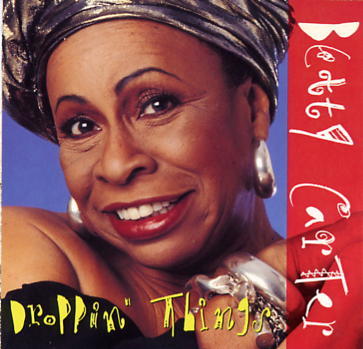
Betty Carter: Droppin' Things
Musicians:
Betty Carter (vocals), Freddie Hubbard (trumpet),
Craig Handy (tenor sax), Marc Carey (piano), Tarus Mateen (bass), Gregory Hutchinson (drums)
.Composed by Betty Carter
.Recorded: The Bottom Line, New York, May 25 or 26, 1990
Rating: 90/100 (learn more)
Unlike many jazz musicians who found their niche and stuck with it, Betty Carter continued to experiment with her music throughout her career. While she never abandoned standards, she included several of her own compositions in her repertoire. As the years went on, her elastic concept of rhythm became more pronounced, and her scatting became an even more important component of her style. Starting in the 1970s, she hired young apprentice musicians who were eager for their big break. While Carter was a tough boss, many of the musicians who worked with her found the experience very valuable.
Droppin Things is based on Carters scat tune, Jumps. It sounds like Carter hadn't decided whether the song should be started in duple or triple time. In fact, the recording includes a false start in 2/4 time before restarting in 3/4. The time moves back and forth between the two meters, even during the solos. To further cloud the meter, Carter sings her melody in straight quarter notes without any downbeat implied. In the second A section, bassist Tarus Mateen plays so fast, there is no clear sense of time signature. To keep all of this together, Carter has guest instrumentalists Freddie Hubbard and Craig Handy solo on the harmonies of the bridge, and she inserts segments of the melody as signposts. Carters own scat solo uses a single scale instead of the chord changes so that the signposts are not necessary as she improvises. Her solo, based on short ideas, morphs into a musical conversation, starting with Carey, who is eventually joined by Hubbard and Handy. The tension builds steadily for nearly two minutes, and then there is a slight repose before Carter closes the performance with the main motive of her melody.
Reviewer: Thomas Cunniffe
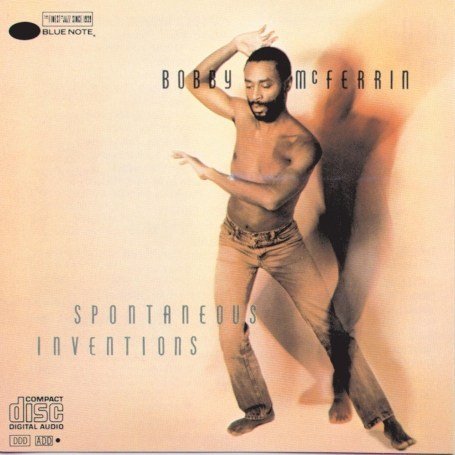
Bobby McFerrin: I Hear Music
Recorded: Aquarius Theatre, Los Angeles, February 28, 1986
Rating: 90/100 (learn more)
Bobby McFerrin has been part of the American music scene for over 25 years, so its easy to take him for granted and, in the process, overlook his considerable accomplishments. To start, there is the whole concept of solo singing that McFerrin developed for himself. With his amazing range and the ability to make rapid-fire changes from the top to the bottom of his voice, he created the illusion of a continuous walking bass line under his falsetto improvisations. Add the frequent slapping of his hand on his chest and the illusion of the rhythm section is complete. But McFerrin did more than just creating his own one-man band. He found a large audience that was not only interested in music for its own sake, but also in making music. He encourages his audience to sing along (and comically chastises them when they dont) and he makes the whole experience of making music a great deal of fun. The concert from which Spontaneous Inventions derives was also recorded for video. The hall is packed (and this, I remind you, is before Dont Worry, Be Happy). On I Hear Music, McFerrin sings a line or two of the lyric before taking out the words. On earlier live recordings, McFerrin was somewhat lax on staying within the unheard harmony, but on this track, he outlines the harmony for most of the solo. When he brings the audience in, McFerrins goofy choice of scat syllables makes the performance lose its focus. Yet, to hear the audience sing back McFerrins musical ideas with considerable accuracy makes up for the temporary suspension of time and harmony.
Reviewer: Thomas Cunniffe
Karrin Allyson: Everybody's Boppin'
Musicians:
Karrin Allyson (vocals), Jon Hendricks (vocals), Nancy King (vocals),
Bruce Barth (piano), Peter Washington (bass), Todd Strait (drums)
.Composed by Jon Hendricks
.Recorded: New York, September 24-29, 2005
Rating: 95/100 (learn more)
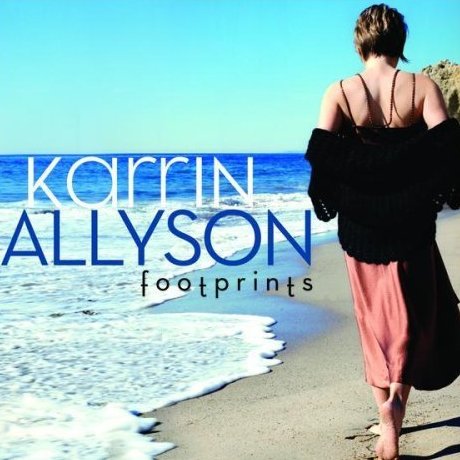
To close her vocalese tribute CD, Footprints, Karrin Allyson gathered together her guest artists Nancy King and Jon Hendricks for a scat summit on the Lambert, Hendricks & Ross staple, Everybodys Boppin. The tempo is easily as fast as the LH&R version, and the collective energy fairly bursts out of the speakers. Its Allysons album, but shes also the youngest singer here and thus has the most to prove. But she is up to the task and her rhythmically taut and harmonically sure solo gets the improvisations off to a flying start. Hendricks comes in sounding like a erupting volcano. While his voice is not what it was in his glory days, he still controls it very well, landing on all the right notes and not losing the growing momentum of the performance. Nancy Kings solo features outrageous leaps from register to register, with a jaw-dropping assortment of vocal sounds. After Bruce Barths note-gobbling exchanges with Todd Strait, the vocalists return for an ensemble chorus and a reprise of the melody. The performance closes with rapid-fire scat exchanges, with Allyson getting in the first and last word before the final chord.
Reviewer: Thomas Cunniffe