THE DOZENS: TWELVE BLUE & SENTIMENTAL TENOR SAX BALLADS
by Alan Kurtz
The tenor is the manliest saxophone and possibly the most masculine of all musical instrumentsexcept, of course, for the rarely sighted contrabass sax, which is so large it must be trundled from place to place like a float in Macy's Thanksgiving Parade, and requires its player to perch precariously atop a stepladder. (Wooden stepladders are preferred. The metal ones jangle like tambourines from the contrabass blast.)
Admittedly, the first of Sax's children to achieve apotheosis in jazz was the alto, thanks to bebopper Charlie Parker. The baritone has likewise been blessed with amazing players.
Yet overall nothing tops the tenor. Titanic technicians from Coleman Hawkins to John Coltrane transformed an ungainly marching-band contraption into an aerodynamic steamroller, achieving supersonic speeds without sacrificing the tenor's brute force.
On ballads, though, the tenor bares its soul. Or, rather, its player's soul. Not that balladry requires a different type of player. Hawkins and Coltrane are as prominent among balladeers as among flying fortresses. It's just that the ballad elicits from paragons of assertiveness a thoughtful sensitivity that's all the more effective for being so surprising.
Paradoxically, the manliest saxophone is most masculine when bluster yields to bliss, and the beastly turns beautiful.
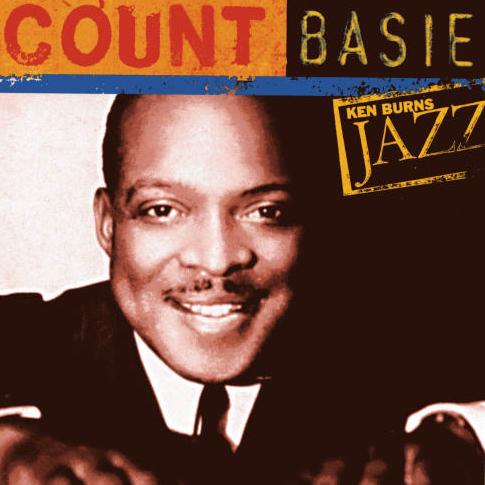
Count Basie: Blue and Sentimental
Track
Blue and Sentimental
Group
Count Basie Orchestra
CD
Ken Burns Jazz: Count Basie (Verve 314 549 090-2)
Musicians:
14-piece band featuring Buck Clayton (trumpet), Herschel Evans (tenor sax), Lester Young (clarinet), Count Basie (piano)
.Composed by Count Basie, Mack David & Jerry Livingston. Arranged by Eddie Durham
.Recorded: New York, June 6, 1938
Rating: 93/100 (learn more)
A year before his untimely death from heart disease at age 29, "tough Texas" tenorman Herschel Evans revealed his gentle side with Count Basie, whose band was not renowned for ballads. Herschel Evans changed that. Stepping closer to the mike than customary, Evans wraps his big, warm tone around a listener the way an affable uncle dispenses hugs, convincing each little niece or nephew that she or he is Uncle's special favorite. "Blue and Sentimental" leaves us forever grateful for the too-short visit of Uncle Herschel.
Reviewer: Alan Kurtz
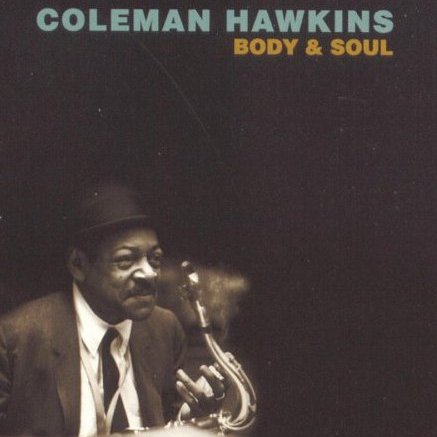
Coleman Hawkins: Body and Soul
Musicians:
Coleman Hawkins (tenor sax),
Tommy Lindsay & Joe Guy (trumpets), Earl Hardy (trombone), Jackie Fields & Eustis Moore (alto saxes), Gene Rodgers (piano), William Oscar Smith (bass), Arthur Herbert (drums)
.Composed by Frank Eyton, Johnny Green, Edward Heyman & Robert Sour
.Recorded: New York, October 11, 1939
Rating: 99/100 (learn more)
Historian Ted Gioia calls this "the most celebrated saxophone solo in the history of jazz" and "a landmark, breakthrough performance" that's been "studied by generations of musicians and is loved by countless jazz fans." Of course, not every listener will care to analyze pedagogically a musician's chordal navigation. Moreover, what Gioia describes as Hawkins's "ponderous tone" and "baroque arpeggios" assembled in "rigidly logical" construction may strike today's ears as mechanistic and old-fashioned. Even so, "Body and Soul" deserves its due. No trailblazer in tenor sax balladry cut a wider swath than Coleman Hawkins.
Reviewer: Alan Kurtz
Lester Young: I Cover the Waterfront (1946, take two)
Track
I Cover the Waterfront (take 2)
Artist
Lester Young (tenor sax)
CD
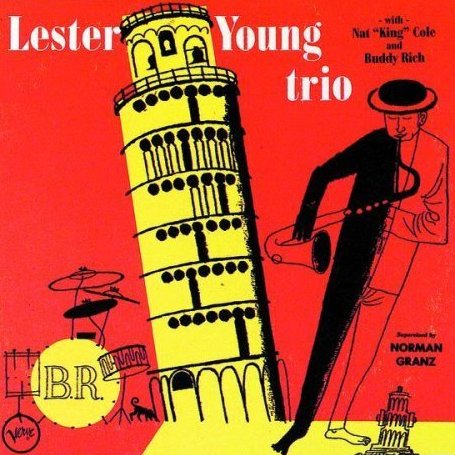
Lester Young Trio (Verve 314 521 650-2)
Musicians:
Lester Young (tenor sax), Nat 'King' Cole (piano), Buddy Rich (drums).
Composed by Johnny Green & Edward Heyman
.Recorded: Los Angeles, March or April 1946
Rating: 96/100 (learn more)
Musically, Lester Young was Coleman Hawkins in a funhouse mirror. The stolid muscleman, taking a break from harmonic weightlifting to admire his brawny reflection, sees instead a lithe minimalist doing tai chi. More conceptualist than technician, Pres liked to "tell a little story" instrumentally. "Lester sings with his horn," remarked his pal Billie Holiday. "You listen to him and can almost hear the words." Here he waits alone at the edge of the sea, scanning the horizon for his intended's return. That much is in the song. The melancholy wisdom that hoping will not make it so is in Lester's horn.
Reviewer: Alan Kurtz
Dexter Gordon: Autumn in New York
Track
Autumn in New York
Artist
Dexter Gordon (tenor sax)
CD
Daddy Plays the Horn (Bethlehem 20-30132)
Musicians:
Dexter Gordon (tenor sax), Kenny Drew (piano), Leroy Vinnegar (bass), Larance Marable (drums).
Composed by Vernon Duke
.Recorded: Los Angeles, September 18, 1955
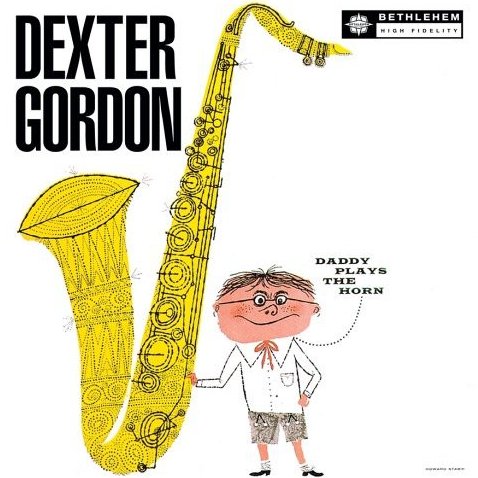
Rating: 95/100 (learn more)
During the 1950s, Dexter Gordon spent most of his time behind bars, and not the kind where drinks are served. Busted for heroin possession, Gordon appeared with other actual inmates in a Hollywood prison flick, Unchained (1955). Adding insult to injury, his sax was dubbed on the soundtrack by an anonymous studio musician. Upon his release, as if in revenge, Dexter recorded one of his most relaxed, self-assured sessions. And nobody dubbed his sinewy but sensuous sax. "If I had the wings of an angel," jailbirds have forever daydreamed, "over these prison walls I would fly." Dexter had wings.
Reviewer: Alan Kurtz
Benny Golson: You're Mine, You
Track
You're Mine, You
Artist
Benny Golson (tenor sax)
CD
Benny Golson's New York Scene (Contemporary OJCCD-164-2)
Musicians:
Benny Golson (tenor sax), Wynton Kelly (piano), Paul Chambers (bass), Charlie Persip (drums).
Composed by Johnny Green & Edward Heyman
.Recorded: New York, October 14, 1957
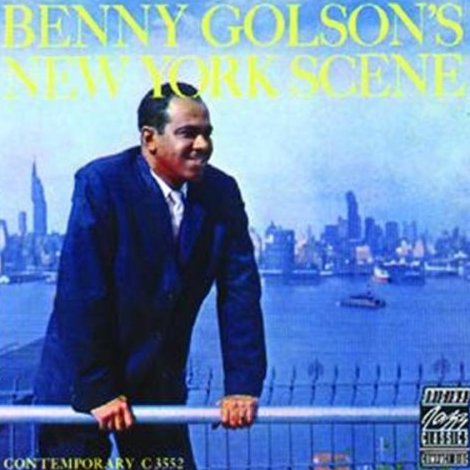
Rating: 94/100 (learn more)
Benny Golson's passionate but never blustery tenor styling was overshadowed in the mid-1950s by his compositional flair. That changed during stints with Art Blakey (1958) and The Jazztet (1959-1962), each of which gave Golson wider exposure as a player. Yet even in The Jazztet, Benny usually left the ballads to trumpeter and co-leader Art Farmer. Sometimes a musician just has too much talent to fit it all in. In any case, "You're Mine, You" proves that Benny as balladeer took a backseat to no one. A tender, touching tenor treat.
Reviewer: Alan Kurtz
Ben Webster: In the Wee Small Hours
Track
In the Wee Small Hours of the Morning
Artist
Ben Webster (tenor sax) and Oscar Peterson (piano)
CD
Ben Webster Meets Oscar Peterson (Verve 314 521 448-2)
Musicians:
Ben Webster (tenor sax), Oscar Peterson (piano), Ray Brown (bass), Ed Thigpen (drums).
Composed by Bob Hilliard & David Mann
.Recorded: Hollywood, November 6, 1959
Rating: 97/100 (learn more)
Nobody's balladry differed more from his up-tempo style than Ben Webster's. On jump tunes, Big Ben growled and snarled like a ravenous rottweiler mistaking your leg for lunch. On ballads, he turned as breathy and fluttery as a butterfly's sigh. (They don't?) Anyhow, this pensive late-night plaint introduced in 1955 by Frank Sinatra is best heard as you lie awake alone with an antique clock quietly ticking in the background while the rest of the world is fast asleep. "When your lonely heart has learned its lesson," goes the lyric, "that's the time you miss her most of all."
Reviewer: Alan Kurtz
Gerry Mulligan (featuring Zoot Sims): Come Rain or Come Shine
Track
Come Rain or Come Shine
Group
Gerry Mulligan Concert Jazz Band
CD
Gerry Mulligan and the Concert Jazz Band on Tour / Guest Soloist: Zoot Sims (Verve)
Musicians:
14-piece band led by Gerry Mulligan and featuring Zoot Sims (tenor sax)
.Recorded: Santa Monica, CA. October 1, 1960
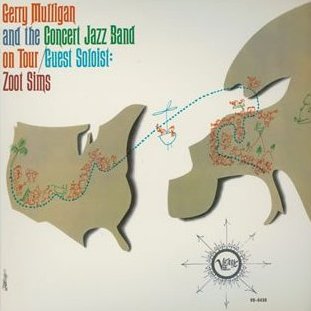
Rating: 97/100 (learn more)
Tenor sax ballads typically feature the lineup most conducive to intimacy, a single horn with rhythm section. Yet here the inveterate swinger Zoot Sims simmers down for a big band ballad as exposed and personal as any quartet. Gerry Mulligan's arrangement reminds us how even the finest gems are enhanced by an exquisite setting. And make no mistake, this is among the finest gems of Zoot's 45-year career. True to the song's title, Sims is alternately cloudy and clear, downcast and uplifting, delicate and robust. Whether it rained or shined, Zoot Sims invariably did the latter.
Reviewer: Alan Kurtz
Stanley Turrentine: Someone to Watch Over Me
Track
Someone to Watch Over Me
Artist
Stanley Turrentine (tenor sax)
CD
Ballads (Blue Note CDP 0777 7 95581 2 4)
Musicians:
Stanley Turrentine (tenor sax), Horace Parlan (piano), George Tucker (bass), Al Harewood (drums).
Composed by George & Ira Gershwin
.Recorded: Englewood Cliffs, NJ. January 20, 1961
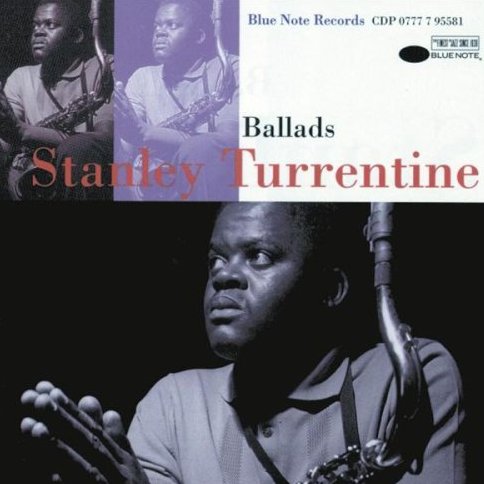
Rating: 94/100 (learn more)
Nowhere is nonpareil audio engineer Rudy Van Gelders renowned "Blue Note sound" more distinctive than on ballads. Besides its fundamental tone, every musical pitch resonates higher sounds called overtones. When you hear the aura of overtones crisply radiating around Stanley Turrentine's tenor, you understand what made Van Gelder unique. No non-musician played a greater role in birthing so many stellar jazz recordings. That said, Turrentine's tenor is still the star. It's just that Stanley's star shone brightest among Van Gelder's galaxy in far, far away New Jersey.
Reviewer: Alan Kurtz
Hank Mobley: I Should Care
Musicians:
Hank Mobley (tenor sax), Wynton Kelly (piano), Paul Chambers (bass), Philly Joe Jones (drums).
Composed by Sammy Cahn, Axel Stordahl & Paul Weston
.Recorded: Englewood Cliffs, NJ. December 5, 1961
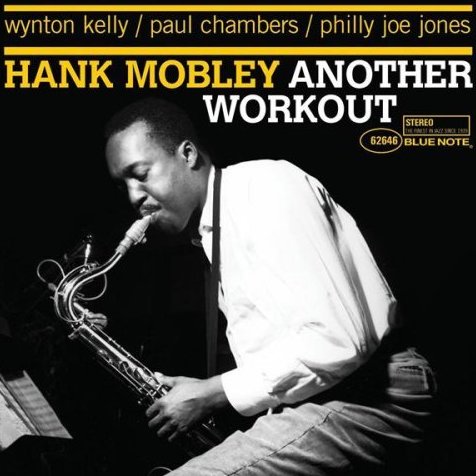
Rating: 94/100 (learn more)
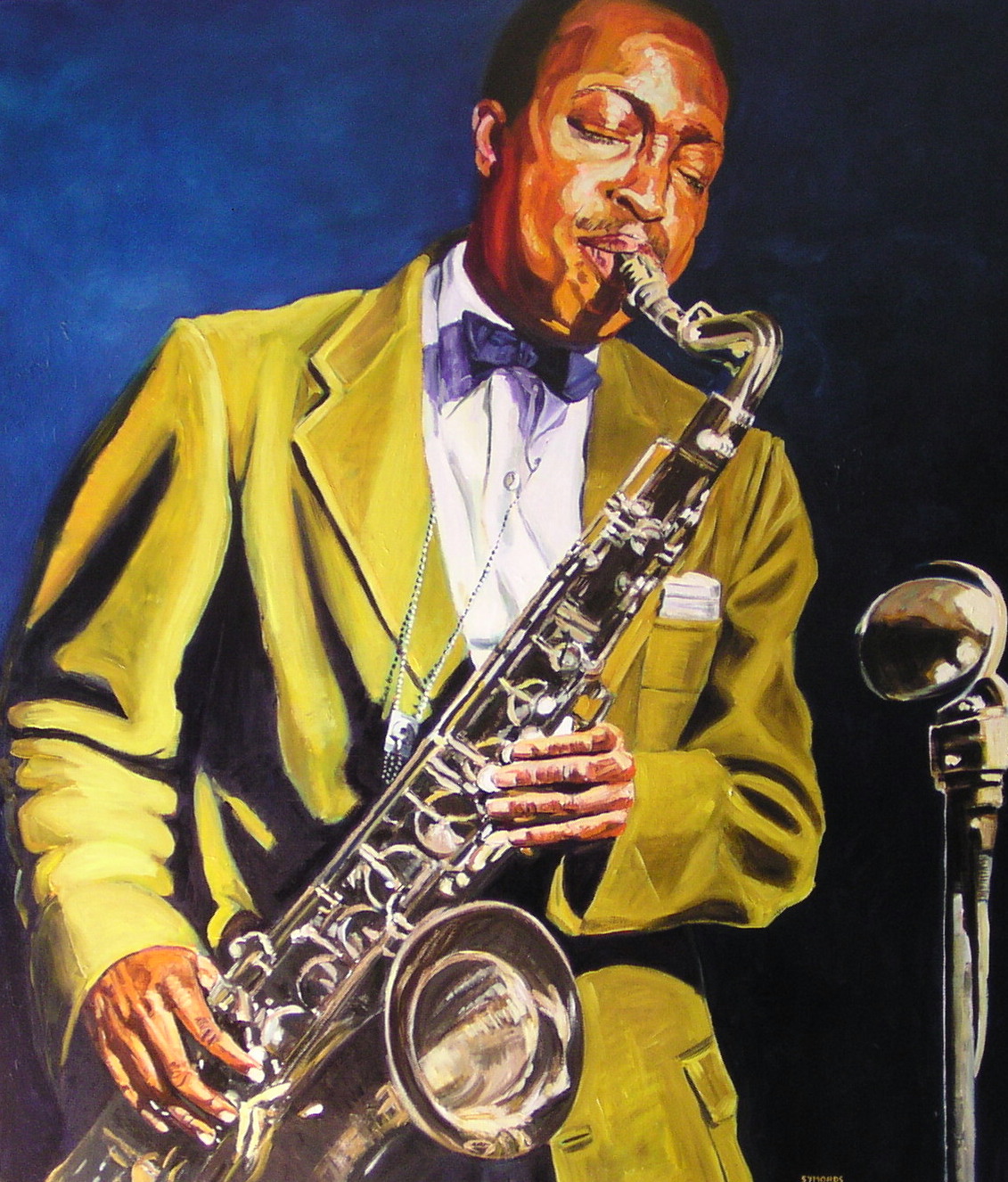
Hard bop and ballads were strange bedfellows. Many hard-bop drummers didn't own wire brushes for their snares, preferring sticks the size of Hank Aaron's bat. Another Hank, surnamed Mobley, was one hard-bop stalwart with a soft spot for pretty tunes. Moreover, at the time of this recording, Hank and his cohorts were either current or former sidemen of Miles Davisa preeminent balladeer. Even when resorting to the jazzman's time-honored recourse of double-timing over a slow tempo, as he does here, Mobley's slightly overcast tone was mobilized in the service of lyricism. And, yes, Philly Joe uses brushes. Another knockout.
Reviewer: Alan Kurtz
Sonny Rollins: Where Are You?
Musicians:
Sonny Rollins (tenor sax), Jim Hall (guitar), Bob Cranshaw (bass), Ben Riley (drums).
Composed by Harold Adamson & Jimmy McHugh
.Recorded: New York, February 13, 1962
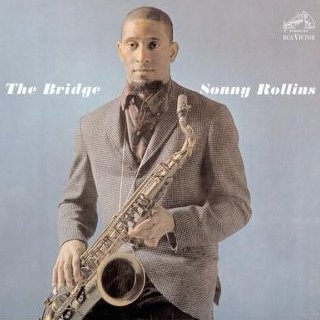
Rating: 97/100 (learn more)
In 1962, returning from one of his periodic sabbaticals, Sonny Rollins met a mixed reception. For some, jazz's increasing experimentalism had rendered Rollins pass. One young jazzman dismissed the elder's comeback album as outmoded, scoffing, "We all knew Sonny could play pretty. This was like declining free samples from Fort Knox by saying, "We all knew they had gold there." In five golden minutes, Sonny reminds us that ballads aren't about navigating tricky chord changes. They're about rafting the far trickier currents of the human heart. Sonny Rollins was a raftsman par excellence.
Reviewer: Alan Kurtz
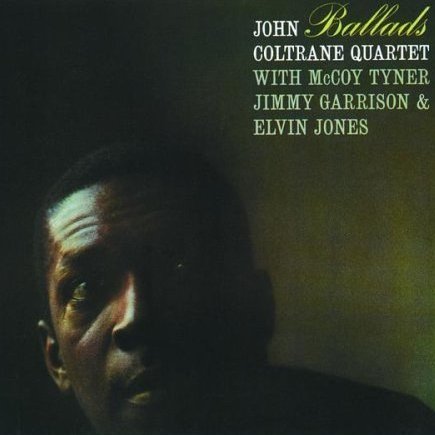
John Coltrane: I Wish I Knew
Musicians:
John Coltrane (tenor sax), McCoy Tyner (piano), Jimmy Garrison (bass), Elvin Jones (drums).
Composed by Harry Warren & Mack Gordon
.Recorded: Englewood Cliffs, NJ. November 13, 1962
Rating: 98/100 (learn more)
There are precious few recordings where a musician's opening notes bypass our eardrums and strike directly at the soul. This is one of those tracks. After Tyner's intro, Coltrane's entrance doesn't merely tingle the spine, it galvanizes the central nervous system. People long remember exactly where they were upon learning of some signal event (usually a national tragedy). Other, more personal experiences are momentous in a different way. They make us forget where we are. Like the instant when we realize that someone we love, loves us, too. John Coltrane's "I Wish I Knew" is such an epiphany.
Reviewer: Alan Kurtz
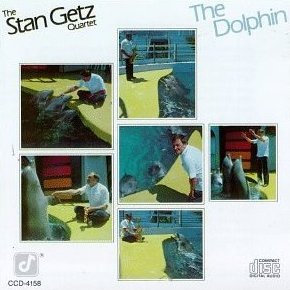
Stan Getz: A Time for Love
Musicians:
Stan Getz (tenor sax), Lou Levy (piano), Monty Budwig (bass), Victor Lewis (drums).
Composed by Johnny Mandel & Paul Webster
.Recorded: San Francisco, May 1981
Rating: 98/100 (learn more)
Early in his career, Stan Getz was dubbed The Sound, just as Sinatra was The Voice. Small wonder. Getz's tenor tone was among Western Civilization's crowning glories, right up there with Shakespeare's quill, Rembrandt's brush and Edison's lab. Thirty-one years after Getz recorded Johnny Mandel's "Hershey Bar," the rematch of musician and composer was still sweet. "A Time for Love," written for the forgettable movie An American Dream (1966), is unforgettable Getz. Instead of the customary ballad order of sax, piano, and sax again to close, Getz and Levy render one gorgeous 40-bar chorus apiece, giving us a 6-minute preview of Heaven.
Reviewer: Alan Kurtz