THE DOZENS: TWELVE ESSENTIAL JOHN COLTRANE PERFORMANCES by Steve Greenlee
John Coltrane (1926-1967) started out as a promising straight-ahead bop player who served under Thelonious Monk, Miles Davis and other A-list musicians. His star rose with the exceptional Cookin / Steamin / Relaxin /Workin records of Daviss 1950s quintet, as he developed a tone that was both muscular and romantic. When he stepped out on his own, he stepped up his game, and by 1959 he had already released two masterpieces, Blue Train and Giant Steps. Eight years later he was dead, but not before he veered far from his original course, moving into avant-garde and free territory, battling addiction, finding religion, expressing musically his devotion to God, and in the process becoming one of the most controversial figures in the history of jazz.
John Coltrane: Moment's Notice
Musicians:
John Coltrane (tenor sax), Lee Morgan (trumpet), Curtis Fuller (trombone), Kenny Drew (piano), Paul Chambers (bass), Philly Joe Jones (drums).
Composed by John Coltrane
.Recorded: New York, September 15, 1957
Rating: 94/100 (learn more)
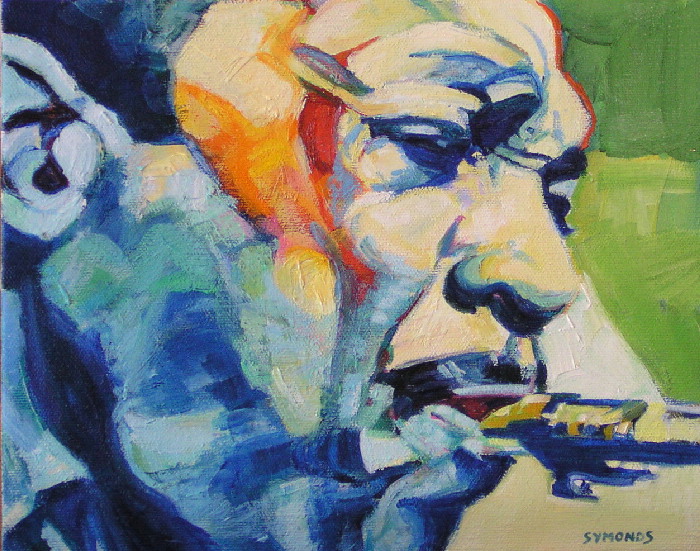
John Coltrane, artwork by Michael Symonds
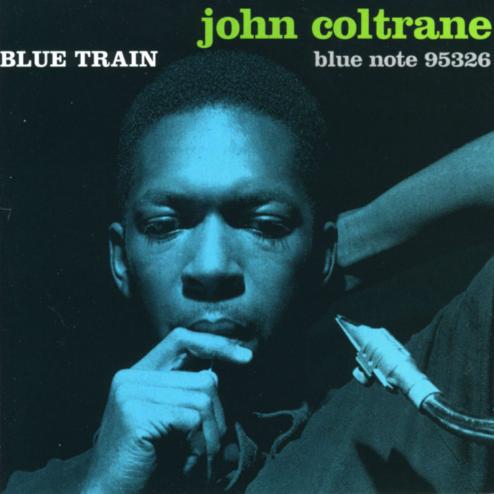
John Coltrane had already made folks sit up and take notice as a member of Miles Daviss quintet, but the album Blue Train established him as a first-rate leader and composer. The title track is the classic cut, but Moments Notice would be the standout on any other album. The melody is bright yet blue, and the band is tight. Everybody but Jones takes a solo, and everybody has something to say. These are what would become known as the early years, but Coltranes expressive, enveloping sound has already developed. His first solo swerves all over the place but stays on track, arriving at its destination right on time.
Reviewer: Steve Greenlee
John Coltrane: Naima
Track
Naima
Artist
John Coltrane (tenor sax), Wynton Kelly (piano), Paul Chambers (bass), and Jimmy Cobb (drums)
CD
Giant Steps (Rhino/Atlantic R2 75203)
Musicians:
John Coltrane (tenor sax), Wynton Kelly (piano), Paul Chambers (bass), Jimmy Cobb (drums).
Composed by John Coltrane
.Recorded: New York, December 2, 1959
Rating: 99/100 (learn more)
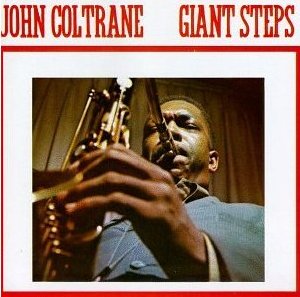
1959 was jazzs magical year with Trane, Ornette, Evans, Mingus, and Miles issuing their clarion calls and here is one reason why. First, its a gorgeous piece of writing how many times has Naima been covered over the years? and, second, it is played with great patience and restraint. The tune runs only 4 minutes 21 seconds, but the quartet is in no rush to get there. In mood, Naima shares traits with Miles Daviss Kind of Blue album, on which Coltrane played a key role just months earlier, but this is a very different piece of work, because theres a real melody here. The rhythm section holds back while Coltrane blows simple, unadorned passages that haunt, and pianist Wynton Kelly delivers a touching solo of his own. Once while listening to this song, pay attention only to bassist Paul Chambers thump-thump- thumping. Its quite revealing.
Reviewer: Steve Greenlee
John Coltrane: Equinox
Musicians:
John Coltrane (tenor sax), McCoy Tyner (piano), Steve Davis (bass), Elvin Jones (drums).
Composed by John Coltrane
.Recorded: New York, October 26, 1960
Rating: 98/100 (learn more)
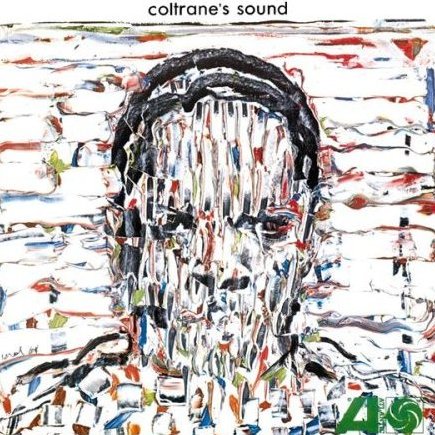
Equinox is a simple enough composition after an intro that nods to Star Eyes as performed by Charlie Parker, its just a 12-bar blues built on the simplest of melodies and employing four basic chords. A child could have written it. But the devil is in the details, and Coltranes quartet digs up a myriad of them over these eight minutes. The atmosphere is one of mystery Elvin Jones tap-tapping on his cymbals, Steve Davis plucking meditatively, and McCoy Tyner comping with those thick chords of his before taking the tunes climactic solo. Coltrane stays close to the melody here, but with him its all about feeling.
Reviewer: Steve Greenlee
John Coltrane: Chasin' the Trane
Track
Chasin the Trane
Artist
John Coltrane (tenor sax)
CD
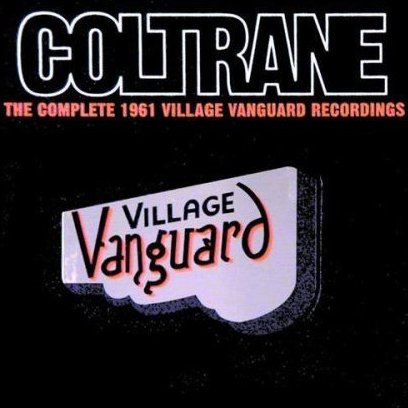
The Complete 1961 Village Vanguard Recordings (Impulse IMPD4-232)
Musicians:
John Coltrane (tenor sax), Eric Dolphy (alto sax), Reggie Workman (bass), Elvin Jones (drums).
Recorded: New York, November 1, 1961
Rating: 99/100 (learn more)
Any self-respecting jazz fan ought to own this four-disc set, and ought to play it at least once a year. It hints at where Coltrane would head in the years to come, and it is a transcendental experience in its own right. Chasin the Trane pianist McCoy Tyner drops out for this tune finds Coltrane and Eric Dolphy squawking at each other while drummer Elvin Jones furiously propels them along and Reggie Workman keeps them tethered with a walking bass. Tyners absence is actually a plus here, taking away the middle register and the chords to allow the listener to focus exclusively on the mentally exhausting interchange between the horns. How Coltrane and Dolphy manage never to repeat a phrase through all of this is almost beyond comprehension.
Reviewer: Steve Greenlee
John Coltrane: Greensleeves
Track
Greensleeves
Artist
John Coltrane (soprano sax)
CD
The Complete 1961 Village Vanguard Recordings (Impulse IMPD4-232)
Musicians:
John Coltrane (soprano sax), McCoy Tyner (piano), Reggie Workman (bass), Elvin Jones (drums).
Traditional
.Recorded: Village Vanguard, New York, November 3, 1961
Rating: 97/100 (learn more)
Coltranes jukebox-friendly interpretation of the show tune My Favorite Things has always overshadowed his overhaul of the English folk song Greensleeves also known as the Christmas song What Child Is This? but this is the superior performance. This wasnt the first time he recorded it, but he really nailed it here. The first few notes out of Coltranes sax come crashing down more than an octave as he states the melody once and then sends it caroming all over the place, augmenting its simple beauty with squeals and phrases that seem gorgeously out of place.
Reviewer: Steve Greenlee
John Coltrane: Nancy (With the Laughing Face)
Musicians:
John Coltrane (tenor sax), McCoy Tyner (piano), Jimmy Garrison (bass), Elvin Jones (drums).
Recorded: New York, September 18, 1962
Rating: 94/100 (learn more)
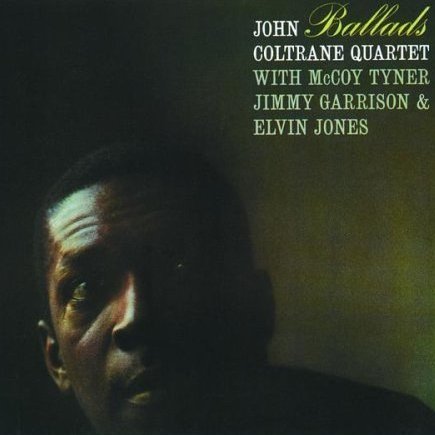
On an album of beautiful balladry, the closer, Nancy (With the Laughing Face), is the crme de la crme. Its only three minutes long, and Coltrane solos through all of it. By no means is this a wild solo. Anyone could play these notes, but its hard to imagine them being played with as much feeling as Coltrane infuses. Hell bend a note downward when you think the passage is over (listen to what he does at the 49-second mark), or hell add a few upturned notes onto a phrase (listen again at 1:03). Hell rush ahead of the beat and then wait as it passes by and he falls behind. You hear the emotions he feels, and it sounds so perfect.
Reviewer: Steve Greenlee
John Coltrane: I Want to Talk About You
Track
I Want to Talk About You
Artist
John Coltrane (tenor sax), McCoy Tyner (piano), Jimmy Garrison (bass), and Elvin Jones (drums)
CD
Live at Birdland (Impulse IMPD-198)
Musicians:
John Coltrane (tenor sax), McCoy Tyner (piano), Jimmy Garrison (bass), Elvin Jones (drums).
Composed by Billy Eckstine
.Recorded: Birdland, New York, October 8, 1963
Rating: 93/100 (learn more)
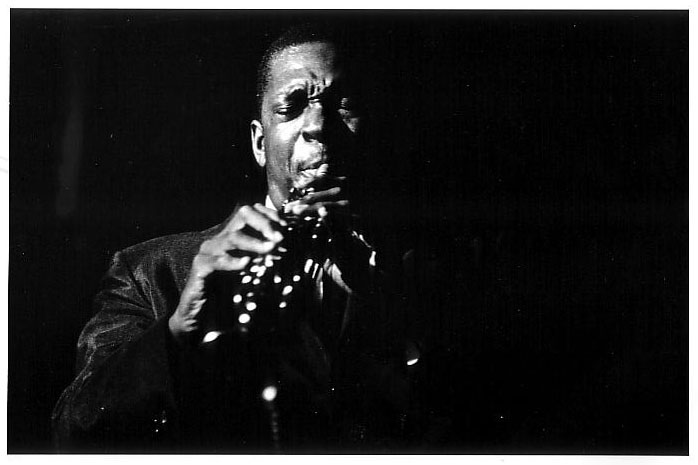
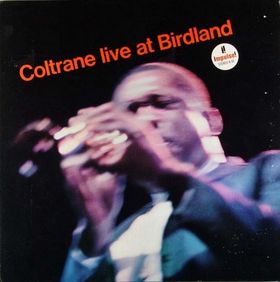
John Coltrane, photo by Herb Snitzer
I Want to Talk About You is a pretty little Billy Eckstine ballad through which Coltrane weaves an increasingly daring solo, splashing a torrent of notes onto the backdrop provided by his nonpareil rhythm section, which was particularly hot on this night at the club Birdland. The real magic, though, begins five minutes into the tune, when the rhythm section drops out and Coltrane is left to blow unaccompanied. His lines are so fluid, so majestic, that it is easy to forget that a quartet was ever there. The drums and bass are gone, but the beat remains. The piano is gone, but the melody is right there behind Coltranes harmonizing. These three jaw-dropping minutes rank among the most blissful of Coltranes career.
Reviewer: Steve Greenlee
John Coltrane: Acknowledgement
Track
Acknowledgement
Artist
John Coltrane (tenor sax, vocal)
CD
A Love Supreme (Impulse 314 589 945-2)
Musicians:
John Coltrane (tenor sax, vocal), McCoy Tyner (piano), Jimmy Garrison (bass), Elvin Jones (drums).
Recorded: New York, December 1964

Rating: 100/100 (learn more)
Those first bass notes, those first pleas from the saxophone so begins Coltranes love letter to God. He offered up A Love Supreme as a gift to his Creator, as words of praise and as a confession. His playing is the embodiment of a quest; you can hear him searching for something, seeking guidance, as the chords move up and up, and the horn lines keep reaching higher. On musical merits, A Love Supreme particularly the first movement, Acknowledgement, where Coltrane chants a love supreme with his vocal cords when he had said it enough with his horn stands as a singular achievement in the history of music, an album that belongs in every collection of American music. But Coltrane was also seeking spiritual fulfillment when he recorded A Love Supreme. For the rest of us, it is itself spiritually fulfilling.
Reviewer: Steve Greenlee
John Coltrane: One Down, One Up
Track
One Down, One Up
Artist
John Coltrane (tenor sax)
CD
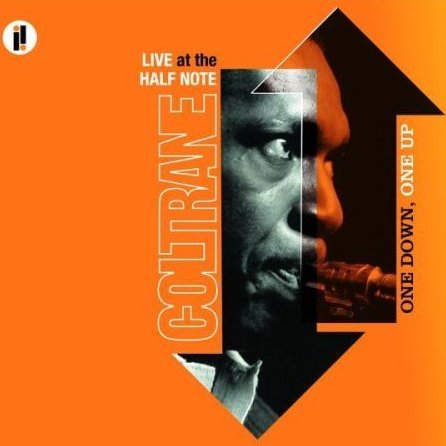
One Down, One Up: Live at the Half Note (Impulse B0002380-02)
Musicians:
John Coltrane (tenor sax), McCoy Tyner (piano), Jimmy Garrison (bass), Elvin Jones (drums).
Recorded: Live at the Half Note, New York, March 26, 1965
Rating: 99/100 (learn more)
Unearthed, cleaned up and released 40 years after it was recorded, this performance stands among the Coltrane quartets most rewarding. The opening number, which runs nearly half an hour, is a tour de force of creativity and stamina. This would be the final year the legendary group remained together, and they play like they were aware of that fact with immediacy, urgency and audacity. Elvin Jones bashes away at his kit, Jimmy Garrison plucks with great speed and dexterity, and McCoy Tyner plunks down powerful, well-spaced chords that threaten to break the piano strings and shatter the ivories. Coltrane himself blows so fiercely he must have been gasping for air, ready to pass out, by the end of it all. A meteorologist would call it hurricane-force improvisation with intermittent tornadoes.
Reviewer: Steve Greenlee
John Coltrane: Ascension - Edition II
Musicians:
John Coltrane (tenor sax), Freddie Hubbard (trumpet), Marion Brown (alto sax), John Tchicai (alto sax), Pharoah Sanders (tenor sax), Archie Shepp (tenor sax), McCoy Tyner (piano), Art Davis (bass), Jimmy Garrison (bass), Elvin Jones (drums), Dewey Johnson (trumpet).
Recorded: Englewood Cliffs, N.J., June 28, 1965

Rating: 89/100 (learn more)
Its difficult (and maybe pointless) to choose between the two 40-minute versions of Ascension that are included on the CD release, so lets go with the Edition II, which for some reason appears first. In any case, we recommend you listen to only one version per sitting, because this is difficult, trying music. Some would call it chaotic. Ascension can go into the same category as Ornette Colemans Free Jazz and Peter Brotzmanns Machine Gun. Yes, there is structure beneath all this, but it is impossible to ascertain exactly how much direction Coltrane gave the cast of musicians he assembled here. The seven saxophonists and trumpeters seem to blare away without much regard for what theyre hearing, if theyre even listening. So why the 89 rating? Because these moments of zaniness are mere bridges that link the high points of this performance namely, the intensely focused improvisation that occurs when most of the ensemble sits back to let the individuals solo with the rhythm section.
Reviewer: Steve Greenlee
John Coltrane: The Father and the Son and the Holy Ghost
Track
The Father and the Son and the Holy Ghost
Artist
John Coltrane (tenor sax, percussion)
CD
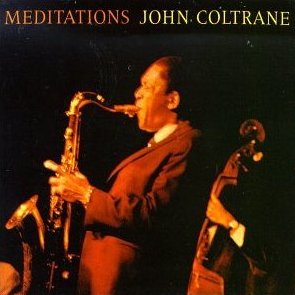
Meditations (Impulse A-9110)
Musicians:
John Coltrane (tenor sax, percussion), Pharoah Sanders (tenor sax, tambourine, bells), Jimmy Garrison (bass), McCoy Tyner (piano), Elvin Jones (drums).
Composed by John Coltrane
.Recorded: Englewood Cliffs, N.J., November 23, 1965
Rating: 97/100 (learn more)
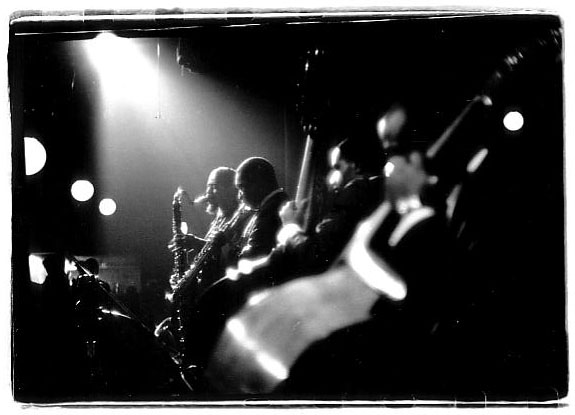
Coltrane was definitely listening to Albert Ayler the evidence is not only in the title but in the folk-like theme that opens and closes The Father and the Son and the Holy Ghost, which was recorded the year after Ayler made his big splash. No matter who did what first, this is a glorious, original piece of art. Coltrane added a second tenor and a second drummer to his quartet for this overtly religious work. Meditations is hardly descriptive of this outing Bombasts would be more like it. Yet, like A Love Supreme and Ascension before it, this is not caterwauling for caterwaulings sake. A search and a conversation unfold before us, and it is perhaps no stretch to suggest that the tune is a metaphor for the manner in which Coltrane thinks we ought to live with reverence for a higher power that can guide us and help us find our path through the chaos of the everyday.
Reviewer: Steve Greenlee
John Coltrane: Mars
Musicians:
John Coltrane (tenor sax, bells), Rashied Ali (drums).
Recorded: Englewood Cliffs, N.J., February 22, 1967
Rating: 94/100 (learn more)
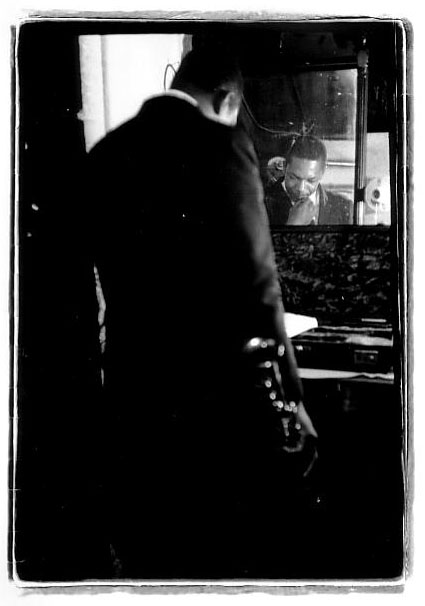
John Coltrane
Photo by Herb Snitzer
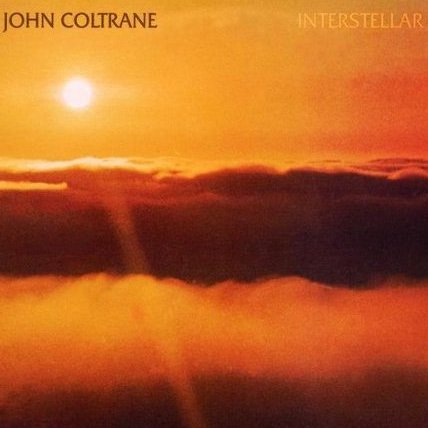
Coltrane stripped his musical ideas to the bone with his final great album, Interstellar Space. A series of duets with the free drummer Rashied Ali, the record would become the sacred text for all other sax-drums pairings. Nothing resembling melody or rhythm exists here just pure sound and thoughts, free of structure and constraints. Pure emotion, pure energy, pure reactions. For the open-minded, a song song? like Mars can be an enlightening experience. When hes not honking away, Coltrane blows circular, repetitive phrases while Ali strikes skins and cymbals with little regard for their intended uses a ride cymbal becomes a snare drum, a snare becomes a hi-hat. What was going through Coltranes mind when he came up with this? Well never know.
Reviewer: Steve Greenlee
Click her for comments and discussion on Twelve Essential John Coltrane Performances
Check out more 'Dozens' here