THE DOZENS: TWELVE LATIN JAZZ CLASSICS by Mark Lomanno
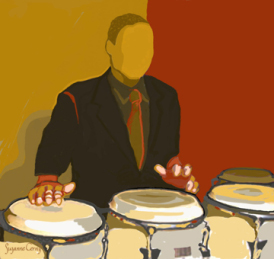
Editor's note: Pianist Mark Lommano first traveled to Cuba on a research grant, seeking to unravel the mysteries of the Cuban son. On his second trip, he came as a musician, performing at the Santiago Jazz Festival and working with Joaquin Pozo, the prominent conquero and bandleader, and the great-nephew of the legendary Chano Pozo. Back stateside, he has brought his world fusion experiences to bear on his work with The Mark Lomanno Afro-Cuban Project, as well as his continued scholarly work in the area of Latin music.
Here Mark picks twelve of his favorite Latin jazz performances, some well known, others neglected gems from the music's past.
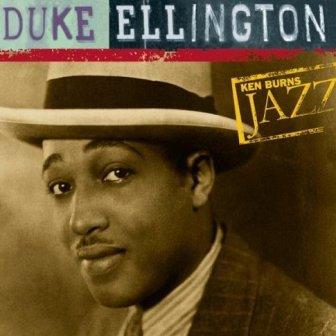
Duke Ellington: Caravan (1937)
Track
Caravan
Artist
Duke Ellington (piano)
CD
Ken Burns Jazz: Duke Ellington (Columbia/Legacy CK 61444)
Musicians:
Duke Ellington (piano), Rex Stewart (cornet), Arthur Whetsol (trumpet), Cootie Williams (trumpet), Lawrence Brown (trombone), Joe "Tricky Sam" Nanton (trombone), Juan Tizol (valve trombone), Barney Bigard (clarinet), Johnny Hodges (clarinet), Otto Hardwick (alto sax), Harry Carney (baritone sax), Fred Guy (guitar), Billy Taylor (bass), Sonny Greer (drums).
Composed by Duke Ellington & Juan Tizol
.Recorded: New York, May 14, 1937
Rating: 97/100 (learn more)
Ellingtons early contribution to the Latin jazz canon is a collaboration with valve trombonist Juan Tizol. Caravan combines the Afro-Cuban practice of elaboration over a repeating vamp section, and the American jazz tradition of passages with more harmonic variety. In this case, in the middle section Ellington references the oft-employed harmonic progression from George Gershwins I Got Rhythm to contrast to the first theme, which is driven by a more rhythmic feel. Tizol continued to work as trombonist and collaborative composer in Ellingtons band for years to come, and the enormously popular Caravan stayed in Ellingtons repertoire for his entire career.
Reviewer: Mark Lomanno
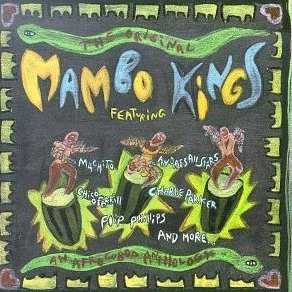
Machito: Tanga
Track
Tanga
Group
Machito and his Orchestra
CD
The Original Mambo Kings: An Introduction to Afro-Cubop (Verve 513876)
Musicians:
Charlie Parker (alto sax), Flip Phillips (tenor sax), Mario Bauza (trumpet),
Frank "Paquito" Davilla, Bob Woodlen (trumpet); Gene Johnson, Fred Skerritt (alto sax); Jose Madera (tenor sax) Leslie Johnakins (baritone sax); Rene Hernandez (piano); Roberto Rodriguez (bass); Luis Miranda (conga); Jose Mangual (bongo); Ubaldo Nieto (timbales)
.Composed by Mario Bauza. Arranged and conducted by Machito
.Recorded: New York, January 1949
Rating: 95/100 (learn more)
Written by Mario Bauza, the musician who brought Dizzy Gillespie and Chano Pozo together, Tanga is a forgotten classic, which predated and anticipated the partnership of Afro-Cuban music and jazz that took place in the Gillespie and Kenton bands, among others. Joining the band as a guest soloist is the jazz tenor saxophonist Flip Phillips, who improvises over a repeating pattern played by the rest of the band. This manner of improvisation continues to be the norm for Afro-Cuban music, but at the time it would have been quite challenging for an American jazz musician. Nonetheless, Phillips gives a convincing performance, fitting in comfortably with the Machito Orchestra.
Reviewer: Mark Lomanno
Dizzy Gillespie: Manteca (live 1948)
Track
Manteca
Artist
Dizzy Gillespie (trumpet)
CD
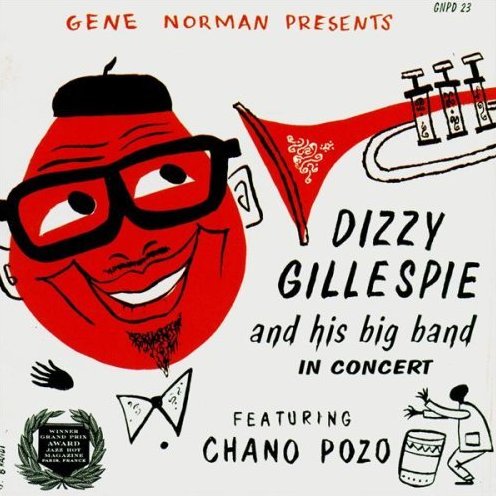
Dizzy Gillespie And His Big Band In Concert Featuring Chano Pozo (GNP/Crescendo 23)
Musicians:
Dizzy Gillespie (trumpet),
and a big band featuring James Moody (tenor sax) and Chano Pozo, (congas)
.Composed by Dizzy Gillespie and Chano Pozo
.Recorded: Recorded live in 1948
Rating: 100/100 (learn more)
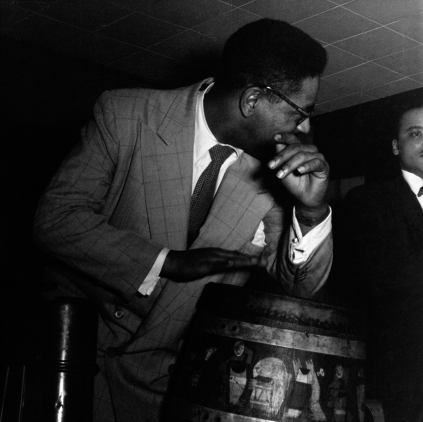
Dizzy Gillespie at Birdland, photo by Marcel Fleiss
Often regarded as the quintessential representation of Latin jazz, Manteca was innovative among contemporary compositions for the heightened level of synthesis between Afro-Cuban music and American jazz. Introduced to Afro-Cuban music by trumpeter/composer Mario Bauza, Dizzy Gillespie sought to explore the music with his big band, adding the Cuban conguero Chano Pozo in September 1947. Until his untimely and mythic demise just over a year later, Chano Pozo made an indelible mark on both the jazz and Latin American music worlds. This track contrasts sections of more percussion-driven, rhythmically complex Afro-Cuban passages with passages that are more akin to the melodic and harmonic conventions of American jazz.
Reviewer: Mark Lomanno
Arsenio Rodriguez: Adivinalo
Musicians:
Arsenio Rodriguez (tres),
Carmelo Alvarez (trumpet), Alfredo Chocolate Armenteros (trumpet), Felix Chappotin (trumpet), Rene Scull (vocal), Carlos Ramirez (guitar, vocal), Antolin Papa Kila Suarez (bongos), Luis Lili Martinez (piano), Lazaro Prieto (bass), Felix Alfonso (conga)
.Composed by Arsenio Rodriguez
.Recorded: Havana, Cuba (c.1946-50)
Rating: 95/100 (learn more)
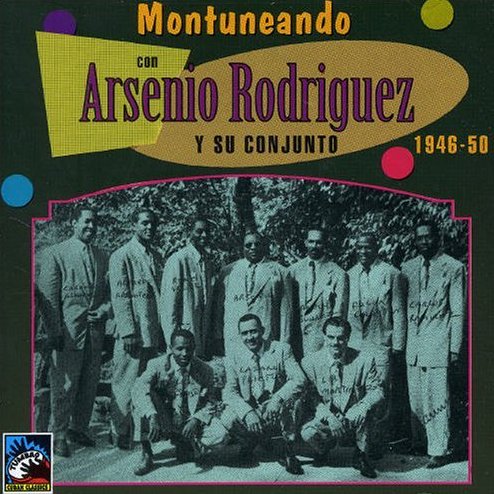
The contributions of Arsenio Rodriguez, the Cuban tres player and composer, to the development of Latin jazz have long been underappreciated. Rodriguezs band featured innovative music, rooted in the Afro-Cuban tradition, without which modern Latin jazz and salsa would have been much different. This track is part of a compilation from Rodriguezs best music. Adivinalo features trumpet and piano improvisations relying on chromaticism and modern jazz harmony. Along with Rodriguez, several other musicians who would become integral to the development of Latin jazz are on this album, including trumpeters Felix Chappotin and Chocolate Armenteros, and pianist Luis Lili Martinez. The percussion section drives this piece, which definitely captures the power of the Afro-Cuban tradition.
Reviewer: Mark Lomanno
Stan Kenton: The Peanut Vendor (1947)
Track
El Manisero (The Peanut Vendor)
Artist
Stan Kenton (piano)
CD
The Best of Stan Kenton (Capitol CDP 7243 8 31504 2 7)
Musicians:
Stan Kenton (piano),
big band featuring Milt Bernhart (trombone) and Shelly Manne (drums)
.Composed by Moises Simons; arranged by Stan Kenton
.
Rating: 93/100 (learn more)
More well known that the first popular American version recorded by Don Azpiazus Orchestra in 1931, this arrangement was the beginning of Kentons lifelong commitment to the exploration of Afro-Cuban music. Both the Azpiazu and Kenton renditions of this song, which celebrates the life of the pregonero (street vendor), were hugely popular in their respective eras. Because the Kenton band was already highly regarded, his recording reached a wider American audience. One of the most distinctive features of this track is the hypnotic repetition of the backgroundvery common in Afro-Cuban music, but not in American jazzover which soloists and percussionists elaborate and improvise varying patterns.
Reviewer: Mark Lomanno
Chico OFarrill: Afro-Cuban Jazz Suite
Track
Afro-Cuban Jazz Suite
Group
Chico OFarrill Orchestra
CD
Cuban Blues: The Chico OFarrill Sessions (Verve 533256)
Musicians:
Mario Bauza (trumpet), Harry "Sweets" Edison (trumpet), Charlie Parker (alto sax), Flip Phillips (tenor sax), Buddy Rich (drums), Machito (maracas),
Rene Hernandez (piano), Jose Mangual (percussion)
.Recorded: December 21, 1950
Rating: 97/100 (learn more)
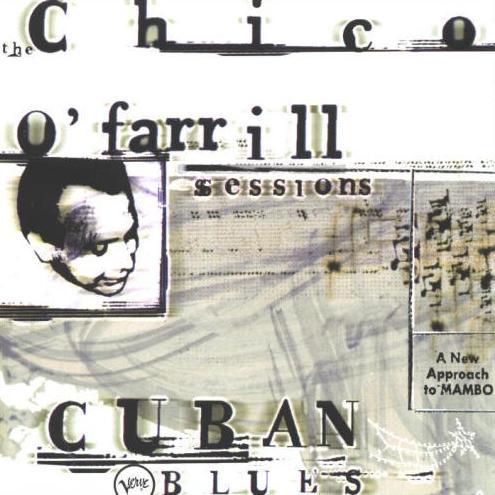
Chico OFarrill, an important Latin jazz pioneer, achieved success as a bandleader, composer and arranger. OFarrill was also a trumpet player, and this extended composition features that instrument -- and was recorded several times, including versions with Clark Terry and Dizzy Gillespie as the soloist. This recording, overseen by Norman Granz for Verve Records, captures OFarrills band at the pinnacle of its sound in the early 1950s. In addition to work with his own band, OFarrill is responsible for many arrangements played by the Machito, Gillespie and Kenton bands. The Afro-Cuban Jazz Suite is one of OFarrills masterpieces.
Reviewer: Mark Lomanno
Luiz Bonf: Manh De Carnaval
Track
Manh De Carnaval
Artist
Luiz Bonfá (guitar)
CD
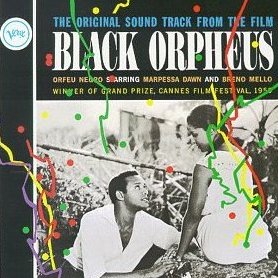
Black Orpheus: Original Movie Soundtrack (Fontana 830783)
Musicians:
Luiz Bonfá (guitar), Antonio Carlos Jobim (piano, vocals), João Gilberto (guitar, vocals).
Composed by Luiz Bonf
.Recorded: 1959
Rating: 95/100 (learn more)
Another recording whose popularity begat a resurgence of public interest in Latin American music, Manh De Carnaval , the theme song from the movie Orfeu Negro (Black Orpheus), helped pave the way for bossa nova to take flight with the American public. This composition, sometimes known in English as "A Day in the Life of a Fool," has become part of the jazz canon, having been recorded countless times; however, this is the track in its original form. Antonio Carlos Jobim and Luiz Bonf co-wrote the score for the film, which is a retelling of the Orpheus and Eurydice tale from Greek mythology. The movies award-winning success and widespread popularity ignited the careers of the composers in America and worldwide.
Reviewer: Mark Lomanno
Stan Getz and Joao Gilberto: S Dano Samba
Track
S Dano Samba
Artist
Stan Getz (tenor sax) and João Gilberto (guitar vocals)
CD
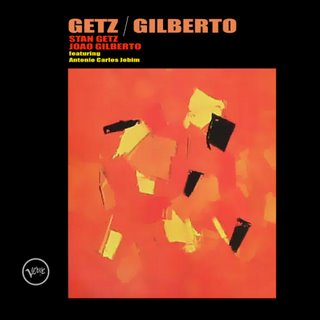
Getz/Gilberto (Verve 521414)
Musicians:
Stan Getz (tenor sax), João Gilberto (guitar vocals), Antonio Carlos Jobim (piano),
Tommy Williams (bass), Milton Banana (drums)
.Composed by Antonio Carlos Jobim
.Recorded: March 1963
Rating: 97/100 (learn more)
A lesser known track from a very famous album, S Dano Samba features an excellent saxophone solo by Stan Getz, who was integral in popularizing the music of Antonio Carlos Jobim in the United States. This is Jobims composition (he also plays piano on this recording), with lyrics by the Brazilian poet Vinicius de Moraes, sung here by the guitarist Joao Gilberto. The mood of the song is ebullient and playful, capturing the unique swing in Brazilian bossa nova. The interaction between the musicians produces a magical result on what became one of the most successful jazz albums of all time.
Reviewer: Mark Lomanno
Cal Tjader: Soul Sauce (Guachi Guaro)
Musicians:
Cal Tjader (vibes), Willie Bobo (percussion),
Lonnie Hewitt (piano), John Hilliard (bass), Johnny Rae (drums), Armando Peraza (percussion)
.Composed by Dizzy Gillespie and Chano Pozo; arranged by Cal Tjader
.Recorded: November 20, 1964
Rating: 95/100 (learn more)
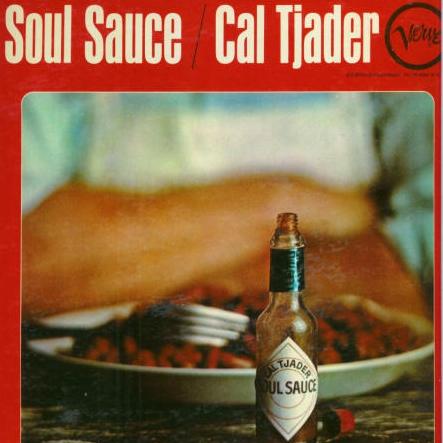
Quite possibly the most famous non-Latino Latin jazz musician, vibraphonist Cal Tjader recorded a very popular remake of Dizzy Gillespies and Chano Pozos Guarachi Guaro (or "Guachi Guaro" as Tjader calls it). Tjaders band featured a style of Latin jazz that was more subdued than some of his contemporaries, although on this track the stellar cast of musiciansincluding percussionists Johnny Rae, Armando Peraza and Willie Bobopay homage to the songs composers with a very lively performance. Lonnie Hewitts piano vamp may remind listeners of a similar one featured in Tito Puentes song, Oye Como Va. Tjaders virtuosity is at the forefront of this trackanother great, groove-oriented bugalu of the early 1960s.
Reviewer: Mark Lomanno
Mongo Santamaria: Watermelon Man
Musicians:
Mongo Santamaria (percussion),
Marty Sheller (tp) Pat Patrick (alto sax, flute), Bobby Capers (tenor sax, flute), Rodgers Grant (piano), Victor Venegas (bass), Frank Hernandez (drumset), Kalil Madi (percussion), Joseph Gorgas (percussion), "Kako" (percussion), "Chihuahua" Martinez (percussion, vocal)
.Composed by Herbie Hancock
.
Rating: 97/100 (learn more)
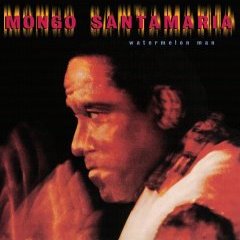
Watermelon Man was an enormously successful hit for both Mongo Santamaria and its composer, Herbie Hancock. The trumpet player, Marty Sheller, plays the only solo in a song that features a groove-oriented melody in an arrangement favoring more Latin percussion than the Hancock original. This song anticipated the bugalu movement in Latin jazz that would take hold later in the 1960s. Bugalu (or boogaloo) incorporated elements of Cuban and Puerto Rican music, as well as American soul and R&B.
Reviewer: Mark Lomanno
Carlos 'Patato' Valdes: Ingrato Corazon
Musicians:
Carlos 'Patato' Valdes (percussion), Arsenio Rodriguez (tres),
Eugenio 'Totico' Arango (vocal), Israel 'Cachao' Lopez (bass), Papaito (sticks), Francisco 'Panchin' Valdez (sticks), Hector Cadavieco (vocal), Mario Cadavieco (vocal), Juan 'Curba' Dreke (vocal), Tony Mayari (vocal), Virgilio Marti (vocal)
.Arranged by Carlos Patato Valdes
.Recorded: 1967

Rating: 95/100 (learn more)
This Verve record features another all-star cast that presents a rich tableau of Afro-Cuban offerings. Joining the conguero Carlos Patato Valdes is co-leader, vocalist Eugenio Totico Arango, tres player Arsenio Rodriguez, and the legendary bassist Israel Cachao Lopez. These musicians celebrate the sacred and secular roots of Afro-Cuban jazz with an album full of quintessential rumba tracks. Ingrato Corazon is a high-energy ensemble piece with solos by Rodriguez and Patato, but featuring the improvisatory vocals of Totico, backed by the members of the band singing a refrain in the traditional call-and-response format.
Reviewer: Mark Lomanno
Chucho Valdez: You Dont Know What Love Is
Musicians:
Chucho Valdes (piano),
Roman Filiu O'Reilly (alto saxophone), Yaroldy Abreu Robles (congas), Lazaro Rivero Alarcon (bass), Ramses Rodriguez Baralt (drums)
.Composed by Don Raye; arranged by Jesus Chucho Valdes
.Recorded: May 2003
Rating: 97/100 (learn more)
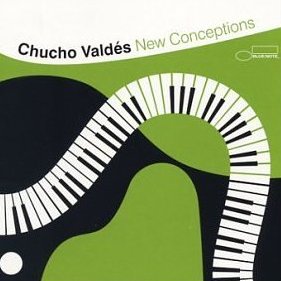
As one of the most seminal figures in Latin jazz, pianist Jesus Chucho Valdes has been at the forefront of Latin American music innovation for over forty years. A founding member of Irakere, Valdes is one of three in a family of Cuban pianists (along with his father, Bebo, and son, Chuchito). This Blue Note album features reinterpretations of Cuban and American jazz standards. You Dont Know What Love Is is arranged as a mambo, layered with polyrhythms and showcasing Valdess pianistic talent, along with an alto saxophone solo by Roman Filiu O'Reilly. Even the definition of mambo is challenged as the group settles into a funk-rock groove as the track progresses.
Reviewer: Mark Lomanno
Check out more 'Dozens' here
Add your comments here.