THE DOZENS: TWELVE TURKEYS FOR THANKSGIVING by Alan Kurtz
Jazz.com visitors will notice that most of our reviews are favorable. That's because (a) we love jazz and (b) in building a database of online reviews, it's only fitting to begin with masterpiecesand, lord knows, jazz has plenty. The bulk of any art form, however, is not great; indeed, much of it is run-of-the-mill, and some of it is dreck. Don't the undeserving deserve write-ups, too?
In 1970, President Nixon unsuccessfully nominated Appeals Court Judge G. Harrold Carswell as Associate Justice of the Supreme Court. Defending the nominee against charges of mediocrity, U.S. Senator Roman Hruska (R-Nebraska ) pleaded: "Even if he is mediocre, there are a lot of mediocre people. They're entitled to a little representation, aren't they?"
Surely the same can be said of mediocre jazz tracks. Since there are so many of them, they're entitled to a little representation. Aren't they?
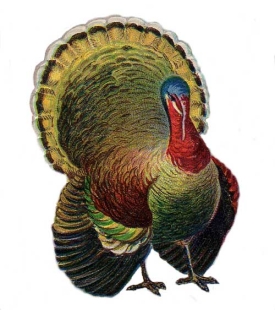
Thus we are pleased to present Twelve Turkeys for Thanksgiving. This list may come in handy not only during the holiday season, but year-round. Just remember to give thanks that you don't have to consume these gobblers, now that we've brought them to your attention. (And if you do sneak a taste, we won't tell.)
Charlie Parker: The Gypsy
Track
The Gypsy
Artist
Charlie Parker (alto sax)
CD
The Complete Savoy and Dial Studio Recordings 1944-1948 (Atlantic 92911)
Musicians:
Charlie Parker (alto sax), Howard McGhee (trumpet), Jimmy Bunn (piano), Bob Kesterson (bass), Roy Porter (drums).
Recorded: Hollywood, July 29, 1946

Rating: 60/100 (learn more)
Bop's proudest soloist never forgave producer Ross Russell for releasing this exercise in self-humiliation (self-immolation?) that, with its session-mate "Lover Man," tests our bounds of compassion. While pathos can produce moving artistic experiences, Bird's abject ballad, recorded by a desperately sick man in a haze of competing intoxicants, is merely pathetic. We cringe at the performance, pity the performer, and ultimately forgive Ross Russell. After all, the strung-out soloist spent his entire life in extremis, so why not hear him at his nakedly revealing worst? As music, this 3-minute track is atrocious. As autobiography, it's in a class by itself.
Reviewer: Alan Kurtz
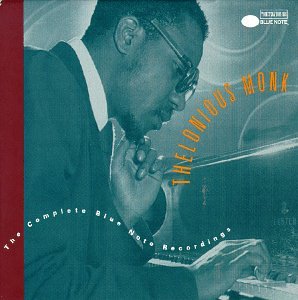
Thelonious Monk: I Should Care (1948)
Track
I Should Care
Artist
Thelonious Monk (piano)
CD
The Complete Blue Note Recordings (Blue Note 30363)
Musicians:
Thelonious Monk (piano), Milt Jackson (vibes), John Simmons (bass), Kenny Hagood (vocals), Shadow Wilson (drums).
Composed by Sammy Cahn, Axel Stordahl & Paul Weston [nota bene: Weston and his wife, singer Jo Stafford, would shortly hereafter form the immortal comedy team of Jonathan & Darlene Edwards]
.Recorded: New York, July 2, 1948
Rating: 62/100 (learn more)
At a historic session where he first recorded his stunning originals "Evidence," "Misterioso," "Epistrophy" and "I Mean You," Monk was asked to perform something, umm recognizable. The hermetically self- contained pianist reacts like an exterminator faced with rampant infestation, transforming a harmless ditty from an MGM musical into obstreperous cacophony recalling composer Charles Ives's 1890s' polytonal experiments pitting two brass bands blaring opposing marches in a New England town square. They couldn't have been more at odds than Monk and his hapless vocalist. With bop's high priest dispensing such low comedy, could Jonathan & Darlene Edwards be far behind?
Reviewer: Alan Kurtz
Mel Torm: The Hut-Sut Song
Track
The Hut-Sut Song
Artist
Mel Tormé (vocals)
CD
Mel Torm's Finest Hour (Uptown/Universal 549673)
Musicians:
Mel Tormé (vocals), Conrad Gozzo (trumpet), Benny Carter (alto sax), Georgie Auld (tenor sax), Babe Russin (tenor sax),
John Best, Mannie Klein (trumpets); Ed Kusby, Lloyd Ulyate, Ted Vesely (trombones); Matty Matlock (alto sax), Chuck Gentry (baritone sax), Al Pellegrini (piano), Allen Reuss (guitar), Joe Comfort (bass), Nick Fatool (drums)
.Composed by Leo Killian, Ted McMichael & Jack Owens. Arranged by Billy May. Conducted by George Cates
.Recorded: Los Angeles, August 3, 1954

Rating: 66/100 (learn more)
Although Mel Torm's musicianship made him one of jazz's finest singers, on this track the Velvet Frog (well, Torm is a French name, isn't it?) seems to have temporarily taken leave of his senses. The mock- Swedish doubletalk "Hut-Sut Song" was an annoyingly ubiquitous novelty hit in 1941, but there was no excuse for continuing to inflict it upon the American people, especially in a collection improbably dubbed Mel Torm's Finest Hour. It might cop an award in the "What Was He Thinking?" category, except there's no evidence of thought anywhere, from Billy May's growling brass mindlessly lifted from Glenn Miller to Torm's witless recitation. It ain't even dumb fun. Just dumb.
Reviewer: Alan Kurtz
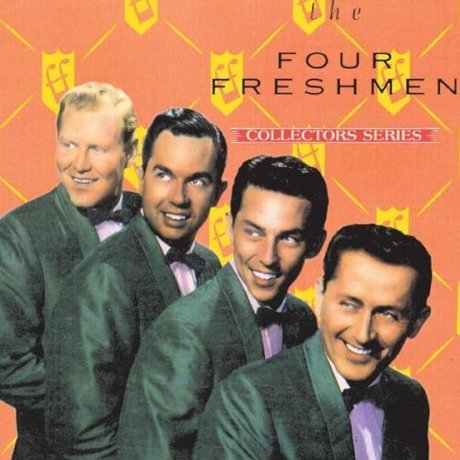
The Four Freshmen: Day by Day
Track
Day by Day
Group
The Four Freshmen
CD
Capitol Collectors Series (Capitol C2-93197)
Musicians:
Ross Barbour, Don Barbour, Ken Albers (vocals), Bob Flanigan (vocals, trombone). Unidentified orchestra
.Composed by Sammy Cahn, Axel Stordahl & Paul Weston
.Recorded: Los Angeles, May 18, 1955
Rating: 70/100 (learn more)
Among 1950s' male vocal quartets, The Four Freshmen manifested the foremost multiple personality disorder. They might be the White-Bread Frosh purveying such senior prom tripe as "Graduation Day," or the Blackface Frosh perpetrating the most slanderous Negro mockery since Al Jolson, as in the indictable offenses "Mr. B.'s Blues," "Stormy Weather" and "Mood Indigo" (the shame! doing this to Ellington). This track, modeled on Perry Como's hit "Papa Loves Mambo" (1954), finds the Freshmen in their bouncy Los Cuatro Latinos incarnation. "Day by Day" spent 15 weeks on the pop charts, but for us is mercifully over in less than two minutes.
Reviewer: Alan Kurtz
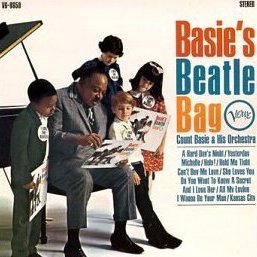
Count Basie: Do You Want to Know a Secret?
Track
Do You Want to Know a Secret?
Group
Count Basie Orchestra
CD
Basie's Beatle Bag (Universal/Polygram 2613)
Musicians:
Count Basie (piano), Al Grey (trombone), Marshall Royal (alto sax), Eddie 'Lockjaw' Davis (tenor sax), Freddie Green (guitar), Sonny Payne (drums),
Wallace Davenport, Sonny Cohn, Al Aarons, Phil Guilbeau (trumpets), Grover Mitchell, Henderson Chambers, Bill Hughes (trombones); Bobby Plater (alto saxes), Eric Dixon (tenor sax), Count Basie (organ), Norman Keenan (bass)
.Composed by Lennon/McCartney; arranged by Chico O'Farrill
.Recorded: Los Angeles, May 3, 1966
Rating: 75/100 (learn more)
Jazz in the 1950s survived Elvis by ignoring him. Miles Davis did not apply his moody Harmon mute to "Heartbreak Hotel." The Modern Jazz Quartet didn't cover "Hound Dog" with one of their elegant rococo arrangements. Yet in the '60s, that lesson was lost. Instead of playing hard to get, jazzmen lusted after the pop charts, with dismal results. Here, as altoist Marshall Royal ladles out more vibrato than Carmen Lombardo on New Year's Eve, the Basie crew shows how clueless jazzmen were to what made mid-'60s rock so appealing: its freshness, irreverence and youthful exuberance. Hey, waiter! Set the fellas in the band up with a round of Geritol on my tab. On second thought, better make those doubles.
Reviewer: Alan Kurtz
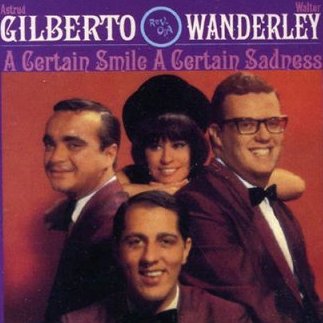
Astrud Gilberto & Walter Wanderley: So Nice
Track
So Nice (Samba de Verao [Summer Samba])
Artist
Astrud Gilberto (vocals) and Walter Wanderley (organ)
CD
A Certain Smile, A Certain Sadness (Verve V6-8673)
Musicians:
Astrud Gilberto (vocals), Walter Wanderley (organ), Bobby Rosengarden (percussion),
unknown (guitar), Jose Marino (bass), Claudio Slon (drums)
.Composed by Norman Gimbel, Marcos Valle & Paulo Srgio Valle
.Recorded: New York, September 20, 1966
Rating: 77/100 (learn more)
How do you say "turkey" in Portuguese? That's easy: Astrud Gilberto. Bossa nova's answer to Mrs. Miller, the campy suburban Los Angeles matron who graced mid-'60s pop charts with timely but gloriously awful covers of favorites such as Petula Clark's "Downtown." Here, to invoke a chewing-gum commercial of that era, we "double our pleasure, double our fun" by pairing off-key Astrud with Walter Wanderley's cheesy cocktail-lounge organ. And the hits just keep on coming. We must admit, though, this track would make an ideal soundtrack for a time-capsule video of the Swinging Sixties directed by Federico Fellini. Ciao, Marcello!
Reviewer: Alan Kurtz
Wes Montgomery: Watch What Happens
Musicians:
Wes Montgomery (guitar), Herbie Hancock (piano), Ron Carter (bass), Grady Tate (drums), Ray Barretto (percussion),
Ray Alonge (French horn), George Marge, Romeo Penque, Joe Soldo, Stan Webb, Phil Bodner (woodwinds), Jack Jennings, Joe Wohletz (percussion), plus 12 violins, 2 violas, 2 cellos and a harp
.Composed by Jacques Demy, Norman Gimbel & Michel Legrand. Arranged and conducted by Don Sebesky
.Recorded: Englewood Cliffs, NJ, June 6, 1967
Rating: 80/100 (learn more)
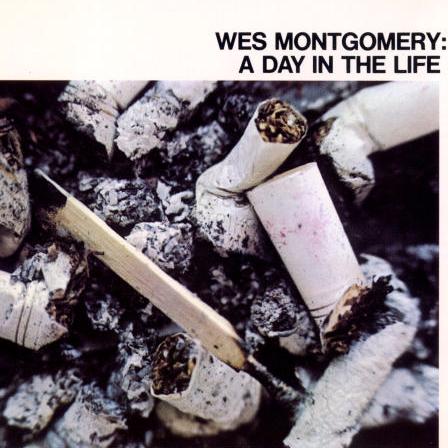
By 1967, Pop Jazz was staler than last night's butts, as shown by an ashtray's contents on this track's close-up album photo. Sure enough, that musty aroma emanated from jazz's grandest guitarist, who squandered the mid-'60s covering, with all the chintzy blandishments of elevator music, hits by such bantamweights as The Association, Kingston Trio, and Brothers Four. We can 't begrudge success to someone who worked hard, waited years for recognition, and gave more to music than he ever got back. But 12 months after sleepwalking through this Muzakical morass, that man was dead at 45. Wes, we hardly knew ye.
Reviewer: Alan Kurtz
Johnny Hodges: Don't Sleep in the Subway
Track
Don't Sleep in the Subway
Artist
Johnny Hodges (alto sax)
CD
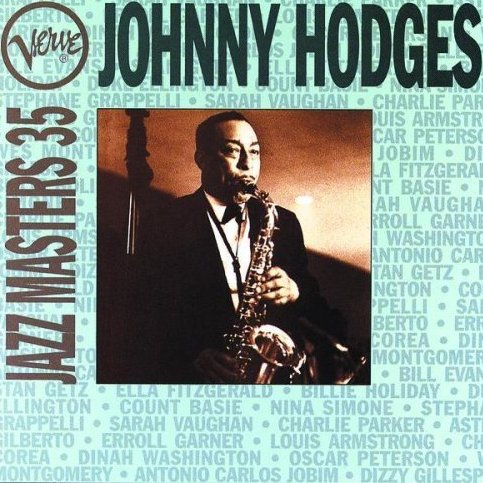
Verve Jazz Masters 35 (Polygram 521857)
Musicians:
Johnny Hodges (alto sax), Ernie Royal (trumpet), Bill Berry (trumpet), Snooky Young (trumpet), Frank Wess (tenor sax), Jimmy Hamilton (tenor sax), Jerome Richardson (alto sax), Hank Jones (harpsichord), Everett Barksdale (guitar), Milt Hinton (bass), Grady Tate (drums),
Tony Studd (trombone), Danny Bank (baritone sax)
.Composed by Tony Hatch & Jackie Trent. Arranged and conducted by Jimmy Jones
.Recorded: New York, August 21, 1967
Rating: 70/100 (learn more)
"Everybody knows Johnny Hodges," went Duke Ellington's standard introduction. By the mid-'60s, it was no longer true. Record-buying kids didn't know Ellington, much less Hodges. They did, however, fancy singer Petula Clark, who made this song a Top 5 hit in 1967. Verve Records missed Miss Clark, but prospered by merchandizing jazz masters Jimmy Smith and Wes Montgomery as trendy schlockmeisters. Alas, what worked for them did not work for Hodges, who sounds like a refugee from a halfway house, wandering dazed and disoriented in the subway, where, hounded by Hank Jones's clattering harpsichord, Johnny can't even catch some z's.
Reviewer: Alan Kurtz
Gabor Szabo: Walk Away Renee
Musicians:
Gabor Szabo (guitar), Mike Melvoin (organ), Jim Keltner (drums),
Francois Vaz (guitar), George Ricci (cello), Lajos "Louis" Kabok (bass), Randy Cierly (electric bass)
.Composed by Michael Brown, Bob Calilli & Tony Sansone
.Recorded: Los Angeles, January 20, 1969
Rating: 80/100 (learn more)
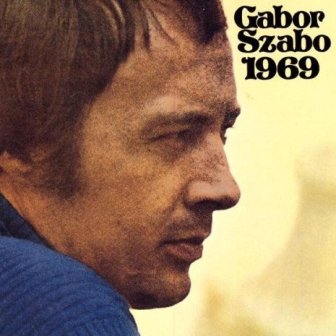
Gabor Szabo was a brilliantly original jazz guitarist who longed to be a pop star. (Stop me if you've heard this one before.) Even on Spellbinder (1966), his finest album, he covered hits by Sinatra and Sonny & Cher, and worse yet insisted on singing. Here Szabo revives a Golden Oldie from 1966, a Top 5 hit by Baroque rockers The Left Banke. Melvoin's organ, however, sounds lugubriously like Procol Harum, and Kabok & Cierly, who aren't accountants but dual bassists, provide more depth than the Mariana Trench. The only good thing about 1969, besides Neil Armstrong's small step/giant leap on the Moon, was that it mercifully put an end to the Sixties.
Reviewer: Alan Kurtz
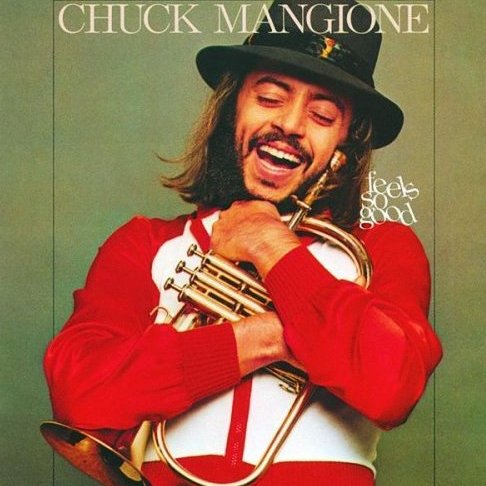
Chuck Mangione: Feels So Good
Track
Feels So Good
Artist
Chuck Mangione (flugelhorn, electric piano)
CD
Feels So Good (A&M 75021-3219-2)
Musicians:
Chuck Mangione (flugelhorn, electric piano), Grant Geissman (guitar),
Chris Vadala (tenor sax), Charles Meeks (bass), James Bradley, Jr. (drums)
.Composed by Chuck Mangione
.Recorded: Burbank, CA, 1977
Rating: 77/100 (learn more)
Flgelhorn is German for turkey. The cornet's klutzy cousin, despite sonorous middle and lower registers, has notoriously weak upper reaches. Miles Davis and Shorty Rogers wisely kept to its natural range, but less savvy players insist on attempting higher notes that'd be a cinch on a trumpet but break miserably on the F-horn. Leading the pack of miserable breakers is Chuck Mangione, whose cracked tones have impressed gullible hordes as emotionally freightedanalogous to a human voice rent from overwhelming feeling. Far be it from us to spoil anyone's angst, but Mangione is closer to weak-lipped Herb Alpert than to Edvard Munch.
Reviewer: Alan Kurtz
Sonny Rollins: Disco Monk
Track
Disco Monk
Artist
Sonny Rollins (tenor sax, overdubbed piano and tenor sax)
CD
Don't Ask (Original Jazz Classics 9152)
Musicians:
Sonny Rollins (tenor sax, overdubbed piano and tenor sax), Mark Soskin (keyboards), Larry Coryell (electric guitar), Al Foster (drums), Bill Summers (percussion),
Jerome Harris (electric bass)
.Composed by Sonny Rollins
.Recorded: Berkeley, CA, May 15, 1979
Rating: 69/100 (learn more)
Sonny Rollins has always delighted in the mundane as a means of challenging himself. Lurking behind his penchant for unlikely sources is a trenchant wit that recalls pioneering political cartoonist Thomas Nast. As decisively as Nast lampooned bloated grafters of American politics, Rollins skewers lame ducks of American popular music, simultaneously ridiculing and rising triumphantly above his sources. One is left to wonder, though, as Sonny discos the night away, why a great artist would ruminate on such dross. Satire goes a long way, but enough already, Theodorewe get the point. As for Monk, this silly track's only connection to Thelonious is its title.
Reviewer: Alan Kurtz
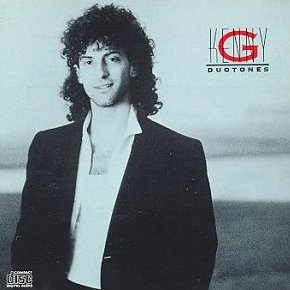
Kenny G: Songbird
Musicians:
Kenny G (soprano sax, keyboards, electronics),
John Raymond, Corrado Rustici, Alan Glass (guitars), Randy Jackson, Joe Plass, Walter Afanasieff, Roger Sause, Preston Glass, Cory Lerios (keyboards, wind chimes), Kenny McDougald (drums), Tony Gable, Greg "Gigi" Conway (percussion)
.Composed by Kenny G
.Recorded: San Rafael, CA., 1986
Rating: 60/100 (learn more)
Seldom has a jazz track ignited such firestorms. Songbirding, as it's now known, gained notoriety during the 1989 overthrow of Panamanian dictator Manuel Noriega, who, fleeing the U.S. invasion, took sanctuary in the Apostolic Nunciature. Since assaulting the Holy See's embassy would've violated international law, U.S. troops surrounded the compound with loudspeakers, volume cranked to 11, from which they directed an around-the-clock barrage of Kenny G's hit. After enduring 72 hours of this unspeakable torture, Gen. Noriega emerged, hands clasped to his ears, and meekly surrendered. Although songbirding remains a controversial tool in the war against terror, no one doubts its effectiveness.
Reviewer: Alan Kurtz