THE DOZENS: THE JAZZ SIDE OF WOODY ALLEN
by Alan Kurtz
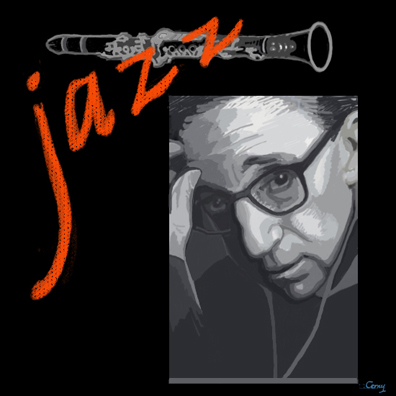
When we pitched this topic for The Dozens to Jazz.com honcho Ted Gioia, he responded: "Go ahead, but avoid critiquing Woody Allen's private life. We can leave that terrain to the tabloids."
Sage advice. "That terrain" is, after all, radioactive. Writing reviews in a Hazmat suit can be strenuous work.
Nor do we propose discussing his movies. (We prefer the early, funny ones.) Film criticism, like scandal-mongering, is best left to professionals.
We cannot, however, ignore Woody's masterful inclusion of timeless jazz recordings across four decades of prolific filmmaking. His debt to jazz for making his movies more magical has been repaid many times over by attracting new listeners. It's not uncommon for people to confess that, until they saw
Manhattan (1979), they'd never heard Gershwin's Rhapsody In Blue. How many others similarly discover such relatively lesser known artists as Django Reinhardt, Chick Webb and Erroll Garner? The unlikeliest missionary has baptized millions in the cleansing waters of jazz.
So here are a dozen doozies from Woody Allen movie jazz. As our honcho advised, "If it focuses on the music, and calls attention to some solid recordings, then I'm on board." All aboard! Solid recordings coming up.
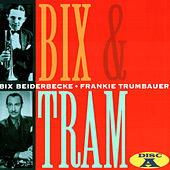
Bix Beiderbecke: Singin' the Blues as heard in Woody Allen's Bullets Over Broadway (1994)
Track
Singin' the Blues
Group
Frank Trumbauer & His Orchestra (with Bix Beiderbecke)
CD
Bix & Tram (JSP Records 913)
Musicians:
Bix Beiderbecke (cornet), Frankie Trumbauer (C-melody saxophone), Jimmy Dorsey (clarinet, alto sax), Bill Rank (trombone), Eddie Lang (guitar),
Doc Ryker (alto sax), Paul Mertz (piano), Chauncey Morehouse (drums)
.Recorded: New York, February 4, 1927
Rating: 100/100 (learn more)
By the time Miles Davis's Birth of the Cool was first marketed as such (1954), cool jazz had been around for 30 years. The 1920s evoke hot-footed flappers burning up the dance floor to Hot Fives, Hot Sevens and Red Hot Peppers, but "Singin' the Blues" is cooler than bathtub gin in an igloo. Backed only by Lang at Heaven's gait, minute one features Trumbauer's sweet oddity C-melody sax. Minute two finds Bix's legendary legato supplanting Trumbauer. Minute three ushers in the remaining cast for an easygoing finale. This classic track could illustrate an audio dictionary under laid-back. Indispensable loveliness.
Reviewer: Alan Kurtz
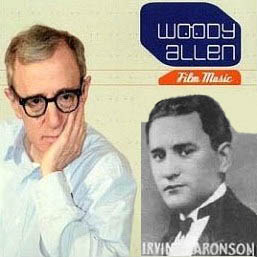
Irving Aaronson: Let's Misbehave as heard in Woody Allen's Everything You Always Wanted to Know About Sex (1972) and Bullets Over Broadway (1994)
Track
Let's Misbehave
Group
Irving Aaronson and his Commanders
CD
Woody Allen Film Music (Sound Track Factory SFCD44413)
Musicians:
Unidentified musicians led by Irving Aaronson (piano)
.Composed by Cole Porter
.Recorded: Camden, NJ, March 1, 1928
Rating: 92/100 (learn more)
In 1922, between cocktails, F. Scott Fitzgerald christened the Jazz Age, which thereupon lived up to its moniker with gay abandonbringing us to Cole Porter, whose song "Let's Misbehave" shows how promiscuously jazz by the late 1920s had debauched Western civilization. Here is a popular dance band laden with such antiquities as fiddles, tuba and splash cymbals, yet their rakish syncopation and scat vocal chorus are as modern as the Chrysler Building. "Let's Misbehave" ain't jazz, but sure is jazzy. Plus it's more campy fun than Cole Porter's coming-out party, which we hear was simply to die for, darlings.
Reviewer: Alan Kurtz
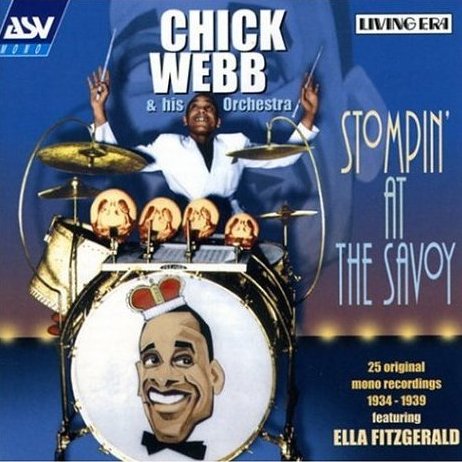
Chick Webb: If Dreams Come True as heard in Woody Allen's Stardust Memories (1980)
Track
If Dreams Come True
Group
Chick Webb Orchestra
CD
Stompin' at the Savoy (ASV/Living Era 5416)
Musicians:
Big band featuring Taft Jordan (trumpet), Sandy Williams (trombone), Edgar Sampson (alto sax), Chick Webb (drums)
.Composed by Edgar Sampson, Benny Goodman & Irving Mills
.Recorded: New York, January 15, 1934
Rating: 94/100 (learn more)
Just as Cole Porter's "Let's Misbehave" flaunted jazz's naughty influence on 1920s pop culture, "If Dreams Come True," with straight-muted brass, sugary saxes and two-beat shuffle, reflects the less-ballyhooed embrace of white dance music by black jazz bands. During the 1930s, Chick Webb and His Orchestra were the house band at Harlem's Savoy Ballroom, where whites and blacks danced, if not necessarily together, at least side by side. Three decades later, the inclusive spirit of "If Dreams Come True" would achieve its oratorical apotheosis in Dr. King's eloquent "I Have a Dream." Regrettably, into the new millennium, such dreams have still not come true.
Reviewer: Alan Kurtz
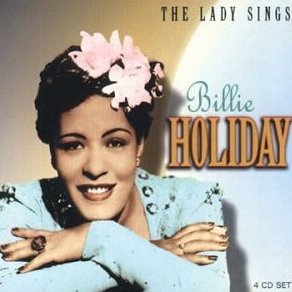
Billie Holiday: Did I Remember as heard in Woody Allen's Celebrity (1998)
Musicians:
Billie Holiday (vocals), Bunny Berigan (trumpet), Artie Shaw (clarinet), Joe Bushkin (piano), Cozy Cole (drums), Dick McDonough (guitar),
Pete Peterson (bass)
.Composed by Walter Donaldson & Harold Adamson
.Recorded: New York, July 10, 1936
Rating: 90/100 (learn more)
At 23, Billie Holiday was an untrained vocalist with no technique but oodles of charisma. She was fun to hear because she was obviously having fun. On this track, her unselfconscious artistry shines through a typically inane song from the mid-1930s. The band does its best with tepid material, with relaxed turns by Shaw and Berigan, but only Billie strikes the right note of saucy impertinence. At a time when most singers were stiffer than an Englishman's upper lip, Billies playfully conversational delivery was as refreshing as a Cockney barmaid at the Royal Academy of Headwaiters. Wot'll y'ave, guv?
Reviewer: Alan Kurtz
Django Reinhardt: Body and Soul as heard in Woody Allen's Stardust Memories (1980)
Track
Body and Soul
Group
Le Quintette du Hot Club de France
CD
Djangology (aka Django Reinhardt) (Membran 222918)
Musicians:
Django Reinhardt (guitar), Stéphane Grappelli (violin), Louis Vola (bass), Joseph Reinhardt (guitar), Roger Chaput (guitar).
Composed by Edward Heyman, Robert Sour, Frank Eyton and Johnny Green
.Recorded: Paris, France, April 22, 1937

Rating: 97/100 (learn more)
In Paris during the 1930s, jazz was all the rage. But when a homegrown quintet of 3 guitars, violin and bass appeared, something seemed lost in translation. Until, that is, they played. The group's star was Belgian Gypsy guitarist Django Reinhardt. Despite an injury that reduced his fretting to two fingers and a thumb, Django's flat-picking speed and projection on the steel-string acoustic guitar were phenomenal. Reputedly, when no pick was at hand, Django would break off a tooth from his plastic pocket comb to discharge notes that exploded with the fury of artillery ordnance. His hair may have been mussed, but Django's rockets hit their targets without fail.
Reviewer: Alan Kurtz
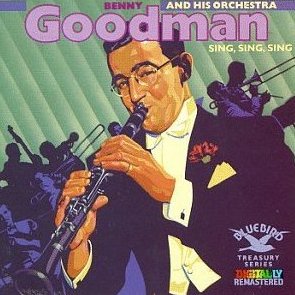
Benny Goodman: Sing, Sing, Sing as heard in Woody Allen's New York Stories (1989), Manhattan Murder Mystery (1993) and Deconstructing Harry (1997)
Musicians:
Benny Goodman (clarinet),
leading a 14-piece band featuring Harry James (trumpet), Ziggy Elman (trumpet), Hymie Schertzer (alto sax), Gene Krupa (drums)
.Composed by Louis Prima. Arranged by Jimmy Mundy
.Recorded: Hollywood, July 6, 1937
Rating: 89/100 (learn more)
Immensely popular in its day, "Sing, Sing, Sing" is the nadir of white jungle music. Not to be confused with the 1990s electronic drum-&-bass dance genre, jungle music in jazz has racist connotations. During long runs at such dubiously named Prohibition-era Manhattan nightspots as the Plantation Club and Cotton Club, Duke Ellington's nonpareil orchestraignominiously billed as The Jungle Bandentertained white patrons in jungle-themed floor shows with light-skinned Negro female dancers in loin cloths. "Sing, Sing, Sing" updates this foolishness to the Swing Era, and compounds the insult by being performed entirely by white men. Cringe, cringe, cringe at our ancestors' navet.
Reviewer: Alan Kurtz
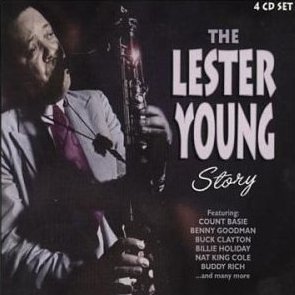
Count Basie: Tickle Toe as heard in Woody Allen's StardustMemories (1980)
Musicians:
Count Basie (piano),
15-piece band featuring Buck Clayton (trumpet), Lester Young (tenor sax), Count Basie (piano), Jo Jones (drums)
.Recorded: New York, March 19, 1940
Rating: 96/100 (learn more)
Lester Young grew up in a carnival, where he played in his dad's band and learned from the geeks it was okay to be different. Coming of age, Lester departed from the tenor sax's prevailing masculinity. With his lighter, cooler tone, he hovered angelically above the Swing Era's insistent rhythms with gliding, melodious solos that left him and his listeners poised, observes musicologist Scott DeVeaux, to savor the pleasant ambiguities of the moment. This trackhalf corny big-band clichs, half serpentine forays anticipating bopis a fascinating glimpse of 1930s jazz dipping a toe in the ticklish uncertainties of modernism.
Reviewer: Alan Kurtz
Duke Ellington: Take the 'A' Train (1941) as heard in Woody Allen's Radio Days (1987)
Track
Take the 'A' Train
Artist
Duke Ellington (piano)
CD
Ken Burns Jazz: Duke Ellington (Columbia/Legacy CK 61444)
Musicians:
Duke Ellington (piano),
and a 15-piece band featuring Ray Nance (trumpet), Jimmy Blanton (bass), Sonny Greer (drums)
.Composed by Billy Strayhorn
.Recorded: Hollywood, February 15, 1941
Rating: 100/100 (learn more)
In 1941, Duke Ellington escaped the bondage of jungle music via an underground railway called the A train. Duke's motorman Billy Strayhorn, picking up a carload of familiar Swing Era passengerscatchy theme smoothly stated by saxes, punchy punctuation from the brasses, steady rhythmic pulsetransports us to Sugar Hill in Harlem, a destination just this side of paradise. Combining Benny Goodman's precision with Count Basie's nonchalance, Ellington's band rode its own express line to immortality. If you're looking for a single track to both epitomize and justify the Swing Era, take the A Train.
Reviewer: Alan Kurtz
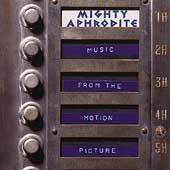
Erroll Garner: Penthouse Serenade as heard in Woody Allen's Mighty Aphrodite (1995)
Track
Penthouse Serenade
Artist
Erroll Garner (piano)
CD
Mighty Aphrodite: Music From the Motion Picture (Sony Classical SK 62253)
Musicians:
Erroll Garner (piano), John Simmons (bass), Shadow Wilson (drums).
Composed by Will Jason & Val Burton
.Recorded: New York, January 11, 1951
Rating: 95/100 (learn more)
One mark of a great jazz artist is the ability to make a standard his or her own. By that yardstick, and by any other as well, Erroll Garner was a great jazz artist. Atop his habitual left-hand 4-to-the-bar chording (most reminiscent of Count Basie's perennial rhythm guitarist, Freddie Green), Garner's bubbly tremolos guide listeners through a melody with the attentiveness and fertile imagination of Samuel Taylor Coleridge touring Xanadu. Garner's patented "Penthouse Serenade" is entrancing, as elfin Erroll courts his high-rise sweetheart. For the hopeless romantic in us all, Erroll Garner shall ever be a stately pleasure-gnome.
Reviewer: Alan Kurtz
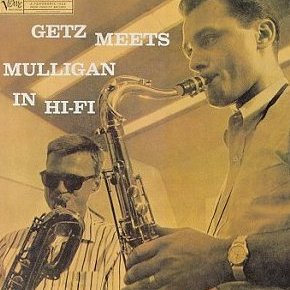
Stan Getz & Gerry Mulligan: That Old Feeling as heard in Woody Allen's Husbands and Wives (1992) and Celebrity (1998)
Track
That Old Feeling
Artist
Stan Getz (tenor sax) and Gerry Mulligan (baritone sax)
CD
Getz Meets Mulligan in Hi-Fi (Verve 849 392-2)
Musicians:
Stan Getz (tenor sax), Gerry Mulligan (baritone sax), Lou Levy (piano), Ray Brown (bass), Stan Levey (drums).
Composed by Sammy Fain & Lew Brown
.Recorded: Los Angeles, October 12, 1957
Rating: 97/100 (learn more)
In the 1950s, owning a mere record player was not enough. Audiophiles grew so obsessed with turntables, cartridges, styli, preamps, power amps, woofers, tweeters and graphic equalizers that many dispensed with music altogether, preferring entire albums of sports cars in action. Fortunately, Getz Meets Mulligan in Hi-Fi retained "That Old Feeling" of two great jazzmen jousting one another, and it was sleeker than Jaguar jockeying with Ferrari at Le Mans. To justify the Hi-Fi tag, reverb is added to the horns, but it doesn't mar a performance in which both sax men play more robustly than usual. This is topflight 1950s modern jazz.
Reviewer: Alan Kurtz
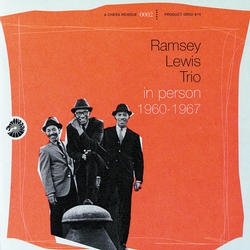
Ramsey Lewis: The 'In' Crowd as heard in Woody Allen's Mighty Aphrodite (1995)
Recorded: Washington, DC: May 13, 1965
Rating: 96/100 (learn more)
The mid-'60s pop avalanche split jazz in half. One side slid OUT, exploring the crowd-abatement effects of what author Stanley Crouch calls one-dimensional screeching and honking. Another side followed the IN crowd, scavenging the pop charts for fresh roadkill. Recorded live before an IN-thusiastic crowd, Ramsey Lewis's cover of The In Crowd unexpectedly outdid Dobie Grays original, becoming one of 1965's top hits. Lewis, whose first gig was backing the choir at Chicago's Zion Hill Baptist Church, adds hard swinging to gospel roots, and shows remarkable dynamic range. Sure he played to the crowd, but they loved it. We still do.
Reviewer: Alan Kurtz
Zubin Mehta: Rhapsody in Blue as heard in Woody Allen's Manhattan (1979)
Track
Rhapsody in Blue
Group
New York Philharmonic
CD
Woody Allen Classics (Sony Classical SK53549)
Musicians:
Zubin Mehta (conductor), Gary Graffman (piano),
New York Philharmonic conducted by Zubin Mehta; piano soloist Gary Graffman
.Composed by George Gershwin. Orchestrated by Ferde Grof
.Recorded: New York, 1978
Rating: 100/100 (learn more)
In 1924 bandleader Paul Whiteman, the reigning "King of Jazz," introduced his unruly domain to Gotham highbrows, premiering George Gershwin's Rhapsody in Blue with its composer at the piano. Gershwin described his piece better than any reviewer could as "a musical kaleidoscope of America, of our vast melting pot, our unduplicated national pep, our blues, our metropolitan madness." True to its name, Rhapsody revolves thematically around the blues scale that is central to jazz. From its outrageous opening clarinet glissandoas instantly recognizable as the first four notes of Beethoven's Fifth Symphonyto its final triumphant chord, Rhapsody in Blue exudes Jazz Age chutzpah. Here covered by the New York Philharmonic with piano soloist Gary Graffman, as conducted by Zubin Mehta especially for Woody Allen's Manhattan (1979), Gershwin's crowning glory remains a vibrant, everlasting monument of Americana.
Reviewer: Alan Kurtz
Add your comments here.