An interview with ron carter
by Andy Karp
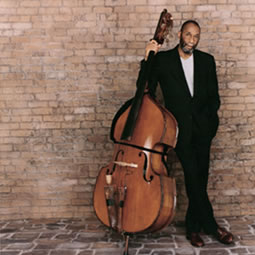 2007 has shaped up as one of the most extraordinary years in Ron Carters remarkable four-and-a-half-decade career in jazz. Long considered one of jazzs pre-eminent bassists, Carter has been touring the world with his trio, quartet and nonet as well as a duo with guitarist Jim Hall.
This summer, in celebration of his 70th birthday, the versatile musician, bandleader, composer, arranger and educator was feted at a special Carnegie Hall concert during the JVC Jazz Festival in New York. The show featured Carter leading various ensembles including longtime colleagues Herbie Hancock, Wayne Shorter, Billy Cobham and Jim Hall, plus current bandmates Mulgrew Miller, Russell Malone, Stephen Scott, Payton Crossley and Rolando Morales.
Carter has also been collaborating with jazz writer Dan Ouellette on an authorized biography. In July, Blue Note released his newest recording, Dear Miles. Together with drummer Crossley, pianist Scott and percussionist Roger Squitero, Carter re-examines some of the tunes made famous by the legendary Miles Davis band of the mid-60s, in which he anchored the rhythm section.
Jazz.coms Andy Karp recently caught up with Carter during a brief pause in his busy schedule. They discussed some of the highlights of Carters multi-faceted, ever-evolving career and what keeps him still going strong at 70.
What do you see as your most important accomplishments?
Teaching at City College in NY for 18 years. That meant for me being committed to the students and the principles of teaching on the college level. I would not take any job during the course of the school week that would make me miss classes. I would travel only on the weekends, so I could get back to New York on a Sunday night or Monday morning. I would often go from the airport right to class and I would only travel during the summer tours.
I felt it was important to give the students a sense of continuity in classes. They came to school to study with me, not a substitute, and so I had a game plan for them. I have a 16-week syllabus that consists of arranging and composition that, in order to teach, I couldnt be gone for three or four weeks at a stretch. I didnt mind that sacrifice because it was for the students and for my principle of things. I never felt that I was short changing my career or missing a chance to do something.
My next most important accomplishment was spending five years in the laboratory of Miles Davis, Wayne Shorter, Herbie Hancock and Tony Williams. We were fortunate to have been thrown into this laboratory with the head chemist, as I would call Miles. Miles would put all these vials in front of us, and beakers and tubes and put on a white smock and said, These are the ingredients. You have two sets tonight to figure out whats its gonna do.
What did you take away from that experience?
The discipline of playing good every night, no matter what the circumstances were. Knowing that the band was looking to me to be responsible for keeping the music in order, and being responsible for maintaining a level that we looked for every night. I know that all of us had our own physical problems, sore hands, or twisted ankles or Miles with his physical problems. One of the things I took from that is that every night you came to play. I think that impacted each and every one of us.
You were all a good deal younger than Miles. What do you think Miles learned from playing with such a young band?
I think he found that our dedication to the music was first and foremost with us. He knew that we came to play every night. We were very curious at the time and wanted to know how does this work, how does that work? Our youthful curiosity added years to his musical career.
In addition to bringing in new composition to that band, you were also playing songs that Miles had played with earlier bands. That gave you an opportunity to reinvent those songs.
We played them as long as we could and as often as we could. Once we saw the blueprint, and had done all the manipulating we could with that specific blueprint, the whole idea was to try to find another blueprint.
Everybody in that band went on to create fusion jazz. Yet you chose a different path.
When they started plugging in all of those instruments, it just distorted the sound, which is part of the process. The sound of the bass that I was looking for was good enough not to need that kind of assistance. I thought the sound was pretty good, and if I worked on it more, it could get even better. If I plugged into a device that would literally distort that, that seemed counterproductive to what I thought the bass could possibly do.
Secondly, the musical values were a little different. The bass players in rock bands played the same figure all night, and thats part of that musical concept. I thought I could find some different notes to make the music work differently. But in those bands, that clearly was the bass players job. I felt in those bands, there was nothing for me to do that would make it better.
I still practice to get my sound to sound the same every night. Thats still my focus.
What else are you most proud of?
The fact that I would get calls from people that I would be surprised they knew I existed. Im a pretty low profile person, although I like to dress nice. But bass players traditionally are the kind of musicians people least think about. Thats why Id be surprised when Id get a call to do an Aretha Franklin date. Or Paul Simon would call me. I did some overdubs with Jefferson Airplane, years ago. I did a thing with a Tribe Called Quest. All these various people in these pretty far flung musical genres have called me. These are music genres that Im surprised they know I exist given the traditional acknowledgement of bass players in bands. And given that view that they would call me rather than a Ray Brown, or other big names who were enjoying their careers at the same time I was trying to build mine.
With over 2,500 recordings to your credit, do you think youre the most recorded jazz bass player, or possibly the most recorded jazz musician overall?
Im not sure. Im doing one [recording session] every month or so it seems, which I enjoy. [According to Tom Lords The Jazz Discography 7.0 on CD-ROM, Carter ranks among the 12 most recorded musicians in jazz history; bassist Milt Hinton ranks first.]
Are there any sessions that you werent able to do because of another commitment, or because you were out of town, that you wish you had been able to do? Is there anyone you wished you had played with that you havent yet?
Phoebe Snow. I made one of her last tracks before she retired and decided to raise a family. Id like to have a chance to play with her again now that Ive gotten few years older and shes settled into a nice place with raising her family. Shes a great singer and I think I could have some fun playing with her.
I got called a couple of times to record with Lena Horne, but I was out of town. While I did make a record with her, Id have loved to have spent more time with her just to find out how she does what she does.
In addition to playing with Lena Horne, did you play with other swing era veterans?
I played with Coleman Hawkins and Lockjaw Davis.
Were those formative experiences for you, or was your own musical voice well established by that point?
Anytime you play with people of that genre, and certainly they were 30 years older than me that the time, its like going to school with them. You learn how they pick the tunes, how they pick the speeds, the personnel, how they go into the studio prepared or not prepared. Those kinds of things affect me more as a complete musician rather than as a bass player in and of itself.
Do you try to provide that kind of experience when youre in the role of elder statesman?
Absolutely. One of the problems were looking at today is many of the young bandleaders havent had the experience of being a sideman in the band more than one night to find out how does this band really operate. Because of that dearth of experience many of those youthful, leader-led bands will probably not be successful musically or personally or business-wise, because they havent stopped to look around and find out how they can learn from anyone else other than their manager or agent.
Would you say there fewer opportunities to learn on the bandstand today then when you were coming up? Fewer jam sessions?
There are probably the same number of jam sessions. Im not sure the quality of players is the same, because I havent been to those in a long time. Certainly the enthusiasm for jam sessions is still there. I will grant you there are probably fewer bands than 15 years ago where a young person who comes to New York can get hooked up with and learn how its done. Art Blakey University is gone, Cannonball University is gone, Miles University is gone. Many of the big bands no longer function. So a lot of the avenues that were available when I was learning on the bandstand arent so available. But theres no excuse for guys not looking for something like that.
Youve recorded as a leader on many labels. Which producers have you had the most successful relationships with?
All of them, because they trusted that I was mature enough as a player and as a person to deliver product on time with a satisfactory musical result. Theyre all good for me, man. Edwin Edwards at Prestige, Orin Keepnews at Milestone, Ed Michel at Galaxy, of course Creed Taylor at CTI, Hitoshi Namekata at Toshiba-EMI. Ive all had good relationships with them. I accepted their recommendations and advice and used them when I thought it would help the project. And they would feel comfortable that if I didnt like their particular idea, it wasnt because my ego was in the way, it was that it didnt complete the story I had in mind for this CD.
As one of the most in-demand bassists in jazz, you can pick the sessions and gigs you want to play on. How do you choose what jobs youre going to take as a sideman?
My first question is What can I learn from this gig? When I finish the night playing with these particular people, when I get home and take out a sheet of paper and say, OK, I learned these positive things tonight, song selection, tempo, how the music is written out. On the other side, I say, what did I not learn? Did we not start on time, did we not know the set in advance, was there too much time between tunes, did we play past the length of the set time so the club could have a turnover? Any gig that offers me those kinds of options I give some serious thought to. If Ive had a not pleasant experience on the proposed date or club gig, I tend not to take it the second time around, because Im not sure I can get any better with the attitude being what it is.
You have a special affinity for the cello. Was that your first instrument?
Yes, it was.
What is it about the cello that draws you?
The range of the instrument from low C up to almost infinity. Its such a broad range instrument that can play any type of figure, with a multiple choice of sounds and a great library of written music.
The cello is in the same range as the guitar, and you seem to have an affinity for playing with guitar players, too.
I wish I could play guitar.
You never thought of picking it up?
Man, its hard enough to pick up the bass. There arent enough hours in the day.
In your nonet, you have four cellists. Thats a unique line up.
Yes, and they all play good.
Oscar Pettiford, who played bass and cello, is a favorite of yours. When you performed recently at the Blue Note in New York with Jim Hall, you performed one of Pettifords compositions, Laverne Walk.
Oscar played a cello tuned like a bass, so its not quite the same. I play it tuned like a cello, with the top string ADGC.
How does your cello concept translate to the piccolo bass, which is a unique instrument youre also associated with? Whats the history of the piccolo bass? Did you invent it, or help develop it?
Its kind of a one-off thing. When I was putting together a band, I wanted to be clearly the designated leader when you walked into the space where the band was playing. Its the one instrument that would put me physically in front of the band. We would have another time keeper so they would know that this guy in front, whoever, he is, must be the band leader. To that end, I wanted an instrument that would be out of the range of the big bass, but didnt sound nasally like a high cello can occasionally sound. So I had this friend in New Jersey who made me my first piccolo bass. Subsequently, I found one four or five years later at a bass shop in Cincinnati that I retuned to the piccolo bass tuning which is, top to bottom, CGDA, thats a cello tuning upside down, actually. Its the kind of quality and sound that allows me to feel like a bass player, but sound like a cello player. That puts me in front, physically and sonically.
Do you still use the piccolo bass?
Only when the nonet plays. I want it to be special for that band.
Tell me about the nonet. You recently did a performance at New Yorks Merkin Hall.
Its a band that people would appreciate if they could hear more of it. But its difficult to find work outside of the driving radius of New York City because the travel cost is so high. The cello players want their cellos on the plane, which is another seat, and the costs get out of control. Whenever weve played with this band, its been musically rewarding and the audience response has been quite stimulating. I would hope I could hit the lottery tomorrow and make a gig anywhere I want to with the nonet.
Among the younger generation of bass players, who are some you respect or admire?
The problem with traveling with the bass today is really getting outrageous. Most airlines wont even take the bass inside the luggage compartment. So were stuck with having to make a cottage industry out of renting basses as we go along. Given that context, anyone who sticks with the upright bass is my favorite.
Lets talk about Ron Carter the composer. How many songs have you written?
One hundred forty at last count.
How do you approach composing?
All my compositions are different. It depends on what kind of story I have in mind, and where I happen to hear this story starting. Usually, I just start on bass and find a melody I thinks going to be reasonable and then go to the piano and find some chords to make this melody sound like someone else will want to play it.
Have many of your compositions been recorded by others?
Oh yes, a lot of them have. Thats a good sign for me. That means someone else found something in them besides me, and they didnt need me there to explain it to them. That for me is the test of a good tune.
Describe how your playing has evolved. For example, how do you approach a song today that youve been playing for many years, such as So What or St. Thomas, or standards such as My Funny Valentine or All the Things You Are?
What Ive always known is that you cant play the same with everybody. I play differently with Herbie Hancock than I do with Cedar Walton than I do with Stephen Scott than I do with Roland Hanna. Every piano player has a certain requirement that makes them not just comfortable but more aware. If anything, Ive been able to fine tune that awareness over the past few years and have been able to tie in more quickly than I would have 20 years ago. However a song is going to develop differently than last year will depend on the environment I find, the players. Stuff I learned to play with Roland Hanna may fit with Herbie this time, or stuff with Stephen Scott may fit with Herbie or may fit with Chick [Corea].
Theyre the recipients of whatever changes there are. Someone like Stephen Scott, who is someone Ive played with on and off for the past 15 years, can probably answer that better than I can, because hes more aware of my growth more acutely than I have been, how its affected our songs from night to night and gig to gig because hes the recipient of those changes, those growth rings.
Which of the recordings youve made as a leader are essential to your discography?
Brandenberg #3 on Blue Note or Toshiba, Ron Carter, All Alone on Mercury/Toshiba, which is a solo bass record, Entre Amigos, where I share the bandstand with Rosa Passos, and Telephone, which Jim Hall and I co-led.
How about as a sideman?
Miles Smiles and My Funny Valentine with Miles, Eric Gales In the Tradition, Over the Top by Jimmy Smith and Speak Like A Child by Herbie Hancock.
At a time when a lot of musicians your age are starting to slow down, you seem like youre going full throttle. Youre a frequent international traveler, going to Europe, Japan and other places. Have you always worked this hard? Whats driving you now?
I wouldnt say Ive always worked this hard. I have always worked this often. One of the things that makes this possible is the reputation Ive gotten throughout the years through other musicians and other musics is that Im responsible, Im professional, I try to play great every night and I try to respect everyone Im playing with. Those kinds of values people still see in me makes them want to see if I can still do it. That one thing. Two, people want to see if this antique, this upright, still works (laughs).
What impression do you want people to have when they think of Ron Carter?
Id like them to think that heres a guy who tried to reach a new height every night, whos honest and was my friend.
Tags: bass·ron carter
October 19, 2007 · 2 comments

This was a great article! I grew up with Peyton Crosley in Omaha, NE and I recall Payton leaving for NYC to study and play jazz when he was like 15 yrs old or so. It was a big thrill to see that he is Playing with one of the great Bass Masters in Ron Carter. I am also a bass player and I double on Upright and Elec. bass. Both of which are 5-string C-E-A-D-G. Mr. Ron Carter is one of my mentors for Upright bass and I credit him as an influence in my style on upright. At one time, I even considered playing on the same string brand that Ron uses so I could get closer to his sound, but unfortunately, they did not come in a 5-string set-up and I did not want to compromise by adding another string from a diff. source or mfg. At any rate, a big shout out to Payton Crosley! My long lost friend from Omaha! Way to go Payton! It's been years. Maybe I'll look you up next time I am in the City. (Andy, great job on this interview with Mr. Ron Carter!) Peace. Calvin Howell CHKYO Jazz & Blues Orlando, FL
This article is great because it gives you the true prospective of Ron Carter. Yes, I am a fan of Ron Carter because he holds fast to his love of the Upright Bass and has not bent to the electronic bass sound. Ron is truly a prize of this art as he wears the hats of an ecucator, composer, arranger and performer. Keep up the good works Ron.