In conversation with sonny rollins
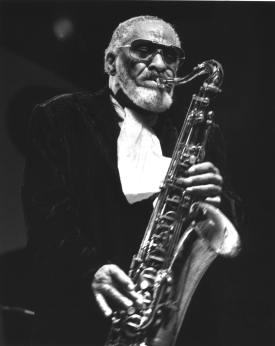
A Sonny Rollins concert is an event in the world of jazz. Rolling Stone once said that, in the future, people will boast of having seen Rollins perform, much as the lucky few now boast of having seen the great bebop pioneer Charlie Parker.
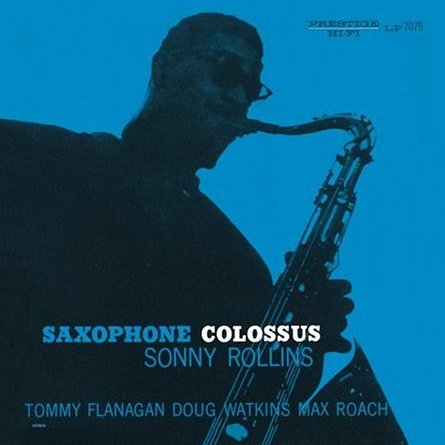
Rollins indelibly wrote himself into the pages of jazz history on June 22, 1956 with a series of nonpareil performances for the album Saxophone Colossus. It was hailed as a classic from the moment it was released, but for the then-25 year-old saxophonist, it was just another session in the course of a remarkable creative high that spanned almost three years. During that time he recorded fifteen sessions under his own name, beginning with Worktime in December 1955 and ending with Freedom Suite in 1958, with such masterworks as the aforementioned Colossus, Way Out West,and the classic Blue Note album, A Night at the Village Vanguard sandwiched in-between.
This was an astonishing period of creativity by any measure. It saw Rollins prising jazz from the omnipresent influence of Charlie Parker, whose legion of followers mistook speed for content and ended up creating solos that seemed like one enormous glissando. In contrast, Rollins demonstrated that jazz improvisation could be sustained for lengthy periods with great cohesion, subtlety, and even wit. With sometimes blunt, sometimes asymmetric phrasing, and always a big powerful tone, his style was unmistakable. He seemed to dismantle songs and reassemble them in new and interesting ways before your very eyes, a feat performed with such clarity of purpose you could almost hear him thinking.
Rollins solos were propositionscerebral inventions that sounded as if they could be spun endlessly, in contrast to the pronouncements of an Armstrong or a Parker, which seemed to arrive, etched in stone. I always stress that music never ends, it just continues, there is no real cut-off, he once said. His improvisations are a beguiling mixture of the vertical and the horizontal, governed as much by the underlying harmonic sequence (the vertical) as the development and thematic variation of a melodic idea (the horizontal). Ever since Blue 7 from Saxophone Colossus, shrewdly analyzed by Gunther Schuller in the pages of the then-highly influential Jazz Review, Rollins has, over the years, developed and refined this creative process into a unique art.
So what goes through his mind when creating one of his majestic, hypnotic solos that brings you to the edge of the seat with a mixture of awe and admiration? Ten years ago he touched on his creative process in an interview for the now-defunct Jazz Express magazine, when he talked about thematic unity in his solos. You have to create around a fixed pattern yet still leave the creative element sounding free, he explained. The essence of freedom in improvisation is something that is very creative, yet very formal; the ability to create something very spiritual, something of ones own. It seemed an interesting place to begin to try and explore the art of Sonny Rollins.
In an interview you kindly gave me about ten years ago, we touched on your creative process, and you said that you would work around a fixed pattern and still leave the creative element sounding free, and that the essence of freedom in improvisation is both creative and formal. I think students, in particular, would be fascinated if we could explore these points in a little more depth, in order to try and discover how you conceptualize the improvisation process.
 Well, let me try and take a crack at it. The whole act of improvisationand really painting, its the same sort of thingyou try and communicate a subconscious, if you will, and a higher power, an energy. So that is very interesting trying to create. I love this, because I feel that jazz improvisation is the ultimate. You have to create on the spot, the essence of this music from Louis Armstrong and all the great people who followed in his path. Clich playing may be okay to a point, and maybe you learn by playing clichs, but then you throw all of that stuff aside. Its just like when I am working a piece of music, I will study the music, I will learn the music. Maybe thats what I meant when I said there is some kind of formal aspect to this, so I learn the melody, the chord progression, in preparation for my instrumental improvisation.
Now when I improvise after learning formally these things, I forget them. I dont go up on the stage and think of them. I forget them and thats where the creativity comes in. That little area is quite mysterious. Music is magical, we all know that, and that area where you create and your subconscious is at work and you dont know what youre playing. Often I play thingsif Im in the right grooveIll play things where I surprise myself. Those are things that are deep in my subconscious, and they come out during my improvisation, but they are not things I went into the song thinking about. They are things I hear, and they come out.
And this is why in improvisation it is so top of the field when it comes to artistic expression, to me, because there is so much skill involved in playing music, and yet it has got to be free and loose. The skill is there; you learn the skill and you forget it. You dont have to play your scales in the middle of the set. You know what your scales are. Its a matter of keeping your embouchure. You dont have to think about that.
In fact, in a way, improvisation is making the mind blank. When Im playing, Im in a trance. Im not thinking of anything. Sometimes Ive thought about a nice pattern I wanted to play, maybe a little riff on the song. Its very clever and Id think about it and go, Oh yeah, this song Ill put in this clever riff, itll really sound clever, everybody will think Im clever! But I cant do it, because when I think about putting it in someplace, the music has gone by so fast that it doesnt work, so I just forget it. Just absorb it and it comes out at some weird time and for some weird reason from the subconscious, so Ill play it, but dont try to manage it and put it in to a solo. So thats what I have learned about musicabout improvisationand its beautiful. I think somebody told me Miles [Davis] said something like that, he learns something and he forgets it because you cant be creative if you know too much about what youre doing.
Theres something else that Miles hated: clich people. These are some of the best artists in the world who have tremendous skill, but they play clichs. A clich is something which is proven to be effective, but if you just use clichs, its a different type of playing. Its not really the height of jazz improvisation, its not where I want to be anyway. Look, I dont put any kind of playing down, certainly there are some great players who play clichs [who] I admire. Because it takes a lot of skill to play clichs in an effective way. But its notMiles and I used to talk about this all the timeits not the optimum. Its a different way of playing, but its not the way I want to play. Its not the way other people play that I look to, these people in the firmament played.
How would you direct students to work towards that end?
Well, they should learn their materials. If its a song pattern, they should learn the melody, they should learn the harmony, learn all of these things, and then try and improvise on it. Now people improvise in different ways; some people improvise on the chord progression, some people improvise more on the melody like Lester Young. Coleman Hawkins would be a guy who improvises on the chord progression, so whatever suits the individual person, thats the way to go about it, and youll soon find out if you have the talent to be a jazz musician.
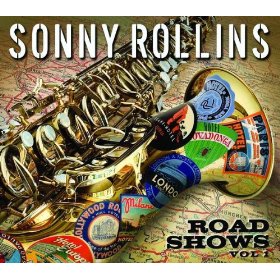
Turning to your recent work, Road Shows: Volume 1, there is a track recorded at Carnegie Hall with a trio comprising Christian McBride on bass and Roy Haynes on drums. Trio is a configuration in which you produced many of your finest albums, and I wonder if you could speak about this aspect of your career, and what it means to you.
When I look back on my career, I find that I was playing trio almost from the beginning. You know, when I first met Miles, I was playing an opening act for Miles Davis and some of these stars that [had been] playing down on 52nd Street. This was a place up in the Bronx called the 845 Club, and I was hired to play and open up for these guys. As I look back I remember I had a trio then. When Miles, I remember, offered me a job in his band, he heard me in a trio originally.
When I look back on my career, I find I made many records with a trio, thats why when nowadays you find saxophone, drums, bass, theres a little bit of Sonny Rollins in that line-up. I find I had been doing it for so much of my career, and I didnt even realize it until somebody asked me about it a year or so ago, and I looked back and I realized how much of my work was with a trio. Some of my records, like A Night at the Village Vanguard, Way Out West, Freedom Suite, a lot of records were made with trio. I had more than useful accompaniment too! I had people like Elvin Jones, Max Roach, , Ray Brown, Shelly ManneI mean, I had configurations of groups which really had the crme de la crme, and so the success of those records is certainly not only my playing.
I do find it has been some years since I played in that grouping. The reason I first did it was, as a soloist, it gave me more freedom to hear the harmonic possibilities of any piece of music that were playing. With due respect to the piano playersand I have worked with some of the bestthe piano is a dominating instrument. If you have eighty-eight keys and the person is playing chords behind you when you are soloing, it is very difficult to deviate from their harmonic direction. So with a bass and drums I dont have that. I can hear my own harmony and fill it in myself.
Ive always liked that. When I first started playing as a kid, I used to be in the house playing by myself, for hours and hours, and my dear mother used to call me, Sonny, Sonny, its time to eat dinner. And Id just be in there in the bedroom playing in my own reverie, my own peaceful trance so to speak. I have always been a person who has been able to create my own harmony when I play, and the fact that other people are doing it today, Im glad, because I feel its good. And its not that pianos are not great too. Theyre good, its all good; its not a matter of that, but in my case I find it was a natural progression towards the piano-less group.
I wonder what the date was when you were playing trio at the 845 Club?
That would have been inIm not sure1948, or 1949 maybe 1948 actually. I was a teenager, but I was a determined teenager, who knew what I wanted to do. I wanted to play music, I wanted to be a jazz musician. People have asked me, Sonny, you played with people like Charlie Parker when you were young, didnt it make you feel a little bit scared? So I said no. Actually I loved all those people. They were my gods, but still I had something in me that made me always feel as if I belonged, and that I should be there where I was. So, I was young but I always had a feeling, I was so certain I wanted to be a musician. I shouldnt say certain, because there were a lot of people who I grew up with, we all wanted to be jazz musicians. That was the only thing to be. We all wanted to be jazz musicians and some of us tried but couldnt make it, didnt have the natural ability like I did. So it wasnt a fait accompli that I should be a musician. I dont want to be too glib about this. I didnt know I was going to make it, but I just had a feeling that I was in the right place with the right people, people like Charlie Parker: our idol, our prophet, our god.
He was something of a mentor to you.
Definitely. Oh yes. Well, he looked at me in rather an avuncular way, myself and a lot of other young people, all trying to play like him, and I think he was very proud of us, really.
What aspects of his playing gave you most inspiration?
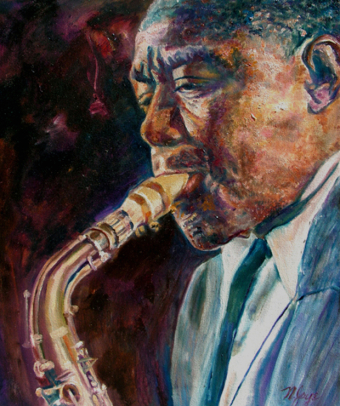
Gee, thats very hard to say, because my idol [was] originally Louis Jordan, the rhythm and blues saxophonist. Then I gravitated to Coleman Hawkins, and I stayed with Coleman Hawkins, trying to absorb him. And then I familiarized myself with Lester Young, and all the time I had heard Ben Webster and tried to absorb some of his playing. The great Don Byas was one of my ultimate favorite saxophone players; I think he was one of these unsung heroes. So I triedI learned a lot [laughs]. I wish I could have learned more from these people. I studied them a lot, let me say that!
Charlie Parker came along and I studied Charlie Parker a lot. The fact that Charlie Parker came on the scene just at the time when I was coming into my adolescence meant he became a prominent source of my inspiration at that time. When I first heard Charlie Parker it was the '40s. The first record I had by Charlie Parker was a record called KoKo.' It was a famous record of him playing on Cherokee. It was on Savoy. On the other side of that record was How High the Moon by Don Byas, and I actually bought that record for Don Byas because I didnt really know Charlie Parker!
So I listened to Charlie Parker play. It was interesting, but after playing it for my friends at school I realized this guy has got something going here, and I began to become a devotee of Charlie Parker. But originally Don Byas was the reason for my purchasing that record and to this day I still love Don Byas, Don Byas is great.
When youre young it has to be this or that, but as you grow older and get more mature youre able to realize everyone has something unique and special to say in jazz, everybody should really play. If you love jazz you can contribute to it; if you have talent you can make a contribution. You dont have to be as good as Sonny Stitt to play saxophone, you can make your own kind of contribution
Very important for young students to realize.
Exactly.
< How did you make yourself known to Charlie Parker?
As I began playing more and getting some recognition from some of the older players and so on, finally I got to the point where I was playing with Miles [Davis] and our paths crossed. And Miles said to Charlie Parker, 'listen to this guy,' and Charlie Parker, the first time he heard me, he said, Hey, man! Thats me! So I really felt great, and he was like a father figure to us all, mentor and everything.
You mention Miles Davis a lot, and it would be interesting to talk about your association with him, as he gave you rights of first refusal for the tenor chair when he was forming his 1955 quintet.
[Laughs] Well, I had been playing with Miles. When I was away from New York, he gravitated towards me to start his band up. We were very good friends. Miles and me used to hang out, at my house; Ive been in his house, this kind of stuff. And although I had played with Miles and Coltrane in 1949I think thats right, but my chronology could be off a little bit, we both played with Miles [around then], so Miles knew Coltrane and he knew me I think he recounts some of that in his biography. I was very excited, of course, when he said he 'wanted to get Sonny,' but I think that was because he and I were very close personally and musically. So probably thats why he wanted to get me back [from Chicago] when he formed his band, but Im sure Coltrane was available and was someone who he would have taken, also. I think he just mentioned my name as the first one at that point.
Miles loved to have a strong saxophone player; that was one of his desires . I think it set his playing in relief, which he enjoyed and he realized it was good musically to play against the pattern of saxophone sounds. It set his playing off in relief, made him more cogent, and I think he knew that.
Im thinking of Paper Moon that you recorded with him.
Oh yeah! Paper Moon, right! Oh yeah, boy, I havent heard that in a long time!
To me that encapsulates what you were just saying.
I guess so, I guess so. I think also when I look back on the songs he made with Charlie Parker he played differently to Dizzy Gillespie when he played with Charlie Parker. You know when Dizzy Gillespie and Charlie Parker came out, they were both playing basically in the same style, the bebop style playing a lot of notes and so forth. But when Miles played with Bird, he played the opposite. He played much more introspectively. It was different. Of course, Miles was a genius, and I think he had that in mind all the time, 'one day Ill have a strong saxophone player,' so he could play his style. It would set off his style more prominently.
Another trumpet player you were associated with was Clifford Brown, who of course was a completely different player than Miles.
Yes, yes. Yes, he was quite different [from] Miles. Miles was Miles. You have to look into past trumpet players to find parallels with Miles, people like Freddie Websterthats one guy who Miles loved. You could sort of see Miles trying to get a lot of his things from Freddie Webster. But other people coming on after you had Dizzy Gillespie. You had the great Fats Navarro, who was a fantastic trumpet player. I had a guy playing with me, a great pianist called Stephen Scott, and Stephen used to tell me, he said, Oh, man. I think Fats Navarro was my favorite trumpeter. And thats perfectly legitimate, because he could play anything. I had the good opportunity to play some jobs with Fats Navarro. But to get back to Clifford Brown Clifford Brown, I would say, had a style akin to Fats Navarro. That was his inspiration. Clifford was so fresh, he was young, he was fresh and he was exuberantbeautiful sound, everything. He was just a gift to the music profession when he came out. He was somebody very, very special.
For me, I find him the most rewarding trumpet player in jazz to listen to.
Okay, well I certainly wouldnt give you an argument over that at all. He was fantastic. He was so full of life in his playing, so much life in his playing, just wonderful, just wonderful.
What impact did he have on you as a person and as a musician, and what were you able to take from that experience?
Well, as person he had a great effect on meas a musician also, but first as a person. He was a very humble person, very businesslike, very nice. For a person who could play that much music, when we played together he could bring the house down, he was still a very humble person and at the time he was a very clean-living person, which unfortunately artists and musicians dont always go that route in their personal lives. This is not a criticism of jazz musicians, because jazz musicians have hard, hard, hard lives and they are prey to the usual things artists are prey to: alcohol, drugs, all these things. In fact, jazz musicians [because they work in bars and clubs] even more so. But I would say all artists are subject to getting involved in these things because it sort of goes with the living, trying to get closer to nature and music, and these things are hard to find in every day life, every day society. So artists and writers may get into drinking and all that, because were trying to find essences of things youre not going to find in everyday life. Thats what makes art art, something separate, so one of the pitfalls is that in order to find those things, you drink a lot, you use drugs a lot, you find ways that at least temporarily give you a different consciousness.
With Clifford Brown, he was a guy who played so much music but he was clean-living person. At that time in my life I was struggling to get away from some of these bad habits, all of which I had indulged in, so when I came across Clifford it was, Wow, this guy can play so much music, and yet hes clean-living, he is what I want to be: a clean-living person. So he ended up being a perfect model for me at a particularly dangerous time in my life, if I can put it that way.
You would put it that strongly, would you?
Well, you see I had been in a rehabilitation hospital for substance abuse [in Lexington], and when I joined Clifford Brown and Max Roach I had been fighting to get free of all of these things. I had been going along very nicely. In fact, I had turned a corner in many ways. I had turned a corner but I had to stay away from music for awhile. I had to stay away from the environment of music until I got myself strong enough to be around music and not fall prey to drinking and drug abuse and all that stuff. So I was right at a critical point in my life when I had turned a corner and I was ready to going back to playing, and thats when I met the band and they asked me to join it and Clifford became such a light to me, because he was playing so great and yet he was completely clean, a clean-living person. So he was a great influence on me in a very, very positive way
And as a musician, what little bit of Clifford Brown did you take away from that experience?
Well, Clifford was a fine, consummate musician, but I certainly didnt feel, Boy, Clifford Brown, I dont know if I should be up here. I didnt feel that, but I certainly felt a big challenge playing with Clifford Brown because of his great playing. However, what sort of saved me and the edification of that band was that I was playing a little differently to the fellow I followed in the band, Harold Land, a fine saxophone player. But the Clifford Brown/Max Roach band with Harold Land was set in a certain direction and when I joined the band it sort of opened-up a lot of other things, it changed a lot about the band. A lot of people observed that, it changed the character of the band, and in so doing it changed Brownie. I know that, because Brownies wife told me some years ago when I was playing the Clifford Brown Jazz Festival in Wilmington, Delawarehis homeshe told me, she said, You know Sonny, you and Brownie were so close and Brownie was really affected by you. For someone to say that I had an effect on him as well as him influencing me was a mutual thing, it was very humbling to me, because Clifford was so great. I dont know if I was as great on saxophone as Clifford was on trumpet, Im not sure about that, you know? But what I am sure is that I had it in my hands to go in a slightly different direction which changed the character of that band and eventually when his wife, when she told me, she said, Yes, you guys were affecting each other, that was great!
We have talked about certain mentors in your life, but jazz has lost mentors like Art Blakey, Betty Carter, and so on, who gave musicians a firm grounding in music and the jazz life. These figures are no longer with us and I just wonder whether you think if jazz has lost anything by this, the opportunity of playing with someone with a very powerful personality?
There is a criticism going around that the kids coming out of the schools dont really have the old-style hands-on experience that people got when they were playing in these smoke-filled nightclubs, [when] there were no [jazz] schools per se. Thats a legitimate criticism. However, what can we do about it? Theres nothing we can do about it. So instead of lamenting the fact that we have no that things arent the way they were fifty years ago we just have to hope that we can get people coming out of schools, because thats what happening now. The schools is where its at rather than nightclubs, which is where it was at when I started.
So things change, things go in cycles, and Im not to concerned about that. I think it might be I can see why a lot of people say everybody sounds alike, they play the same. Well, thats probably the beginning of something that might be not so desirable, but I think that will ameliorate given time. Youll find people beginning to follow different models. Technology might give people a chance to play with records, whatever it is, or there might be more of a chance for people to play in live situations in optimum ways that they can get the essence, which is what a lot of people tell me. The essence has gone. Theyre playing something they could read out of books! All of these things, I dont feel too discouraged by them. Jazz is a force of nature, nobody can stop jazz.
Its nature, you cant stop nature. You can try and control nature, but it doesnt work. So youre never going to eliminate jazz because its a wonderful natural freedom, its very spiritual and creative. I think it is a very high spiritual part of what we consider. . Other people might think jazz is more funky; whatever you think about it, theres something there thats real, and these great people we have had have certainly shown that it is a beautiful expression of nature and the spirit, whatever you want to call it. There is nothing demeaning about jazz that anybody can say, because I know differently. So Im not worried that the schools have taken over, I think probably they had to, because society at large always keeps jazz so far back from the consciousness of the people, and maybe we needed it to have it to go into the schools.
Finally, last question. When you sit down to listen to music, what do you listen to?
Well, I dont listen to records nowadays. I sort of had a mental block about listening to music for many years now. I dont do that. I used to do that, in fact I am probably going to start listening to music again, but I havent listened to music as a relaxing part of my day for many years. I think because I listened to so much music and was involved in so much music it probably just got to overkill, so I cant really answer that question because I dont do that.
I understand, of course. I thought you might take me by surprise and say Mozart or
I love Mozart, by the way.
Well, hes very difficult to dislike!
Yes, and theres a lot of other music I like. I mean, Im lucky because I love so many kinds of music, its great. You hear music all the time, even though I dont sit down and listen to it, usually you cant escape some kind of music, so if I happen to be some place and they play some Mozart, sure, its great. If I started listening again, Id have to have a room just full of records. Im a music lover. I love all kinds of music. Good music and bad music, thats the two things; if it's good which means it's done well, if it's done with spirit, if it's done with feeling, if it's done with heart, its good. If its done without those things, then I consider its bad musicany style, it doesnt matter the style, just those qualifications should obtain. Most music, I like it if its done well.
Thank you for your time.
Thank you.
Tags:
November 13, 2009 · 0 comments

Comments are closed.