In conversation with eliane elias
By Tomas Pea

The pianist, singer, and songwriter Eliane Elias is best known for a distinctive and immediately recognizable musical style that blends her Brazilian roots, alluring voice, and impressive jazz, classical and compositional skills. I was fortunate to catch up with Eliane between tours recently. Despite feeling a bit under the weather, she was very enthusiastic about the upcoming release of her new Blue Note album, Bossa Nova Stories, and happy to school' me on the finer points of the Bossa Nova. Elias' talents as a composer and multidimensional instrumentalist have been recognized by her peers and fans alike. As one reviewer wrote, "The beautiful, Brazilian-born New York-based pianist vocalist Eliane Elias is still delivering soft and swinging music, hip and hot enough for North and South America. Whether the groove is acoustic or electronic, jazz or samba, its all Eliane Elias, and its all good."
Congratulations on the release of Bossa Nova Stories. I understand that the album has already been released in Europe and Japan. When can we look forward to hearing it in the U.S.?
The album will be released in the U.S. on January 13th.
The album coincides with the 50th anniversary of Bossa Nova, and the 70th anniversary of Blue Note Records.
Bossa Nova Stories is just a title. I have been paying tribute and giving continuity to this music for years!
Before we talk about the album, I wonder if you might take a few moments to enlighten me on the finer points of Bossa Nova. Over the years, the Bossa Nova has become part of Americas soundtrack, yet I get the feeling that a lot of people dont understand how deep the genre is, and how revolutionary it was when it was first created.
Let me give you a little bit of history, first about me. I was very fortunate to have grown up in Brazil during a time when Bossa Nova was on the streets, on the radio, on televisionit was everywhere. I often say that Bossa Nova is part of my DNA, because the music was so strong, and growing up during that time was fantastic. Brazil is such an incredibly musical country.
This was during the late 50s and early 60s. Correct?
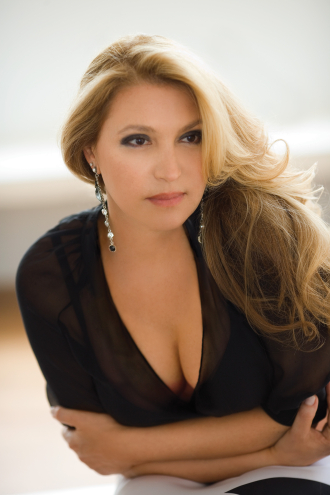
I grew up during the 60s but the first Bossa Nova tunes, like Desafinado and Chega de Saudade, were launched in 1958. What most people dont know is that they werent quite liked immediately, because they had all of these twisted harmonies and melodies. If you think about it, its no coincidence that Desafinado means off-key! In fact, at first the music was booed, because it was really different from anything that was happening in Brazil at the time. Composers like Antonio Carlos Jobim and Joao Donato were influenced by the great American composers and jazz musicians. For example, Jobim, who is like our Cole Porter, loved the music of George Gershwin, and Donato loved Stan Kenton. In fact, he had a portrait of Stan Kenton hanging in his bedroom! They were also influenced by musicians like Gerry Mulligan and Chet Baker, as well as the songwriters who were writing standards. Those rhythms mixed with our rhythms. The result was sort of the way a Brazilian might hear jazz and Bebop.
Jobim was also influenced by the impressionists like Ravel, Debussy, and Chopin, as well as nature, love, poetry, and things that everyone can relate to emotionally. Add the melodic aspects of Bossa Nova, and you have this beautiful combination of ingredients and a new groove called the Bossa Nova. I have been reading books and listening to interviews, and I found out that when they created the Bossa Nova they were trying to create a new groove that would appeal to younger people (thus Bossa Nova or New Bossa), but in their wildest dreams they could never have imagined that it would become so universal and eternal, and leave such an indelible mark on Brazilian music and the world. So when the Boss Nova finally came out, there was this incredible combination of pleasant, sensual rhythms sung in this beautiful, soft language (Portuguese), combined with these beautiful harmonies and melodies. It was really fantastic.
I feel like I just completed a course in Bossa Nova 101. Thank you!
(Laughs)
How is the Bossa Nova received overseas?
Music is such a universal language. Right now, I am touring Bossa Nova Stories and its doing wonderfully, people just love it. Its great to listen to; its uplifting, and its the kind of music the world needs. I love to perform, these days I get up and sing, go back to the piano
I recall that in the early part of your career you were a bit shy about singing.
(Laughs) Thats an interesting comment, because on Amanda [Passport, 1985], my first recording, I sing throughout the entire record.
Thats the one recording by you that I dont have.
Its no longer available. Randy (Brecker) loved my voice, so I just went along with him even though I just wanted to play (the piano). After Amanda, I continued doing instrumental things, and eventually I began to sing. Last night, I saw a video of myself on YouTube that was filmed around the time I was just starting to sing, and I thought to myself, Thats not me anymore. Since then, my voice has really opened up. I hope that you can make it to Dizzys [at Jazz at Lincoln Center in New York City] in January [2009]. When you do, you are going to say Wow! For me, its so beautiful to see the development of my other instrument.
So its a whole new you!
Yes, its a whole new me, and it feels great. After all these years, the possibilities have really opened up, and there are all of these songs that I want to sing.
Lets talk about your years as a child prodigy and budding pianist. You were born in Sao Paulo, Brazil. As I understand it, your mother played the piano.
She was not a professional musician. She played classical music, loved jazz, and had an amazing collection of jazz recordings, which were very influential to me I fell in love with jazz as a child, and started transcribing music at a very early age.
Your father used to bring you records from his travels.
At the time we couldnt import records [in Brazil], but by the time I was thirteen, I had lots of jazz records, and tons of things that I had transcribed. Eventually, I was accepted by one of most prestigious schools in Brazil. After graduation, I taught in the piano department and performed with a trio by night. When I was seventeen, I was playing in a club, and I was approached by Vinicius de Moraes, who was Jobims co-writer. They loved my playing and invited me to join them on an international tour. I accepted. I toured with them until Vinicius died in July of 1980, then I moved to New York. Although I was much younger than the creators of Bossa Nova, I didnt learn about it second-hand. I witnessed, lived, and breathed the music in the presence of greatness. The importance of keeping the continuity and authenticity of the music has always stayed with me.
Tell me about your current group, and how you are keeping traditional Bossa Nova alive.
I am fortunate to have Oscar Castro-Nevesan incredible Bossa Nova guitaristand Paulo Braga, who was Jobims drummer for twenty years. [Also] bass player Marc Johnson, who has lived this music and is such a virtuoso and an incredible musician; I couldnt imagine a Brazilian bassist playing the music more authentically and beautifully than he does. Traditionally, Bossa Nova recordings have always had big orchestras, and though its a big expense, I feel very fortunate that am able to do It, because its such a beautiful and an important part of this music. Essentially, thats how we created Bossa Nova Stories: by recording some of the very first [Bossa Nova] tunes that came out, and doing what has always traditionally been done [by] including standardsespecially my favorite tunes by Frank Sinatra, like Too Marvelous For Words, Day In Day Out, Day by Day, They Cant Take That Away From Me, all of which are great vehicles for the Bossa Nova.
You also pay tribute to some of the more contemporary composers, like Stevie Wonder and Ivan Lins.
I wanted to add something new, because there are so many great songs that can be done this way.
Just to backtrack for a moment, after you worked with Jobim, Vinicius and Toquiho, you relocated to New York. As I understand it, the transition from Sao Paulo to New York was a breeze.
Sometimes I look back, and I say to myself, How did I do that? I didn't speak English, but somehow I was able to communicate what I wanted to do (laughs). New York was not intimidating to me. Quite the opposite; it felt very tiny.
In some ways it is.
It felt like a little Disneyworld, and I felt very safe compared to Sao Paulo, which is a very crazy, cosmopolitan metropolis. After that, things started happening very quickly for me. I went to a few jam sessions and got noticed right away and was offered a number of good opportunities early on.
You became a member of Steps Ahead. Does the group ever reunite?
We did two reunions actually it wasnt quite a reunion because Michael [Brecker] wasnt there. Its hard for me to hear that music now because I either hear Michael or Bob [Berg], both of whom are no longer with us.
The group was very popular.
Wasnt it? How I got into the group is an interesting story. I went into the studio to do a demo tape. Bassist Eddie Gomez recommended Peter Erskine and Michael Brecker, and Mike Mainieri volunteered to produce the demo. Anyway, they heard me play, and they asked me to join the band. It was fantastic, because it gave me my first taste of international exposure. We played festivals, and we were the first and only acoustic quintet with four guys and a diva on the cover [Steps Ahead (Elektra, 1983)]. They included, Introducing Eliane Elias in the title, which was a very nice beginning (laughs). After that, I got married to Randy Brecker and I had my daughter (Amanda). Then Randy and I worked as co-leaders and we recorded Amanda. After that, I signed with Blue Note Records and began my solo career.
How many recordings have you made thus far?
If I am not mistaken, Bossa Nova Stories is my 20th album.
Congratulations! By the way, your daughter, the beautiful and talented singer-songwriter, Amanda (Brecker) is all grown up now. In fact, she just recorded her first album called Here I Am.
Yes, she is doing really well! She is also the only non-French teacher who teaches French at the United Nations.
I heard that at one point her recording climbed to number one on the Japanese charts.
It was so cute, because when Bossa Nova Stories was released in Japan it went to number one, then she bumped me and it went to number two!
You must be very proud of her.
Yes, I am very proud of her. Thats what I like to see!
What kind of music do you like to listen to when you are not rehearsing or performing?
You are not going to like the answer
Why not?
I am actually listening to my rehearsals.
Fair enough. You just returned from the Barcelona Jazz Festival, where you performed as a duo with Marc Johnson. Tell me about the festival and seeing the great Bebo and Chucho Valdes perform together.
It was wonderful. Actually, I was a bit embarrassed, because they insisted that I sit on the stage. I was sitting eight feet away from Bebo.
How was the performance?
It was wonderful. After the concert, we all went back to the hotel. When we arrived at the hotel I was exhausted and ready to go up to my room but, Bebo wanted to drink champagne and hang out. [Interviewers note: Bebo Valdez was born on October 9, 1918.]
Whats next for Eliane Elias?
I am looking forward to performing at Dizzys from January 6 to the 11th [2009], and to the release of Bossa Nova Stories on January 13th. After that, I will be performing in Boston, Seattle, Korea, and Singapore.
Thanks so much for taking time to speak with me, and best of luck. It has been a pleasure speaking with you.
Thank you Tomas, I hope you can make it down to Dizzys.
Are you kidding? I wouldnt miss it!
RECOMMENDED LISTENING:
Something for You Eliane Elias Sings and Plays Bill Evans (Blue Note Records, 2008)
Dreamer (BMG Music, 2004)
Impulsive: Eliane Elias, Bob Brookmeyer & the Danish Jazz Radio Jazz Orchestra Play the Music of Eliane Elias (Stunt Records)
ELIANE ELIAS WEB SITE: elianeelias.com
Tags:
February 18, 2009 · 1 comment

Thank you for this suggestion. I've listen the preview of this CD and I think i'm gonna buy these. Cheers!