The Jazz.com Blog
October 20, 2008 · 1 comment
How I Rediscovered the Blues
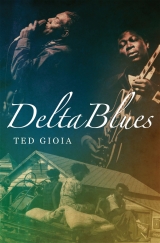
Today marks the official publication of my new book Delta Blues, a work that has been in the making for many years. Yet it also represents the culmination of an unusual series of events by which many of my most deeply-held views on music were challenged and reformulated. As strange as it may sound, a vision quest of more than fifteen years led to the writing of this book.
When I was twenty years old, I naively thought I knew almost everything there was to know about the blues. At that time I was immersed in the world of modern jazz piano, and believed that the blues was a fairly simple song structure. I wrongly thought that once I had mastered the chords and various modernistic substitute changes, once I knew how to play the blues in all twelve keys and various meters, I had exhausted the potential of this music. As I see it now, my knowledge then was limited to the structure of the blues, while I remained largely ignorant of the substance of this music.
For my first CD, The End of the Open Road, I composed a blues. Although it kept to twelve bars, the harmonies moved far outside the tonic, dominant, sub-dominant formulas that defined the idiom. Here was my idea of the chords of a twelve bar blues at that time (1986): C7 / Db7 / Gmin7 / Gb7 / F7 / D7(#9) Db7 / Emin7 / A7(b5) / D7(b9) / G7(aug) / C7 G7(aug) / C7 G7(aug). This would have been typical of my attitude at the time. To the extent I retained an interest in the blues, it was driven by how I could build something complex on top of it.
Yet over the next few years my attitude started to change—at first slowly, and then dramatically. In time, I would begin to question many of the assumptions that had fueled my musical development during my teens and twenties. I look back at some of my notebook jottings from 1991, and can already see a shift in my perspective on music. Here were the first ruminations that later resulted in my books Work Songs and Healing Songs. Starting in the early 1990s, I found myself going back, again and again, to traditional music forms, especially non-commercial or pre-commercial styles of performance that had developed and survived outside the ever-expanding orbit of the entertainment industry.
I increasingly became aware of a depth and power in this music that I had missed before. I became especially interested in the power of music as a change agent, as a transformational force in day-to-day life—aspects of song that I felt were crucial yet poorly understood. In a very real sense, I was convinced that there was a magical element in music—and I stress that I am not speaking metaphorically here—a type of enchantment that was increasingly obscured amidst the noise and hype of modern culture.
I spent almost a decade studying traditional styles of music before I began writing about them. To some extent, I needed to begin my own musical education all over again, starting from scratch. The challenges this presented were many, and beyond the scope of what I can convey in this setting.
Sad to say, when I started writing about these subjects, I encountered fierce resistance from editors and publishers. They wanted me to write on the same things I had written about in the past, and they felt that writing about non-commercial styles of music would itself have poor commercial prospects. I was absolutely convinced, in contrast, that unlocking the transformational power of music as it confronts day-to-day life was perhaps the biggest story any music writer could address. Even so, this was a lonely time for me as an author. No one wanted me to write on traditional music, and my persistence in digging into this area over a period now approaching fifteen years possibly represents the most stubborn move of my life to date.
But it was this very persistence that prepared me to write a book on the Delta blues—a subject that began fascinating me around eight years ago. The Delta blues was not just another type of song, to my mind, but represented a rare moment in American culture when a powerful music of everyday life (remember my comments above about magic) confronts and transforms commercial music. Songs that grew out of the stark realities of impoverished communities somehow managed to reach out and change the whole entertainment industry. And did it, moreover, with very little compromise or watering down of their core essence.
I also now learned how even the structure of the blues was far more multi-layered than I had realized at first. The idea that the blues is built on twelve bars and three chords is a fairly late arrival on the scene. Before blues was a structure, it possessed a universe of sounds that defied the rigid categories of Western music. Exploring the complexities of these sounds—far more complex than I had realized in my youth—opened my ears in a way jazz never had. It was almost as if blues introduced me to the way music might have developed if Pythagoras and his heirs had not infused it with so much mathematics. In short, there was a blues behind the blues that resisted codification. I was determined to tell its story, and unlock its mysteries.
I won’t try to tell the whole tale here. But I found myself carried away by the music and life stories of people such as Son House, Charley Patton, Robert Johnson, Muddy Waters, Howlin’ Wolf, John Lee Hooker, B.B. King, Skip James, and the others who played greater or lesser roles in this process. I was also interested in how this legacy became infused in the works of Elvis Presley, the Rolling Stones, Eric Clapton, the Beatles and other mega-stars.
In Delta Blues, I have tried to relate this remarkable story to the best of my ability. The challenges in doing so were far greater than I envisioned when I started the process—to some extent, I had to become something of a private investigator to unravel the many mysteries of this music. But it has been a great pleasure throughout the whole process—especially having the excuse to immerse myself in this music and the lives of the people who made it. My hope is that some of that pleasure and excitement will be conveyed to those who read my book, and (invariably a music writer's highest aspiration) that my narrative approaches, to some degree, the high standards set by the music itself.
This blog article posted by Ted Gioia.
Tags:

The magic of music is real, the magnetism of the Blues indisputable, and the truths of this book hard-won and all the more compelling for it. sadly a non-musician (though i play a mean phonograph) i come to music as a listener and student of its history--and there's none more fascinating than that of Black Music in the New World, with Blues as the deepest surviving root. kudos to Gioia for spreadin' the joy.