The Jazz.com Blog
October 28, 2008 · 1 comment
Ornette: The Blue Note Years (Part Two)
Below we continue with the final installment of Chris Kelsey's two part article on the Blue Note recordings of Ornette Coleman. For part one of this article, click here. T.G.

It seems odd to think any one of Coleman's albums more controversial than the rest, since his early career was literally replete with controversy. However, Ornette's The Empty Foxhole project for Blue Note, recorded in September 1966, was easily the most notorious of all his recordings.
In what might be seen as a father's misplaced confidence in his child's nascent talent, Ornette used his inexperienced ten-year-old son Denardo on drums. Denardo definitely had a fresh approach, with a vivid imagination and big ears. He's especially responsive to his dad's improvised lines. Most often, however, he's a child doing a man's work.
On the martial "The Empty Foxhole," for example, Denardo sounds like Sunny Murray might've sounded had he grown up listening to sun-warped John Philip Sousa 78s on a wind-up phonograph. And Denardo isn't the only wild card. Ornette's trumpet and violin playing is also pretty hit-and-miss. It sometimes seems that the trio's third member, bassist Charlie Haden, was the only "professional" on the date. To be fair, Denardo acquitted himself much better two years later on Ornette at 12 (Impulse). By the '80s he would be a terrific drummer. A glass-half-full guy might even say that Ornette was simply ahead of the curve, as usual.
If Down Beat magazine had given an award in the mid '60s for "Established Alto Saxophonist Most Positively Influenced By Ornette Coleman," Jackie McLean would've won hands down. A Charlie Parker-derived bopper in the '50s, McLean's came under the spell of free jazz in the '60s, adopting some of its expressive and harmonic elements, adding them to his emotionally charged brand of post-bop. In March 1967, McLean took a logical step and invited Ornette to play trumpet on his Blue Note album, New And Old Gospel.

If Coleman sounds in better form here than on The Empty Foxhole, it's due in no small part to the company he's keeping. McLean's men were first-rate musicians who, although they approached the music from a modal/bop angle, were very Ornette-friendly (they included drummer Billy Higgins, who had distinguished career playing in Coleman's own group). On tracks like "Lifeline," a medley of McLean tunes that opens the album, Ornette displays the same singing tone and mercurial phrasing that distinguishes his sax playing, while McLean does some of the most burning "out" playing of his career. Nothing here is as uncompromisingly free as Coleman's work as a leader. Instead, it's an inspired amalgam of Ornette's concept, Blue Note-style gospel jazz ("Old Gospel"), and modal jazz à la A Love Supreme-era Coltrane. Good, borderline great stuff.
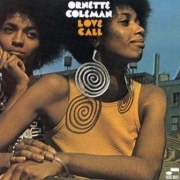
Ornette's final two Blue Notes are, like the Golden Circle recordings, a matched pair. The tracks for New York Is Now! and Love Call were recorded in two sessions held roughly a week apart in the spring of 1968. In selecting his band, Ornette reached outside the circle of musicians with whom he'd been performing since his un-retirement (a small group that included Izenson, Moffett, Haden, and Blackwell). He hired tenor saxophonist Dewey Redman, an old classmate from their days together at I. M. Terrell High School in Ft. Worth.
He also tapped John Coltrane's former rhythm team of bassist Jimmy Garrison and drummer Elvin Jones—a daring choice, inviting comparison with his avant-garde doppelganger. The critical consensus has long held that it was a bad move. The consensus, in my opinion, is wrong. Garrison had recorded with Ornette years earlier, and although he might not have been Ornette's musical soul-mate (he had expressed doubts about the Coleman method on more than one occasion), he and Jones were incapable of failure when working alongside one another. On tunes like "Airborne" and "The Garden of Souls," the two men are superb, providing Ornette with some of the most primal backing he'd ever had. The darkly serious rhythm section provides a fascinating contrast to Ornette's lighter, more optimistic style. As for Redman, he sounds more like Ornette on tenor than Ornette On Tenor, his densely scribbled lines a hoarse, angry echo of Coleman's alto.
While it may be true that nothing Coleman recorded for Blue Note has stuck in the collective ear like "Lonely Woman" from The Shape of Jazz to Come or "Ramblin'" from Change of the Century, it's just as true that very little jazz made by anyone since has had nearly so great an impact as those early albums. (Thank Ornette's revolution for that; subsequent jazz became so splintered, no one style or artist would ever again have such a profound effect on the music as a whole.) Ornette's Blue Notes are an important part of his recorded legacy. Dismiss them at your own peril. There's gold in them thar digitally encoded bits.
This is the end of the second installment of Chris Kelsey's two-part article on Ornette Coleman's Blue Note recordings. For the first part of this article, click here.
Tags:

Thanks for this great series of posts. As much as I love Blue Note's hard bop catalogue, I feel it often overshadows a lot of the great free jazz and avant garde music produced by the label during the 1960s. The Blue Note output of Coleman, Andrew Hill, Jackie McLean, et al is a constant source of enjoyment that I don't revisit as often as I should.