The Jazz.com Blog
November 18, 2008 · 0 comments
An Adventurous Festival that Crosses Borders and Genres
Thierry Qunum covers the jazz scene from his home base in Paris, and is a frequent contributor to these pages. Qunum writes for Jazz Magazine and other periodicals, and is a jury member for the Django DOr (France) and the European Jazz Prize (Austria). Below he shares his thoughts on the opening weekend of the ongoing Jazzdor Festival in Strasbourg. T.G.
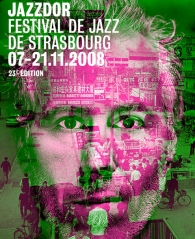
France doesnt just have jazz festivals in the summer and on its beaches. The fall is also a busy period all over the country. From Perpignan, in the south, to Toulouse, in the southwest, to Nevers, in the center, to Paris and up to Strasbourg, in the northeast, France displays an impressive diversity of events that, since they are not mainly focused on the tourist audience, often offer daring programs.
Of this trend, Jazzdor is a good case in point. This festival started out in a small jazz club 23 years ago. The event lasted only 3 days back then. Now it covers Strasbourg itself and a dozen smaller cities in its neighborhood and lasts two weeks. Due to the closeness of Germany, just over the Rhine river, Jazzdor also was the first French jazz festival to cross a border and organize concerts with fellow German cultural institutions.
This may seem to be just normal for a city that, besides being the capital of the Alsace region, hosts the European Parliament and was a major cultural and university center even before Gutenberg settled close to its beautiful pink stones cathedral with the brand new printing machine hed invented, back in the 15th century. Still Philippe Ochem, Jazzdors director for the last two decades, has fought hard to bring his festival to the level of creativity and international renown that it now has among artists worldwide, and among audiences more than 100 kms around Strasbourg.
The first weekend of Jazzdors 23rd edition was based in town, but it displayed a good sample of what the overall program would be during the following days in other places, including Offenburg in Germany. Here one encountered mostly European musiciansincluding many artists debuting music that had never been played in France beforeand lots of full houses. The last factor is partly due to the trust local audiences have developed in Ochems artistic choices and also partly due to the inexpensive students passes that Jazzdor offers to reach younger listeners.
Das Kapital is a Danish / German / French trio based in Paris. Hasse Poulsen plays the guitar, Daniel Erdmann the tenor and soprano saxes, Edward Perraud is the drummer. Their performance, called Lenin on Tour, was a first in France and has them playing along with a silent documentary that shows three huge stone bustsone of them Lenins, of coursetraveling through Europe on a trailer. The trio devised a magical soundtrack for this strange road movie, playing witty counterpoints to the images or totally ignoring them to build their own musical journey. The journey ends with The International, the communist partys hymn, played in a tender and ironical way . . . that may have led the trio to some tiny cell way back then.
Another trio followed in the same auditorium, Swiss / German / American, this time: drummer Daniel Humair, pianist Joachim Khn and Tony Malaby on tenor sax. These three have just issued a remarkable record in France a couple of months ago, Full Contact, but their concert was disappointing partly due to sound problems that must have affected their morale. This, of course, doesnt lessen the respect one has for such artists. It can only remind us that improvisation is a fragile art and that a real jazz concert can never be the mere copy of the record.
The next two days, in a smaller auditorium called Ple Sud, typical Jazzdor French / German programs took place. Again audiences encountered live music for a silent movie: Berlindie Symphonie des Grostadt (Berlinthe symphony of the big city), a 1927 Walter Ruttmanns masterwork from the German expressionnist period. Playing along this classic were two pianistsBerlin-based veteran Alexander von Schlippenbach, and his wife Japanese born Aki Takasewith their son DJ Illvibe at the turntables. Trying to catch the atmosphere of this fascinating moviewhich shows Berlin from the busy hours of the morning to the height of its crazy nightlifethe pianos summoned up memories of Harlem stride masters, of Monk, and the free jazz of which Schlippenbach and Takase have been active exponents. In the meantime, DJ Illvibe efficiently injected his creative sounds in the flow of notes that escaped from the two pianos.
The next band, Tous Dehors (Everybody outsidea play on words on the name of its leader and multi-reed player Laurent Dehors), was celebrating its tenth birthday. Over the years this band has built a reputation of liveliness and virtuosity, mixing its own repertoire with iconoclastic covers of Bizets Carmen or Mozarts The Magic Flute. But music and humor (at least too much of it) dont always fit together, and their succession of small pieces played with a wealth of instruments (from bagpipe to marimba through accordion and harpsichord) and covering a huge diversity of styles (from dixieland to rock & roll via Ellington) definitely lacked focus.
After that, Berlin based drummer Oliver Seidles Soko Seidle quartet came across, by contrast, as a bunch of purists. They played acoustic instruments, without any amplification and, believe it or not, none of them played more than one instrument: alto sax, bass clarinet, bass and drums. Still their music was full of energy, and the message it delivered was very convincing. They showed that it is still possible nowadays to follow the path of Ornette and Dolphy and still create fresh music. Even if this concert didnt totally avoid clichs, there couldnt be any doubt about the dedication and sincerity of the members of Soko Seidle.
Louis Sclavis concluded this week end with his usual art of juggling with his own clichs. As a clarinet player, sax player and as a leader, Sclavis is certainly the best known modern French jazz musician outside of the country. In the last few years, his manner hasnt changed much as far as writing and soloing is concerned. Maxime Delpierre on guitar, Matthieu Metzger on alto sax and Olivier Lt on electric bass showed that once again Sclavis has made good choices among the new generation of promising young French musicians. Their energy and creativity, supported by long time Sclavis companion drummer Franois Merville, proved instrumental in the success of a typical Sclavis show.
Between these two sets of concerts, Sylvie Courvoisier played an intimate solo at Strasbourgs Modern Art Museum. This pianist definitely has a unique conception of her instrument and builds a world of her own with it. Her virtuosity never shows off. Whether she plays an ostinato inside the strings or displays a delicate touch on the keyboard, everything Courvoisier does is part of a coherent vision of the tune. As a composer of the instant, she organizes lush sound textures with rare intensity.
After this initial weekend, Jazzdor was to carry on for almost two weeks in Alsace and Germany, and its always a surprise to see how much this festival manages to fill auditoriums in town and villages while presenting a program mostly based on contemporary jazz and European groups. Yet visitors from overseas are also coming to Jazzdor this year: Rudresh Mahanthappa with Vijay Iyer, Fat Kid Wednesday and Matthew Shipp, as well the featured artist at the concluding concert of the festival, Dianne Reeves. The rate of reservations already assured the organizers that this deliberately popular concert was going to play to a full house too.
This blog entry posted by Thierry Qunum.
Tags:

Comments are closed.