The Jazz.com Blog
November 20, 2008 · 2 comments
The South Asian Tinge in Jazz
Jelly Roll Morton, in an oft-quoted passage, once spoke about the "Spanish tinge" that was, in his opinion, an essential ingredient of jazz. Although Morton has sometimes been derided, and is often treated with bemused disdain by later commentators, his remarks on jazz are typically quite astute. When talking about himself, Morton could be an unreliable source, but on almost every other subject, he needs to be taken seriously. His remarks on Latin elements in jazz are a case in point.
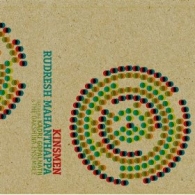
Morton decidedly did not talk about the South Asian tinge in jazz. But maybe it's time we start doing so. Rudresh Mahanthappa's new release Kinsmen, one of the most interesting CDs to come my way in recent weeks, has spurred my thoughts on this fertile area of exploration on the current jazz scene. Attempts to merge South Asian music and African-American traditions rarely get the same attention that Latin jazz garners, but this is a vital and exciting type of fusion today, and there are no shortage of interesting precedents from the past.
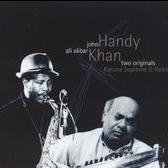
Sometimes it takes some digging to unearth the history of this partnership. John Handy's recordings with Ali Akbar Khan may be historic, even more they may be mesmerizing to hear. But they are—alas!—almost impossible to find, even in specialty stores and on the virtual shelves of esoteric web sites.
Other potent examples of Indian fusion music never appear on commercial releases. I remember a tape lent to me once by a student of Terry Riley, featuring a East-meets-West performance with Zakir Hussain, from an event organized by Riley. The music was stunning, but I was forbidden, in the strongest possible words, from making a copy. Today it lives on only in my memory. Although I still have some lingering hopes that a CD of this music may someday appear. (By the way, I plan to write more about Terry Riley—a fascinating figure in modern music—on jazz.com at a future date.)
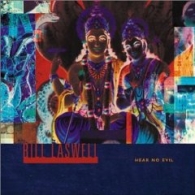
In contrast, Bill Laswell's work with Zakir Hussain is easy to obtain, and if you haven't heard it, you definitely should do yourself the favor of checking it out. (See my reviews here and here.) Laswell is a wide-ranging artist, who has put his stamp on hundreds of projects, but he has a provocative sense of world fusion music that sets him apart from the crowd. I am especially fond of Laswell's Hear No Evil, in which Hussain's tabla plays a central role in the mixing of rhythmic sensibilities from North and South, East and West.
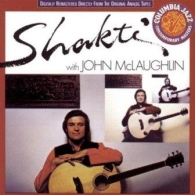
However, no one has done more to give visibility to the "South Asian tinge" in jazz than guitarist John McLaughlin. His Shakti band (extensively covered on jazz.com by Walter Kolosky) brought attention to Hussain as well as to violinist L. Shankar, and percussionists Vikku Vinayakram and R. Raghavan. In various settings, McLaughlin has collaborated with a host of other prominent Indian musicians. Coming on the heels of McLaughlin's Mahavishnu Orchestra, Shakti opened up the ears of many jazz-rock fans to sounds they had never before, and helped set in motion the commercialization of "World Music" as a marketing category. Previously non-Western musical styles had lived a largely subterranean life, found in obscure recordings from Folkways or Nonesuch or even smaller specialty labels, but with the impetus provided by McLaughlin and others, it was starting to find a mainstream audience during the mid-1970s.
A few years later, during a 1980 performance at a Mumbai jazz festival, John Handy invited altoist Kadri Gopalnath to join him on stage, and their combination of jazz and Carnatic music created quite a stir at the event. Gopalnath, who shares the alto responsibilities with Mahanthappa on Kinsmen, is now acknowledged as a pioneer in developing the saxophone as a legitimate voice for Indian music. His mastery is evident on a number of recordings, still little known in the US, which avoid glib fusion formulas in favor of a mindful probing of the untapped potential of his native musical traditions.

2008 has proven to be a stellar year for the South Asian tinge in jazz. Earlier this year, the Miles in India project got some attention, both for a fine CD as well the attendant concert performances of this music. John McLaughlin celebrated his Indian connections with his CD Floating Point and a companion DVD. Trilok Gurtu has a new CD in the works (with didgeridoo in the mix!). On his recent Tragicomic CD, Vijay Iyer delves at certain points (for example, on the song "Machine Days") into rhythmic and melodic structures suggestive of Indian music, albeit artfully clothed in dense new millennium jazz textures. In short, this is a vibrant field of exploration, still in flux and full of creative energy.
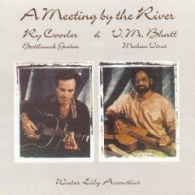
One of my favorite CDs of the year features Debashish Bhattacharya's powerful combination of slide guitar techniques with the Hindustani tradition in Indian music. Others have ventured down this path before (see, for example, Ry Cooder's fine 1993 CD with V.M Bhatt, A Meeting by the River), but seldom with such felicitous results. For several months now, I have been ardently recommending Bhattacharya's release, Calcutta Chronicles: Indian Slide Guitar Odyssey—most recently during a trip I made last week to the Mississippi Delta, where people were asking me about the influence of Delta guitar traditions on other genres of music—and everyone who hears it seems to share my enthusiasm. But it is almost unknown, even among serious jazz and blues fans. Currently it doesn't rank among the top 50,000 or so best selling CDs at Amazon.com, yet it is likely to secure a prominent place in my "best of 2008" list.
Indeed, the whole "South Asian" tinge in jazz (and blues) deserves more attention. Despite the many intriguing attempts to bring together these traditions in the period from 1970 to the present day, the most influential and best known connection between South Asian music and jazz may still be Coltrane's attempt to incorporate Eastern-sounding modal licks into the saxophone vocabulary. This personal decision definitely changed the flavor of jazz, and left a lasting mark on how the music is played. But very few jazz fans have traced back the roots of this sound beyond Coltrane. They really need to learn that there is more to India than "India."
Yet a new generation of American players with Indian roots now seem poised to take us to the next level. Artists such as pianist Vijay Iyer and saxophonist Rudresh Mahanthappa have the talent, the commitment and the standing within the jazz world to bridge these two rich traditions and find ways of intersection and dissemination that go beyond what we have heard before. It is fascinating to watch as these top tier talents, deeply schooled in the vocabulary of jazz, explore their own heritage in a way that is neither derivative nor superficial.
A return to the roots is one of the prevailing themes of the modern era—and it is a theme that I will explore in my next book (on the "death of the cool") where I focus on this quest for "rooted-ness" as one of the defining qualities of our times. In his new CD, Rudresh Mahanthappa shows us the surprising twists and turns that often emerge once we begin to take seriously the historical roots that pre-date our own birth and assimilation into our surrounding culture. Mahanthappa admits that he first received Kadri Gopalnath's album Saxophone Indian Style as a joke gift from his older brother, who thought the mere title was quite amusing. (Check out my review of a track by Gopalnath here.) Yet now Mahanthappa has invited Gopalnath as a guest artist on Kinsmen. The joke gift has now resulted in a real gift . . . to all of us.
On Kinsmen, Mahanthappa also features Poovalur Sriji on mridangam (a drum common in Carnatic music), violinist Avasarala Kanyakumari, guitarist Rez Abassi, bassist Carlo de Rosa and drummer Royal Hartigan. A track from this CD ("Ganesha") is featured as Song of the Day on jazz.com.
This blog entry posted by Ted Gioia
Tags:

Excellent musings, Ted. When I saw the title I was expecting things like "Now, Jazz Ramwong", but this is a fine summary of Indian influence on jazz. Don't forget John Mayer's work with Joe Harriott, too.
Nice current introductory piece on South Asian tinge in Jazz. Though, it has been written about in the past...granted not as much however(in English). The "Latin Tinge" is Jelly Roll's phrase-- but its never mentioned he's refering to Multi-instrumentalist Sonny Clay's composition "Cho-King" circa 1931. There is the reverse influence of Jazz on "Indian" composition. Example: "Fire Night" by Ravi Shankar. For extra info Mr. T. Jenkins. Mr. Gioia is "West Coast Jazz" in other languages?