The Jazz.com Blog
November 27, 2008 · 1 comment
Jazz.com's First Annual Album Cover Awards
During our inaugural year, jazz.com has published more than 3,500 track-by-track reviews spanning the entire 91-year history of jazz recordings. To illustrate them, we've uploaded thumbnail images of almost as many album covers. Like the tracks themselves, most of these covers are estimable, many are superb, and a few are downright dreadful. Alan Kurtz, jazz.com's resident curmudgeon, now presents his admittedly subjective survey of the Best & Worst Album Covers in our ever-expanding inventory. Readers are invited to nominate their own favorites or otherwise comment below, or by email to editor@jazz.com. T.G.
Picking the single best and worst album covers in jazz.com's digitized library is a no-brainer, which is right up my alley. So let's get those out of the way first.
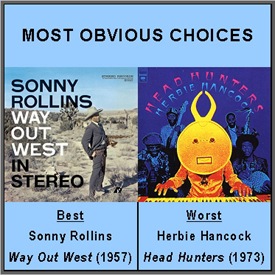
Closer look:
Sonny Rollins, Way Out West
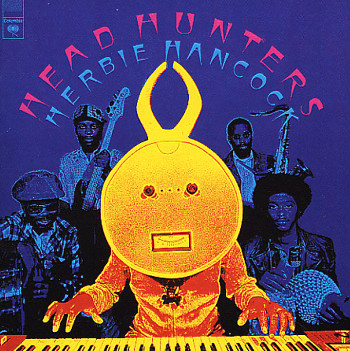
Herbie Hancock, Head Hunters
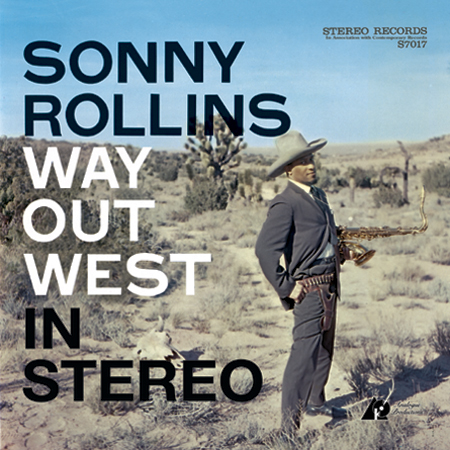
In 1957, on assignment for Contemporary Records after making his mark with atmospheric black-&-white shots of West Coast jazz golden boy Chet Baker, photographer William Claxton drove Sonny Rollins into the Mojave Desert, where he posed the New York City slicker as a cowpoke in a Brooks Brothers suit, capturing the iconic result in sunbathed Kodachrome. At some point during Claxton's storied career, which brought the native Californian lens-to-face with the rich and famous from models to movie stars (he did a book on Steve McQueen), he was asked by Los Angeles Times staff writer Scott Timberg how he'd like to be remembered. Claxton replied: "It'll say on my tombstone that I was a jazz photographer." On October 11, 2008, a day before his 81st birthday, William Claxton died. Sir, if I were chiseling your inscription, it would say you were the jazz photographer.
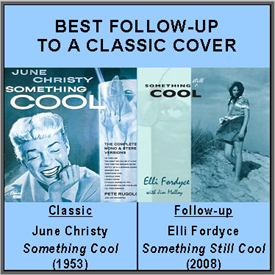
Closer look:
June Christy, Something Cool
Elli Fordyce, Something Still Cool
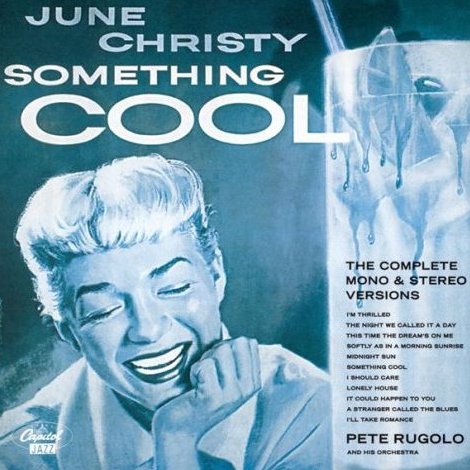

One good cover deserves another, as demonstrated by vocalist Elli Fordyce and her graphic designer Lindy Bostrom. Elli was cool at age 10 on Cape Cod, and still is. June Christy, of course, was cooler than ice in the tallest tumbler.
Honorable Mention: This Is Our Moosic by Mostly Other People Do The Killing (2008).
Closer look:
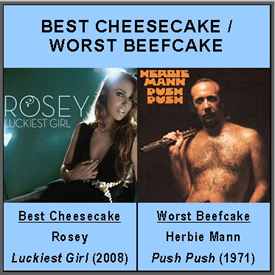
Rosey, Luckiest Girl
Herbie Mann, Push Push

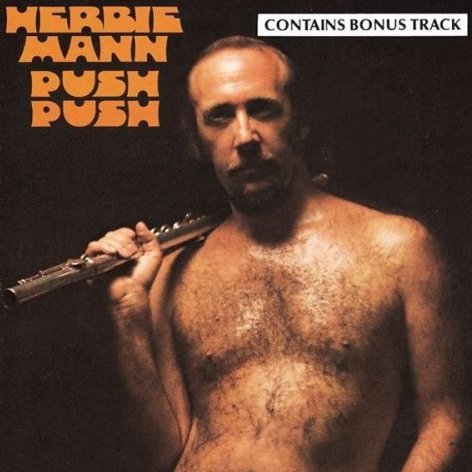
Jazz.com's reviewers are predominately male, a regrettable bias that reflects the jazz audience base and which we would love to remedy, if only more female writers would step forward. Yet as an editor, I'm struck by how conscientious our contributors are when presented with an album cover such as Rosey's Luckiest Girl. "Dare I review this artist's music?" the would-be critic gulps. "Won't I be accused of sexism if I dislike it? Won't I be accused of sexism if I ignore it? Won't I be accused of infidelity if my wife notices what I am listening to?" Such vexing issues must be punctiliously resolved before we can even begin to evaluate the music itself. Conversely, it's easy to sneer at Herbie Mann's Push Push cover. In fact, it may be politically correct to sneer at said cover. There's a moral here somewhere, but I'm not drunk enough to figure it out.
Closer look:
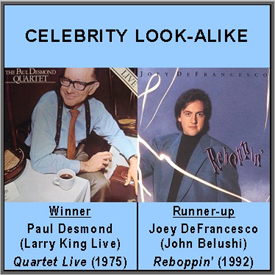
Paul Desmond, Quartet Live
Joey DeFrancesco, Reboppin'
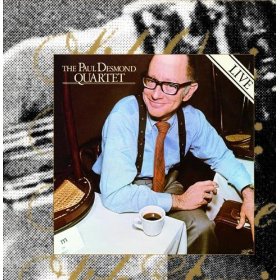
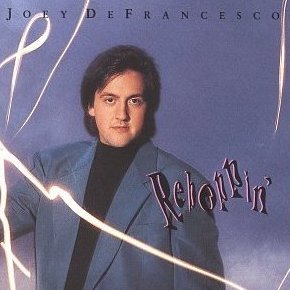
Describing the cover photo of Quartet Live, Doug Ramsey remarks that Paul Desmond "is smiling as if he knows something the viewer does not." The composer of "Take Five" and longtime star saxophonist of the Dave Brubeck Quartet knew that he was dying of lung cancer. Yet as the picture shows, that didn't stop him from smoking, or from adding a macabre touch to his wardrobe. "Woven into his black suspenders," Ramsey reports, "are tiny white skulls and crossbones."
Desmond died in 1977 at age 52, eight years before Larry King debuted his venerable nightly talk show on CNN. How magical it would have been to see Paul Desmond interviewed on Larry King Live, although viewers might have mistaken it for some kind of video trick, showing the same guy asking and answering questions from opposite sides of a split screen. But can't you just hear Larry King asking Paul Desmond: "So, how many of you are there in the quartet?"
Closer look:
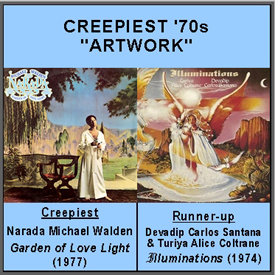
Narada Michael Walden, Garden of Love Light
Carlos Santana & Alice Coltrane, Illuminations
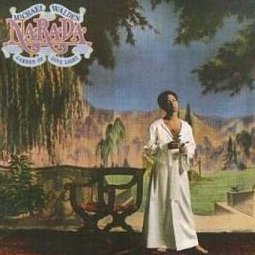
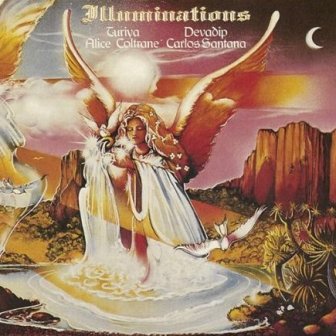
Not all aspects of '70s fusion have aged equally well. Its trademark electric guitar shredding still grates as implacably as Ron Popeil's Veg-O-Matic. ("Now how much would you pay?") Virtuosity is timeless. But fusion's Holier Than Thou affectations have curdled into a cheesiness rivaled only by the whining of its early synthesizers. Back in the day, no self-respecting fusioneer left the house without his (or, in the case of Alice Coltrane, her) personal guru on loan from an ashram (or was it a Wal-Mart?) on the outskirts of Calcutta. Naturally, pretentious Indian honorifics were de rigueur. Johnny McLaughlin, electric guitarist from Yorkshire, England, became Mahavishnu John McLaughlin. The Mahavishnu Orchestra's drummer, Michael Walden from Kalamazoo, became Narada Michael Walden. Another Michigander, Alice McLeod Coltrane from Detroit, became Turiya Alice Coltrane. Carlos Augusto Santana Alves from Jalisco, Mexico, became Devadip Carlos Santana. You get the picture. And of course their album-cover artwork had to convince us that for $3.98 we were buying not merely a vinyl LP, but a life-changing spiritual experience. With all this blissful Goodness suffusing the '70s, is it any wonder we got the baleful Greed of the '80s?
Closer look:
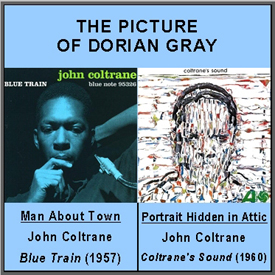
John Coltrane, Blue Train
John Coltrane, Coltrane's Sound
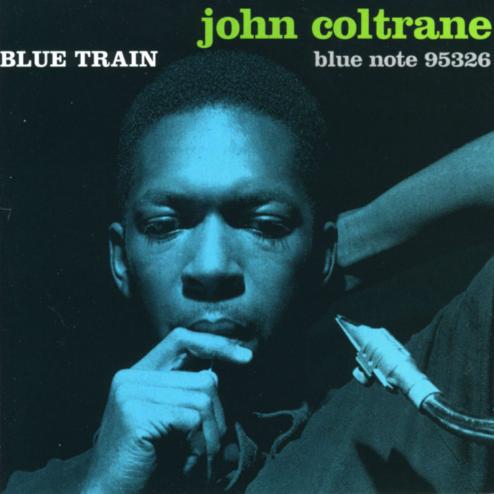
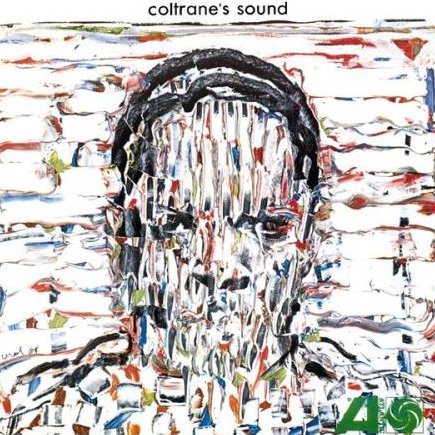
A strong contender for our Worst Album Cover award, Coltrane's Sound was edged out by the sheer K-tel schlockiness of Herbie Hancock's Head Hunters. (Get down tonight! Let's party like it's 1979!) Our Dorian Gray Award, however, is no mere consolation prize. Some art directors would trade their immortal souls to be able to paint like this.
Closer look:
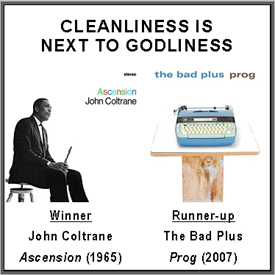
John Coltrane, Ascension
The Bad Plus, Prog

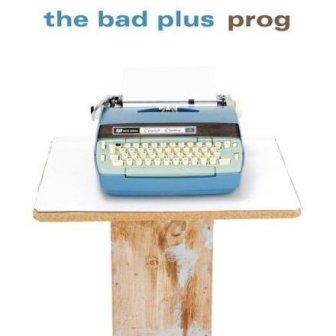
The uncluttered image is an art form unto itself. Sometimes, less truly is more.
Closer look:
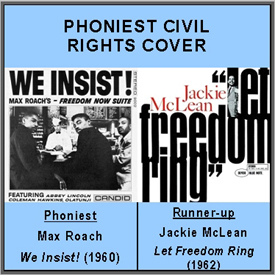
Max Roach, We Insist!
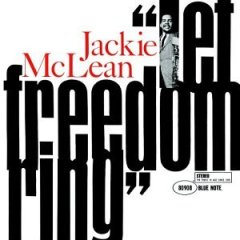
Jackie McLean, Let Freedom Ring
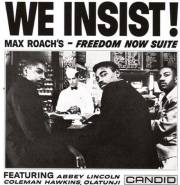
(1) After a February 1960 sit-in by North Carolina A&T College students at Woolworth's whites-only lunch counter in Greensboro made front-page news nationwide, the less-than-aptly named Candid Records released Max Roach's Freedom Now Suite, packaged with a topicality seldom seen in jazz. A banner headline suitable for the outbreak of World War III topped a photographic restaging of Greensboro made especially unconvincing by the bow-tied counterman, who looks more like an out-of-work New York actor than a redneck soda jerk. Remarkably, art designer Frank Gauna's dramatization has fooled otherwise well-informed observers even into the new millennium. E.g., in his American Book Award-winning Freedom Is, Freedom Ain't: Jazz and the Making of the Sixties (Harvard University Press, 2003), Scott Saul writes: "The album cover was dominated by a photograph from the Greensboro sit-ins, in which two of the students turned their bodies away from the Woolworth lunch counter and looked the viewer straight in the eye." Actually, three men are turned toward the camera, proving that being looked straight in the eye can unnerve even an academician. Perhaps that's why Professor Saul mistook this hoax for the real deal by Greensboro News-Record photographer Jack Moebes.

(2) The title of Jackie McLean's 1962 LP was familiar to generations of U.S. schoolchildren from the Rev. Samuel F. Smith's 1832 patriotic hymn "America" ("My Country 'Tis of Thee"). It was also a favorite admonition of modern-day Negro activists, such as the Rev. Dr. Martin Luther King, Jr., who in 1956 revived it for a speech during the Montgomery bus boycott and later made it a refrain in his rousing oratory at the 1963 March on Washington. In his liner notes, though, Jackie McLean refers to freedom in a strictly musical sensefreedom in improvisation, of expression, from tempo. He writes not about civil rights, but about choosing "the right notes." Not one of his 1,175 words concerns race, and neither does anything else about this album, which ought to have been called Let Opportunism Ring.
Closer look:
Donald Fagen, The Nightfly
Wes Montgomery, A Day in the Life
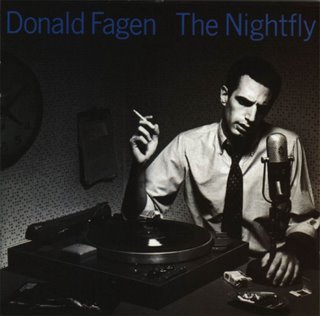
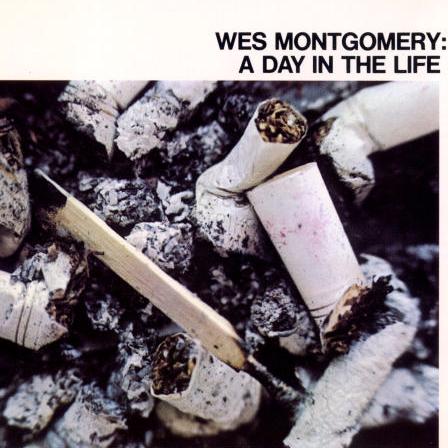
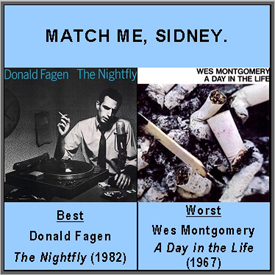
In Hollywoods Sweet Smell of Success (1957), whenever the domineering and unscrupulous Broadway gossip columnist J.J. Hunsecker (played by Burt Lancaster) desires a light for his cigarette, he has but to flex his arm and demand: "Match me, Sidney." His toady, publicist Sidney Falco (portrayed to slimy perfection by Tony Curtis), promptly obliges, though not without a certain queasy ambivalence.
A quarter-century later, ber-hipster Donald Fagen looks on The Nightfly as if he's issued the same command to his own toady, presumably just out of frame. Not that anyone could really match the Steely Dan co-founder who, one year after disbanding his supergroup, released what jazz.com's editor-in-chief Ted Gioia now calls the "final masterpiece" of Pop Jazz.
If only we could lavish similar praise on A Day in the Life. Alas, it's a safe bet the LP on DJ Don's late-night turntable wasn't Wes Montgomery's A&M debut. By then, 1960s Pop Jazz was staler than last night's butts, as helpfully illustrated in close-up by an ashtray's contents. Yes, that musty aroma did indeed emanate from jazz's grandest guitarist, who squandered his last years covering fluff hits by such bantamweights as The Association, Kingston Trio, and Brothers Four. Twelve months after sleepwalking through A Day in the Life, he was dead at 45. Wes, we hardly knew ye.
Closer look:
Brand X, Livestock
Franco Ambrosetti, The Wind
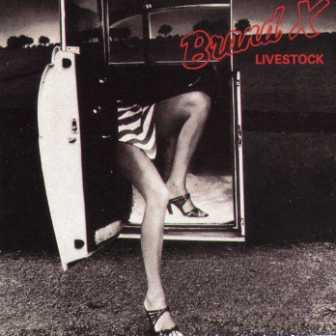
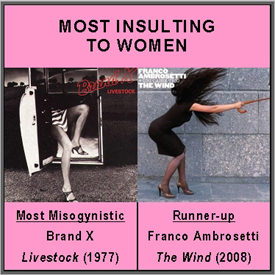
(1) Few album covers rival Brand X's for sheer unabashed misogyny. True, band members may not be responsible for the offensive covers on such compilations as The Plot Thins: A History of Brand X (1997) and Macrocosm: Introducing...Brand X (2003). In particular, bassist Percy Jones is to be commended for distancing himself from the latter: "I just want everyone to know that I had nothing to do with this record or the tasteless artwork."
But Livestock (1977) is another matter. It was the band's third album, coming on the heels of their successful Moroccan Roll and at a time when the group probably did have some say in packaging. So what did they give us? A photograph of a woman visible only from the waist down, with legs spread and exposed to thigh-top, beneath the red-letter title LIVESTOCK.
This reeks of the original artwork for Spinal Tap's Smell the Glove (1982), which the Polymer label refused to release because it depicted a greased, naked woman on all fours wearing a dog collar, as a man's arm dangles her leash and shoves a glove in her face to sniff. Frankly, Brand X deserved the same fate as Spinal Tap: having their records released in an all-black jacket with no identifying marks.
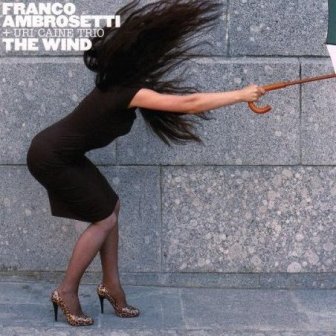
(2) The woman's pose on Franco Ambrosetti's The Wind (2008) makes me wonder which sort of Wind is being referred to. As in Brand X's Livestock, her face is completely hidden, thus consummating the debasement. Misogynists will no doubt accuse me of taking this too seriously. But as Freud argued in Jokes and their Relation to the Unconscious (Der Witz und seine Beziehung zum Unbewuten, 1905), sometimes a joke is not just a joke.
Closer look:
Nik Brtsch's Ronin, Holon
Stefano Bollani, Piano Solo
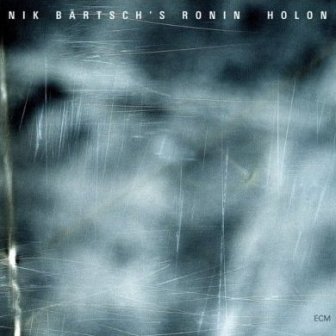

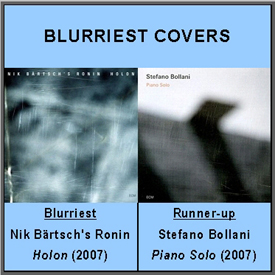
Shown an advance copy of Spinal Tap's Smell the Glove, newly encased in an all-black jacket because its original artwork was deemed hostile to women, band member Nigel Tufnel wondered rhetorically: "How much more black could this be?" Since no one replied, he answered himself: "None. None more black." So it is with ECM covers. How much more blurry could they be? None. None more blurry.
ECM has a lock on this award. I predict they will win it year in and year out.
Closer look:
Ella Fitzgerald & Louis Armstrong, Ella and Louis
Horace Silver, Song for my Father
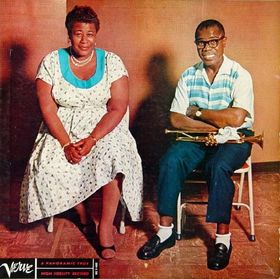
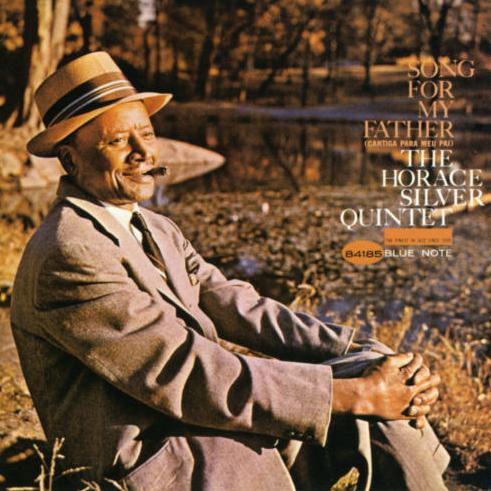
This is a close call. Both covers are nonpareil. Silver pre's jauntily clenched stogie nearly carries the day, but Satchmo's socks prove unbeatable.
Thus concludes our irreverent rummaging through jazz.com's attic of album covers, old and new, borrowed and blue. We think you'll agree that, as so often has been said, a picture is worth well, I forget the exact number, but a whole lot of words. And if the images from our first year were this good, imagine what next year holds in store!
This blog entry posted by Alan Kurtz.
Tags:

sorry i missed seeing this until this a.m.... excellent choices, Mr. Kurmudgeon, for the most part, but too brief and editorially compressed to suit me. bring on the sequels!