The Jazz.com Blog
February 05, 2008 · 0 comments
Will the Real Pat Metheny Please Stand Up?
Pat Metheny has not made it easy on casual jazz fans. Generally, the jazz consumer who picks up a CD by a familiar name – Oscar Peterson, Art Blakey and the Jazz Messengers, the Modern Jazz Quartet, etc. – knows exactly what’s in store. The particular songs on the CD might be new, the sidemen might change a bit, but the style and musical values established by these artists did not budge. These first principles - solid and unyielding - literally defined those individuals as jazz musicians.
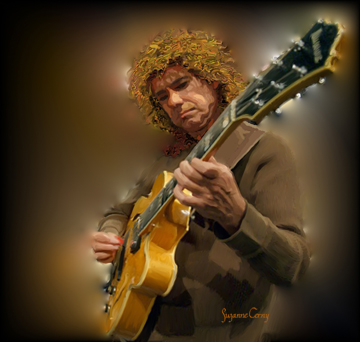
Metheny, in contrast, has more in common with those restless visionaries of the 1960s, who refused to stay in one place for very long. The best-known cases are Miles Davis and John Coltrane. These iconoclasts followed a marked evolution in their work. They reinvented themselves every two or three years. Above all, they never let past successes prevent them from making radical changes in their approach. They would throw everything overboard, if it allowed them to get to the next destination on their journey.
But Metheny – whose new CD Day Trip was released last week - is an even more extreme case than either Coltrane or Miles. First, the range of his recordings is dauntingly wide. When you buy one of his recordings, you never know if you are getting Pat the avant-gardist of Song X, or Pat the world fusion maestro, or lovely Pat the odd-time-meter-man, or one of his other guises: straight-ahead jam session cat, ethereal ECM mood-setter, croosover smooth jazz star, etc. But even more striking: unlike Davis or Coltrane, Metheny follows no apparent progression in his career, no evolution from one stage to the next. He might go from a fusion-oriented project to experimental jazz, or the other way around. It’s all the same to Metheny. No big picture map guides his moves, which often appear to be digressions rather than (as with Coltrane or Miles) a journey.
In this regard, Metheny is the quintessential post-modern jazz player. Although many jazz critics still talk as though the music is defined by certain progressive trends that are moving it ahead in some type of linear fashion . . . the truth is that this stopped happening decades ago. The concept of avant garde is merely an ideology in the jazz world, not an accurate reflection of any meaningful nexus in the music itself. Indeed, many of the musicians most celebrated as being at the “forefront” of the music are the ones most slavishly in thrall to concepts that are thirty or forty years old. (I hope to elaborate on this in more detail in a future blog entry.)
The reality of post-modern jazz is that players pick and choose. Some pick and choose narrowly – the musical equivalent of a vegan diet (or, for that matter, my son who would prefer eat every meal at a fast food restaurant, if he could). While others jazz players are omnivores, who swallow and digest everything in their path. Metheny is one of the latter. And the full range of what he has digested in his career resists any easy summary.
The risk of such an approach, however, is that a jazz artists can lose any sense of identity. One’s style as an artist is as much dictated by what one leaves out, as by what one includes. The styles that are all-inclusive cease to be styles. They become anthologies, compendiums of jazz techniques. And though an anthology can be entertaining, it is not the same as a unified body of work built with a consistent vision.
A few artists have managed to maintain a very personal style, while making radical shifts in musical settings. The single best example is Charles Mingus – in fact, Mingus's rare ability to morph into something new, while holding on to his core personality, may be the main reason why this artist is such a hero to the post-modern generation of jazz players. Mingus could play bop or free or swing or cool or funk, and always sound like . . . Mingus.
But Mingus had an advantage that none of today’s players can match. He learned these styles at the very source. Mingus is the only musician I know of who could claim to have been employed as a working player in the bands of Duke Ellington, Louis Armstrong and Charlie Parker. Those three names cover a lot of territory. So when Mingus played bop or trad or swing, he wasn’t adopting some pose, or playing some retro game. He lived these styles, he felt these idioms inside as an authentic expression of the people who had invented them. I believe that this unique background allowed Mingus to move fluidly from style to style yet never lose track of his own personal bearings.
And what about Pat Metheny? In all fairness to the guitarist, he does an credible job of balancing the widely divergent musical goals he is pursuing. He may not pull them all together at the level of a Charles Mingus. Nonetheless, I am impressed at his ability to cover a wide range of stylistic ground without losing his identity. Of course, he is helped in this regard by his rare talent, a very personal guitar sound and (above all) his tremendous knack for melodic improvisation.
But Metheny is the rare exception, and not necessarily a good role model for younger players. The very versatility of the new generation is perhaps its single biggest stumbling block. In the old days, jazz musicians crafted a style, and only the studio musicians needed to be able to play in every style. And though we have gone through a post-modern period in which such schizophrenic approaches to building a jazz career have been fashionable, I sense that time is rapidly passing. Playing everything from trad to rad will not always been seen as a virtue, mark my words. The best players of the next generation might be more like the vegans than the omnivores, achieving greatness through an exemplary selectivity in the paths they follow.
And then we might even get nostalgic for the peripatetic music of Mr. Pat Metheny.
A review of Pat Metheny’s “At Last You’re Here,” currently Song of the Day at jazz.com, can be found here.
This blog entry posted by Ted Gioia
Tags:

Comments are closed.