The Jazz.com Blog
May 20, 2008 · 0 comments
Jazz Report from Estonia
Our bloggers must suffer from chronic wanderlust. They have reported on recent jazz happenings in Norway, Ireland, Brooklyn, Germany, New Orleans, Norway (again!) and even at Lincoln Center. But none of our contributors covers more miles (or kilometers, given his European beat) than Stuart Nicholson. Today he sends in his report on jazz activities in Estonia. Get the full story below . . . T.G.
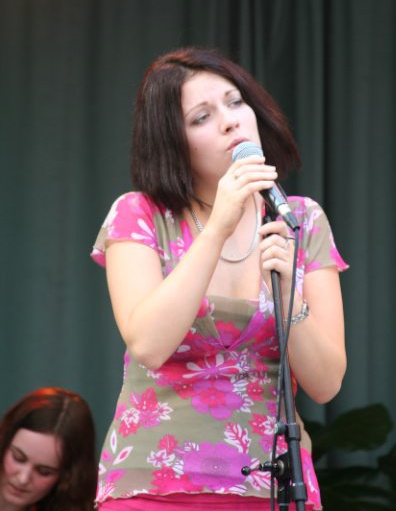
Estonian Jazz Vocalist Tuuli Taul
Any Estonian over the age of thirty has a clear memory of what life was like before their country declared independence from the former Soviet Union on August 20, 1991. Gray, they say with a shrug. It was gray, lots of waiting in lines. For many, keeping up with Western culture, including jazz, was a matter of tuning into Finnish radio and TV the Estonian language and the Finnish language have many characteristics in common, and Finland is only a 90 minute trip across the Baltic by fast boat.
Estonia is a proud and independent country that was annexed by the Soviet Union in 1940, occupied by the Nazis in 1941, only to be taken over again by the Soviet Union in 1944 a period that cost them 25% of their population. Their history goes back to 8500 BC when a settlement that eventually became Estonia was formed immediately after the Ice Age.
But despite foreign occupation, which in earlier times included annexation by the Danes and the Swedes, this small Baltic country (population 1.3 million) has fiercely maintained its cultural traditions. Their runic folk tradition predates the Vikings and it was highly symbolic that Soviet rule was ended by the Singing Revolution, a mass demonstration by the Estonian population singing their national folk songs.
Since independence, stories of what a beautiful country this was began to circulate as the effects of cheap air travel began to be felt. Up until then, I had a picture in my minds eye of, well, a country with blizzards swirling down from the north, gray concrete apartment blocks and its citizenry wrapped up in trench coats, huddled around braziers for warmth, much like Napoleons troops during the retreat from Moscow in 1812.
Such fanciful preconceptions are quickly dashed when you arrive at Tallinn airport. Estonia is one of the worlds fastest growing economies, and signs of prosperity are everywhere. A member of the European Union and NATO since 2004, Estonia quickly adapted to the new technologies and its new economic freedom has seen living standards skyrocket.
Tallinn is home of the Jazzkaar Festival, one of the must-see events on the European jazz calendar, held annually in the brilliant spring sunshine. It began nineteen years ago under Russian occupation, a remarkable feat thats down to its indefatigable director Anne Erm, who has steered the event into one of the most important cultural events in Estonia and the biggest jazz festival in the Baltic States.
Spread over twelve days, the programme was spiced with the occasional big name headliner, Dave Douglas and Avishai Cohen had already appeared when I got in, but on successive nights at the Rock Caf Roy Ayers and Angelique Kidjo held court. Neither are exactly spring chickens, but both were possessed with demonic energy that kept their young bands on their toes.
If anything, they showed how Afrobeat and funk are mutating into something very similar; a process of transculturation where Afrobeat takes on Afro-American elements of funk through the global dominance of Anglo-American pop culture. Both concerts attracted young audiences, mainly 18 to 25 year olds, who loved Ayers solos on synthi-vibes and Kidjos dynamic vocals.
A late afternoon concert by Al DiMeola in the Estonia Kontserdisaal had earlier seen the guitarist go Spanish, with classical guitar, accordion and percussion accompaniment. The music resounded with rousing cadences and DiMeolas double, triple and quadruple time sprints. But it lacked depth. After the technical fireworks had been exhausted there was nowhere left to go, except more of the same.
But while the big names pull in the crowds, Jazzkaar provides a wonderful showcase for Estonian jazz, which attracts a keen, youthful following. Vocalist Tulli Taul and her trio are one reason why. With two guitars (one taking the bass role) and a percussion accompaniment, Taul sings her originals in Estonian. And heres where it gets interesting. Because language and melodic construction are so closely linked, words and melody dont fall in ways in which you would expect in English.
Especially fascinating was her scat; like the best scat singers her improvisation grows organically from the songs melody, but it was twisted and turned by her language in ways you simply didnt expect. This was also apparent when the guitar duo Ain Agan and Teemu Viinikainen, an Estonian and a Finn, played a Finnish tango during their absorbing set. Circling each other with accomplished ease, their collaboration was one of understated excellence.
The No. 99 Jazziklubi is set in the somewhat surreal surroundings of a former government building. Located in the basement, its a good performance space that boasts excellent sound. With a different band nightly including the Kadri Voorand Quartet, Villu Veski and Fulvio Paredes, for many the most accomplished group was a quintet led by saxophonist Raivo Tafenau.
Tafenau was equally at home on soprano, alto and tenor saxophones, and shared the front line with bass clarinettist Meelis Vind. The essentially straight-ahead disposition of the band was given a sense of mystery by the dark tones of the saxophone/bass clarinet combination and by Jurmo Eesperes Fender Rhodes. Tafenau and Vind were strong and convincing, but it was Eespere, in his understated way, who caught everyones attention. He developed melodies with care and precision, rather linking together endless riffs and licks, and emerged as a very promising talent in a very competent rhythm section, epitomising the high standard of Estonian jazz at its best.
However, on leaving the No. 99 there seemed no shortage of police gathered in groups, packed into unmarked parked cars and in vans. It was a reminder of how this tiny Baltic state, despite the enormous strides it has made in recent years, has not quite slipped the shackles of the past. It was the first anniversary of riots by ethnic Russians protesting at the removal of a Soviet war memorial in the nearby Freedom Square in which over 1,000 people were arrested and 300 people injured.
To Estonians it was a legacy of the Soviet occupation and Russian government officials reacted angrily to the removal of the monument with Foreign Minister Sergey Lavrov calling it, absolutely repulsive. The Estonian government responded by saying that for Estonians there was little difference between Nazi occupation during the Second World War and the later tyranny of Soviet rule.
Incredibly, Estonian government websites came under cyber attack, which many sources ascribe to Russia, while in Moscow, pro-Kremlin youth groups flung tomatoes at the Estonian embassy and parked a life-sized inflatable tank in front of the building. Demonstrators elsewhere burnt Estonian flags. A year on calm prevailed. But it was a reminder of the past which the majority population wish to distance themselves from. Democracy and freedom have been grasped with both hands by Estonia. In 1992, people stood in lines for hours to buy food. Bread and milk products were rationed. Yet with shrewd financial management Estonia has become the first former communist country to rise to the status of a "free" economy in the annual Index of Economic Freedom, published by The Heritage Foundation and The Wall Street Journal.
This remarkable success story is echoed by Jazzkaar, which has played a significant role in raising the profile of Estonian art and culture across Europe. In the West it is easy to overlook the ways in which jazz has become synonymous with freedom in countries beyond our borders. But talking to young audiences at the Jazzkaar festival left one in no doubt about what the music means to them and how it is still a potent musical force in the world.
This blog entry posted by Stuart Nicholson.
Tags:

Comments are closed.