The Jazz.com Blog
June 18, 2008 · 1 comment
New Technology Shakes Up the Jazz World
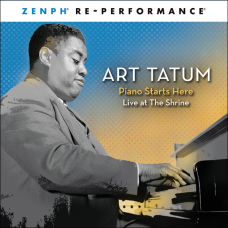
Earlier this week, I discussed the remarkable (and controversial) new recording from Sony that recreates a 1949 piano recital by Art Tatum using innovative technology from Zenph Studios, a North Carolina start-up. Put simply, Zenph is able to bring an artists music back to life note-perfect, for concerts and recordings, long after the performer is dead.
Below is my recent conversation with Zenph President and founder John Q. Walker, who provides more background on this technology, and discusses where it might lead. (Hint: Zenph has more than just piano music in its sights.)
Stay tuned for part three of this series, in which your curious blogger lists some old jazz recordings he would like to see rejuvenated in this manner, and speculates on some other implications of this technology. You can email me your thoughts at editor@jazz.com.
How did Zenph Studios come about?
I have a Ph.d. in software engineering and a piano degree. I wanted to tackle a very basic problem: how do we go from the recording to the notes themselves. Its an immense technology problem, but if you have the notes you can do anything.
And you have started with the piano?
But eventually we will be all music, all genres.
What would you say to critics who claim that this music is not the real Tatum?
Well, in the course of our work we found out a lot about the real Tatum. Do you know that the original recording of the Shrine Auditorium concert is at the wrong tape speed?
We spent weeks trying to figure whether it was sharp or flat. Fortunately we could compare the Shrine version of Humoresque with one of Tatum playing the same piece of one of his few surviving videos. In fact, it was quite amazing to compare the two. There are long stretches where Tatums playing at the Shrine and on this video were absolutely in sync.

But some have described this CD as test tube Tatum or Bizarro Tatum sort of like what Dolly the cloned sheep is to Marys little lamb. What's your response?
Its Tatum playing. Tatums playing is the original. We have simply separated the original from the medium on which it was originally recorded.
We played this music for Oscar Peterson before he died, and he said, Thats my friend Art Tatum playing, and I havent heard him in fifty years.
What else did you learn about Tatum while doing this project?
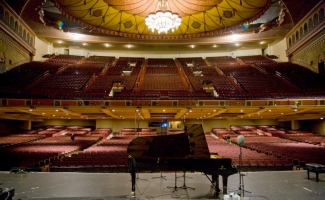
We have a recital hall here that seats around 65 people. We were working on Tatum over a series of months, and when I heard the music it always sounded too loud. But then I realized that Tatum was playing this music for a crowd of six thousand people. When we got to the Shrine Auditorium to record this music in concert, I could see that he was playing with this very performance space in mind. In the context of the Shrine, every note, every pedal movement, everything was perfect.
I cried. Maybe just in relief. But I cried.
How are you able to identify and quantify the pedaling techniques used on these recordings? That would seem to be quite a challenge.
In terms of analysis, when the dampers are up they create different harmonics and overtones. You can quantify it. The most important point in pedaling is the half point, which is when the hair of the felt touches the string. That point needs to be precisely coded, and then you need to understand how the pianist accelerates through that point.
So you are drawing on a substantial amount of data here, and not just making judgment calls.
Absolutely. We held a recital series for three years, and brought in different pianists classical, jazz and microscopically recorded what they did. We needed to understand what humans do at the piano.
I understand that you were able to identify a splice in Glenn Goulds Aria from The Goldberg Variations because there was a sudden acceleration that, according to your analysis, would not have been done live by a human pianist.
Thats correct. I couldnt hear it on the original recording. But we could tell from our work here.
How did you decide on the Tatum Shrine Concert as a follow-up to your Glenn Gould recording?
We have a contract with Sony, and this is the Tatum recording that they had the rights to.
Well, it was an inspired choice. It features Tatum at his very best, but the sound quality on the original has always hampered peoples appreciation of this music. What other piano projects are you considering?
There are so many. For jazz, there are Duke Ellington solos and Fats Waller. James P. Johnson. Dave Brubeck playing solo in his home in 1955. Erroll Garner. In the classical music field, we have Rachmaninoff, the young Horowitz. . . .
I would love to hear you work your magic on Jelly Roll Mortons piano solo from his Library of Congress recordings. Another example of great music marred by a poor recording.
I am having a meeting with Sony on Jelly Roll Morton next week.
You are now working on other instruments? Whats next.
The bass. Its not perfect yet, but we are about 94% of the way there.
What are the challenges of tackling the bass?
With the piano there are about a dozen things we need to take into account for each note. But for the bass there are multiple dozens of factors. We need to get every finger nail click, and popping the strings against the fretboard, every pitch bend, and all the other factors.
And weve got it.
[Author's Note: Apparently they do. As a follow-up to our interview, Walker sent me unreleased recordings of Zenph's recreation of Ray Brown's bass, and the true-to-life quality of the sound was impressive.]
What is the playback mechanism for the bass? For the piano, you are using the Yamaha Diskclavier Pro, but how do you handle string instruments.
Our bass is completely software driven.
What instruments do you plan to tackle after the bass?
Next is drum kits, percussion and saxophone.
It would be fascinating to hear the Charlie Parker recordings from the 1940s.
Or think of all the piano trio albums. For example Erroll Garners Concert by the Sea.
Its a classic recording, maybe Garners finest moment, but as I mentioned in a recent review, it is marred by sub-par recording quality.
Every week I get a request from someone for us to take on that very recording.
For my comments on the Zenph Art Tatum CD, click here. Also, New York-based fans can hear the Tatum performance live at the Apollo Theater on June 22 in a benefit concert for the National Jazz Museum in Harlem.
Check back soon for my personal wish list of old recordings with poor sound that I would like to hear in pristine new Zenph-a-sized versions. If you have nifty suggestions, or contrary opinions, send them to me at editor@jazz.com.
This blog entry posted by Ted Gioia.
Tags:

This is fantastic! Now if Science can just create some people under 60 to appreciate this awesome Art...