The Jazz.com Blog
June 03, 2008 · 3 comments
Life on the Road: The Journal of a Traveling Jazz Musician
Editor's Note: Although much is written about jazz, little of it captures the gritty economic and psychological realities of life on the road. Below is the first installment of Fry Aagres tour diary, an account that will give you a much richer (and often dispiriting) perspective on the workaday plight of most jazz musicians.
Here it is all laid out. How much do you make from playing for the take at the door? How often are musicians forced to do this? How are jazz artists treated with at venues, especially musicians who are not household names? What is the road life really all about? How does touring in Europe compare with the situation in the US?
Jazz.com wants to thank Fry Aagre for sharing this frank journal with our readers, and Stuart Nicholson for his help in bringing this account to light. For part two of this article, click here.
DAY ONE
Im sitting in my hotel room in New York and my hearts bumping and I feel slightly giddy. Im 1,200 miles from home and Im about to do my first tour in the United States. My crazy dream is about to come true. Tomorrow I meet up with my band for rehearsals and then its all go.
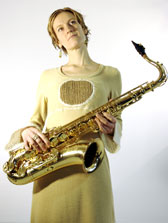
Im Fry Aagre and Im a saxophonist and composer from Norway. (You can read all about me on my website.) Ive released two CDs, Katalyze (2004) and Countryside (2007), and I have toured a lot in Europe and know pretty much how the jazz economy works there so it will be interesting to experience at first hand what, if any, differences there are here in the United States.
Im also curious to see how my Nordic, lyrical jazz style will go down with American audiences. In addition to my jazz influences, my music draws inspiration from classical music, and one of my aims is to bring improvisation and composition closer together by soloing within the language of the tunes. In other words, I like to blur the distinction between the written and the improvised.
Getting a good group-sound is also very important. For me, this is more important than showing off technique. Since I have a very melodic approach to improvisation and am not one for technical fireworks it will be interesting to see my how approach is received on this side of the Atlantic.
This is my third trip to the USA. My first visit was in May 2001 when I received a scholarship to study with Dave Liebman. The second time was in October last year, when I played some concerts in New York with percussionist Annette Aguilar and her band Stringbeans, pianist Kris Davis and my fellow countryman and New York resident, bassist Eivind Opsvik. Ive been fascinated by the scene ever since my first visit and Ive had this distant dream of touring in the States with my own band, despite the fact that everyone tells me the best paid jobs are in Europe.
When I was here last time I talked to guitarist Lily Masse about organizing an East Coast Tour for my quartet. She sent Countryside to venues such as Firehouse 12 in Connecticut, Ars Nova and Chris Jazz Cafe in Philadelphia, but no one seemed interested in booking a bunch of unknown Norwegians.
However, we managed to get several door gigs, but since this can be risky financially, especially after taking four return airfares into account, I decided to leave my band at home and ask my new friends in New York, pianist Kris Davis, bassist Michael Bates and drummer Jeff Davis, if theyd care to join me. A huge sigh of relief when they said yes! Thanks gal and guys!
I first heard Kris and Jeff at the Oslo Jazz Festival in August 2007, and we played together during my New York stay last October. I felt we created a good chemistry together and I wanted to continue the collaboration. I knew Michael Bates from Dave Douglas Jazz Workshop in Banff, Canada, which I attended in 2005. So Im really looking forward to touring with these musicians.
Nervous? You bet
DAY TWO
I have just had my first rehearsal with the band. I was impressed. Some of my tunes are hard but they were well prepared and got the vibe of the compositions right away. Wow! This is really a rare experience for me. They told me that The New York Times had written about our upcoming concerts in the jazz listings. Yes!!! This could be an exiting week.
DAY THREE
More rehearsals. The band chemistry is good and theyre really getting into my music.
DAY FOUR
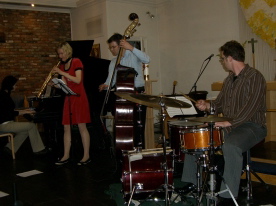
Lunchtime concert at the Norwegian Seamens Church, New York. Deal: $400 (our only paying gig). Audience: 40-50. CD sales: 5. Concert length: 50 minutes. Nice room with great acoustics. Good grand piano. Good atmosphere and friendly staff.
We were supposed to play our concert after the service but the whole service was delayed 30 minutes so it was a bit annoying because people who came for the concert had to wait. Some might even have left. But once we started there were about 40-50 people in the audience. Relief!
I was happy there were so many people there. I didnt know anyone in the audience, and it turned out most of them had read about us in The New York Times. The concert went well, we got through the hard tunes and there were some interesting interactive things happening in the band. As we needed to run through all the tunes, we didnt stretch the solo sections. The response from the audience was very good. The musicians are all very creative, flexible and have got open ears so I believe well get a great group sound during this tour. It is also interesting to discover how the tunes will develop.
DAY SIX
Cornelia Street Caf, New York - Double bill with a New York band called The Suite Unravelling.
Deal: Door money. They take money for the first five people. 20% off food and one free drink. Admission: $10. Audience: 25. CD sales: 0. Concert length: 50 min (one set). We made $75 for the whole band.
I love Cornelia Street and Im really excited to be playing here. Its such a nice venue, very narrow and intimate with about 55 seats. When I got there, I went up to the bar guy with the ASCAP royalties form and asked him to sign. I was very surprised when I realized that he didnt know what it was! The musicians told me that the clubs dont pay for royalties in the USA. Even if I did get them to sign, they wouldnt pay for it. I was surprised since royalties are an important strand of my income and musicians here dont get any money at all. Thats too bad.
The staff at the Cornelia Street said 25 people in the audience were very good for a Tuesday night. Tonight we only played half the number of tunes so we could stretch out the solo sections. The concert went really well. It was so fun, lots of exciting and unexpected turns, and we went into some sections of free improvisation too. I felt that they made me play better than I have for a long time. It was a real kick for me. It seemed like the audience liked it, but they didnt really give that much away. It was difficult to read them. Usually I get some kind of communication with the audience when I talk between the songs maybe didnt like my jokes! But everyone stayed through the set, so I guess that was a good sign. Got some great feedback from the musicians in the audience afterwards. Thanks! Thanks! Thanks!
This blog entry posted by Fry Aagre. For part two of this article, click here.
Tags:

Very interesting to read this Froy, and entertaining as well. I am a publicist in the jazz biz, I actually rep Michael Bates. Thanks for sharing, always good to hear of the experiences that artists have - it makes me/enables me to do my job better. Cheers, Jason Byrne
This has been needed for a while, Froy! Kudos to you for sharing your experience as it provides great insight to other artists and to jazz industry folks like myself as to what you encounter as a musician and entrepreneur. Great to have you here and shout outs to Lily Masse and my PR friend, Jason Byrne!
As a jazz lover and musician, I am elated to read about the trials of a professional musician on the road. I would think that Froys' woes are acceptable because she's doing something she loves. This article will help me to appreciate the music and artists that I encounter as I travel the jazz front, listening to unknowns as well as knowns. I must admit, I never gave much thought to the way a musician earns his/her pay and now that I read this, I embrace jazz and it's musicians a great deal more. Hats off to Froy and all the other artists in this industry for their dedication and love of jazz.