The Jazz.com Blog
June 04, 2008 · 0 comments
Revisiting Keith Jarrett's "American Quartet"
How odd! Imagine trying to record Keith Jarrett's more complex compositions from the 1970s with an ensemble that doesn't even include a piano. Yet this is exactly what George Schuller is attempting on his new CD Like Before, Somewhere After .
But maybe this isn't so odd, after all. Schuller draws on the works of Jarrett's so-called American Quartet, and one of the peculiarities of this combo was how creatively it undermined the typical conventions of piano-led bands.

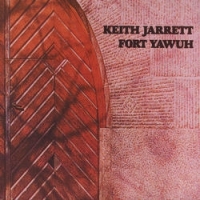
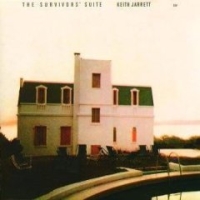
At times, Jarrett seemed almost ambivalent about the keyboard when playing with this ensemble. On "Death and the Flower," the piano doesn't appear until six minutes into the track. On The Survivors' Suite almost nine minutes elapse before we hear the first piano note. On the opening track to Fort Yawuh, recorded live at the Village Vanguard in 1973, Jarrett drops out completely mid-song, almost as if he would rather listen to his sideman than play himself. When he returns later, he is playing soprano sax in the front line, the piano a forgotten piece of furniture on the bandstand. Various other recordings from this period, find Jarrett reaching inside the piano to pluck the strings, or tinkering with various percussion instruments or blowing on a wood flute—almost anything that would relieve him from actually putting his fingers on the Steinway keyboard.
Yet everyone of these tracks is exhilarating. Although Jarrett today is viewed almost solely from the perspective of his pianism, he showed time and time again on these early LPs, that he could impose a potent musical vision that was more than just an extension of his keyboard mastery. This was all the more surprising when one considers that Jarrett's other persistent creative outlet during this period was his solo piano work, as demonstrated by live recordings at Bremen, Köln and elsewhere, as well as his seminal solo studio session Facing You.
Even Jarrett's choice of bandmates reflected this desire to subvert the traditional role of the pianist in a jazz band. Bassist Charlie Haden and saxophonist Dewey Redman had worked closely with Ornette Coleman in settings where no piano was allowed, and conventional chord voicings an endangered species. These players didn't need cues from the keyboard. They were perfectly happy to float along or thunder vociferously without any input from Jarrett. And Keith, for his part, seemed quite content to see them move with confidence and independence through his compositions.
In short, Jarrett was a remarkably ego-less combo leader back in the early and mid-1970s. Before the music started, he may have acted like the ultimate control freak—fretting about cameras, coughs, the sound system, audience etiquette, illegal recording devices, you name it. But once he embarked on a sonic journey, he served the music rather than force it to serve him.
As I listen again to this body of work, some of it so familiar to me after years of acquaintance, I am constantly reminded of the ritualistic aspects of Jarrett's American quartet. The opening moments of so many these performances sound almost like the invocations that signal the beginning of some vision quest or primitive ceremony. The impassioned solos remind me of possession dances, akin to what a field worker might find in a distant and unfamiliar culture. Perhaps it is going too far to seek a metaphysical or spiritual dimension in these works, yet the listener is constantly aware of levels of signification in the music that cannot be reduced to lead sheets and transcriptions.
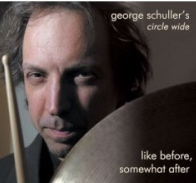
George Schuller and the other musicians who join him on his Like Before, Somewhere After project seem especially sensitive to this aspect of Jarrett's music. They get past the notes on the page, and into something deeper, an elusive transcendence that defies even this glib critic. Some aspects of music, alas, resist all of our words.
Jazz.com has selected The Survivors' Suite by George Schuller's Circle Wide band as Song of the Day. For a review of this track and link to a download, click here. Also, visit this page for a list of all the tracks featured as Song of the Day since the launch of jazz.com.
This blog entry posted by Ted Gioia
Tags:

Comments are closed.