The Jazz.com Blog
July 10, 2008 · 0 comments
Revisiting Jazz Classics
Five days per week, jazz.com highlights a classic recording from the past. This feature, called A Classic Revisited, is our way of celebrating the jazz heritage. It is a companion to our Song of the Day, which focuses on the best of current releases.
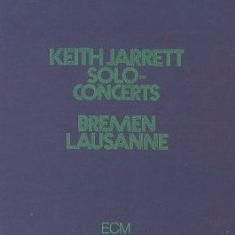
Our selection for today’s ‘classic’ was recorded thirty-five years ago this weekend. At the time of his July 12, 1973 concert in Bremen, 28 year old Keith Jarrett was far from a household name. His breakthrough hit, The Köln Concert, which would become one of the biggest selling jazz recordings of all time, was still two years in the future. Of course, serious jazz fans knew about this artist, but mostly through his sideman work with Miles Davis and Charles Lloyd, supplemented by a very brief stint with Art Blakey and a handful of largely unheralded leader dates.
Two years before the Bremen concert, Jarrett had enjoyed a stint with the Columbia label that was so short it could almost be measured in hours. In the aftermath, Jarrett went to the opposite extreme. Sent packing from the largest record label in the world, the pianist hooked up with a then little-known European outfit, called ECM. Founded in 1969 by Manfred Eicher with an investment of 16,000 DM, less than $5,000 in US dollars, ECM was following the unpromising path of putting fastidious care into projects few major labels would even consider releasing.
At the time, this looked like a disastrous career move for the pianist. In retrospect, it was a turning point not just for Jarrett, but for the jazz world as a whole. ECM would legitimize an entirely different approach to the jazz idiom, one in which a wide array of other traditions -- folk, world music, classical, minimalist -- would mix with more familiar elements of the jazz vocabulary, creating exciting new hybrids.
None of Jarrett's previous efforts had prepared jazz fans for the concert recording he made that day in Bremen. Jarrett had been working on the concept of largely improvised solo piano recitals, without the usual breaks between tunes . . . . in fact, without any “tunes” in the conventional sense. Different musical interludes flowed seamlessly into each other, and Jarrett relied almost completely on the inspiration of the moment to guide him through the course of a performance. The only certainties of a Jarrett solo concert were that the artist would be on stage with a piano, and there would be an intermission midway through the proceedings. Besides these predictable factors, virtually anything might happen.
The style of Jarrett's playing was as much a departure from the norm as these innovations in formal structure. Put simply, this music often didn’t sound like jazz. Jarrett would often go for long stretches without the familiar syncopations or phraseology of the jazz idiom; much of his solo work seemed to draw on classical antecedents, or involved brave new styles of the pianist’s own devising. He might even crawl into the piano and start plucking the strings. Yet just when you thought that Jarrett had abandoned the blues for Béla Bartok or Henry Cowell, he would break into some devastating über-funk that made clear his deep jazz credentials. Thirty-five years later, the Bremen concert still surprises us, captivating listeners with Jarrett's breadth of conception and depth of imagination.
For the full review of this memorable performance, click here. Below are links to the reviews of tracks recently featured as A Classic Revisited.
Recent Jazz Classics Featured at Jazz.com:
Keith Jarrett: Bremen, Part I
Louis Armstrong & Jimmie Rodgers: Blue Yodel #9
Jimmie Noone & Earl Hines: Four or Five Times
King Pleasure: Moody's Mood for Love
Frank Sinatra (with Count Basie): I Believe in You
Woody Herman: Four Brothers
Charlie Parker: A Night in Tunisia
Lonnie Johnson & Eddie Lang: A Handful of Riffs
Pee Wee Russell: That Old Feeling
Jelly Roll Morton: Black Bottom Stomp
Kenny Burrell: Chitlins Con Carne
Stéphane Grappelli: Body and Soul
Claude Thornhill: Yardbird Suite
Dizzy Gillespie: Groovin' High
Carmen McRae: Love is Here to Stay
Jackie McLean: Melody for Melonae
Hampton Hawes: Broadway
Bobby Hutcherson: For You, Mom and Dad
Frank Trumbauer: San
Sonny Clark: Cool Struttin'
Glenn Miller: Moonlight Serenade
Dinah Washington: There is No Greater Love
Grant Green: Ain't It Funky Now
Hot Lips Page: Lafayette
Shelly Manne: Summertime
Clifford Brown & Max Roach: Sandu
Lionel Hampton: Flying Home
Jimmy McGriff: Back on the Track
Al Cohn & Jimmy Rowles: Them There Eyes
Peggy Lee: Cannonball Express
Gerald Wilson: Out of This World
Miles Davis: On Green Dolphin Street
Billie Holiday: What's New
Fats Waller: Ain't Misbehavin'
Art Farmer: Jubilation
Thelonious Monk: 'Round Midnight
Bob Florence: Bebop Charlie
Tina Brooks: Star Eyes
João Gilberto: Estate
Modern Jazz Quartet: Django
Hank Mobley: I Should Care
Bill Holman: You Go to My Head
Betty Carter: Mean to Me
Art Tatum: Sophisticated Lady
Charlie Parker: Parker's Mood
Freddie Hubbard: Here's That Rainy Day
Horace Silver: Song for My Father
Frank Sinatra: The Way You Look Tonight
Larry Young: The Moontrane
Miles Davis: So What
Jimmy Giuffre: Propulsion
Ella Fitzgerald: Mack the Knife
Tony Bennett: Sometimes I'm Happy
Chico O'Farrill: Afro-Cuban Jazz Suite
Charles Mingus: Better Git It in Your Soul
Andrew Hill: Refuge
Jim Hall: Concierto de Aranjuez
Nat King Cole: Route 66
George Russell: Concerto for Billy the Kid
V.S.O.P.: One of a Kind
Cecil Taylor: Tales (8 Whisps)
This blog entry posted by Ted Gioia.
Tags:

Comments are closed.