The Jazz.com Blog
July 07, 2008 · 1 comment
Diary of a Jazz Musician: Final Installment
Recently jazz.com published portions of Fry Aagres diary from her tour of the US. These two widely-read installments (click here for parts one and two) rank among the most honest accounts of the jazz life that I have encountered.
Aagre depicts the harsh realities of life on the road -- showing us how musicians are paid (if at all), how are they treated, and the obstacles they face as they travel from gig to gig. Aagre's expos is all the more illuminating, since this artist can compare the situation in the US with the much different circumstances in her native Norway. Below is the third and final extract from this journal. T.G.
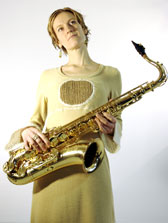
FRY AAGRE'S TOUR DIARY
DAY TEN
Loft party at the Bushwick Department of Public Works. Deal: Played for free, got 4 beers each. Admission: free. Audience: 50. CD sales: 0. Concert length: One set of 50 min. We made nothing.
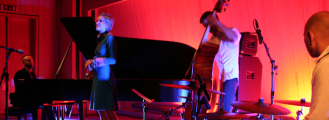
We met at Bushwick Department of Public Works, to play at the Moduna Loft Event, arranged by Addtract Consortium, the musicians collective founded by Lily Maase. She and six other people share the entire loft of Bushwick Department of Public Works and every sixth week they arrange a party where lots of artists appear. This time the theme of the party was robots. We were supposed to be robots and wear red clothes. This was very suitable for me as my stage dress happened to be red and with a robot image on it. I was lucky there!
Since there were no piano, Kris played a Fender Rhodes. As a result, the concert was very different than Lily Pad, which was on the softer side. It made a difference to have the Rhodes instead of the piano. We went into some adventurous free sections and the energy level was very high.
After my band went home, I was really struggling to stay awake for the rest of the party. I didnt sleep the night before. The party was cool, lots of artists, alternative people, even one dressed like a fish. Lots of musicians from the Dave Douglas Jazz Workshop at Banff, Canada in 2005. I wish I wasnt so tired
However, this has been a fantastic tour both musically and socially. It has been a very sober tour too, maximum 1.5 pint of beer a night! Tiring too, since we have driven about 21 hours in 3 days Kris, Jeff and Michael really enjoyed it and are keen to do more. Im so honoured to hear that and well try to do something in December. Generally we have found the audiences very enthusiastic and weve got lots of great feedback and appreciation. Hoorah!
DAY ELEVEN
The trip home back to New York went fine. It gave me time to reflect. The tour has made me realize how lucky we are in Europe. The jazz education in the universities and the colleges is free while the jazz scene is subsidized by government as part of national and regional cultural politics.
Playing for the door is something that hardly happens in Europe and we are used to promoters paying for hotels, transport, providing sound engineer and equipment and paying us properly. However, I realise the gigs Ive played may be considered low profile and they may not be representative of better paying gigs in bigger venues where the big names play.
But Im surprised about the fact that really established musicians still have to play for the door, especially in New York. Since a lot of venues dont pay, the bandleaders must pay their musicians from their own pockets instead. So they often loose money when playing their own music. Since there is no government funding available, how can you develop your music when youve got to take on two, sometimes three gigs a night, often playing music you might not enjoy, just to pay the rent?
When I did my sums I found that this tour cost me almost $6,000 and I made about $1,000. My expenses include musician fees (the amount was agreed on before the tour), hotels, travel costs and food. Even though I was fortunate to get half of it funded by my government, I still got a taste of what its like to be a bandleader here.
I dont know how the situation for contemporary jazz musicians in USA can possibly get worse. I wonder how long they can survive on the kind of money they receive and how long students with big ambitions will continue spending a fortune on jazz education that probably will result in a full time teaching job with badly paid gigs on the side?
It seems like the idea of being a full time touring musician is only a distant dream for most people. However, despite the bad situation, the daunting economic and social factors and the closing down of many mid-level venues, I am very impressed by the musicians.
The people I have met here are so welcoming, encouraging and curious to play with new musicians. I find it so exciting that the musicians are so into doing sessions, meeting up to play each others tunes. Last but not least, the level is so high. Since the competition is so hard, they really have to be on top on their instrument and be really professional at all times.
The musicians Ive met work so hard; they teach, they play lots of gigs, they arrange sessions, they hang out, they compose, they book gigs and last but not least bandleaders often end up paying their band from their own pockets, as well as flights and accommodation when touring. They really have great courage and a willingness to sacrifice for their music. We can learn from this in Europe.
This blog entry posted by Fry Aagre.
Tags:

Tru Dat!