The Jazz.com Blog
July 08, 2008 · 4 comments
Wynton Marsalis & Willie Nelson: Can Country Music and Jazz Peacefully Co-Exist?
Today Blue Note releases an unusual collaboration between Wynton Marsalis and Willie Nelson. The CD, entitled Two Men With the Blues, represents a unique moment in both artists careers, and spurs some reflection on the rich history of jazz-and-country collaborations.
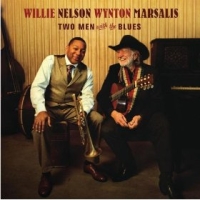
Well, to be honest, this history is not very rich. Jazz and country stars rarely meet up not in the saddle, not in the saloon, and certainly not in the recording studio. You probably never really considered Willie Nelson a likely Blue Note recording artist. Close your eyes and try to picture Willie hanging out with Rudy Van Gelder in Englewood Cliffs, New Jersey.
Nope, I cant either.
But dont underestimate Mr. Nelson, who has made a career out of breaking through stereotypes and genre clichs. Check out his almost lost reggae sessions or his recording of Gospel Favorites to get an idea of this artists willingness to stake out new territory. Of course, Nelsons Stardust is one of the best selling albums of American popular song standards ever recorded.
There are a small number of happy precedents for the Marsalis-Nelson collaboration. Back in 1930, Louis Armstrong got together with country legend-in-the-making Jimmie Rodgers to record a memorable blues. This song, a rarity in both artists discographies, is especially noteworthy for Armstrongs decision to play an under-stated solo that reminds us of the work of his mentor Joe King Oliver. Rodgers, for his part, was an effective blues singer . . . and could yodel much better than Bessie Smith. This collaboration promised a glorious future for the union of jazz and country.
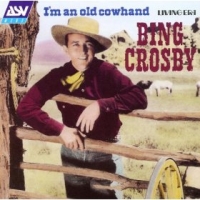
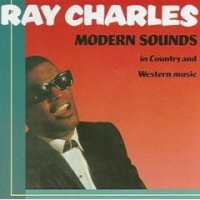
Ah, that promise has rarely been realized in later years. Listen to Bing Crosby tackle The Last Roundup three years later, and it's hard to keep a straight face. (To give Crosby his due, he did a better job with country songs in other settings.) Most of the leading jazz singers simply avoided material of this sort. The vocalist with the greatest potential to bridge the worlds of jazz and country, Ray Charles, never really committed to either camp, although he lingered in both. Charless personal reinvention of country music shows how African-American currents could invigorate the Nashville sound, yet his work in this vein stands out mostly as a curio in the annals of American musical history.
The single most promising movement to merge country and jazz remains the Western Swing craze of the 1940s. Bob Wills New San Antonio Rose, from the start of the decade, was a million seller, and inspired follow-up hits by Wills and a host of imitators. This style effortlessly blended down-home fiddlin with big band swingin, and with so much success that exciting new developments seemed just around the corner. If big band jazz could merge with country music, what about country hard bop or Nashville cool jazz or other hybrids of this sort? Western Swing pointed to an exciting new union between the jazz and country traditions -- something more than just a passing fad or short-lived novelty sound.
Yet this style faded from the scene during the Truman administration. No, not completely . . . its lingering influence can still be occasionally felt in a later recording. But, for all intents and purposes, its promise of a world-changing dtente between two very different musical styles was never completely realized.

By the time Louis Armstrong recreated his Jimmie Rodgers collaboration forty years later, on October 28, 1970, with Johnny Cash (you can watch it on video here), things had hardly progressed much beyond where they stood back in 1930. The 1970s would prove to be a great period of jazz fusion, but the fusion would be with rock and not country. Yet one wonders what might have happened if Miles had concocted Bitches Moonshine instead of Bitches Brew; if John McLaughlin had moved to Nashville for a year; or if Joe Zawinul and Wayne Shorter had invited Chet Atkins to join Weather Report. (Okay, I'm kidding . . . but not entirely.)
Now we have one more intriguing collaboration between jazz and country, with the most famous exponent of each style stepping forward to share the same stage. The results are . . . surprisingly entertaining, and very relaxed. Hearing Nelson and Marsalis together is good fun (as my British friends would say). And as some of you may remember, I have long been an advocate of the Fun Principle in jazz (see my more philosophical comments on the subject here). There are no hidden agendas, or unhidden agendas here just two artists letting loose and having a good time. And that, after all, was the starting point for both the jazz and country traditions. It only got heavier and heavier with the weight of the passing decades.
Too bad this CD didnt come out in time for Fourth of July. I would have recommended it for the holiday BBQ. But its never too late for fun. With that in mind, Stardust, from the new Wynton Marsalis and Willie Nelson CD, has been selected as the Song of the Day at jazz.com. Read the full review here.
This blog entry posted by Ted Gioia.
Tags: cowboy jazz

This posting made me think of Bill Frisell - who has released a few records that effectively bridge country and jazz styles. 2002's The Willies (with banjo player Danny Barnes) and 1997's Nashville (with Union Station's Jerry Douglas, the genre's foremost instrumentalist) both cleverly sound like country music but attack the music from a collectively-improvised jazz approach. And Nashville rather controversially won the Downbeat Jazz Album of the Year Award. country and jazz indeed coexisting. There's also a great article by David Ake in the Jazz Perspectives Journal that talks a little bit about the link between stringed instrumentalists, especially jazz guitarists, and their proclivity towards incorporating neighboring string-based styles -- from blues to folk to bluegrass/country music. Heres a link: "The Emergence of the Rural American Ideal in Jazz" (http://www.informaworld.com/smpp/content~content=a769862538~db=all~order=page)
Interestingly, John McLaughlin did perform on the the Miles Davis cut "Willie Nelson."
Walter / Eric, Good points. I recall that Miles was planning a recording project with Willie Nelson at one point. They also shared a manager and record label. So perhaps my musings on a missed golden age of 1970s jazz-country fusion aren't so "Crazy" (to quote a Willie Nelson song title) after all. Ted
this remind me some, years ago, of a recording (casette recording)Eddie Daniels,or somewhat like that, his band consist of mandolin, bass, guitar no drums players...