The Jazz.com Blog
August 18, 2008 · 0 comments
Letter from Europe (Part Two)
Below is the second and final part of Stuart Nicholson's report on the surprising rise of strings on the European jazz scene. Here he surveys more than a dozen recent recordings of interest. Click here to read part one of his article. T.G.
One of the most striking examples of the new emphasis on strings in European jazz is the work of the Radio String Quartet from Vienna. Who would have thought a string quartet would successfully take on the challenge of playing the music of the loud, electric jazz-rock band the Mahavishnu Orchestra from the 1970s? Yet Celebrating the Mahavishnu Orchestra (ACT) is a marvel of re-conceptualization that combines stunning musicianship with artfully conceived arrangements. Also from Austria, Klaus Paier, Stefan Gferer and Roman Werni recorded with the Movimento String Quartet on Live Vol.2 (PAO).
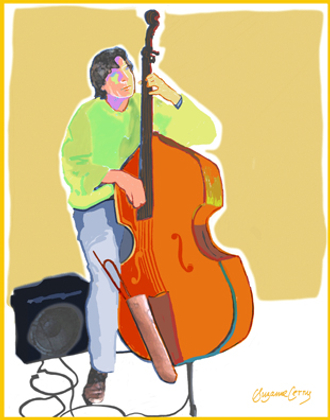
In the UK, the Mercury nominated Basquiat Strings (a string quartet augmented by a viola, double bass and Seb Rochford’s drums) mix originals by leader Ben Davis with sophisticated arrangements of compositions by Joe Zawinul, Ornette Coleman and Wayne Shorter on Basquiat Strings with Seb Rochford (F-IRE). Saxophonist John Surman and bassist Chris Laurence recently collaborated with Trans4mation, a string quartet, on Surman’s The Spaces In Between (ECM), an album of haunting melodies and shimmering, elusive textures. Guitarist Phil Robson has just released an album called Six Strings and a Beat (Babel), a project commissioned by Derby Jazz, while pianist John Law’s Out of Darkness (Slam), perform the seven movement title piece with a string quartet and all-star jazz ensemble.
At the Jazzahead! Convention in 2007, Kenny Wheeler, John Taylor and vocalist Diana Torto earned a standing ovation for a series of originals by Wheeler and Taylor performed with The Hugo Wolf String Quartet, while currently bassist Malcolm Creese’s Acoustic Triangle has been expanded with the addition of the Sacconi Strings, six world class string players, on the album 3 Dimensions (audio-b) and has embarked on a major 14 date tour of the UK.
In Germany, pianist Julia Hülsmann has played and recorded with the Gerdur Gonnasdottir String Quartet; Berlin’s twenty-five year old trumpet player Matthias Schriefl and his group Shreefpunk recorded with a string quartet on Shreefpunk Plus Strings (ACT), and the Bluestrings project, a string “big band,” led by Frank Wunderer, won the Preis von Jugend Jazz for their CD Öffentlchkeit.
In Sweden pianist Lars Jansson recently challenged the American paradigm of jazz with a twelve piece ensemble that includes a string quartet he provocatively called Where is the Blues while The Danish trio Sound of Choice recorded Invisible Correspondence (PAO) with the French iXi String Quartet. In Holland the Zapp String Quartet, recipients of the prestigious Kersjesprijs award, have recorded four wholly absorbing albums while in Italy Stefano Bollani went the whole hog and recorded Concertone (LBLC) with The Orchestra della Toscana in 2006.
Norwegian trumpeter Arve Henriksen wrote a through-composed 25 minute composition using a string section from Bremen’s Die Deutsche Kammerphilharmonie plus live electronics which he performed at the 2007 Jazzahead! convention which was, by common consent, the hit of the whole three day event. The Cikada String 4tet, also from Norway, collaborated with Christof Lauer and Jens Thomas on Shadows in the Rain (ACT), arranged by Colin Towns.
Equally, their fellow countryman, violin virtuoso Ola Kvernberg (born 1981), showed that the great tradition of jazz fiddle players did not wither and die on the vine after the deaths of Stuff Smith and Stephanie Grappelli. His 2006 Night Driver (Jazzland), with just bass and drum accompaniment, is a stunning achievement by the Trondheim Conservatory graduate.
Today, the dissenting voices raised against Dvorák’s New World Symphony, intended as a lesson on how to forge American nationalism within the Western tradition of classical music, seem quaint with the emergence of composers such as Aaron Copland, Samuel Barber, William Grant Still and Elliot Carter who have successfully evoked elements of Americana into European classical music.
T.S. Eliot once pointed out that no artist can work outside the tradition because the tradition will stretch to accommodate anything artists do. The critics who railed against Dvorák’s New World Symphony, such as Edward MacDowell, who in racist outrage, complained, “Masquerading in the so-called nationalism of Negro clothes cut in Bohemia will not help us,” failed to acknowledge how art evolves.
So too the dissenting voices raised against musicians who seek to re-inscribe jazz with their own cultural and national significance. The increasing use of strings maybe just one aspect of this; it may not be revolutionary and it may only be one element of a broader whole, but it is certainly creating interesting music and reflects one way among many in which European jazz is finding its own voice.
This blog entry posted by Stuart Nicholson
Tags:

0 responses so far
There are no comments yet...