The Jazz.com Blog
August 21, 2008 · 1 comment
The Velvet Fog Still Rolls In
Thirty years ago this month, Concord Records brought singer Mel Torm together with the Marty Paich Dek-tette for the Reunion project, revisiting a combination that had produced several classic recordings in the past. In celebration of this anniversary, jazz.com is delighted to publish Thomas Cunniffe's in-depth survey of this memorable partnership. At the same time, a new reissue of Torm's Capitol recordings (see below) also casts light on this seminal singer who passed away in 1999 after an illustrious musical career that started at age four and continued for another seventy years.
In any list of great collaborations between singer and arranger, the Torm-Paich combo must rank toward the top of the list. A brilliant vocalist deserves equally brilliant orchestrations, and without them can hardly reach the pinnacle of the jazz art. Sinatra had Nelson Riddle, Gordon Jenkins, Billy May, Quincy Jones and others, and his uncanny ability to find the right musical settings for his artistry will ensure that his classic recordings will continue to find an audience long after his passing. In contrast, Dean Martin had the potential to stand out as one of the greatest singers of his era, but he rarely had arrangements that matched what he could do as a singer. As a result, his body of recordings only hint at what might have been.
But unlike the casual Martin, who took things as they came and saw rehearsals as a necessary (and sometimes, in his mind, unnecessary) evil, Torm was a relentless perfectionist. If I wanted to be glib, I could tell you that Torm could write the book on jazz singers but this is not glib at all. He actually did write the book: Torms fine work My Singing Teachers: Reflections on Singing Popular Music, published by Oxford University Press in 1994. And the fact that Torm scored more than 250 arrangements himself during his career may have something to do with his ability to pick top flight orchestrators or, in the case of Paich, an extraordinary one.
Torm's fastidious ways extended even to lifestyle choices. To protect his voice, he refrained smoking, limited his drinking, avoided chilly drafts. He made sure he had ample sleep, insisting that seven or eight hours of rest were important to his artistry. I will let you make your own guess on how many of these rules were followed by the singers in the Rat Pack.
Of course, you dont need to know these things to understand the high standards Mel Torm brought to his music. You just need to listen to the recordings. His impeccable intonation, his exquisite phrasing, his flashy scat-singing, his ability to mix it up with the horns or navigate the trickiest modulations . . . in all of these regards, Torm demonstrates a mastery of the jazz idiom that demands our respect.
Perhaps my only reservation about Torm is how easy he makes it sound. If you are looking for an artist who grapples with a song, he is not your type of artist. Even Torm's nickname, The Velvet Fog, told you how smoothly he seemed to float through his performances. Like several other standout jazz masters (Art Tatum and Benny Goodman come to mind), Mel Torm never seems to be find himself outside his comfort zone. But it is such a capacious comfort zone -- and includes large chunks of terrain where others are fearful of treading -- that we forgive him for the impenetrable grace and total command with which he glides over the chord changes.
Torm often minimized the importance of his early work for the Capitol label. But with the benefit of hindsight, we should cherish the contributions to American singing of this label during the middle years of the 20th century. As I have noted elsewhere, the efforts of this one company stand out in any attempt to chronicle the state of American popular singing in the period between the decline of the big bands and the rise of rock and roll. In addition to Mel Torm, other artists on the Capitol roster during this brief Golden Age included Frank Sinatra, Nat King Cole, Dean Martin, Judy Garland, Nancy Wilson, Dinah Shore, the Kingston Trio, June Christy, the Four Freshmen and Peggy Lee. The vision behind Capitol in its early days was shaped by musicians, not accountants or marketeers, and the results showed in album after album. This a rare phenomenon that we may never see again: a large company achieving tremendous commercial success on the pop charts while demonstrating an unflagging commitment to the highest levels of musicianship.
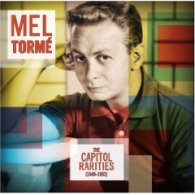
A new Mel Torm CD, The Capitol Rarities (1949-1952), gives us a chance to revisit this period in the vocalists career. No, there are no Marty Paich arrangements here, but we are blessed with contributions by Nelson Riddle, Pete Rugolo and other sympathetic partners. Love is Such a Cheat, included on this CD, was one of Torms personal favorites, and for good reason. Here he delivers a complicated, tongue-twisting lyric at a rapid pace but with an effortless mastery that is one of this singers trademarks.
If cool is the ability to do difficult things with the appearance of ease, then Torm is the cool singer par excellence. The arrival of this rarities reissue and the anniversary of the Paich-Torm reunion give us a good reason to celebrate this artist. But, frankly, you shouldnt need any excuses to re-visit or perhaps make your first acquaintance with this pre-eminent interpreter of American popular song.
This blog entry posted by Ted Gioia
Tags:

Hey pallie, like thanks so much for makin' the Dinocomparison and for sharin' your Dinoperspective.....your point 'bout our Dino's musical arrangements is a very interestin' observation...never was, never will be anyone as cool as the King of Cool...oh, to return to the days when Dino walked the earth...