The Jazz.com Blog
September 01, 2008 · 2 comments
Horace Silver at Eighty
No one did more to set the hard bop movement into orbit than Horace Silver, who celebrates his 80th birthday this week. His influence extends far beyond the body of work made under his own name. Before Art Blakey took control of the Jazz Messengersthat remarkable finishing school for hard bop titansthis band was led or co-led by Horace Silver. When Silver left to form his own quintet, both the new unit and the old one, now headed by Blakey, thrived and propagated the emerging hard bop sound. Most of the key musicians working that style served in one or the other of these two ensembles, or were touched in other ways by the influence of the estimable Mr. Silver.
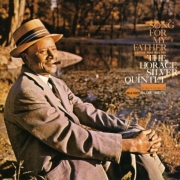
His own musical background spanned the full range of earlier jazz styles. Silver knew coolhe had recorded with Miles Davis and Stan Getz and even played tenor himself in a Lester Young vein. Silver knew pre-war traditionshe had gigged with Coleman Hawkins and studied the music of Art Tatum and Teddy Wilson, as well as boogie-woogie and blues. Silver knew bop and Latin and could also draw on the influences of his own personal circumstancessuch as the Cape Verdean lineage of his father celebrated in Silvers oft-heard composition Song for My Father.
The miracle is that Silver, for all these varied sources of inspiration, developed a style that was so uncluttered and focused. In an era during which many leading musicians, such as Miles and Mingus, felt compelled to move restlessly from style to style, Silver went back again and again to the timeless values of great jazz. Catchy melodies, infectious rhythms, tight arrangements, memorable solosthese were the trademarks of Silvers great Blue Note recordings.

This is a recipe that works just as well today as it did a half century ago. So it comes as no surprise that Horace Silvers recordings hold up so well today. But if the formula sounds obvious enough, it is not quite so easy for others to imitate. In particular, Silvers charts are among the most perfectly realized of the erawith strong hooks and perfectly realized grooves. He would rank high in any poll of jazz fans (or jazz musicians, for that matter) to pick the most admired composers in the history of jazz.
Some of these songs were hit records for Silver, and many more might have climbed the charts had they been given some airplay and promotion. Even imitators and followers of his could achieve big successesjust check out how Steely Dan took the basic beat of Song for My Father and used it as the foundation for Rikki, Dont Lose That Number.

Song for My Father, is a good place to begin if you are new to this artist. Listen to Silver's piano solo here, and you will be struck by how simple it seems. If you wrote it out, an intermediate piano student would have no difficulty with it; the most complicated aspects are a few right-hand ornamentations and the syncopations. Yet there is something ineffably perfect in this performanceand in its realization in the studiothat you won't be able to appreciate in any written transcription. No one in the long history of jazz has been better than Horace Silver at achieving the grandest effects with such simple tools at his disposal.
Where do you begin in identifying the highlights of Silver's output? Try making a list: Seor Blues, Opus de Funk, Peace, Doodlin, Nicas Dream, Nutville, Song for My Father, Filthy McNasty, The Preacher, Sister Sadie, and so many others that deserve to be heard. More than a half century after many of these songs were first recorded, they remain beloved jazz standards, and perhaps the best measure of their success is how frequently they still are played, in performance and at jam sessions, by jazz musicians today.
In honor of Silvers 80th birthday, Bill Kirchner has contributed a Dozens focusing on twelve essential tracks by this seminal artist. Click here to read the full article.
This blog article posted by Ted Gioia.
Tags:

Thanks so much for this post, Ted--I'm linking to both it and Bill's "The Dozens" piece on the page for this past weekend's Night Lights Horace Silver tribute: http://nightlights.blogs.wfiu.org/the-horace-silver-songbook/
Does anybody know where the transcriptions to his tunes are? Or where any of the jazz messenger tunes have been turned into charts for the us fans? I'll trade 10 of my small charts for one of the jazz messenger charts like nica's dream or moaning, etc. http://www.tcsn.net/goodideas/charts5.html