The Jazz.com Blog
September 14, 2008 · 1 comment
Jazz Music With Strings Attached
Why does the mixture of jazz and strings so seldom live up to my expectations? I like both ingredients individually. I listen to lots of symphonic musicorchestral music shows up on my CD player almost as often as jazz. And, needless, to say, jazz has been my lifelong passion. But somehow, when you put orchestral arrangements behind a major jazz soloist, it often seems as if everyone involved in the project was given a stupid pill.
Charlie Parker was proud of his recordings with strings, and Bird himself played with aplomb on these tracks. But the string arrangements themselves were execrable. Other jazz greats, such as Clifford Brown and Bill Evans, have also struggled with string accompaniment that fell short of what their artistry deserved. I am sure that many jazz fans share my suspicion, whenever a new jazz session with strings attached is released, that the CD is intended for a crossover audience rather than die-hard jazz fans. Welcome to the EZ-Listening Highway!
True, there are notable exceptions. Stan Getzs Focus album, scored by Eddie Sauter, ranks among the tenorists best work. When I first met Getz, this was the initial LP he took down from his shelf to play for me, and in this instance (unlike the case of Bird cited above) the hornplayers pride was matched by the quality of the finished project. Yet the key here was Sauters determination to challenge Getz, and craft arrangements that didnt just keep politely in the background.
Gunther Schuller has done the same at several junctures in his long career. The recent release of a recording of Schullers Concertino for Jazz Quartet and Orchestra, originally composed for the Modern Jazz Quartet in 1959, reminds us of how the addition of an orchestra can raise the level of a jazz performance. Schullers Rush Hour project with Joe Lovano is another striking example of what orchestral jazz should sound like.
Other examples could also be cited of solid symphonic jazz projects. Butalas!these are mostly exceptions. The more typical recipe for these projects is to take pop standards from Tin Pan Alley, assign the chords to the strings, andvoila!the result is symphonic jazz ready for crossover appeal.
Two recent releases remind us of the range of these efforts, and the challenges involved in marrying symphonic music and jazz.
Pianist Danilo Perez enlisted arranger Claus Ogerman to provide the orchestrations for his new Across the Crystal Sea CD. After many years of listening to Ogerman, I am still puzzled by this arranger, who sometimes rises to the highest levels of creativity, but frequently comes up with very low-key charts that are like frosting without the cake. The mixture of the often fiery Perez and the usually under-stated Ogerman is problematic. On the title song, for example, the pianist is working very hard to create some turbulence on the Crystal Sea, while Ogerman has set his cruise control for smooth sailing.
Other tracks on this project are more successful. A guest appearance by Cassandra Wilson stands outOgerman is often at his best when working with singersand at other moments the project creates some effective moods with a film score ambiance. Even so, this is not the first place to begin if you want to check out the artistry of Danilo Perez. There are times here where the pianist risks falling into the role of sideman on his own leader date.
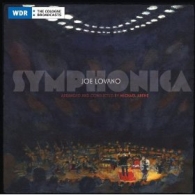
A few days ago, Blue Note released a CD of Joe Lovanos 2005 performance in Germany with the WDR Big Band and Rundfunk Orchestra, and this album represents a more challengingand satisfyingexample of symphonic jazz. Michael Abene contributed the arrangements, and not a single pop standard is included on the diska rarity in itself for jazz-plus-orchestra collaborations. But we dont miss the Tin Pan Alley tunes on this exceptional CD, which primarily features Lovano originals. Abene is not a household name outside the jazz commumnity, but this pianist-arranger, whose career spans everything from Maynard Ferguson (whose band he joined as a teenager) to the Manhattan School of Music (where he currently teaches) deserves more renown.
Lovano, for his part, handles these horn-versus-strings projects as well as any living jazz artist. His bag-of-tricks encompasses a very wide range of moods, and he is one of the few saxophonists of the current era who is just as convincing when he plays gritty, muscular tenor as when he is floating ethereally above the changes. He does both, as the occasion warrants, on Symphonica.
As I mentioned, the CD is mostly comprised of Lovano originals, but the saxophonist does include one coverhis version of Minguss Duke Ellingtons Sound of Love. Lovano handled this same composition admirably on his live recording at the Village Vanguard from 1995. But this version is twice as long, and enlivened by Abenes very interesting orchestral writing. This has long been one of my favorite Mingus works, a poised Strayhorn-esque piece built with a rich harmonic palette and a sweeping melody. Lovano delivers a major statement on this ballad, which has been selected as Song of the Day at jazz.com. Click here to read the full review.
This blog article posted by Ted Gioia.
Tags:

"A guest appearance by Cassandra Wilson stands outOgerman is often at his best when working with singers' I'm not even sure of that. I thought the CD with Krall was bland.