The Jazz.com Blog
September 21, 2008 · 0 comments
A Surprise from Patricia Barber
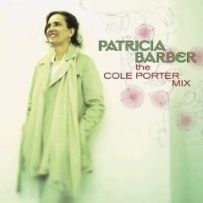
You can tell a lot about Patricia Barber from the way she opens her recordings. For example, her 2006 CD Mythologies starts with Barber singing:
Should I leave Erebus to his own device
What Chaos when the curtain rises and the houselights dim
With whitecake on my face . . .
Or how about this kick-off to her live recording A Fortnight in France:
Did you ever think a piano could fall on your head?
Do you look over your shoulder at all?
You get the idea. This artist has somehow escaped the crossover police in the A&R department, and has been allowedthrough some sly loophole in her contractto challenge her audience. In an age in which most so-called jazz vocal releases are as shallow as the Los Angeles River in summertime, Patricia Barber has decided to test the ocean waters.
So what am I to make of Barbers latest CD? It opens with these words:
Youd be so easy to love
So easy to idolize
All others above . . .
Can this be true? Has Patricia Barber really released a Cole Porter songbook? And do I really hear a gentle bossa nova arrangement in the background of this track? The answer to both questions is a resounding yes, and listeners are left to ponder what is going on here. Has Barber entered the Ella phase of her career, where she will tackle theme projects based on Gershwin, Berlin, Arlen and others? Do we now stop worrying about a piano falling on our collective heads?
But dont despair, Barber fans. The tunes may be familiar here, but Barber hasnt turned into a cabaret singer. She puts more than a little spin on these songs. Her phrasing on Easy to Love is so far behind the beat, that I kept worrying she would miss her next chord connection and get stuck at C#7 overnight without her bags. But she handles every change with the kind of comfortable mastery of time I associate with Carmen McRae and Betty Carter.
Elsewhere on this CD, saxophonist Chris Potter imparts an acerbic flavor to even the most familiar tunes. I especially like Just One of Those Things, in which the arrangement builds in layers. The performance starts with just voice on the pickup notes, and then moves along with Barber working off a very fast walking bass line. Guitar and sax each come in during the melody statement, and set up a fleet Potter solo. No one is going through the motions here; this is not just 'another' one of those things.
Probably the most striking thing about this CD is what is missing . . . namely the irony. Excessive irony has poisoned the styles of many post-modern players, preventing them from getting deeply inside these old popular tunes. Everything becomes a game, and the one thing we know about games is that they dont really matter. In other settings, Barber has shown herself to be quite skilled at distancing herself in this way from the banality of a lyric. But she only pulls out her daggers in the right settings (hear, for example, her wickedly brilliant take on Sonny Bonos The Beat Goes On). What I find more remarkable is her ability to turn off the irony completely a moment later. Then she inhabits the song, instead of just offering a wry commentary on it.
This is quite a rare talent, in my experience. Jazz singers these days tend to fall into two categories. There are those who deconstruct the tune by applying their clever persepctive on itinvariably with a double dose of irony; and then there are those others who just try to immerse themselves into the emotional core of a lyric, and let the pieces fall where they may. (By the way, I tend to believe that the ironists, who have dominated the scene in recent decades, are losing out to the latter, let's call them Method singers, who are now on the rise . . . But that is the subject for a different day.) My point here is that Patricia Barber, more than any other vocalist on the current scene, is surprisingly skilled at moving from the one camp to the other. And the verve and unpredictability with which she shifts from sly commentary to heart-on-sleeve immediacy is one of the most compelling aspects of her musical vision.
The Cole Porter Mix, is mostly titled toward the irony-free side of Ms. Barber. Even when these songs seem to be begging for a Jacques Derrida, Barber keeps closer to Emily Dickinson. But if you think that makes for a boring CD, you need to check out this music first and reconsider. Yes, its a sign of how far we have gone, that sometimes the most surprising thing you can do is to sing the old songs as if you took them seriously.
In honor of this fine CD, released last week, jazz.com is featuring "Miss Otis Regrets" from Patricia Barber's The Cole Porter Mix as Song of the Day.
This blog article posted by Ted Gioia.
Tags:

Comments are closed.