The Jazz.com Blog
September 09, 2008 · 1 comment
Listen to these CDs . . . Even If They Sound Awful!
I have devoted several postings here recently to the issue of sound quality on jazz recordings. In particular, I have expressed my concern that the current generation of jazz fans (as well as musicians and critics, for that matter) seem far more familiar with high fidelity jazz recordings than with earlier works.
In short, a strange sort of Darwinian process seems to be at play here. The influence of a jazz musician from the 'good ol' days' apparently depends not just on the value of the artist's musical legacy, but also on extraneous factors. Musicians who had access to the best quality recording equipment rank higher than those losers who crowded around the big horn to make their 78s.
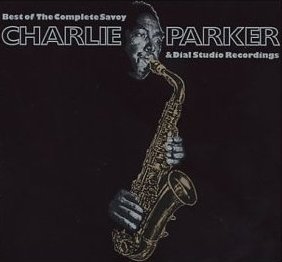
Tell me it ain't so, Joe! I would love to believe you. But if you have any doubts, just look at the rankings on the Amazon.com sales charts. Amazon ranks the sales of hundreds of thousands of recordings, so it is easy to compare Kind of Blue (ranked #181 as I write) with Charlie Parker's equally essential Best of The Complete Savoy & Dial Studio Recordings (ranked #59,916). The bottom line is clear: it may not mean a thing if a CD ain't got that swing . . . but it's even more important to have stereo sound if you want to climb the charts.
The cut-off point seems to fall around 1957. Recordings from the late 1950s such as Kind of Blue and Time Out rank among the biggest selling jazz releases of all time. But jazz music from the 1920s and 1930s and 1940s seems to have fallen off the radar screens of fans in the new millennium. This is all the more ironic when one considers that jazz was at its very peak of popularity during this earlier period.
There are a few exceptions to this generalization, but only a small number. Three, in particular, come to mind. I have found that most jazz fans have some familiarity with Billie Holidays work from the pre-stereophonic era. More than a few have also checked out some of Louis Armstrong's path-breaking work from the 1920s. Finally (as we recently explored in this column), the gypsy jazz of Django Reinhardt appears to be more popular now than at any time in recent memory.
But these three bright spots are exceptions. The masterpieces of early jazz are mostly forgotten, by my measure. Lady Day, Django and Satchmo are only the starting points. With this in mind, I have listed below some suggestions of where listeners might concentrate in exploring the other riches of jazz from the days before high fidelity sound.
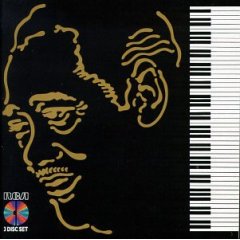
Duke Ellingtons work from 1939-1941: This might be the single best place to begin your jazz education. Certainly there are essential Ellington performances from earlier and later periods, but Duke never had a better band than his (as its called today) Blanton-Webster unit. Yet how many younger jazz fans today own these recordings? The excellent RCA reissue of this material currently ranks #59,772 on the Amazon.com music chartswhich is hardly reassuring. At one time the Smithsonian reissued these tracks, as well it should given their importance in 20th century American music. These reissues were lovingly compiled by the late Martin Williams (a man who greatly influenced me and many other jazz writers). But try finding those editions today, my friend.
The jazziest evening in North Dakota history: While we are on the topic of this Ellington unit, let me strongly recommend the bands live recording in Fargo, North Dakota on November 7, 1940. This was not a commercial recording, but the work of some devoted jazz fans who happened to capture this legendary band playing at its peak. By any measure, this certainly ranks as one of the great bootleg recordings of all time. But it doesnt rank as a big seller: currently it is #138,977 on the Amazon.com charts. This music is available in several reissue, but none of them rank in the top 100,000. Yes, that is true . . . more than 100,000 CDs sell better than this masterwork.
Bebop pianists who arent named Thelonious Monk: Because Monk recorded major works with excellent audio quality during the late 1950s and 1960s, he has become far better known than any of the other pianists who contributed to the bop movement. Hooray for Monk. But the music Bud Powell recorded during the period from May 1949 to May 1951 also deserves your closest consideration. If you havent heard these tracks (and not many people have these days) you dont really know bop. And poor Lennie Tristanowho never made a single recording with really first-rate audio qualityisnt showing up on many iPod playlists these days either. And don't even get me started on Dodo Marmarosa, Richard Twardzik, Herbie Nichols . . .
The jazziest evening in Toronto history: We hear a lot of hoopla when some previously unknown tape comes to light featuring jazz stars of a bygone era. But this is the best live bop date of them all. The sound is just one step above abysmal, but modern jazz does not get any more exciting than this.
The man who invented jazz: Okay, maybe Jelly Roll Morton didnt really invent jazz, even if he claimed to be the creator of hot music. But you need to hear his 1920s recordings anyway. (This box set is out-of-print, but a few used copies can be found.) Morton's Library of Congress recordings are also must-have jazz. They were recently reissued in a lavish box set, but jazz fans are still griping about the poor job of re-mastering this music. Some day the U.S. will put up a real monument to Jelly Roll, but in the meantime these reissues will need to suffice.
1920s trumpeters who arent named Louis Armstrong: I am assuming that you already know about Louis Armstrongs music from this period. (If not, stay after school and listen to West End Blues fifty times.) But you may not know King Olivers work from 1923 or Bix Beiderbeckes work from 1927. Start with these, but consider tackling Jabbo Smith and Bubber Miley for extra credit.
These recommendation only scratch the surface. But when you listen to these recordings, dont worry about scratches on the surface. The audio quality will not be your thrill, but the music certainly will live up to your expectations If you are serious about your love for jazz, these are some historic recordings you need to know.
If you have some suggestions of older recordings that deserve a second hearing, add your comments below or email them to editor@jazz.com.
This blog article posted by Ted Gioia.
Tags:

TedThe current state of recorded jazz fits well with the rest of our glitz-based economy, where packaging can upstage content. What it looks (or sounds) like becomes more important than what it really is. In part, that's "show" business. But it's certainly messing up our political climate, among other things. In this scenario, early, "scratchy" recordings have lost their cachetwhere at one time the scratchiness lent cachet because it meant old, which promised authentic: inchoate, liberated, ensemble-based expression that would have people out of their seats, dancing. So the scratchiness hid the treasure--as some dug-up, worm-eaten chest may contain jewels and gold. The gold and jewels still abide, and they still make people dance. I recently played a trad-jazz gig at a senior center. The old folks were in there fox-trotting and line-dancing. But that day, a group of middle school kids happened to visit the center. They sat waiting for us to play. I said to the leader, "If we can get the kids, we're in." And to our delight, when we swung into Sweet Georgia Brown, the kids took to the floor, rocking the house, laughing and ecstatic. In my opinion (and I confess bias), if we want to improve the commercial state of jazz and protect its roots, we need to start infusing our festivals with more of the original jazz, from the twenties and thirties. As opposed to the studied and appreciative responses of current jazz-club audiences, traditional jazz inexorably brings big smiles.