The Jazz.com Blog
January 12, 2009 · 7 comments
5 Lessons Today's Jazz Labels Could Learn From Blue Note

I hate to spoil a birthday party. But the current celebration of Blue Note Records' 70th anniversary inevitably brings with it some invidious comparisons between the current jazz scene and the way it was back in the day.
I am not talking about nostalgia for the great Blue Note acts of yesteryearalthough certainly there is reason to look back fondly on those past masters. (Fans looking to take a walk down memory lane, should click here or here.) Rather I am more concerned about the business side of the equation, and what it is doing to jazz music today.
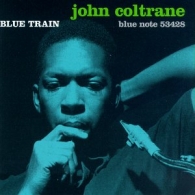
With that in mind, I am offering a list (because, as you know, blogs must have lists) of the Five Things Today's Jazz Record Labels Could Learn from Blue Note.
(1) For heaven's sake, stand for something
Once upon a time, jazz record labels stood for something. The people who ran them had an aesthetic vision. Sometimes that vision was even more important than the bottom line. Labels had personalities. They might be quirky or eccentric or stubborn, but you always knew who they were.
But not any more.
I once knew what Concord stood for as a label. But today I have no clue. Is it a smooth jazz label? Is it a mainstream label? Was it bought out by Starbucks? Who knows? The same is true of Verve, which once had one of the most distinctive personalities of any label. But if you visit Verves web site today, and listen to the music playing for site visitors . . . well, lets just say that you wont be reminded of Norman Granz and J.A.T.P.
Yet at least those two labels have some heritage and lingering brand value, and are thus better off than most of the current outfits releasing jazz, who have less personality than an emoticon in nine-point font. Can anyone describe the personality of a Chesky or a Justin Time or a [fill in the blank] release? What a change from the indie tradition of the past. For a knowledgeable jazz fan, each of the following names has a resonance and meaning, a history and heritage: Soul Note, Pacific, ECM, Riverside, Commodore, Fantasy, Contemporary, Delmark, Muse, etc. Even tiny outfits, such as Discovery or Biograph or Nessa meant something. But how many current brands have that type of potency in their name?
Blue Note in the 1950s and 1960s had the strongest personality of them all. Yes, Blue Note could surprise you by signing artists outside of the hard bop idiom. But even these releases added to the allure of the label, and prevented the Blue Note sound from becoming a clich. The end result was a tiny indie company that eventually had more clout in the jazz world than the majors.
This ability to project a personality is the single biggest advantage a small label has over the huge corporations that dominate the entertainment industry. The indie operations of today should learn from Blue Note and use this leverage.
(2) Build the careers of your artists over the long haul
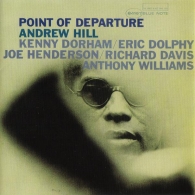
How many labels today can match the long-term commitment that Blue Note showed to the musicians on its roster back during its glory years? Even an artist such as Andrew Hillwhose records sold poorly at the timewas able to record a dozen leader dates for Blue Note over the course of a decade, and also show up as a sideman on other projects for the label.
Don't minimize the importance of artists such as Hill or Grant Green or Tina Brooks in building Blue Note's reputation. Even fans who preferred Lee Morgan to Andrew Hill loved the label all the more because of its continued allegiance to something other than dollars and cents. Much of the Blue Note mystique today derives from those gritty records that never got much airplay, but made a statement nonetheless. Part of the statement was about integrity.
Its hard to find that type of loyalty these days (although there are a few examples). The jazz world would be much better off if the corporate beasts that run the show had more allegiance to their artists. They call it a stable of artists for a reason . . . It is supposed to reflect stability. Judging by what I see, maybe its time to change the name to the Unstable of artists on the roster.
(3) Remember: It is no crime for a jazz record to sound good
I am suspicious of any approach to jazz that consistently disregards (or actually scorns) the enjoyment of the listener. Strange to say, many opinion leaders in jazz dont have listener enjoyment on their list of key criteria for a good jazz record. In fact, there are some who actually think that a jazz record is all the better, the less it is enjoyed. (This latter viewpoint is slowly losing credibility in the jazz world, but the operative word here is slowly.)
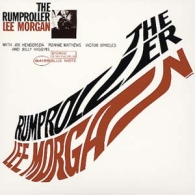
Blue Note never had this problem. Blue Note was willing to stretch the ears of its fans, but it didnt insult them. A fan could buy a half-dozen Blue Note LPs at random, and be assured that listening to them would mostly be a pleasurable experience. As a result, a lot of Blue Note music got significant airplay, and some songs even became hits.
Think about that for a second. Acoustic jazz instrumentals played by world class players that climb the charts? No you dont see that very much these days. Then again, there arent many labels like Blue Note around any more.
(4) Dont get caught up in the quest for glamorjazz is not a beauty contest
I have noted elsewhere that good looks seem to play a disproportionate role in determining who gets a record contract these days. This was always true to some degree in the world of pop music, but didn't become a major problem until the rise of music videos. Then the infection even spread to jazzwhich had been mostly immune to this way of evaluating "talent"and over the last ten years it has become so pronounced that it is almost laughable.
Somebody should tell the music industry moguls that people still listen to music, and that the song on the radio doesnt sound any better if it's Britney and not Ella. More to the point, the overall impact of this approach is a dumbing down of jazz (and other forms of music), the promotion of acts without career staying power, and the gradual distrust of the fan basewho are smart enough to understand what is going on. After all, if the record label doesnt care enough to promote the best talent, why should the fan care enough to buy the CD. And if some jazz fan wants to ogle attractive bodies, the Sports Illustrated swimsuit issue costs about half of the going rate for a compact disk.

Blue Note was, of course, the anti-glamor label during its heyday. Fashion models rarely found their way on to a Blue Note LP cover. Instead fans got to ogle hot, sweaty musicians. Heck, you hardly even got a color photo (those four-color separations cost money, folks). But no one complained. You didn't want to see those guys in high-def anyway. Get real . . . jazz fans knew that Hank Mobley didnt look like Montgomery Clift. So what? (to borrow a useful jazz phrase).
When jazz artists start looking like Montgomery Cllift, then you need to start worrying. I think we need to start worrying.
(5) Earn the loyalty of your customers
Have you every purchased a recording without knowing anything about the artistbut just because you had so much trust in the values and integrity of the label? I have too. But not as often as I once did.
Only a few labels generate that type of loyalty. In my case, I can think of releases that I purchased from Blue Note, ECM, Folkways, Deutsche Grammophon, Arhoolie, and a few other companies . . . based solely on my confidence in the people running them, and their commitment to the music.
Loyalty of this sort requires a number of ingredients. But Blue Note had them all: musicianship, audio quality, creativity, a larger vision, a respect for the intelligence of its audience, etc. The type of goodwill this builds is incalculable, and this is why the Blue Note catalog continues to sell well even when the records are a half-century old. Its funny how the labels that are so focused on maximizing the sale of records this week, this month, never make it to the half-century mark. There is a lesson in that.
Okay, go back to the birthday party. Have a drink; eat some cake. Let's sing a song in syncopated time for Blue Note, and wish the label 70 more prosperous years. But let's also remember the reasons why this label got to a venerable age in the first place. They haven't aged at all.
This is blog article was posted by Ted Gioia.
Tags:

There's some country song with lyrics on the order of "If you don't stand for something, you'll fall for anything." Sounds like your point to me. But (expanding on your fifth point) a sixth lesson might be tougher now: Run the company by ear rather than the bottomline; that is, have a strong leader with specific musical taste running the company--a Wolfe, Granz, or Strachwitz, say--instead of beancounters and Harvard MBAs. (And a big Arhoolie to you too, Mr. Gioia, for thinking to salute the incomparable Arhoolie label.)
Most jazz that has a chance to be historically important doesn't come out on what might be considered traditional jazz labels, anyway. Most jazz I listen to is released on small-run labels owned by musicians, and yes, they do have a personality. The paradigm that had labels controlling the vanguard of jazz doesn't exist anymore, and anyone looking for a pattern of relevance in commercial labels is chasing an archaism.
I concur with your article, and miss the days of knowing the sound of a record from the label it was on. I remember as a folkie in the sixties implictly trusting Electra to deliver the goods. Moving to today and the jazz genre, while many of the large companies -- Verve, Concord, Telarc -- are hard to get a handle on, there are a number of small, independent labels that to me have a "sound" that I can trust and have trusted in selecting unknown players. I can think specifically of Pirouet, Smalls, High Note, Arbors, Sharp 9, Egea off the top of my head, but there are several others I believe have a recognizable sound and/or mission. I am watching with interest how Resonance will grow, for example. Equally, I know to be wary of the sound I will get from some labels as I am not a fan of the abstract free jazz sound. So I think chasing a sound is not necessarily an anachronism, and I think many in the industry feel the same way, thus the growth of the small labels. The real question may lie in radio, over the air or satellite, and what they play, and whether they can get the message out on new artists. Thanks goes to NPR and all the public radio stations out there, particularly at universities around the country, who may be the last bastion of hope in getting the sound out. But overall I fundementally agree with everything you said regarding labels, customers, and patience.
I myself would love to see jazz musicians and producers embrace the "art of the album" more. By that I mean a recording that tells a compelling narrative from start to finish; where the aesthetic vision informs every song and creates obvious continuity, and yet at the same time there are some interesting contrasts. Great pop/rock artists and producers always seem to have had a much better grasp of this, right down to having cover art that is evocative of the sounds and ideas on the record. For jazz the "blowing session" has too often been the norm, still to this day (though some of the younger musicians DO try to incorporate a lot of originals). I love the classic Blue Note label records, but I will readily trade one Herbie Hancock "The Prisoner" for dozens of hard-bop blowing sessions whose distinguishing traits are meaningful only to connoisseurs and musicians. What is the likelihood a jazz musician will record something like "The All-Seeing Eye" these days?
After reading your insightful article I tried to figure out at what point did things begin to change. I began by looking at the stature Blue Note held in the jazz community back in the fifties and the sixties. In retrospect we see the label as the standard in the fifties in the sixties. But where where did the standard go from there? I suppose Impulse! took Blue Note's place toward the middle of the sixties but then it seems the standard migrated to Europe with ECM , Black Saint/Soulnote, Hat Hut, Steeplechase, Silkheart, FMP and Timeless throughout the seventies and eighties. I took a look at my list of ten favorite recordings for 2008 and realized only two of them represented an American label (and small ones at that). The other eight were from Britain (two of them), Poland (one of them), Portugal (two of them), Italy (two of them) and Canada (one of them). It seems to me that the "Blue Note" standard in jazz does not reside exclusively in America anymore. In my opinion labels like Clean Feed, Leo and HATology are setting the pace and leading the way today.
Yes a great article, the truth does hurt, but let us celebrate CIMP records. An American label that easily 'answers' your five lessons, in fact they could have raised the bar on Blue Note. The amount of wonderful music CIMP has released over the years should be treasured, thanks to CIMP....Craig
Are you kidding? Good looks mattered in jazz even back in the 50's/60's. Coltrane, Miles, Dexter, Getz...these were good looking people (Charlie Parker is a big exception here.) Lou Donaldson wasn't so good looking, and Blue Note did put models on his record covers (sometimes.)