The Jazz.com Blog
January 05, 2009 · 2 comments
Jazz Singing Versus Cabaret Singing
There are many hidden fault lines in the music worldconflicts between styles not always apparent to the casual fan. The average joe (plumber or otherwise) sometimes thinks that jazz piano is more-or-less-the-same as cocktail piano (heaven forbid!). Or that jazz fans listen to radio stations with Smooth Jazz formats. (Yarrggghhh!)
And then we get to that really contentious issue: the relationship between jazz singing and cabaret singing. These two factions are hardly on speaking terms, let alone singing terms. But here comes Sue Russell, who recently contributed a piece on twelve essential Mildred Bailey performances to jazz.com, attempting to arbitrate between these warring camps. T.G.
Several times a year I dust off my tiara and sing a few show tunes for a small audience of friends. I also write about jazz for websites such as this one. Lately I find myself caught between two worlds that, to me, really dont feel all that different.
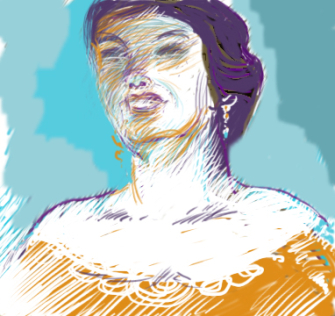
On the one hand, I hear jazz singers and listeners bemoaning the narcissism or preciousness of cabaret. They might even get really down and dirty and say its a haven for has-beens who lack musical chops. On the other hand, my cabaret buddies stake their claim against jazz singers for taking liberties with the sacred lyrics and melodies of Mr. Rodgers, Mr. Sondheim, and Mr. Porter. They seem to feel that jazz singers live in a different universe in which songs dont tell a story or words lose their meaning and are replaced by abstract sounds. Id like to arbitrate in these turf wars so we can all get back to what really matters: great songs and great singers.
So lets take a step back and compare definitions. Nobody wants to go out on a limb and say precisely what jazz is, but those who try to define it generally do so in musical terms, For example, Answers.com defines jazz as music with a strong but flexible rhythmic understructure with solo and ensemble improvisations on basic tunes and chord patterns anda highly sophisticated harmonic idiom. Conversely, cabaret is generally defined as a place and not by the music (or other entertainment) that happens there. According to Websters, a cabaret (not cabaret itself, as a genre) is a spot that is open late at night and that provides entertainment (such as singers or dancers) as well as dancing and food and drink. Other sources cite historical examples under the heading of cabaret, like Caf Society or the Blue Angel. Apparently you can visit a cabaret, but the entertainment youll find there is anybodys guess, and nobody is saying anything about chord patterns.
So we have a little identity crisis in cabaret. If nobody else knows precisely who we are, how do we define ourselves? One thing we know, based on observation, is that cabaret performers are generally singers, so the comparison is not really between two genres of music but rather between two different approaches to singing. My contention is that a good deal of the time the approaches are really not so different, but the fact that were all singers means we share the singers unfortunate status as low man or woman on the musical totem pole. That stereotype of the dumb singer, or, more specifically, the dumb chick singer, is still present. Thats what happens when the voice is your instrument. If everybody else plays the same instrument without having to practice, it must not be a valuable commodity.
Whatever we call ourselves, as singers, were all in the same proverbial boat. Were looking for respect and doing our best to earn it. Sometimes that push for respect may lead jazz singers to put down the cabaret artist, who must absorb the fallout, becoming, in effect, the dumb singer whos not taken seriously by the boys (or girls) in the band.
And cabaret singers also find ways to prop ourselves up. Were the proud children of Mabel Mercer. We pay homage to the Great American Songbook. We proclaim our sacred duty to the text. We distinguish ourselves from our friends in jazz by virtue of this devotion to the intimacy of the moment, to the connection between singer and song and singer and audience as if weve invented it ourselves.
But I can make a long list of singers and songs whose CDs or iTunes titles get labeled as jazz but whose performances are really indistinguishable from cabaret. For starters, Ill name a few: Mildred Bailey singing Heather on the Hill; Lee Wiley singing anything by Gershwin or Porter; or Tony Bennett singing the rare Rodgers and Hart ballad, This Funny World. Cabaret singers, take a listen, and youll see what I mean. And once youve ventured into the jazz section, you may even surprise yourself by enjoying Betty Carters gleeful version of The Surry with the Fringe on Top or Little Jimmy Scott stretching a sentence to its breaking point in an old chestnut like Irving Berlins They Say Its Wonderful.

And jazz singers, bear in mind that the music of some of the all-time great practitioners unfortunately gets filed across the aisle under easy listening. Frank Sinatra may make it sound easy, but really its not. After all, Mabel Mercer taught him everything he needed to know about the lyric. He told us that himself. And all of you are, of course welcome to the cabaret. Ill be the one with the tiara.
This blog entry posted by Sue Russell.
Tags:

Interesting comparison/contrast. Thanks for taking the time to consider this point. Let's not forget that other famous vocal jazz location, where you'll find something called a 'lounge singer.' And it's a mystery what they'll be singing too.
Darwin---I would never forget the lounge singers...and the lounge piano players, too, for that matter. SR