The Jazz.com Blog
January 06, 2009 · 2 comments
Sonny Rollins, Rahsaan Roland Kirk and Lennie Tristano on DVD
Thomas Cunniffe is an erudite commentator on matters jazzy, and our resident expert on the many jazz DVDs coming on the market. Below he looks at some recent releases featuring rare footage of various past masters in performance. T.G.
Its a well-known axiom that the main problem in the music business is that the business usually gets in the way of the music. While very few have gotten rich by promoting jazz, it seems that someone is always trying.
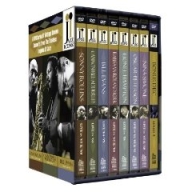
Nonetheless, I shudder at some of the tactics used to lure potential buyers. Most notably, there is the concept of the bonus discotherwise unavailable music that can be had only by purchasing a large boxed set. Usually, the bonus material is very rare and/or of high musical quality, but it is saved for those with deep pockets and kept from those with meager finances. For those students studying the musics history, such tactics seem unnecessarily cruel. (While Jazz Icons is the current focus of this criticism, they are far from the only culprits: Do we really need to spend a hundred bucks for Sonys newest reissue of Kind Of Blue just to hear all of the music from these sessions?)
The bonus disc for Jazz Icons Series 3 features 2 three-song sets from Sonny Rollins 1959 tour of Europe, plus Rahsaan Roland Kirk in a 1963 program from Belgium and Nina Simone performing on a 1965 Swedish TV show. The Rollins represents the earliest video Ive seen of the saxophonist, and ironically, it was one of the last recordings Rollins made before his well-known 2-year sabbatical.
The tour must have been an interesting one. From discographical information, we know that the tour started with Pete La Roca Sims on drums and Henry Grimes on bass. Grimes was on all of the airchecks and videos of the tour, but La Roca Sims missed at least two performances, an Aix-En-Provence date where Kenny Clarke sat in, and the Stockholm date that opens the DVD, where Joe Harris plays on what is presumably a borrowed drum set (the initials E-J are emblazoned on the bass drum). In the otherwise exemplary liner notes, there is no explanation about this personnel mystery.
Rollins is fully engaged in both performances. On It Dont Mean A Thing, he starts by developing a two-note motive which later morphs into a longer version of the same idea. While Rollins thematic improvisation is always effective, I wonder if this performance happened after he had read Gunther Schullers Jazz Review article on Blue 7 and was now consciously trying to develop motives in his solos. (The Schuller article was published only 4 months before this concert, and it was several months later that Rollins announced his frustration with Schullers article and made his promise to never again read reviews of his own performances.) On Love Letters, Rollins plays the entire melody chorus a cappella, and it almost feels as though hed do the entire piece solo. Rollins had recorded a solo version of Body & Soul in the previous year, but his live marathon solo performances were still far in the future.
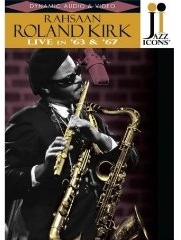
Still, its Rollins with bass and drumsthe same instrumentation as on the 1965 performance on the main Rollins disc from the set, and an obvious point of comparison between the performances. To do such a comparison, you have to jump between two discs (and of course, you have to have shelled out the money for the boxed set). The same point can be made for Rahsaan Roland Kirks performances. The bonus disc has a set using the same rhythm section as two of the sets on the main Kirk disc: George Gruntz, Guy Pedersen & Daniel Humair. Further, theres another version of Kirks barn-burner Three For The Festival to compare to the two on the main disc. Why separate these recordings? We could all learn more about Kirk by hearing the progression of the performances. (After all, what made the Charles Mingus disc the highlight of the first Jazz Icons set was the short time frame between recording dates and the similar personnel of the performances.)
What you do discover about Kirk is that he was not as avant-garde as you originally might have thought. While there are certain elements of free jazz in Kirks playing, he was basically a mixture of hard bop and Chicago soul. His tenor sax had a burnished quality that could alternately conjure up Rollins and Gene Ammons, and his flute was pure and melodious, owing equal amounts to Yusef Lateef and Eric Dolphy. His flute style is best-known for his simultaneous singing and playing, but as annotator John Kruth points out, Kirk was not the first to employ the technique, but did more with it than anyone else. As for Kirks manzello and strich, both are used as contrast to his tenor sax, and when he plays several instruments at once, its usually for short punch figures and not for extended periods.
What is also surprising is that Kirk refrains from marathon solos. While others of his generation would play 15- to -30-minute solos, Kirk makes his statements in 2 or 3 choruses and keeps our attention by switching horns or by adding whistles, sirens or music boxes to the mix. And if his originality is in question, check out his up-tempo waltz treatment of The Shadow Of Your Smile: trust me, you cant really imagine it, you have to hear it. Then youll wonder why no one else ever thought of it!
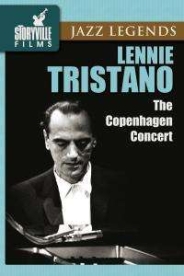
Another mis-categorized musician was Lennie Tristano. Usually lumped into the cool school, with a passing mention of his 1949 free jazz experiments, Tristano really belongs to the avant-garde, even if his early recordings did not influence the direction of the music. Tristano loved to stretch harmonies to their breaking points and on Darn That Dream from Storyvilles DVD The Copenhagen Concert, its nearly impossible to follow the chord progression through the improvisation. On many of the tracks, Tristano juxtaposes a walking bass line in the left hand with long, rhythmically complex lines in the right. In most cases, the rhythmic counterpoint between the two hands is the highlight, but on Its You Or No One he suddenly breaks the rhythm and the mood by inserting a series of block chords which progress up and down the keyboard, then restarts the walking bass in a faster tempo. Theres precious little Tristano on video, especially solo piano, so this 1965 film is a must-have. And as were speaking of marketing these discs, Storyville came up with a brilliant idea: the notes for all 5 discs in the release fit into a single booklet which is placed into each disc box. So, while youre scanning the booklet for the notes for your particular disc, you find detailed notes on the other discs available from the company. Now, THATS user-friendly!
JAZZ ICONS SERIES 3 BONUS DISC Jazz Icons (no catalog number) 60 minutes.
Sonny Rollins (ts); Henry Grimes (b); Joe Harris (d). Stockholm; March 4, 1959. Interview; It Dont Mean A Thing; Pauls Pal; Love Letters.
Sonny Rollins (ts); Henry Grimes (b); Pete La Roca Sims (d). Laren; March (?), 1959. Ive Told Every Little Star; I Want To Be Happy; Youre A Weaver Of Dreams.
Rahsaan Roland Kirk (r); George Gruntz (p); Guy Pedersen (b); Daniel Humair (d). Belgium; 1963. Stolen Moments; Everything Happens To Me; Domino; Three For The Festival.
Nina Simone (p,v); Rudy Stevenson (g); Lisle Atkinson (b); Bobby Hamilton (d). Sweden; December 11, 1965. Love Me Or Leave Me; Interview; Mississippi Goddam.
RAHSAAN ROLAND KIRK LIVE IN 63 & 67 Jazz Icons 2.119008. 80 minutes.
Rahsaan Roland Kirk (r); George Gruntz (p); Guy Pedersen (b); Daniel Humair (d). Belgium; October or November, 1963. Moon Song; Lover; Three For The Festival; Yesterdays; Milestones.
Rahsaan Roland Kirk (r); George Gruntz (p); Guy Pedersen (b); Daniel Humair (d). Amersfoort, Holland; October, 1963. Bags Groove; Lover Man; There Will Never Be Another You; Three For The Festival.
Rahsaan Roland Kirk (r); Ron Burton (p); Niels Henning rsted Pedersen (b); Alex Riel (d). Konisberg, Norway; late June or early July, 1967. Blues For Alice; Blue Ro; The Shadow Of Your Smile; Making Love After Hours; NY Theme.
LENNIE TRISTANO, THE COPENHAGEN CONCERT Storyville 26060. 41 minutes.
Lennie Tristano (p). Copenhagen; October 31, 1965. Darn That Dream; Lullabye Of The Leaves; Expressions; You Dont Know What Love Is; Tivoli Garden Swing; Ghost Of A Chance; Its You Or No One; Imagination; Tangerine.
This blog entry posted by Thomas Cunniffe
Tags:
I really liked this post. Can I copy it to my site? Thank you in advance.
I am very interested in this