The Jazz.com Blog
October 19, 2009 · 2 comments
A Jazz Success Story in Vermont
Willard Jenkins continues his series on grassroots jazz organizations in the US with a look at a remarkable success story in Burlington Vermont . Jenkins shares below his dialogue with Arnie Malina, whose efforts in jazz advocacy could serve as a role model for other local jazz organizations. T.G.
When it comes to presenting the performing arts Arnie Malina is a force of nature. He has won numerous awards, including citations from the Association of Performing Arts Presenters (APAP) and the Governors Arts Award from the state of Montana. Arnie is a past APAP board member and current board member of the National Performance Network. Additionally Arnie was one of the distinguished arts presenters profiled in the definitive 1990 arts presenting guidebook Twenty One Voices: The Art of Presenting Performing Arts by Naomi Rhodes. (DIYers alert: get that book!)
I had the pleasure of first meeting Arnie in 1991, as co-architect of the former Lila Wallace-Readers Digest National Jazz Network (NJN) of presenting organizations, when he was part of the Network representing Helena Presents. (The NJN also included past participants in this series of jazz.com conversations John Gilbreath, Marty Ashby, and Tom Guralnick). A warm and generous man with a quick wit and a sharp eye for unusual arts programming, though a multi-discipline presenter Arnie quickly became one of the leaders of that pioneering network of jazz presenters. Since then Ive viewed with great interest the excellent work hes done in Burlington, VT, where hes the artistic director and chief programming officer of the Flynn Theatre and their Discover Jazz Festival. Heres a man who knows how to build jazz audiences in unlikely places!
Hows a NY guy like you wind up presenting in such unlikely jazz havens as Helena, MT and Burlington, VT.
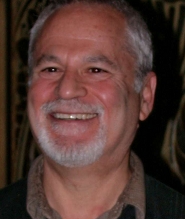
I grew up in New York City and left when I was 21. I went to Music & Arts HS and I actually remember giving a report in an English class on jazz, and I remember getting help from a senior who lived in my neighborhood who was a jazz saxophonist. Somebody said I must know everything about jazz, and I said oh no, I dont know anything [jazz] is such a complex endeavor and [I] hope to continue to learn.
I went to City College in New York then I went to the University of Colorado in Boulder, so that was my first leap out of the city. When I got to Boulder there werent even sidewalks where my dorm was.
Eventually I married a woman who was from Helena, MT, so thats how I got to Helena. Its really beautiful there, yet there was not a whole lot to doespecially for someone who loved going to foreign films, independent films. . . . so we opened up a film society to fill that craving and it turned into a community cultural center. And it became the most exciting thing Id ever worked on, it was like my baby.
When did you first present jazz in Helena?
In 1976; we really started out showing films, this was even before video. Even in a place like Helena, MT there were local people who have a hunger for jazz and there were jazz artists there, so I became one of their champions. I started presenting local jazz artists, some of whom were my friends. Then we eventually established a performing arts series out of this film society; three years into it we ended up having a major performing arts series. Because we started presenting very adventurous things we were always the maverick in town. First they were worried that we were presenting porno films
With the performing arts series I started out with four events and one of them was always jazz. I was always a multi-discipline presenter and I always presented stuff that wasnt the norm. I tried to contribute and expand the communitys cultural interest. In Helena, MT at that time the only thing that was commercially viable was a Dixieland jazz festival that happened every year. It was very successful but very tame. My focus was to bring stuff that wasnt the norm. We developed an adventurous audience between the films and the jazz, and we started presenting modern dancethe first modern dance event in Helena, MT, probably the first so-called progressive jazz events.
I started out presenting people like Sonny Rollins, but I also presented really unusual things for that area, like the Art Ensemble of Chicago, the World Saxophone Quartet before I left Montana wed presented the World Saxophone Quartet four times.
What prompted your move to Burlington, VT?
I was asked to come here. People really wanted me to take this job so people started calling me from New England, people I had worked with from the various jazz networks. . . . I took over in 97 for the very talented Philip Bither when he went to the Walker Art Center. I was a perfect fit in a way because [Philip and I] belonged to similar networks. From my work in Montana we got to be part of the NJN and also the National Performance Network, and the Flynn was also part of those networks. The Flynn had the same kind of programming profile I had developed in Montana.
Back to Montana for a moment, talk about the extraordinary project you did with Don Pullen.
I got to know Don Pullen totally blindly when I went to the Miami New Music Festival back in 1988. I heard him perform for the first time and I remember he had bells on his ankles and really loved it. I got in touch with him and at first he thought who the hell is this guy? But he was game and he came to Montana and we did a little residency in a church because we were in the process of renovating the jail into a performing arts center. So now whats called Helena Presents, or the Myrna Loy Center, is headquartered in an old jail that we renovated into a performing arts center that opened up around 91. This [Pullen residency] was before the jail but Im thrilled to say that Don Pullen got to perform in the jail [laughs]; the project was finished before he passed on. I presented him a number of times, including his African-Brazilian Connection twice, I presented him as a soloist. . . . this was after the Don Pullen-George Adams Quartet.
I had also presented the Garth Fagan Dance Company and in those days you were able to apply for major bucks to develop new works and a 3-year residency program. In Montana I also had a lot of experiences with Native American drumming groups, and various rituals and ceremonies, so I got the idea to do a jazz-Native American project. And I also thought it could be a dance-jazz project. Garth Fagan became very excited about it and Don Pullen was thrilled to participate. We wrote a grant, it was a huge undertaking and the second time we got a three year grant. That was a very ambitious project that included a ton of residency activities, both on the Salish-Kootenai reservation north of Missoula, MT and in Helena.
Ultimately Don did a number of residencies but he became ill and there were times that he would unbelievably arrive at the Helena airport just coming from chemotherapy. It was an astonishing experience for me but it really felt like this project was keeping him alive. Don also made dear friends with the Native Americans. Wed go to different native music groups so that he could learn about their music.
Where was this work performed?
It was performed in quite a few places: in Helena, MT, on the Indian reservation in the gymnasium where a line of people a mile long waited to get into the theater. It was performed in Washington, DC under the auspices of what was then District Curators. It was performed in Seattle, WA, in Missoula, MT, and it was performed in New York City at Lincoln Center Out of Doors. And [Sacred Common Ground] was recorded by Blue Note Records and Im a co-producer with Michael Cuscuna. Id never [produced a record] before so I got a little taste of what that was all about. Don did record the album but he died before he was able to perform it with the project complete. So we got DD Jackson, who was a protg of Don Pullen, one of his students; he was able to perform the work in all those places, but Don made the recording and that was a blessing.
What other projects involving jazz musicians and composers are you most proud of?
I presented the world premier of Steve Lacys Vespers in a cathedral in Helena, MT in 1991 that was very exciting. We also had a 3-year residency with Lester Bowie 97-99 in Burlington. That was extraordinary because we went to all these rural towns and Lester did things like perform in a supermarket; he did a residency at BF Goodrich rubber plant. . . . I also remember his former wife Fontella Bass was part of that and also the dancer-choreographer Diane McIntyre. What was fun about that was that Diane McIntyre also danced with Don Pullen. She came up to Burlington as part of the Lester Bowie residency.
Is it safe to say that since you got to Burlington your jazz presenting has escalated?
The [Discover Jazz Festival] is huge for us here and its expanded since I got here to two weekends.
How about as far as your overall annual season at the Flynn Theatre
We have two theatres here that we present jazz in; one is 1450 seats, which dictates a certain kind of performance, and since Ive been here weve also developed a black box theater in 2000, which we call the Flynn Jazz Cabaret Space. In all the genres it has enabled us to do more experimental things because it doesnt cost as much to run When we do something in the Flynn main stage we have to charge ourselves $3,000 rent to help pay for the space, there are union tech crews which are $3,000-5,000 per show, much larger advertising budgets$5,000. . . . But in the Flynn [black box] space, which is only 180 seats, we can do [marketing] more through email, the rental is only $400 and we can experiment more and have smaller houses, so its a godsend. We do that not only with jazz but also with some new music, theater, and even with some dance. For jazz its a really great space.
What jazz did you present last season?
We presented the Chick Corea-John McLaughlin Five Peace Band on the big stage, we presented the Maria Schneider Orchestraand Im very proud to say that we commissioned a work by Maria thats on her latest CD Sky Blue, so we have a credit on that. . . . We presented Omar Sosa and his Afreecanos Quartet [in the black box]. We tried to present Cecil Taylor but it didnt work out. Weve been presenting a continuous stream of Dutch jazz. This season were presenting the David Binney Quartet, Dafnis Prieto, the Vanguard Jazz Orchestra, Dee Dee Bridgewater, Hiromi, a duet between Joshua Redman & Brad Mehldau, were presenting the Dutch jazz Trio Kaufmann/ Gratowsky/deJood, the Imani Winds with Stefon Harris, and 4-6 things that we havent yet scheduled in the smaller space. Hiromi, David Binney, and Dafnis Prieto are in the small space.
What kind of community audience support for your jazz presentations have you been able to garner?
Weve definitely developed some University of Vermont audience; weve worked very closely with the University of Vermont jazz department, which was a fledgling department and Im sure the director there would agree that we have helped him grow, and since then theyve added [trumpeter] Ray Vega to their department. We do a number of projects with the UVM jazz department. Each year we have an event where we bring in a jazz artist that works with the jazz band there and the second half of their program is [the visiting artist] with their [own band]. Our visiting artist will come for two days to rehearse their material with the UVM band.
Has this relationship with the University assisted you with your audience development?
Yes, because that way we get some of these younger students to come, faculty members, and we get some support from the department. Its also a real bonding.
What about the general populace of Burlington?
Its not easy to fill up the auditorium its much easier to fill up Flynn Space, the smaller auditorium. Were not any different. . . . the big names sell. . . . We sold out the Five Peace Band, which is 1,450 seats, which is a huge, huge amount in a town of 45,000 people!
So your sales are still very much driven by the (artist) attraction. . . . Do you have a significant portion of your audience which comes purely because of your reputation for excellent programming that may be willing to take a chance on people theyve never heard?
We definitely have that happening, but its not a huge number. First of all you have the jazz fanatics. . . . DJs and a small number of fansaround 50 people. Then you have people who really love what we do and get turned on and are willing to take chances. . . . I dont know what the numbers are but maybe thats another hundred people. Then you have educational connections that enlarge the audience. Our community is jazz-drenched to a certain extent. I dont know how it compares to other places; but for instance as part of the jazz festival we showcase 45 high school and jr. high school jazz bands every year. So they know that theyre getting ready to do their final big concert in the context of this jazz festival.
And these school bands are all from the general area around Burlington?
No, theyre from the state of Vermont. We still sponsor the IAJE day [with the still-active Vermont state unit of the former IAJE]. We contribute to that significantly by giving them the theater and all of our various spaces; so there are adjudications and all the various high school bands play. We have an education component here; we have a jazz combo course for kids that sign upwe have two sections, younger kids and high school kidsthat happens throughout the year and we also have a sort of Latin-centered jazz camp every summer.
What was the genesis of the Discover Jazz Festival
Its 27 years old. I wasnt here but the genesis was a community idea that was originally put together by the city and the Flynn became a partner. Eventually the Flynn became the sole producer, in association with the city.
How has the festival grown over the years?
Its gotten much larger. Its now over two weekends. This year it was June 5-14. The most activity occurs on the weekends. During the week we have what we call the Flynn Space Adventures in Music series, and a few other things. This year we had [pianist] Luis Perdomo on a Monday night, Grace Kelly on Tuesday, we had a Dutch group on Wednesday, Trio Braam/deJood/Vatcher, on Thursday we had a woman from Burlington who has moved to Chicago named Jennifer Hartswick whos a trumpeter and a vocalist. We have the Discover Jazz Big Band which consists of players from around here which is quite good and weve had all these projects including one with vibist Cecilia Smith, the tribute to Mary Lou Williams. It was extraordinary; we had local choruses involved, the Discover Jazz Big Band, we had special guests, and a wonderful singer that Cecilia brought.
So there were special guests, local people, and the whole educational impulse of learning about someone that most people dont know much aboutMary Lou Williamsand honoring a woman with a woman conducting. . . . People were so moved by itit wasnt easy to get an audience, we had about 800 peopleand the big band loved working on the project.
When we were up there for the festival when we had the first Lila Wallace-Readers Digest National Jazz Network meeting in 91, back when you were part of the network with Helena Presents, the Discover Jazz Festival had a lot of activities in off-site spaces.
We still have a variety of spaces, but Flynn Space has become so attractive and much more easy to use, [so] we use it more often. But we have tentsa World Music Tent, a Gospel Music Tent, weve had a Blues Tent down by the waterfront. . . . We still occasionally use a space at City Hall which seats about 300, but not as often. During the jazz festival we work with many clubs and they do [complimentary] programs; some of the clubs really support the festival in terms of money and some of the younger artists might be presented there.
Do you see a correlation between the Discover Jazz Festival audience and the audience for your year-round jazz presentations?
Certainly the ones we talked about beforethe 50 fanatics. And not only do they come to both but theyre active participants through dialogue, through suggestions, through playing stuff on radio. . . . Then theres the other hundred-something. . . . Its certainly true that because the jazz festival is also a party, and a summer thing, and a lot of it is free, it attracts a wider audience. We get people from around New England, New York state, Quebec, etc.
What have been some of your most successful efforts at developing audiences for jazz in Burlington, a place better known for Lake Champlain or Ben & Jerrys?
How do you develop audiences? Part of it has to do with the programming. . . . We love educational events and we do those as part of a discourse. Whether they actually develop audiences is really hard to say, but to me its part of education, part of intellectual activity. . . and we do a lot of those. Even Q&As are such wonderful adventures, especially in Flynn Space. We have meet-the-artist sessions and theyre very well attended. We also have a huge student matinee program; we have 45,000 kids coming to performances. For example this year the students are coming to see the Vanguard Jazz Orchestra and Dafnis Prieto. We are dedicated to having at least one student matinee be a jazz program. The kids come from a 50-mile radius, mostly from Vermont. We try to pull out all the stops!
This blog entry posted by Willard Jenkins
Tags:
Arnie is my brother, I knew him when, then and now. A great article, I am very proud of him.
Nice Article. Burlington is lucky to have Arnie Malina to enhance their culture.