The Jazz.com Blog
November 11, 2009 · 0 comments
How We Got to Be Cool
Im still a little fuzzy on how I became an authority on acting cool. But sometimes one simply must accept the destiny fate hands out. In any event, I am sharing the wealth with an extract below from my new book The Birth (and Death) of the Cool. I am also doing double duty this week as a guest blogger at Powells. Finally, I am making cool appearances (or approximations thereof) next Tuesday (Nov. 17) at the Tattered Cover in Denver and a week from Saturday (Nov. 21) at Magers & Quinn in Minneapolis. Be there or be square! T.G.

Henry Louis Gates relates the story of a group of black high school students in North Carolina who, dismayed over the rigidity of standardized achievement tests, devised one more to their own liking. They convinced a group of employees at publisher McGraw-Hill to take this exam, and these custodians of the written word all received Cs and Ds.
A typical question: Who is buried in Grants tomb? The correct answer, the Harvard scholar tell us is Your mama. Gates, in his characteristically dry manner, adds: It is difficult to explain why this response is so funny.
When cool captured the American imagination in the fifties, such unexpected resolutions would constantly come to the fore. Cool would be embedded in a series of paradoxes. It would reveal while keeping things hidden. It would be emotionally involved while maintaining its distance. It would be obsessively focused on style and attitude while always showing its total disdain for these same superficial attributes. And even when it amused, it was sometimes difficult to explain why it was so funny.
No wonder cool came to conquer the world. An approach this flexible, this adaptive to every situation, was a sure winner at the midpoint of the American Century. In the 1950s, everyone was dishing up some new recipe for self-actualization for the general public, but all the othersfrom Dr. Norman Vincent Peales positive thinking to L. Ron Hubbards Dianeticswere ninety-eight-pound weaklings at the beach compared to this new, slick approach that worked for everybody, high and low.
Were you rich? Well, you needed to hone that cool image to match your bank account. Were you poor? Well, my friend, you needed a dose of cool even more than Mr. Moneybags. Cool is about making a dollar out of fifteen cents, Donnell Alexander has astutely explained in his provocative essay Cool Like Me: Are Black People Cooler Than White People? Cool is an industry of style that everyone in the world can use. Its finding the essential soul while being essentially lost.
Were you beautiful? Then cool for you was like water for a mermaid, the medium through which you swam to show off your finer points. Were you plain or even ugly? Well, cool was your best friend, because with the right attitude and accoutrements you could rise above that pug nose, that double chin. Were you happy? Then cool would make you happier. Were you sad or desperate or resentful? Well, cool could even turn that into a type of allure, making angry young men into something chic and happening.
The American fixation with coolness may seem like a sign of shallownessuntil you realize how much this attitude fit in with the essence of the national character. After all, the American dream was all about breaking through the limitations of class, birth, personal history, familyall the baggage that kept the Old World in thrall to the powers that be. Perhaps America didnt always live up to its aspirations. Yes, there were individuals and groups shut out from its promises. But coolness was, in some odd way, the truest embodiment of what America dangled in front of its huddled masses. It represented the possibility that you could radically reinvent your life, achieve some level of personal heroism and respect, without anyone caring about your family tree or the balance in your checking account or what schools you attended. Cool was the great equalizer. And if you doubted it, just look at the icons of coolblacks and beatniks and bohemians and a bunch of other folks who were at the bottom of the heap and rose to the topthrough sheer hipness. How cool is that?
This was exactly the message that Americans wanted to hear after surviving the Great Depression and World War II. For postwar society, cool was a panacea, a secular sermon with more happy endings than the beatitudes. The cool shall be comforted and have their fill and inherit the earth. And look very stylish in the process.
But a change like this needed role models, and not the usual suspects. Which cool icons could you find to emulate on Main Street in Anytown, USA? Mom and Dad? The mayor or the police chief? The minister? Teachers at the schools? None of these fit the bill. Where do you turn when you want to leave the old ways behind and embrace something cool? What fills the gap when you leave small-town life behind? If you are a farm-raised boy in, say, Davenport, Iowa, and you want to break out and start a new life, who is your role model?

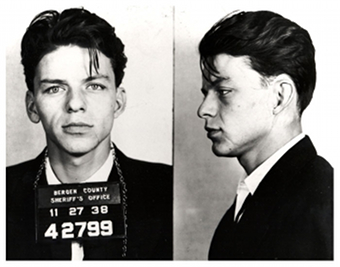
The cool ethos in American life was destined, it seems, to be shaped by bad boys and dropouts. We have a new tone set by Jack Kerouac (dropped out of Columbia), Miles Davis (dropped out of Juilliard), James Dean (dropped out of Santa Monica Junior College), J. D. Salinger (dropped out of NYU), Allen Ginsberg (dropped out of Columbia), Chet Baker (dropped out of El Camino College)not to mention the legion of high school dropouts (Marlon Brando, Frank Sinatra, Bix Beiderbecke, Gerry Mulligan, Stan Getz, and others) who never even got enough education to become college dropouts. But if Ivy League degrees were in short supply among this group, the vast majority of these individuals had an arrest, a felony, or even a jail term to their credit. Welcome to the new topsy-turvy world of the cool, where all the traditional measures of suitability and credentialing are turned upside down! Forget the diploma; show us your mug shot!
This is an extract from The Birth (and Death) of the Cool, a new book by Ted Gioia published by Speck Press. All rights reserved.
Tags:

Comments are closed.