The Jazz.com Blog
November 03, 2009 · 2 comments
Inside View of a Jazz Success Story
Stuart Nicholson looks at the inner workings of one of the most successful jazz events in the world�the annual Molde Jazz Festival. Now in its 50th year, the festival draws 100,000 fans to a city with a population of only 25,000. Below is the first installment of Nicholson�s two-part article. T.G.
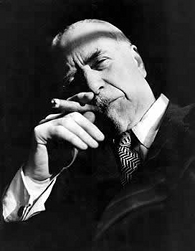
From the early 20th century until his death in 1961, conductor Sir Thomas Beecham transformed musical life in the United Kingdom. And while London still has two symphony orchestras that were founded by him, The London Philharmonic and the Royal Philharmonic, he is often remembered today as much for his mordant wit as his musical achievements.
A master of the double entendre, some of his best quips can be found in Beecham Stories, published in 1978. In classical circles in the UK, Beecham stories are traded like Benny Goodman stories in the jazz world, the only difference being Beecham was his own one man Monty Python show fifty years before the TV series. His admonishment of a cellist during an orchestral rehearsal is pure Python: "Madam, you have between your legs an instrument capable of giving pleasure to thousands - and all you can do is scratch it." He was equally unforgiving of festivals, "They are for the purpose of attracting trade to a town," he said dismissively. In many cases the latter judgment still holds true today. The challenge, of course, is on what musical terms 'trade' is attracted. How do you produce a festival of musical integrity and vision while still managing to draw the crowds?
It's the $64,000 question. With many festivals put together for the purposes of profit, there is a need to maximize ticket sales by appealing to the broadest possible constituency. The result is often a lowest common denominator approach that results in a roster of big names and safe bets at the expense of more challenging artists or up-and-coming talent'since there is a general market perception that more adventurous or lesser known musicians do not generate the same box office returns as players in more mainstream realms. One way around this conundrum is the not-for-profit festival, which is a way many European festivals are structured.
Not-for-profit festivals are possible with subsidy and in Europe it is often a mix of national, regional and local governmental grants plus an element of private sector sponsorship. They are able to attract such funding lines because, as dear old Sir Thomas presciently noted, they "attract trade." But they also bring added value. This is seen in terms of the cultural and artistic prestige a successful, critically acclaimed festival can bring town or region. It can put them on the map of Europe, enabling them to portray themselves as a desirable tourist destination or the sort of place in the global economy that that is attractive to inward investment, an agreeable environment in which to transact business and a vibrant and exciting place to live.
More importantly, not-for-profit festivals provide a degree of artistic freedom from the ubiquitous bottom line when programming. As Bo Gronningsaeter, former director of the Molde Jazz Festival and the Bergen Nattjazz Festival and currently director of the West Norway Jazz Centre and General Secretary of the Europe Jazz Network points out, "Because European festivals have public funding there's more idealism among festival organizers as they have a fixed salary," he says. "You're not in it for the money. If you have a successful festival you don't get a huge bonus, your pay remains exactly the same, but of course you have the satisfaction of creating something audiences want to see. You relate to jazz differently from a profit-orientated businessman. It's not a question of maximum profit; it's a question of making a good program and being able to make the wheels go around financially.
"We're not in the business of making money, but we have to make the books balance. There is an opportunity to aspire to aesthetic balance in the composition of the program because you're not in it for personal profit. You're actually doing it because you're interested in it, even though you're being paid less than you would be in another job!"
One of Europe's oldest and most successful jazz festivals is held annually at Molde, on the west coast of Norway. Its director is Jan Ole Otnaes, and we talked recently about the lines of funding necessary to produce a festival like his. "This year's budget for the festival was 27.8 million Norwegian Krone ($1 = 6.1 Norwegian Krone, August 2009)," Jan Ole begins. "That was made up of a number of funding lines, and, of course, ticket sales which this year amounted to 10.5 million Norwegian Krone (NOK) which represented 37.8 % of our overall budget. Then we have our restaurant and merchandizing facilities which brought in a revenue of 4.3 million NOK (15.4%). Private sponsors are very important to us, and they provide 4.5 million NOK, representing 16.2% of our budget. The balance is then made up of national funding, which accounts for 5.1 million NOK (18.3%), regional funding amounting to 1.7 million NOK (6.1%) and finally local funding 1.7 million NOK (6.1%)."
Given big numbers like these, I asked Jan Ole if there is any room for idealism when programming a festival as big as Molde'since it was impossible not to notice some headline artists, past and present, had a somewhat tenuous connection with jazz, such as Leonard Cohen on this year's festival roster. "Oh, there's room for idealism," he says with a smile. "Look, tonight we've sold almost 10,000 tickets for Leonard Cohen, and he is not cheap! But we try and make a profit and that allows us to do things with the Trondheim Jazz Orchestra, a brand new commission, for example, and various other projects we commission. So any profit we make goes back into the festival by way of subsidising some of our jazz presentations."
This is the end of part one of Stuart Nicholson's article on the Molde Jazz Festival. Check back soon for the second and final installment.
Tags:

I would have never thought of asking the government for money for a festival, how could i entice the government to do such a thing for jazz, i hope its in the next post.
The government definitely has money from our taxes. And of course it must pay for at least some of our entertainments. Good luck!