The Jazz.com Blog
February 25, 2009 · 1 comment
Sonny Fortune in Greenwich
Ralph Miriello, a regular contributor to jazz.com, was on hand for a concert by Sonny Fortune last Sunday at the Cole Auditoriium in Greenwich, Connecticut. Fortune will turn 70 in a few weeks, but the saxophonist maintains his high-octane approach to live performance, as Miriello makes clear below. T.G.
On a wet, cold, overcast afternoon people started to fill the Cole auditorium of the Greenwich Library in Greenwich for a free concert on a Sunday afternoon. The performance was part of the Peterson series of concerts given at the library, and weather was reason enough to take shelter in the warm, dry comfort of the auditorium. For those of us who love jazz it was a rare opportunity to see one of the living legends of the saxophone in an intimate setting.
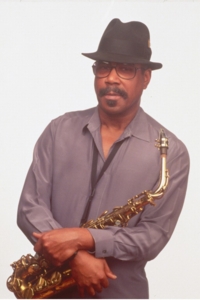
Alto powerhouse Sonny Fortune and his quartet were on hand to perform a few established standards, as well as some new material from his most recent release Continuum, to an attentive audience of about two hundred and fifty. Joining Sonny was pianist Michael Cochrane, bassist Gerald Cannon and drummer Steve Johns. Together they formed a tight, cohesive unit that allowed the powerful Mr. Fortune a backdrop to perform his vital and energetic music.
Sonny Fortune has a storied career that finds this Philadelphia native son performing over the years with jazz stalwarts such as Buddy Rich, McCoy Tyner, Elvin Jones and of course Miles Davis. These jazz masters encountered in Mr. Fortune a consummate professional whose sound was born, by his own admission, out of the work of Rollins, Stitt, Adderley, Dolphy, Shorter and, of course, Coltrane. While sounds of each of these men can quickly be identified in his playing, Mr. Fortune has melted these influences in his own crucible and from these elements has extracted his unique style, one that is at once probing and reflective.
Mr. Fortune, now in his sixty-ninth year, looked trim and fit and wore a pair of gray pants with a matching vest and a white open collared shirt. His signature wide brimmed hat was missing. The set started out with a Wayne Shorter original Footprints, with Mr. Fortune on soprano sax conjuring up the exotic sound that can be elicited from this instrument. Sonnys technique builds tension with repeating phrasings of multiple notes that he can hold indefinitely by employing circular breathing. He undertakes this repetition of ideas in a searching way that encourages the listener to pay attention to the nuances of how he is playing, rather than to the specific notes involved. When he seemingly exhausts one idea he moves on to the next, usually a tension releaser, that employs deliberative, extended concentration on one particular note. While he holds the note, he also delves into its timbre, often until it decays into a whisper.
On the second song, a self-penned piece dedicated to Wayne Shorter titled Waynishand featured on ContinuumMr. Fortune utilizes his bright brass alto saxophone. On this quick-tempo tune Fortune employs ascending and descending runs of notes in a seemingly inexhaustible ebb and flow of ideas. All the while he is gently but firmly pushed along by the piano comping of Cochrane, the contrabass lines of Cannon, and the energetic drums of Johns. Cannon was fresh from a gig with pianist McCoy Tyner the evening before and Sonny was instructing him as to what he wanted to play before the start of each song. Johns is a particularly potent player and his upbeat, smiling attitude proved infectious to Mr. Fortune. When Sonny wasnt playing his horn he would pick up a cowbell and syncopate the beat along side Johns.
On the third song of the set, Mr. Fortunes Mind Games, Johns picked up the brushes as Sonny moved to the flute. Fortunes flute revealed a gritty sound on this bouncy tune. Cannon offered an expanded solo on his honey toned, Hungarian-made bass, which demonstrated a fluid mastery of the pizzicato technique and a harmonically probing sense of improvisation.
On Duke Ellingtons In A Sentimental Mood, Fortune started out with a slow, flute improvisation that cleverly circumnavigated the songs identity, which only became familiar to the audience when he broke into the memorable melody line. He once again explored the timbre of the sounds available to him on his instrument with various breathing techniques. He accentuated each note with a tuh, tuh, tuh sound that is not as pronounced as Jeremy Steigs huffily talking-into-the-flute technique but is, nonetheless, deliberate in the purposeful way he employs his breathinessreminiscent, to me, of Eric Dolphy.
Sensing his audiences engagement with the Duke Ellington piece, Fortune followed with another Ellington orchestra classic, Juan Tizols Caravan. Done up-tempo, the song featured Steve Johns in a cacophonous display of crashing cymbals, rolling toms and punctuated bass drum beats. Johns claims his influences are Art Blakey, Elvin Jones and Steve Gadd, amongst others. and I could detect Gaddian type rolls in his extended solo work on this number. He played at all times with a broad smile across his face obviously enjoying himself with the proceedings. Mr. Fortune, this time on alto, displayed his mellifluous technique that relentlessly probed the heart of the melody with extended improvisation bursts of his firebrand playing.
After a brief intermission, where a grateful audience met with Mr. Fortune to purchase his CDs and get his autograph, the band started the second set with the tune Awakening, another Fortune composition. Here Sonny returned to the flute in an understated blues-tinged style with Cannon offering a creative solo on his contrabass.
The finale was a breathtaking display of virtuosity, kinetic energy and indefatigable endurance. Here the group took on the Coltrane classic Impressions at a breakneck speed. After the initial statement of the melody Cochran went off on an extended multi-minute solo. Canon and Johns managed the pace admirably and kept it from running off the tracks like a runaway train. When Mr. Fortune soloed on alto here he was transformed. His circular breathing allowed him to play endless waterfalls of notes in the Coltrane tradition and with that searching quality John was so revered for. It is quite entrancing to see Mr. Fortune bent over his horn and shuffling his feet back and forth in such an overt display of passion. As he continued to pour out his voluminous ideas throughout a full ten minute blistering solo, one look at the much younger rhythm section of Cannon and Johns bore witness to how physically challenging it is to play with such reckless abandon. The effect was mesmerizing and I for one felt like I had witnessed the reincarnation of Coltrane on some level. Surely Mr. Fortune was channeling the great tenormans spirit in this stunning performance and the audience was duly appreciative.
Sonny told me he was off the next day for a tour in Germany, Holland and Belgium and would be returning for a gig in his hometown Philly in about a month. When one experiences his music live, it becomes obvious what Miles, Elvin and McCoy all saw in Sonnys playing Anyone who wants to see a living legend is encouraged to check out one of his upcoming performances.
This blog entry posted by Ralph A. Miriello.
Tags:

This is a wonderful analytical report of an extraordinary musical performance. Both the Musicians and the Author should be applauded for contributing to spread the appreciation of music, a fundamental component of a nation's culture.