The Jazz.com Blog
February 04, 2009 · 2 comments
The Jazz World Loses Two Soulful Sax Masters
Two much beloved jazz saxophonists passed away in recent daysDavid Fathead Newman and Hank Crawford. There was some sad irony in this alignment of the stars: both of these artists came to the fore while working with Ray Charles, and their paths crossed on a number of occasions in later years. Ted Panken, who interviewed the duo for a Downbeat article a few years back, offers his recollections below. T.G.
At the conclusion of a forward that appeared in program notes for the compilation CDs, Memphis, Ray and a Touch of Moody and Its Mister Fathead (32 Jazz), each containing the proceedings of four 1960s Atlantic albums apiece by, respectively, Hank Crawford and David Newman, label proprietor and producer Joel Dorn offered a pithy, spot-on assessment of their place in the jazz timeline.
"If musicians had to pay royalties for using someone elses sound the way they have to for recording someone elses songs, Dorn wrote, David and Hank would be billionaires."
Often thought of in tandem because of their mutual association in Ray Charles top-shelf unit between 1958 and 1964, and various subsequent co-led projects, Newman, who died on January 20th, and Crawford, who died on January 29th, both raised in the black church, had different perspectives on their musical production.
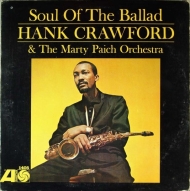
Out of Memphiswhere his generational contemporaries included George Coleman, Frank Strozier, Phineas Newborn, Harold Mabern, Charles Thomas, Booker Little, and Charles LloydCrawford was as much a devotee of the populist, Johnny Hodges-influenced style of Louis Jordan and Earl Bostic as he was of Charlie Parker. He developed a minimalist, melody-oriented, vibrato-heavy solo approach rooted in gospel and the blues (in his trademark horn arrangements, Crawford framed his alto as lead singer over a backup chorus of horns), that earned him a reputation as exemplar of soul alto, which David Sanborn, among others, adapted and stamped onto the post-70s pop soundtrack.
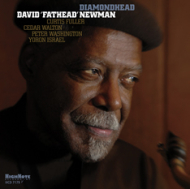
A son of Dallas, Texas, Newman, who came up with Ornette Coleman, Cedar Walton, James Clay, and Dewey Redman, was a distinctive stylist on three instruments. He exemplified the wide open spaces, make-every-note-count tenor saxophone approach famously identified with the Lone Star State, and augmented it with a tart alto saxophone tone learned directly from Parkers prime phrasing influence, Buster Smith, and a sere, piercing, prophets voice on flute. He made his share of commercial recordings, but he also liked to navigate modern harmony and contemporary rhythms, as documented on seven excellent recordings for the High Note label made between 1998 and 2007.
Still, the singular sounds that Newman and Crawford conjured, as identifiably unique to them as their fingerprints, will comprise their mutual legacy. Though theyre not the last of the line of African-American saxophonists raised in the exciting times directly following World War IIwhen interstates, jet planes, mall culture and television did not exist, when institutionalized segregation did, when people from different regions did things their own waywho internalized and never strayed far from the elemental principle that the horn is an analog for the human voice, the conditions in which they formed their sensibility are long past. In that light, there is a certain poignant symbolism in their passing on during the first ten days of the Obama Administration.
Both men learned the fundamentals from band teachers (Crawford from Matthew Garrett, Dee Dee Bridgewaters father; Newman from J.K. Miller, who dubbed him Fathead for his penchant for memorizing music instead of reading it), and, while still in high school, began to earn a living from music. Bebop was our classroom, the study period, recalled Crawford, born Bennie, who took his stage name from Memphis altoist Hank ODay. We'd practice it all day at each other's house, but when we had to go out and play, we'd play a lot of blues. I walked bars and laid on my back on the floor with people dropping coins in the bell.
Like Crawford an early devotee of Earl Bostic, Newman became a convert to the word of Bird after hearing Koko. As a teenager, he played with bebop saxophonist Red Connor, a local luminary whose sound was more or less between Wardell Gray and Dexter Gordon, and maybe even Don Byas." A frequent third horn was Ornette Coleman, then a tenor player. Ornette would come and play on tenor saxophone, and I was on alto, Newman told me. We would play all of Birds tunes, and we both knew his solos note for noteas well as Sonny Criss and the other alto players. After we finished playing Bird, wed do our individual thing, and Ornette would go to Ornette!
We'd play bebop in jam sessions, and there was a club in South Dallas called the Log Cabin where we played together for the door. But you couldnt earn a living playing bebopthe younger people would dance to anything we played, but the older generations, from the thirties on, didnt take too much to it. So in order to make any kind of money playing music around the Dallas area and Texas, you had to play the blues. T-Bone Walker was from Dallas, and whenever he came through town, I would go on gigs in bands that Buster Smith put together to back him up. Lowell Fulsom lived in Fort Worth, and I'd work with him, as well as [pianist] Lloyd Glenn.
At the time, Fulsom was featuring an alto saxophonist named Ray Charles who, Newman recalled, also sang in the styles of Walker, Charles Brown, and Nat Cole. I have to think Ray liked my playing, because when he left Fulsom he started using me on one-nighters around Houston, Newman told Charles biographer David Ritz in the program notes for his 2004 homage, I Remember Brother Ray. I became a regular and I also became a friend. I joined his group in September 1954, playing baritone. When Donald Wilkinson, a great Texas tenor man, left the band, I asked if I could play the tenor book. Ray agreed. Fact is, Ray encouraged me to explore all the different reeds, including alto and flute. He became my biggest booster.
Crawford joined the fold in 1958, replacing Leroy Cooper on baritone sax (Cooper, like Newman an alumnus of Dallas Lincoln High School and a member of Smiths cusp-of-the-50s combos, passed away on January 24th), but he soon advanced to arranging chores. I started trying to write a little bit when I was in high school, and in Memphis, almost every band that you played with was eight pieces, five horns at least, that gospel type of sound, he told me. There was a route of, say, Memphis, Dallas, Houston, New Orleans, that most road bands covered at that time. When they came through Memphis, theyd play at places like the Palace Theater, the Hippodrome, and Club Handy in Mitchell's Hotel. One of the good things about that era is that we got a chance to see a lot of the people who we later got to know, singers like Percy Mayfield, but instrumentalists, too. Sometimes they'd come through without a full band and pick up locals, and we would play for certain entertainers. Really, it was an era of everything going on. You had tap dancers, comics, shake dancersshows. We played shows.
When I went to Tennessee State, I formed a little group called the Jazz Gents. Wed play locally, and wed get to Louisville, Kentucky, at the Top Hat, and then go up to Buffalo at the Pine Grill. During the summer, wed play the southern route. I had some great teachers at Tennessee State in Nashville, which is where I started studying saxophones and reeds. W.O. Smith was one of my instructors; he's a bass player who was on the original recording of Coleman Hawkins' Body and Soul. Frank T. Greer was my band director, when Florida A&M and Tennessee State started doing the hundred stepsyoud be running down the field almost. I was fronting the campus band, a 16-piece bandI was writing then.
Id heard Ray'Hallelujah, I Love Her So' and 'Drowning In My Own Tears'and I was impressed by the sound of his small band. I heard something about David then; the solo he did on Ain't That Love knocked me out. Also, a couple of my buddies had already joined Raya trumpet player, John Hunt, and a drummer, Milt Turner, both from Nashville. Anyway, Ray came through Nashville to the Club Baron. I think Leroy Cooper had taken a leave of absence, and they suggested to Ray that I would be the person to play that part. I went down, didn't even audition. I don't think there was even a rehearsal that day, because it was just quick notice. I went to the campus band-room, talked Mr. Greer out of the baritone, told him what it was for, so he agreed.
"I remember the band busat the time, it was a called a wiener, red-and-white, long, airport stylepulled up in front of Brown's Hotel. I remember David getting out with this grin on his face. He kind of bowed and nodded at me, and I nodded back. That was the first time I actually saw him. Anyway, I played the gig that night, and that was the end of that. Three months later, I got a call from Rays manager to ask if I wanted the job. I never thought I'd stay as long as I did. I was glad, because I felt the music, and worked a lot, and saw the world. Ray was getting into his thing. He was really beginning to blossom at that time.
Joining the band with Ray was an avenue for me to do a lot of things. To be honest about it, Ray and I clicked right away. I was directing and doing most of the writing for the small band, and when he got the big band I went to alto and got the job as music director, which I kept for three years. So I was with Ray Charles 24-7. He would call me to come over to his house, and I would sit there all day and sometimes all night while he would dictate and I would notate. Before Ray, I loved the sound of James Moodys Octet, and I liked Quincy Jones, Ernie Wilkins, Frank Foster, and EllingtonId take a bit from each arranger, but basically I was being myself. I think I found my own voice on the saxophone, too. I've always been a melodic player.
As Crawford put it: The secret of survival in this business is identity. You can play all of the notes, and there are a lot of musicians out there now, man, that can playbut nobody knows who they are. People buy identity. If they don't know who you are, you don't really sell. I've studied, man, and I can get off into some pretty hard bebop. But that's not just me naturally. I just play what I feel naturally, and it ends up that I'm better being myself. I'm not concerned about changing with what's in. For me, playing simple is almost a naturalI found my sound, and I'm going to stick to my guns. In this business, there's only one of one. Nobody's going to come to listen to one of my concerts or gigs to hear me sound like somebody else. That's the biggest mistake I can do, for somebody to come and pay $20 or $25 and come in the door, and here I am on the bandstand trying to be somebody else.
Both old masters followed that individualist dictum throughout their long careers, and it served them well.
This music is an incredible gift, Newman told me. It doesn't really come from me or from us; it comes through us. So I want to explore what I can do in all the different areas of music, and not necessarily stick to a certain form. I want to expand my mind and expand the music as it comes through me and as I feel it. I like to bridge the generations, because music is moving as time moves on. You put your particular touch onto it, your stamp, your feeling, and see what comes out.
David Fathead Newman links:
Ben Ratliff
Tim Malcolm
Jon Thurber
Newmans web site
Hank Crawford links:
Bob Mehr
Bruce Weber
Fresh Air interview (from 1998)
This blog entry posted by Ted Panken.
Tags:

beautiful summation of two admirable lives. i believe i saw both guys playing with Ray about 1961, at a strange warehouse club in Chicago. never met Crawford, but Newman walked into my bookstore once a decade ago, and stayed to chat awhile. what a grand gentleman he was. pride of my albums is a Newman-autographed copy of The Genius of Ray Charles!
Hank Crawford. Sweet music. A big loss. But his sound will live on forever.He really could make his sax speak, and with such elegance,and yet earthiness,and deep soul. There was no one to match Hank crawford.An under rated player,and one of the highest order. Rest in peace Benny.