The Jazz.com Blog
April 13, 2009 · 1 comment
The Borough Where Jazz Lives
Tim Wilkins edits the Encyclopedia of Jazz Musicians here at jazz.com, and regularly contributes reviews in this column. Below he calls attention to a jazz festival that is still thriving, while others fall by the wayside. What can the rest of us learn from the CBJC, a jazz advocacy group founded in Brooklyn ten years ago, and still going strong? T.G.
2009 sounded a death knell for major jazz events in New York City: with the IAJE bankrupt and the JVC Jazz Fest dead in the water, it has looked like the first year in decades the "capital of jazz" would go without an event to draw fans and musicians from around the world.
But wait—just across the river, in Brooklyn, there is a jazz festival which is doing just fine, thanks. Arts entrepreneurs could learn a lot from this scrappy fest, which is celebrating its tenth year of keeping the jazz flame alive in one of the places where the music was born.
Some call Brooklyn "the borough where jazz lives," and for years this meant Central Brooklyn, a swath which runs east from the Brooklyn Bridge through Fort Greene, Flatbush, and Bedford-Stuyvestant. Like Manhattan's Harlem and San Juan Hill, Central Brooklyn was a major destination for southern African-Americans moving north between the World Wars. The borough has been home to, among others, singer Billie Holiday, drummers Max Roach and Roy Haynes, trumpeter Freddie Hubbard, bassist Leonard Gaskin, brass player Kiane Zawadi and pianist Randy Weston. Gaskin, Roach and Weston were part of the ambitious group of teenaged musicians who in the early forties made seminal contributions to the emerging language of bebop at clubs like Monroe's Uptown and Minton's. As teens, Weston and Roach would also hang out with older musicians like bandleader Andy Kirk at social clubs, to glean the wisdom that only comes from a life devoted to jazz. Central Brooklyn is one of the few places in America where young musicians can still learn in this way from their elders.
But San Juan Hill, where Fats Waller and Thelonious Monk once strode, was razed in the sixties, and Harlem's legendary ballrooms are gone too. Central Brooklyn, however, is still here, and many of its jazz legends still live in the neighborhood. Others, like Haynes, have moved on but keep close ties to Brooklyn and consistently turn out to support the festival, one key to its manageable budget and success.
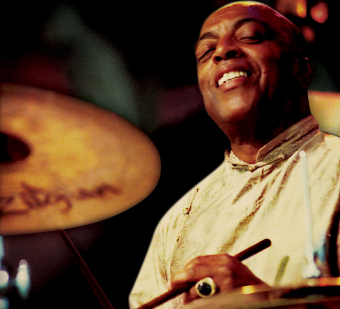
"Me, here, in Brooklyn, 2009 – it feels like a dream!" said the ebullient Haynes, star of the festival's gala concert at the 3,100-seat Brooklyn Tech auditorium on April 4. "I married a woman from Brooklyn, and all four of my kids were born here!" Haynes was fresh from Europe, where he celebrated his 84th birthday by being named a Commander of Arts and Letters by France, that nation's highest honor in the arts.
Haynes's son, Craig, also a top jazz drummer, emerged from the wings to remind his dad that only he was born in Brooklyn—his brothers and sisters were born in Queens—but never mind. Spirits were high, Roy clearly felt like he was coming home, and Brooklyn was happy to have him.
The festival is a labor of love for the core group of committed volunteers who rallied ten years ago to celebrate Billie Holiday's birthday on April 15th. Churches, businesses and elected officials soon got on board, and created the Central Brooklyn Jazz Consortium (CBJC). A key goal for the CBJC is to make jazz and its creators accessible to local youth, who know hip-hop better than the unfamiliar sounds of swing and bop. "The world changed; the need became greater for a new generation of listeners," said Alma Carroll, one of the founders. "We came together to plant the seeds, and finally the acorn started to grow."
And so it has. Since 1999, the festival has grown into full month of daily performances and workshops. This year, they even have live internet broadcasts. All events are held at neighborhood clubs like Jazz 966, Sistas' Place and Rustik Tavern, churches, and schools. Tickets range from free to ten dollars—the top ticket price, for Haynes's benefit show, was $40, ten for students.
The festival also grants awards to celebrate the achievments of Brooklyn's jazz veterans, like Cecil Payne and Cedar Walton, and younger players who live there, like pianist Robert Glasper, trumpeter Maurice Brown and this year's winner of the "young lion" award, drummer E.J. Strickland.
Haynes's group provided the perfect keynote to the festival: his "Fountain of Youth" Band features Philadelphia native Jaleel Shaw on alto and soprano saxophone, Miami's Martin Bejerano on piano, and New York native David Wong on bass. The band's eclectic repertoire ranges from the straight-ahead bop of Monk's "Well, You Needn't" to guitarist Pat Metheny's "James," passing through deceptive polyrhythms on "My Heart Belongs to Daddy" and "Love For Sale."
As a bandleader, Haynes displays the generosity and attentiveness which has made him drummer of choice for everyone from Sarah Vaughan to Charlie Parker. He enjoyed trading guajeo rhythmic riffs with Bejerano. In fact, there was a lot of interaction onstage, which sets the Fountain of Youth apart from other "Living Legacy" bands, which group jazz veterans with mostly deferential young players.
Haynes joked with the audience and cajoled his younger bandmates into finding their own voices. "The ladies will love it, Jaleel, c'mon!" he said, as he spurred Shaw to pick up the soprano sax. Shaw did, and the result was his best playing of the evening, as his own thoughtful timbre and phrasing emerged out of the shadow of hard bop.
The Fountain of Youth band also offers evidence of how jazz, and Brooklyn, are changing: of the younger players, only Shaw is African-American. All play with assurance and maturity beyond their years.
Vocalist Vanessa Rubin, a Cleveland native who spent formative years in Brooklyn, offered an outstanding opening set with her trio of Danny Grissett on piano, Quincy Davis on drums and Richie Golds on bass. She teased the ladies in the audience that sometimes, when it comes to love, "Once is Not Enough!" The group offered thoughtful renditions of Antonio Carlos Jobim's "Corcovado" and two Rubin originals, "Like An Old Song," written in a driving 5/4 rhythm, and "Never Let Me Go." In a highlight of the evening, she joined Haynes's band onstage for masterful encore of "All The The Things You Are."
Poet Amiri Baraka contributed philosophical and comic counterpoints to the music, first with an extended meditation on the hopeful arc which spans from "Pres"—saxophonist Lester Young—to "the Pres," Barack Obama. Haynes invited Baraka back to the stage at the end of the evening, where he brought the house down with what he calls "Low-Kus," one-sentence Zen koans on Black life: "If, in a world of funk, Elvis Presley is king, what is James Brown—God?"
In all, the evening was a fitting celebration of the deep roots of jazz in Brooklyn, which was both open to and encouraging of the music's future. The generous spirit in the house was infectious. Because of this, the music was better than what you might hear, even from these same performers, at a Manhattan nightclub for two to three times the price.
I must say I was surprised at Brooklyn Tech by the absence of my colleagues from the jazz press. Critics who would turn out to shows in Manhattan by Rubin or Haynes, who was feted by the Jazz Journalists Association last spring, were not there. I won't embarrass my friends by telling you how many of them live in Brooklyn. I will just say, as Roy did, "C'mon!"
In this case, their musical loss was my gain, but the Central Brooklyn Jazz Festival deserves to be more than a local treasure. Organizers are already at work on next year's lineup, which may include saxophonists Sonny Rollins and Pharoah Sanders. With world-class performances like these at neighborhood prices, I can only hope the festival will continue to grow and flourish.
If you missed Haynes's show, don't fret: there is plenty of music to come before the month is through. Flutist Dave Valentín will perform on Thursday, April 16th, Rubin will perform again with saxophonist Jeff King at Solomon's Porch on April 17th, after which you can head over to Jazz 966 and catch saxophonist Houston Person. On April 19th, Zawadi will host an evening to honor the recently departed Freddie Hubbard and pianist Ronnie Matthews, with, among others, James Spaulding, Louis Hayes, George Cables, Dwayne Burno, and Kenyatta Beasley. Head over to www.cbjcjazz.org for all the details.
One of Mayor Bloomberg's sharp aides might notice these goings-on across the river and realize the perfect way to stimulate the local economy would be to sponsor a city-wide jazz festival to rival other all-city festivals, like the Montreal International Jazz Festival, which regularly attracts more than 2 million visitors.
New York has plenty of "shovel-ready" musicians who would be happy to join in and put jazz on every streetcorner of the city. Working with partners like the CBJC and Loren Schoenberg's Jazz Museum in Harlem, an all-city jazz fest could revitalize local venues and audiences in every borough.
Musicians, take note. If you want to send Bloomberg a message, if there's a blackout this summer, which in this era of cutbacks there may be, take your axes and shovels out into the streets and start to jam. We don't need to wait for the city to give us permission. Until then, we'll have to rely on the CBJC chairman Jitu Weusi and his dedicated colleagues to bring the best in jazz to Brooklyn every April. As Weusi likes to say, We'll put together, and you just come out and enjoy it!" I, for one, will, and I hope others will, too.
This blog article posted by Tim Wilkins.
Tags:
Right on Tim! Your paradigm works for many cities in this country. The problem with most promoters is that they don't understand hype and social media. The other problem is that musicians have a hard time with the pro bono outreach, especially to student musicians. I know we need to get paid, but we also need to be helping to create music consumers, jazz consumers, of the future. The schools aren't doing it, so it is kind of up to us. Find a school or a group in your community and volunteer a couple of hours. One of those kids might come to a festival you play or buy your downloads someday.