The Jazz.com Blog
April 07, 2009 · 0 comments
The Next Young Lions: 6 Players Who Could be Future Stars
Jazz fans are restless types, and always looking for next new thing. Jazz.com contributor Brian Dwyer, who recently wrote in the column about Herbie Hancock's visit to New Delhi, now offers his thoughts on some heralded younger musicians. He highlights a half-dozen exceptional talents, and tries to determine which of them has what it takes to achieve jazz stardom. T.G.
With communication as widespread as it is, and the world becoming smaller because of it, the young gems of the jazz world that begin to shine early are far less easily concealed than, say, 50 years ago. Young talents can be paraded on morning television programs before they feel at home in the clubs, and before they meet the veterans who will nurture and guide them.
I was inspired, even tricked, by the 14-year-old voice of Simone Jehangir. It should have belonged to someone twice her age. Jehangir is part of Goas up-and-coming jazz scene in India, and her voice carries an air of maturity and a well-developed grace. She had me thinking about what it takes to develop at a young age, and about the signs, as well as some of the hurdles, of early development.
Remember that Herbie Hancock started out with a spot at age 11 playing a Mozart piano concerto with the Chicago Symphony Orchestra. What spurs on the natural, or even the savant (beware the label prodigy, which some take to connote a lack of expression)? Does it take an event like five-year-old Roy Ayers being handed his first pair of mallets from Lionel Hampton to lay the tracks to a historic career? Mary Lou Williams taught herself piano by age five and did a good job from there. But then there are always the cases like that of Craig Hundley, hailed as the future of jazz at age 14, who fail to live up to the hype and expectations.
Heres the nature versus nurture of it allthe patterns in six resumes of potential future jazz stars.
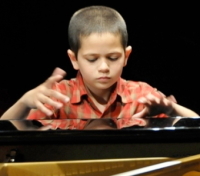
Ariel Lanyi
What comes out of 11-year-old Ariel Lanyi of Jerusalem may well describe what its like in the mind of anyone that agethoughts are interspersed with a few moments of clarity during the muck of development. At this point, the improvisations of this pianist are likely to stem as much from his unbridled childhood curiosity as they are from the jazz recordings hes listened to and studied; its far too early to really say anything definitive except that at the moment his classical training, which began at four, is the basis of his experimentations with jazz.
There are countless others around the world who show promise, for which Lanyi is just one of them. The test comes in the sponsorship, which jazz giants publically support which kids as the future of jazz. If nothing else, Lanyi has his membership to a group for local avant-garde jazz musicians, which begs the question: Can a kid so young really know the difference between avant-garde and flapping your hands up and down?
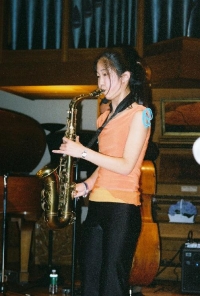
Grace Kelly
At age 17, Grace Kelly has already hit the spots that most musicians spend years trying to get to backstage. The Boston native has done Jazz Standard with Frank Morgan, Dizzys, Birdland, and a stint with Dave Brubeck. Her mother was the one, years before that when Grace was five, that had her learning classical piano and listening to Stan Getz. Since the fifth grade, the sax player has been performing around Boston clubs with her own band or frequently as a guest to more prominent acts.
Shes been in the musical care of, among others, her teacher Lee Konitz (who worked on her fourth album Gracefullee) and Phil Woods. Of course some of the accolades (most in the last four years or so) are because of age, but Kelly has a knack for improvisation and a strong sense of rhythm.
Onstage, she cant stand still. Her signature move might be her dancing, crouching to every note. She grinds her phrases over and over againshe seems always to be trying to reach a high where, excuse the clich, she gets lost in the music and her steps and notes become intertwined. She showed early on a smooth way of phrasing, somewhat like Getz's, that has more recently tended toward a syncopated funk, and a smart control of shrill pitches in a James Carter way. For Grace Kelly, her talent has proven to be a steppingstone to meeting and playing with the legends that have undoubtedly influenced and cared for her.
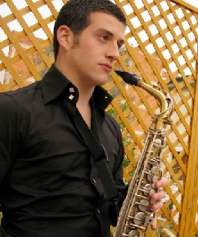
Francesco Cafiso
This Sicilian alto sax player is a curious case of relatively huge fame and huge pressure very early. After hearing him at an Italian jazz festival in 2002, Wynton Marsalis (the name comes up everywhere as perhaps the word on young talent) invited Cafiso to join his European tour at the age of 14, just five years after he first picked up his alto. He has become somewhat the spectacle as of latea protg of Marsaliss, yet still somewhat exclusive to Italy and the nearby European clubs where he plays with his own bands. However, he was invited to Obamas inauguration to perform with Marsalis and the Jazz at Lincoln Center Orchestra.
Like any curator of bop, Cafiso, 19, arranges his solos with technical speed and a definite structure, building up to a climax and cascading down again, much like a good storyteller should. Despite all of his live experiences, hes still studying in a positive sense. His idolization of Bird and Coleman Hawkins is the base he needs to further his exploration and find a defined voice for a boy whos been a man for some time.
Eldar Djangirov
Known simply as Eldar, his right to the single name of the famous came from such accomplishments as playing Carnegie Hall at age 19. His mother, a classical pianist, imparted to him a precise and clean style, while his father served as the supplier of records. His fathers affinity for virtuoso players such as Art Tatum and Oscar Peterson seemed to register with Eldar. But while Tatum always focused on what were, at the time, popular standards, Eldar can break out in salsa or rock rhythms.
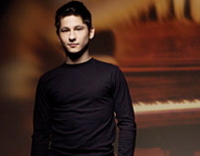
The Kyrgyzstan native made his home in Kansas City at the age of 11. It would be only three years before hed release his first album. In the meantime, he became the youngest musician (12) featured on Marian McPartlands NPR program Piano Jazz. He may very likely have the heart of a young rocker: in the world of Eldar, louder and faster is just more fun.
Eldar is partly a sign of the timesour era of the attention span endangeredin his affinity for switching between styles in an instant. Whereas older players might linger in the spaces between their notes, priding themselves on their pacing, Eldar seems enlivened when he can jump from modal to stride. He may well become the role model for even younger players once hes developed his own personality.
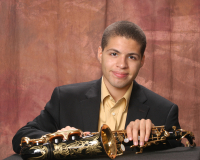
Alex Han
The defining rite-of-passage came for alto saxophonist Han last year at the experienced age of 20, playing throughout Europe with bassist Marcus Miller in a tour that seemed well-suited to Hans R&B vein. Id peg him as a seasoned listener to the Kenny Garretts and Joshua Redmans of a slightly older generation, and the other sustainers and enrichers of the post-Coltrane sax tradition.
His nurturing began at age 12, just four years after he started on the instrument (at his parents urgings), with encouragement from Paquito DRivera. Two years later hed released his first album and had made himself a name. Hes stayed true to the path of the Young Lions. More so than most of the young class, Alex Han should be known for his patience, his balance of the long, trembling bellows with busier phrases. For Han, the issues of age and youth already begin to lose their significance now that hes aware of his own mature style.
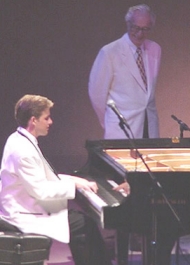
Taylor Eigsti
Whispers of Eigstis name, though probably mispronounced, began even when he was a fifth grader. Now at 24, hes a mature musician, successful in breaking away from the image of himself at 13, when he was asked to play with Dave Brubeck. Like many of the others, his playing began early, in his case at four-years of age. Unlike most prodigies though, he quickly became the educator himself, joining the teaching staff at the Stanford Jazz Workshop at 15.
Eigsti has nestled himself into a contemporary style, with an emphasis on compositionthe kind of long winding escalators marked by alternating rhythms. The hardest thing for a prodigy may be to grow up and take the risky step backwards out of the spotlight, the TV interviews, to join most 20-something musicians. Yet it is clear that his six albums and two Grammy nominations have garnered some respect from many in the jazz community, at least enough for him to be called a colleague rather than a prodigy.
This blog entry posted by Brian Dwyer
Tags:

Comments are closed.