The Jazz.com Blog
May 13, 2009 · 5 comments
Claude Thornhill at 100
More than twenty years have elapsed since New York audiences have been able to hear the repertoire of the great Claude Thornhill band in live performance. When a centennial concert was held a few days ago, critic Will Friedwald juggled his calendar to make sure he was on hand. T.G.
Star date: May 8, 2009. For the previous six months, I knew exactly what I would be doing on this particular night. That day marked the opening of the new Star Trek movie, and there was no way I could miss that. Then, at the last minute, when I was about to buy a pair of tickets at Fandango.com, I learned that there was, in fact, something even more important than Kirk and Spock and Bones McCoy. It turns out that very same Friday evening, the trumpeter and educator Kevin Blanq was mounting an ambitious concert in tribute the legendary Claude Thornhill Orchestra.
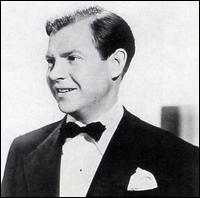
Perhaps even more than Star Trek, Claude Thornhill and his amazing staff of orchestrators (most importantly Gil Evans) and soloists saw the future and boldly went where no musicians had gone before. The band, which made its mark throughout the high years of the swing era and the early postwar period, cast an enormous influence on the shape of the jazz to come. Its most prominent progeny was the ground-breaking Miles Davis Nonet of 1949-1950. Yet when the Nonets recordings were issued on a famous album called The Birth of the Cool, most of the musicians involvednotably longtime Thornhill-ites Gil Evans, Lee Konitz, and Gerry Mulliganwere aware that they were merely developed ideas that Thornhill and Evans had already given birth to.
The Thornhill band was cool long before the term was used in jazz, at least in the modern sense: from the beginning, the pianist-leader was much more interested in contemporary classical music, than, say Goodman or Miller. This gave the band a cool sonority, enhanced by the use of orchestral colors rarely heard in swing bands, such as French horns, bass trombone, arco bass, and tuba, and unusual combinations, like a six-piece reed section of four standard tenor clarinets plus two bass clarinets. The interest in contemporary European music spilled over into a sympathy for the emerging modern jazz of the period, and Thornhill commissioined arrangements by his Evans of seminal bop works by Charlie Parker, Dizzy Gillespie, and Miles Davisall, ostensibly, for dancers.
The band was prized by musiciansit had the rare and then somewhat useless honor of an endorsement from the even-less-known Thelonious Monkand music buffs. But, unlike Glenn Miller, who was one of Thornhills sponsors and mentors, Thornhill never caught on in a big way with the general public. Thornhills reputation could still use some bolstering: there hasnt been a full-length concert of his music in New York at least since Gary Giddins and the American Jazz Orchestra saluted him in 1988. That was why I had to miss the opening of Star Trekby that reckoning, there wont be another Thornhill event until 2030and quite possibly the Klingons will have phasered our planet into oblivion by then.
Mr. Blanq, for his part mounted an excellent recreationit was authentic to the point where the director almost never talked between numbersrather the tunes were mostly linked with piano interludes, just as Thornhill himself did back in the dayand made the indirect point that this is where Miles and Gil got the idea for connecting the individual songs together the same in Miles Ahead, as well as the way that Miles performed his sets in one long conjoined, uninterrupted number throughout his electronic period.
Mr. Blanq somehow managed to put together a full 18-piece band, including two French horns, plus an additional three flautists who joined in on certain arrangements. The other guest was vocalist Molly Ryan, who totally nailed the essence of a 40s band canary on Sunday Kind of Love. (This was the closest thing Thornhill had to a hit. The song was originally published by Thornhills one-time employer, Louis Prima, who once famously introduced the pianist on a record as Baboon-Face Thornhill.) Many of the members in Mr. Blanqs orchestra were student players and recent graduates from Mr. Blanqs tutelage at LaGuardia High Schoolmost of whom probably werent around at the time of the AJO concert 21 years ago. He also brought in three ringers: sax doubler Mark Lopeman (who works regularly with revivalists Vince Giordano and David Berger), classical clarinetist Paul Garment (son of jazz advocate and macher Leonard Garment), and pianist Jim McNeely of the Vanguard Jazz Orchestra.
Today we mostly remember the Thornhill band for its prescient embrace of modernism, but at the time, most of those who danced to the band in ballrooms across the country mainly knew it as a piano-driven ensemble in which most of the melodies were carried by Thornhill himself. There was a tradition of cocktail piano big bands throughout the swing erafamously Eddy Duchin and Carmen Cavalleroand Thornhill, to a certain extent, appealed to the same audience, albeit in a considerably hipper and more musical fashion. Mr. Blanq should be commended for including a lot of the bands bread-and-butter numbers, which transformed pop tunes and standards, such as Lover Man and This Time into elegant keyboard concerti. Both Mr. McNeely and pianist Alex Smith expertly recaptured Thornhills touch, which to todays ears sounds like a mixture of Count Basie, Frederick Chopin, and even Floyd Cramers Nashville slipnote style piano.
In addition, Mr. Blanq called a few classical adaptations, such as Gil Evanss ball-busting arrangements of La Paloma and Tchaikovskys Arab Dance (the two were originally issued back-to-back on a 12 Columbia 78 RPM single). And there also were the boppers: Yardbird Suite (then still known as What Price Love), Anthropology, and Illinois Jacquets Robins Nest. He threw in a raft of rarities, including a remarkable, unrecorded Evans chart of Moon Dreams, which utilized a flute section and overall has more in common with the original Glenn Miller AAF chart than Evanss later free-style interpretation for the Davis tuba band. In a couple of cases, Blanq wrote in a trumpet solo for himself in the vocal spot, in place of the original boy crooner, as on I Knew You When, although on the jivey (and drive-y) Sunday Drivin he essayed the rhythm vocal himself.
Surprisingly, Mr. Blanq omitted Thornhills theme song and most famous composition, Snowfall, and in general concentrated on the slower pieces, playing them with appropriate subtlety and the attention to nuance and shading that they need. Still, I wouldnt have minded a few of the bands hard-hitting and faster flag-wavers, like Busters Last Stand and the almost frighteningly avant-garde Portrait of a Guinea Farm.
In one of the few announcements that Mr. Blanq did make, he told us that he hopes to keep the project going, to give other performances, even beyond the centennial year. Hearing the music live caused all of us present, including Evans protge Maria Schneider and bopster singer-songwriter Bobby Dorough, to re-think a lot of our positions on the band. For instance, the Thornhill band is too-often briefly mentioned in biographies of Gil Evans as but a mere incubation for the arranger (although he was already in his 30s at that time and no novice). After this concert, it seems equally valid to feel that the Thornhill period was the high point of Evanss career, and what he later achieved with Miles Davis and his own band was a mere afterthought.
The concert was actually held not in the big room at Symphony Space, but in the more intimate Thalia Theatre, where it was possible to hear every remarkable detail that Mr. Blanq, Mr. McNeely, and company brought out in the music. Yet, as I remembered on the way out, this venue was recently re-named in honor of a famous Hollywood actor-director-arts patron who sponsored its restoration: It is now known officially as the Leonard Nimoy Thalia. Thus I can only assume that Mr. Spock himself probably wont mind if I wait until the second day to go see the new Star Trek.
This blog entry posted by Will Friedwald
Tags:

Thanks so much for this great write-up on Claude Thornhill, who has indeed seemed in danger of becoming a footnote to the Gil Evans story. Wasn't "Snowfall" somewhat of a hit for Claude back in the day? Anybody wishing to delve into his music should check out the 8 CDs released by Hep (most if not all still in print), which cover the band from 1941 up to 1953. We'll certainly be celebrating the CT centennial here at WFIU--he was born and grew up just down the road from here in Terre Haute. Much appreciation again for this salute, and glad to hear that Mr. Blanq hopes to give future performances.
You will be interested in my article on singer Buddy Hughes and thornhill at http://www.dixieswing.com/vol5.pdf He sang with Thornhill and was on the flipside of "Sunday kind of Love"
I also love Claude Thornhill's music, especially the ballads: those thick chords created by French horns seemed to be suspended in the atmosphere while Claude played the delicate piano ruminations which he called "the lace on the gingerbread." It's hard to imagine a Thornhill concert without "Snowfall," one of the most gorgeous arrangements ever created. (In addition to Mr. Prima's sobriquet, Claude was once referred to by a nearsighted hotel clerk as "Mr. Toenail." Luckily, the bandleader had a wild sense of humor and thought that was hilarious.) As for the perceptive and eloquent Will Friedwald, may he live long and prosper.
It's always amused me that the original title of Claude Thornhill's theme, the beautiful and atmospheric Snowfall, was A Fountain in Havana.
Claude Thornhill, along with Boyd Raeburn (similarly modern, with a very different style), were just a bit too early to have become household names. In the case of Thornhill, I don't know that any other big-band leader came close in terms of sheer beauty of sound. "Snowfall" is a copyrighted chart, with current ownership rights to performing the original uncertain, I suspect this is why they didn't play it. Bob Knack, I am a Thornhill fanatic; do you have contact inforamtion for Buddy Hughes? I can explain why offline...