The Jazz.com Blog
May 16, 2009 · 1 comment
Nat Hentoff on Jazz: Bringing Jazz Back into the Schools
I might consider calling Nat Hentoff the dean of jazz writers, but that would only give a small flavor of the scope of his contributions to the public interest, which often cut to the quick of the key matters of our times. Even when he writes about jazz, he shows this same tenacious grasp of the big issues that impact the overall health of the art form.
Hentoff's recent articles here include his account of a rare event that brought together Wynton Marsalis and Sandra Day O'Connor and a report on the Jazz Foundation of America. Now he looks at new ways of improving jazz education in our schools, an endeavor that may be the single most important step in ensuring the long term vitality of jazz in its land of origin. T.G.
With Charles Mingus gone, my oldest living close friendin and out of jazzis Quincy Jones. Soon after I started as New York editor of Down Beat, I covered several record sessions where Quincy was among the arrangers. I was struck by the openness, clarity and swing of his scoresreflecting his personality. Later, to my surprise and delight, he entered my daughter, Jessica Day, into the jazz canon by writing "Jessica's Day," which was recorded by Dizzy Gillespie and others.
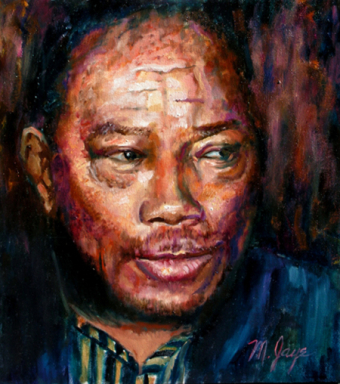
Now, among his global humanitarian and music projects, Qas he is called by hundreds of his friendsis deeply involved in bringing music back into American schools. Because of the No Child Left Behind Law, and the school boards and principals who fearfully implemented it, music has been among the first budget cuts because of the grim amount of time now consumed by testing for reading and math tests, and testing again.
Q has a 12-month plan of very specific action stages he's working on with the Quincy Jones Musiq Consortium. As they evolve in real time, I'll keep you informed. But, to underscore how music can energize a schoolfrom elementary grades onI've found a story which serves as a swinging example to educators, foundations, corporations, and those philanthropists for whom jazz long ago became an essential, enlivening part of their own lives.
I'm grateful to Carrie Melago, a staff reporter for the New York Daily News, for her story on April 28th, "Kid Strikes Up P.S. Band." The principal at Public School 37 in the borough of Queens, which was home to Louis Armstrong and Dizzy Gillespie, among other jazz icons, and where Jimmy Heath now brings listeners with his new big band, ended the music program more than a year ago. He couldn't afford it.
One of his more obstreperous students, Paul Sherman, was acting up last December, until a parent coordinator remembered that he plays piano and told him to put music to "The Pledge of Allegiance." His playing of it became a morning routine. Paul, a sixth-grader, asked if he could put a band togther, and Carrie Melago reports, "About a dozen kids meet at lunch and after school to practice a variety of songs, from R. Kelly's 'I Believe I Can Fly' to Kevin Rudolf and Lil' Wayne's 'Let it Rock.'"
Quincy keeps trying to get me to listen to some of the rappers many of whom he knows so I can understand their impact on the young. Thus far, I'm a poor student of his, but Paul Sherman's combo "has performed at a district-wide concert. . . and the school's multi-cultural festival. Next up is career day and graduation."
Says Paul, the leader of what is now known as the Cynthia Jenkins School Band: "Music makes this school more alive. The school is better with music in it."
Agreeing, Assistant Principal Cheryl Jones emphasizes: "Seeing him doing this is a wonderful thing. It adds dimension to the school."
During my six years long ago at the Boston Latin School, which was founded in 1635, jazz was unknown (except for by me). I did play clarinet in the school's marching band and even became a second lieutenant, and went on the road with the group. Althought we didn't know how to make John Philip Sousa swing (this can be done), it was exhilarating to be part of the collective force of my bandmates.
These days, at P.S. 37 in Queens, Carrie Melago reports that "Kenneth, 11, hadn't displayed any interest in music until he came to the school and joined the band two months ago. He took so quickly to the guitar that his mother, Kenya Savage, scrimped to buy a used one and happily listens to him practice at night." Also, she adds happily, "He stays off the video games."
But what happens when Paul, Kenneth, and the other members of the Cynthia Jenkins School Band graduate? Leader Paul Jeffries is working with the younger kids in the combo to to enable them to carry on. Importantly, despite budget problems, Carrie Melago adds a rousing chord: "Administrators are hoping to have a more formal music program by Fall."
Maybe some of Q's associates in the Quincy Jones Musiq Consortium will drop by P.S. 37 and put some of the sessions on tape, so that perhaps the Public Broadcasting System will do a story on how music does indeed add dimension to a school.
About ten years ago, I went back to Boston Latin School and was delighted to see and hear a school bandunder bandmaster Paul Pittsplaying Duke Ellington's "Things Ain't What they Used to Be." When I told the players Duke would have liked their performance, they were astonished that I had actually spoken to the master. Then, in 2004, when I was at the school's Alumni Dinner as BLS's "Distinguished Graduate of the Year," Paul Pitts, and the band played Ellington throughout the evening.
Sitting next to me, the then headmaster, Cornelia Kelley (BLS '44)moving to the musicsuddenly and emphatically told the audience: "That's what it's all about, ladies and gentlemen!"
She wasn't talking about jazz as an academic subject, but ratherand vibrantlyas a life force.
If jazz has been able to rejuvenate the venerable Boston Latin Schoolwhose graduates have included Samuel Adams, the 1773 Tea Party man, philosopher Ralph Waldo Emerson and preacher Cotton Matherwho, if he'd ever heard jazz, might have considered it the work of the devil, as some later U.S. preachers didQuincy Jones's Musiq Consortium may well enable this American root music to have many harvests in many schools. And not incidentally, he will have provided jobs for working jazz musicians as instructive visitors, as the Jazz Foundation of America has done in a number of cities where music is still essential to education.
This blog entry posted by Nat Hentoff
Tags:

Dear Nat, The pickings are there, for sure! Two weeks ago I heard the vocalist Catherine Russell (daughter of 1930s bandleader Luis Russell), knock out the audience at Scullers in Boston. (I know you've written about her.) Among the crowd were about 45 high school music students visiting from outside Toronto. Ms. Russell sings out of the heartland of jazzblues and swing from Bessie Smith, Alberta Hunter, Frank Sinatra, Yip Harburg, Louis Armstrong, Hoagy Carmichael, and many more. She played with the excellent trio of Mark Shane, Matt Munisteri, and Lee Hudson (piano, guitar, bass). During the performance, the kids were practically on their feet, screaming with applausethough after the show several of them told me that they never listened to jazz. Apparently, all they needed was to hear it. Last year, I played with a Dixieland band at a local senior center. Normally, forty or fifty people show up for this weekly gig. But this day (again), a group of 25 school kids came for a field trip to visit with the seniors. All I needed was to look at these kids to know they likely had never heard traditional jazz. I had no idea how we might be received. But as soon as we started in, the kids were up! We were swinging, and the kids rode the crest of that wave, laughing, dancing, making fun. Louis Armstrong once said that in a second line, you left your troubles behind. These kids did just that. I think that if Q can get the game rolling, he'll find the dice loaded in his favor. Peter Gerler