The Jazz.com Blog
May 25, 2009 · 4 comments
The State of Jazz in Harlem
Jared Pauley is an editor and regular contributor to jazz.com. Below he looks at the current state of jazz in Harlem. This is the latest in a series of articles here focused on the health of the jazz scene in various communities in the US and abroad. T.G.
Harlem, the beautiful, the vibrant, the rawest. The uncompromising, Harlem. Nestled away in the Northern part of Manhattan, this is the place that many greats in jazz music have called home. It has served as the springboard to fame for countless musicians, and helped establish New York City as one of the hotbeds of jazz.
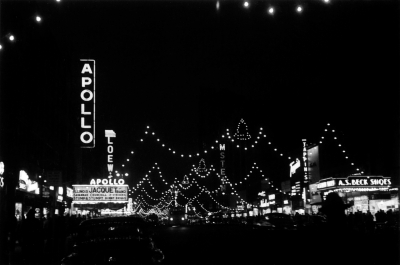
Decades later, Harlem has been altered by commercial businesses—125th Street doesn’t feel the way it did in the 1930s—but the same attitude and cultural pulse that defined the neighborhood more than seventy-five years ago is still alive and well. With the transformation and gentrification of Uptown Manhattan, jazz music has taken on a new life of its own. The music is not as commercial or celebrated by the masses like it once was, but Harlem remains a place where jazz music will thrive and survive. Despite the harshness of the current economic crisis, some establishments have managed to weather the storm while others have perished.
I’m interested in discovering where Harlem is going. Let’s find out.
Harlem is home to the National Jazz Museum where Loren Schoenberg serves as the director. Bassist Christian McBride is co-director of the organization, acting as its cultural ambassador, promoting the agendas, events and aesthetics of the organization through his various appearances, here and abroad. Currently the Museum is housed on E.126th Street but the organization was recently selected by New York City to be included in the Mart 125 Redevelopment Project, which would give the Museum a prime location in Harlem’s bustling commercial section of 125th Street.
Under the proposition, the National Jazz Museum will be provided with 12,000 square feet of space while 2,000 square feet of that space will be leased to the arts organization ImageNation. Schoenberg thinks that by 2012, the organization will have made 125th Street its permanent home. Before this can happen, though, New York City’s Economic Development Council must first issue proposals to private companies that want to bid on the job and after a company has been selected then the renovations can begin. The organization has already enlisted the services of world-renowned museum and exhibition designer Ralph Appelbaum about the physical look of the Museum when it relocates.
In addition to the good news about being chosen for the Mart 125 Redevelopment Project, the Museum has many other programs and services that it offers to the greater NYC community in the name of jazz. The Harmony in Harlem program is a service that is offered for young jazz musicians and young children interested in jazz. Schoenberg said that, “It’s a program for the kids. It’s run through the Children Aids Society.”
The Museum strives to make jazz education available to students who might have been overlooked in the public school systems or might not have the financial means to afford private education. Schoenberg added that, “Many of the programs for jazz for young children are sometimes skewed towards the really talented kids. We decided to create a program to invite kids and get them involved on the beginner’s level.” The program is in its fourth year and currently has about fifteen youngsters enrolled. Mr. Schoenberg and the rest of the NJMH are doing some great things in preserving the legacy and the future of jazz in Harlem. I look forward to seeing the Museum when it reaches its full potential.
While the NJMH is creating solid institutional support for the future of jazz in Harlem, the late night spots are what made Harlem infamous in the first place. Though the days of the Cotton Club and Minton’s are no longer with us, the old school vibe is still alive and well at St. Nick’s Jazz Pub. This storied spot, which is right down the street from my apartment in the Sugar Hill section of Harlem, is the oldest establishment of its kind still operating in Harlem. The club has gone through different owners and several name changes but it has maintained much of the original vibe it possessed back when it was called Luckey’s Rendezvous (stride piano legend Luckey Roberts operated the spot back in the 1940s). Before Roberts took over the club it was called the Poosepahtuck Club in the 1930s, where early jazz pioneer Joe Jordan played house piano. The club was renamed the Pink Angel in the 1950s and it took its current name in the 1960s.
St. Nick’s represents the old guard from the exterior of the club to the interior. In addition, the vibe of St. Nick’s is what I cherish the most and it’s my opinion that no other club in New York City, other than the Village Vanguard, has maintained its heritage in its current incarnation as well as St. Nick’s Pub. The club consistently offers up some of the brightest, but unknown jazz talent in Harlem. Saxophonist Wayne Escoffery, also a Harlem resident along with his wife vocalist Carolyn Leonhart, performs here once a month. I highly recommend St. Nick’s because the atmosphere has been largely preserved from decades past and you can enjoy a set of music, meet your two-drink minimum, and make a contribution to the love bucket for the musicians all for around twenty to thirty dollars.
Some clubs/venues have managed to thrive but sadly others, like uptown’s Big Apple Jazz/EZ’s Woodshed have been unable to stay in business. The now defunct spot was located on Adam Clayton Powell Blvd (7th Avenue) between 131st and 132nd Streets. The club sold a great deal of different merchandise and a plethora of compact discs by established artists as well as up and coming artists. What I found most sad about the club shutting its doors in June 2008 was the fact that the venue catered to the up and coming musician. On many occasions I would frequent the club talk to my friend Mark Lomanno (the manager) and soak up the sounds of promising groups. When I found out that the establishment was going to be closing, I wondered if other venues would follow suit, and cut back their jazz offerings or shut down completely. I imagine that the bills and the rent for the Big Apple must be on the expensive side and this venue didn’t appear to bring in a large amount of revenue. But I have to give kudos due to the simple fact that this club was able give a local audience in the heart of Harlem some exposure to jazz.
Minton’s Playhouse was one of the birthplaces of bebop and the club still operates from its famed location of 118th Street. Today the club offers up a variety of jazz music and entertainment, including tap dancing. The atmosphere of the club stays true to the old school vibe of Minton’s from the 1940s. Like St. Nick’s Jazz Pub, Minton’s is flourishing in a time when live music is one of the few aspects of the music industry left unchanged by technology and the economy. Similar to Minton’s, other clubs like the Shrine are promoting jazz music and world music. Located right down the street from Big Apple Jazz, the Shrine has established itself as one of the prime up and coming venues for alternative music and jazz flavored entertainment. Many talented young musicians frequent the club and have earned it a reputation as a prime time spot for introspective, soul searching music.
Clubs and venues are maintaining their collective grasp on jazz in Harlem and it’s also a place that many performers call home. I guess in the end it truly is the people of Harlem that have always given the neighborhood its flavor and its spice. Artists such as Jackie McLean and Sonny Rollins grew up soaking in the sounds of Harlem, and I am certain that there are other young souls who are just as intrigued by jazz music and its strong historical presence in Harlem.
As a relative newcomer to Harlem I have always been fascinated by this famed section of Northern Manhattan. I think with institutions like the National Jazz Museum calling Harlem home and with clubs like St. Nick’s, the Shrine, and Minton’s remaining open, the future of jazz in Harlem is still secure in this new millennium. Much more could be written about the vibrancy and the beauty of Harlem but one thing remains unchanged: this portion of New York City continues to inspire and preserve the legacy of jazz music.
This blog entry posted by Jared Pauley
Tags:

jared, you're article was far from complete-you haven't been to showman's?,not to mention lenox lounge,creole,the american legion post,the river room,bill's place,and the parlour.
Great article, Jared. There's definitely plenty of jazz worth hearing in Harlem. Sometimes knowing the history is good: Minton's reopened in 2006 after being shuttered for more than thirty years (it spent its last years as a disco) and Big Apple Jazz was on what was once one of the hottest after-hours blocks in Harlem, home to Connie's Inn, where Billie Holiday was first "discovered" by John Hammond, and musicians came to get good luck by rubbing the "Tree of Hope," whose trunk still stands on the stage of the Apollo Theater. Sadly, Big Apple never managed to generate a following in the neighborhood, despite great music. Let's hope the newly revived Minton's fares better.
Hi, I'm living in DC however I frequent NY a lot matter of fact I'll be there the 17th to check out the American Legion on 132nd st. I'm always looking for jazz spots to go to when I come up. I'd like for you to e-mail me as to what's going on who's where & when. I'd appreciate it.thank you.
Tim, we are very much working to revive Minton's and expand its offerings. It seems you are quite familiar with the Harlem jazz scene. Please email me whenever it's convenient as I would like to get your thoughts on ways to expand Minton's audience and allow it to flourish.